

The Everyday Kitchen Appliance That Used To Be Fatally Toxic
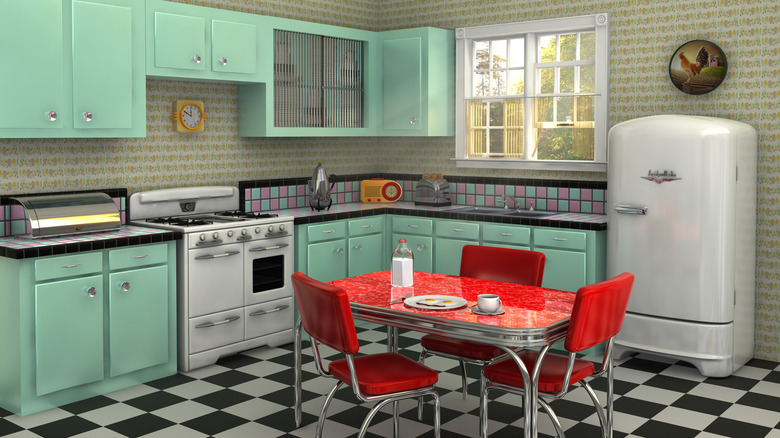
We may receive a commission on purchases made from links.
If you're not an anxious person, you probably don't spend a lot of time worrying about kitchen safety protocols or pondering how dangerous your kitchen appliances are. The truth is, most appliances are incredibly safe thanks to a long history of hard work done by the U.S. Consumer Product Safety Commission. Appliance malfunctions are rare, especially if you read the appliance manual and know how to use it properly. Unfortunately, this wasn't the case in the 1800s and the turn of the century, when households began using the earliest iterations of many kitchen appliances we still have today.
Before refrigeration was invented, people used to store food in underground cellars or bogs, or in larders or iceboxes with blocks of ice. So in 1913, when electric refrigerators were introduced to common households, it was a delightful novelty and a life-changing modern invention. And while electric refrigeration was a stunning feat of genius engineering, it was also incredibly dangerous.
Mass production of home refrigeration systems relied on the use of a self-contained compressor installed in an icebox. The vapor compression process used a combination of ammonia, sulfur dioxide, and methyl chloride, which meant that if the refrigeration system was damaged or developed a leak, it would release deadly toxic gases into the home. In the 1930s, refrigerator manufacturers commissioned the development of a safer refrigerant. This led to the creation of Freon, a non-toxic refrigerant gas, a boon for modern refrigeration safety.
Why you shouldn't install a retro refrigerator in your home
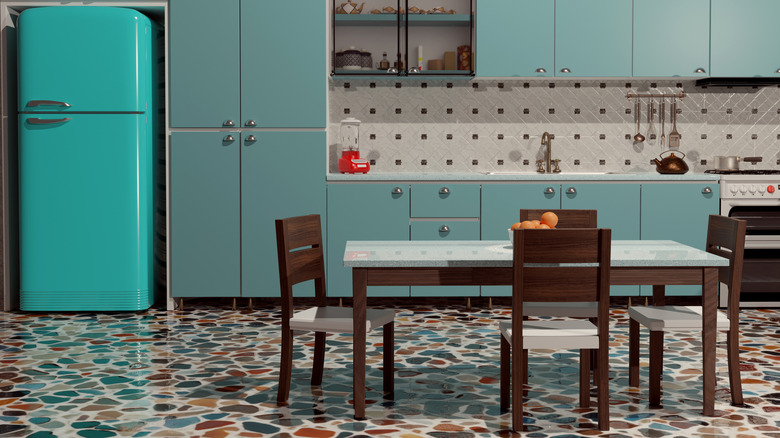
While retro refrigerators look much cooler than their more modern counterparts, they can be dangerous. Even with modern safety advancements, there were dangerous older refrigerator models still in use well into the '90s. For instance, Servel gas refrigerators, manufactured between 1933 and 1957, carried a huge risk of carbon monoxide leakage. In fact, there were at least 22 deaths throughout the U.S., and the model was finally recalled in 1990.
One of the biggest reasons that you wouldn't want a real vintage fridge in your kitchen is that it just might not be safe anymore. If it hasn't been inspected, repaired, or refurbished, it may have hidden problems that could affect food safety and your health. Vintage refrigerators are also much less efficient than their modern counterparts. They don't conform to modern safety standards, may be a fire hazard, and can end up causing a spike in your electric bill. It's also harder to find replacement parts for them when something breaks.
Luckily, you can still design the retro kitchen of your dreams, even without installing a vintage death trap. Frigidaire makes a two-door, 4.5 cu ft apartment refrigerator that is designed to look like a vintage model, and Big Chill also manufactures stylish, old-school refrigerators in a range of colors and sizes. As long as you choose well-reviewed vintage-inspired kitchen items, you can find a lot of brands that offer stylish retro appliances that are affordable and chic.