

Salt Doesn't Technically Expire, But Here's When You Should Throw It Out
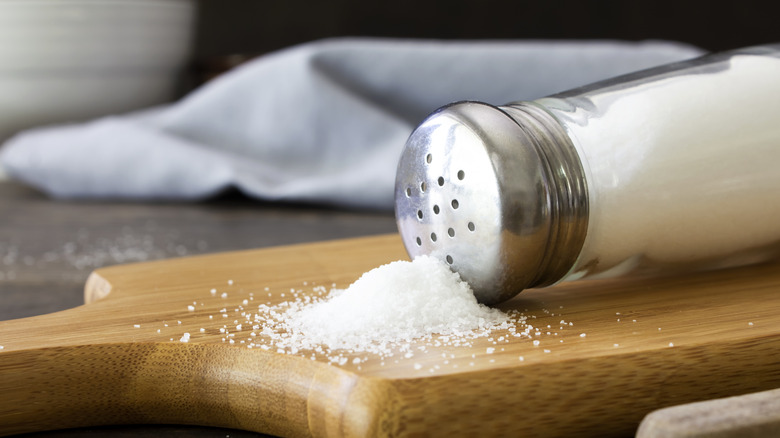
Some products, such as salt, have puzzling expiration dates. Why would a mineral, which has been present on Earth for millions of years, expire? Truth is, salt doesn't technically ever expire, unlike other perishable products such as canned goods, which have a long-but-not-infinite shelf life. However, salt can lose its flavor and potency, and certain types of salt may also clump or change in texture over time. This is especially true for salts that contain additives such as iodine, anti-caking compounds, or other ingredients such as those used in seasoned salts. Although they won't make you sick or affect your health in any significant way, you should check the pantry for salts you may have been keeping for a few years and make sure they are still worth using. If you have to add more of a specific salt to taste, it's time to toss it.
Manufacturers will always add a "best by" date to salt, even if the product doesn't actually expire. After all, there's a reason salt has been used for millennia as a preservative to store foods for long-term use when refrigeration was not an option. Salt-curing meats, fish, and pickling vegetables are tried and true ways to use salt to add extra life to perishable products. That's because most microbes that cause foodborne illnesses cannot survive in salt.
Of course, different types of salt have different shelf lives, which depend on the source, how they are processed, and probably most importantly, how they are stored.
How to store salt for a longer shelf life
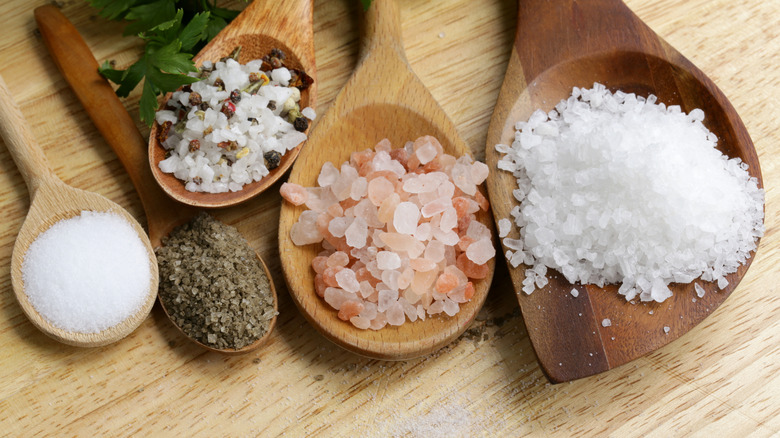
When stored properly, salts have a reasonably long shelf life. For instance, Kosher salt and table salt remain perfectly fine to use for an average of five years, while flakier salts such as Maldon sea salt will start losing their taste and beautiful texture after about three years. The same goes for pure salts such as Himalayan pink salt. Moreover, salts that are seasoned with herbs and spices are quicker to lose their flavor, and that's especially true of salts seasoned with oils, such as truffle salt and salts flavored with citrus peels. These volatile oils lose their potency and oxidize upon exposure to oxygen, which may also cause unpleasant, rancid flavors and odors.
To keep your salts in the best condition, store them in airtight containers in a dry, cool, and dark place. Moisture will create clumping, which is frustrating when you reach for the salt shaker at the table and get nothing. Light and heat can also affect the texture and taste of your salt, and will decrease its iodine content. If your salt has picked up an unusual smell, contains foreign bits, or has started clumping due to moisture, it's best to discard it.
The best way to avoid these issues is to use your salts. If you spent a good amount of money purchasing a unique salt, don't hoard it! Use it so you can enjoy its special flavor and qualities while it's fresh. If you have a few different kinds, you could try a fun salt tasting. Set them up at the table in little bowls or grinders, and let everyone experiment with their specific textures and flavors to discover their favorite.