

6 '90s Fast Food Trends We Want To Bring Back In 2025

The 1990s were a magical time for fast food lovers, when many of today's iconic menu items first hit the scene — from Taco Bell's Double Decker taco to the Pillsbury Cini Minis at Burger King and more. In those days, McDonald's and Burger King competed for the hamburger throne while Wendy's was fast-becoming America's favorite. It was arguably Pizza Hut's most innovative decade, and Subway stood out as one of the few healthy options.
Public opinion of fast food began shifting in the '90s, largely due to Phil Sokolof, the then-president of the National Heart Savers Association, who, in 1990, published a scathing full-page article in major newspapers, including The New York Times. In the article, titled "The Poisoning of America," Sokolof called McDonald's out for having too much fat and cholesterol in its food. It was the '90s version of the 2004 documentary "Super Size Me," which would later stir up similar controversy for the chain.
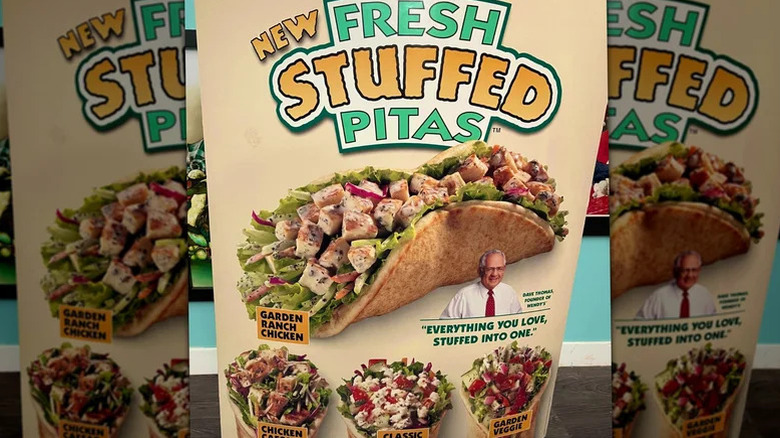
The criticism didn't slow down the fast-food industry, but it did inspire chains to create healthier options for the first time. The same decade that gave us Stuffed Crust pizza and Taco Bell's Double Decker taco is also the one that gave us Fresh Stuffed pitas and $5 Footlongs, which perfectly encapsulate the broad scope of innovation that occurred during the '90s. Here are seven '90s fast food trends we want to bring back.
Playful architecture
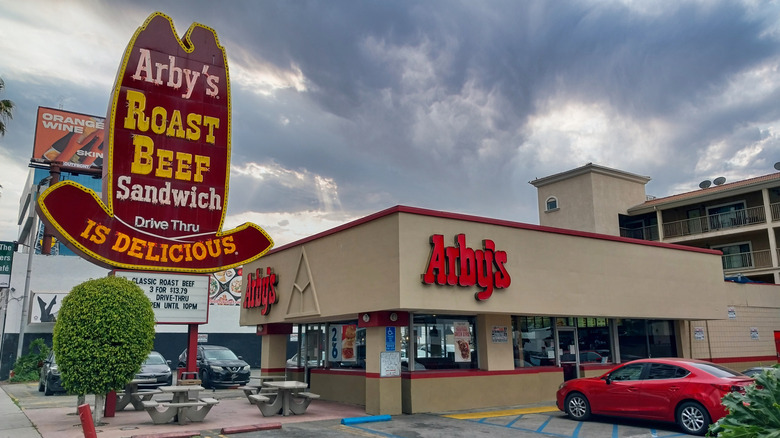
The sleek, minimalist look of fast food chains today is a far cry from the themed styles of the 1990s. Back then, architecture brimmed with character, giving each chain its own recognizable aesthetic, whereas now, it can be hard to tell a KFC from a Pizza Hut. The phenomenon is called "blanding" and refers to when companies remove standout branding elements in hopes of appealing to a broader base. In many ways, it's the opposite of traditional branding, favoring neutrality instead of individuality.
In the '90s, the curvature of Arby's 10-gallon hat could be seen a mile away. The bold red mansard-inspired roof made finding Pizza Hut easy peasy, and the sunroom with hanging plants gave Wendy's upscale appeal. Blanding has resulted in a landscape of boring, neutral-colored fast food chains that feel cold, almost melting away against the surrounding scenery. While the reasoning behind blanding makes sense, one could argue that fast food chains looked better before their modern remodel.
Luckily, whimsical fast food architecture hasn't completely disappeared, like the UFO-themed McDonald's in Roswell, New Mexico, and the In-N-Out original replica in Baldwin, CA. Some legacy locations from this bygone era also still exist. Pizza Hut began retro-izing several legacy locations in 2019, renovating the interior to resemble how it did in the past with the old logo, red booths, multi-color lamps, and checkered table covers. There are "Pizza Hut Classic" locations in 22 states.
Fun play areas for kids
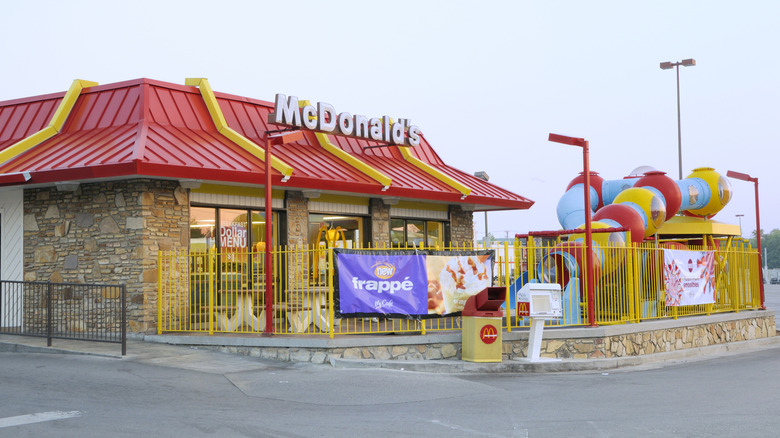
Another reason the '90s were the glory days of fast food is that chains used to have play areas for kids. McDonald's introduced the first-ever fast-food chain play area, called the McDonaldland Playland. The concept was inspired by McDonaldland, the fictional place where Ronald McDonald and other popular characters reside. Playlands were initially outdoors and featured classic rides like the Officer Big Mac Climb-In Jail, Hamburglar Swing, Captain Crook Spiral Slide, and others.
But, after causing numerous injuries, they were relocated indoors and rebranded as PlayPlaces in 1987, remaining as staples until the 2020 COVID pandemic put the final nail in the coffin. PlayPlaces weren't the most sanitary. They could be contain discarded food, random items, and sometimes even human excrement. One story about a kid finding a hypodermic syringe in the ball pit didn't help their case, either. By the '90s, Burger King had its version, called the Kids Club Play Lands, but ultimately ran into issues similar to McDonald's.
In the aftermath of the great fast-food play area purge, Chick-fil-A stands as one of the few remaining chains that still have playgrounds. Unlike McDonald's and Burger King, the company has been more transparent about sanitizing its playgrounds. You can find where they are located via the Chick-fil-A app. If other chains follow Chick-fil-A's example, re-launching play areas can inject fun into the dine-in experience that has been missing for some time now.
Buffet-style eating
With classic fast food deals like Subway's $5 Footlongs, Little Caesars' Hot-N-Ready $5 pizza, and McDonald's dollar menu, the '90s were one of the best bang-for-your-buck decades ever. The crown jewel of '90s food deals, however, was buffet-style eating. Iconic chain restaurant buffets you may not remember, like CiCi's Pizza, Old Country Buffet, and Pizza Hut, are just a few. Yes, Pizza Hut used to have a buffet section, along with Wendy's, Popeyes, and KFC. The chain introduced buffets in 1992, and at their height, had 2,000 locations nationwide.
The goal was to incentivize more customers to dine in, but when that failed, most of the buffets were phased out. This Reddit thread has a list of the few remaining. Today's buffets feature pizzas, pastas, Original Stuffed Crust, melts, wings, breadsticks, and cheese sticks. Pizza Hut locations have shrunk considerably since then, so bringing buffets back isn't feasible at most. That said, they could work at the aforementioned Pizza Hut Classic locations.
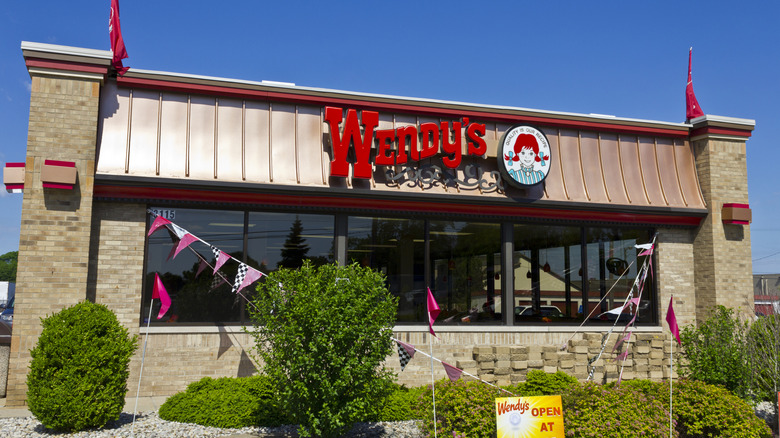
Wendy's buffet was called the Superbar, but in place of burgers, it offered pasta, Mexican food, a salad section, and desserts. It cost less than $5 and predated Pizza Hut's buffet by 5 years. Wendy's, like Pizza Hut, struggled to get the buffets to generate revenue. KFC's buffet was short-lived, and Popeye's shuttered its last buffet in 2022 due to the COVID-19 pandemic, which severely impacted buffet culture as a whole. Pandemic-PTSD aside, when done right, all-you-can-eat is still the best deal around.
Founders being the mascot for chains
Fast food chains don't use their founders as the mascot like they did during the '90s. Dave Thomas, the wholesome founder of Wendy's, famously appeared in over 600 of the chain's commercials, unwittingly earning the Guinness World Record for most TV commercial appearances by a company founder. Thomas had a relatable personality that made Wendy's feel like a small chain, despite having 4,000 locations by 1992. His fatherly spirit carried over into real life as well, where he donated millions to programs for children and even established the Dave Thomas Foundation for Adoption.
Compared to then, people aren't as quick to trust CEOs and founders of major companies. It also doesn't help that John Schnatter, the founder of Papa John's and its former TV commercial ambassador, got up to some shady things, including sexual harassment accusations. Consumers today are more prone to hold CEO's accountable, so understandably, it's risky for one to be their company's mascot.
However, if we're to use an example of great founder mascots, Thomas is a much better one, along with the OG founder mascot, Colonel Sanders, who started appearing in commercials as early as the '60s, and occasionally still pops up in them. At the end of the day, customers want to trust the companies they support, and when founders come across genuine, it helps build that trust.
'90s portions and prices
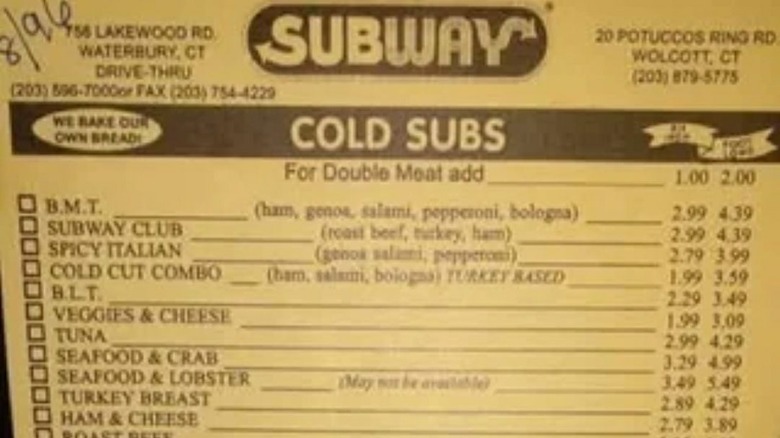
When people say that things were better back in the day, in the case of '90s fast food prices and portion sizes, they might be right. A look at a McDonald's menu from the '90s will make you wish time travel existed. The Big Mac meal with a large fry and medium soda cost just $2.99, the same for a Quarter Pounder with cheese meal. What $20 got you at McDonald's in the '90s was a feast, compared to now, when a Big Mac meal costs $11.79, and an additional $1 for a large fry, including tax. That's four times as much, which is ridiculous, especially when considering large families.
Nowadays, value comes in the form of loyalty programs, purchase point systems, and digital coupons, making customers navigate strategically placed hurdles just to save a dollar or two. McDonald's is not the only culprit. In 1996, a B.M.T. Footlong from Subway sold for just $4.39 plus tax, but has nearly doubled in price, now costing $10.79. Little Caesars' Hot-N-Ready pizza, priced at $5, was one of the last remaining stalwarts of '90s pricing, but in 2022, it was increased to $5.55 — albeit with extra pepperoni.
That said, pizza chains are unique in this respect, as they've only marginally increased prices, compared to other fast food types. For example, between 1999 and 2005, Domino's only increased the price of a large pizza by one dollar, per The Hustle.
Competitive menu expansion
Anyone who grew up during the '90s remembers the giant pizza war waged between Little Caesars' Big! Big! Cheese, Pizza Hut's Bigfoot pizza, and Domino's Dominator. What was shrewd competition for the chains was heaven for pizza lovers. Competition is a natural part of business, but during the '90s, fast food chains appeared to respond more directly to their counterparts, resulting in the creation of some of fast food history's most memorable menu innovations. Gourmet ingredients had also become more accessible, which prompted an industry-wide shift towards healthier menu items, per Uber Trends.
According to a New York Times article from 1990, the fast food industry faced harsh criticism from health professionals, who accused the food of having too much fat and cholesterol. Competition and criticism, the increased availability of gourmet ingredients, and a growing interest in health led to the creation of many '90s fast food items that deserve a comeback, including Burger King's Spicy Bean Burger, McDonald's McLean burger, and Wendy's Fresh Stuffed Pitas — some of the first health-friendly menu items.
Menu expansion during the '90s was competitive like any era, but in a way that felt more innovative and responsive to the customer base. The most recent example of this was the chicken sandwich war between Popeyes, Chick-fil-A, and KFC in 2019.