

Is It Safe To Eat Pomegranate Seeds?
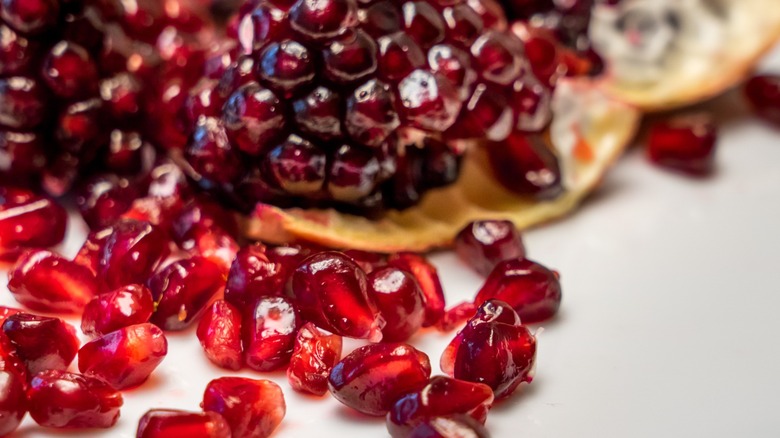
There's some uncertainty surrounding the edibility of fruit seeds and with good reason — did you know that eating apple seeds can make you sick? Myths like, if you swallow a watermelon seed you'll grow a watermelon in your stomach, don't help, either. But pomegranates are special, because they're almost nothing but seeds. Each fruit is chock-a-block with glistening, crimson-colored jewels about the size of popcorn kernels. These ruby-encased pomegranate seeds look enticing, and, happily, they're absolutely safe to eat.
In fact, pomegranate seeds are really nutritious — high in fiber, antioxidants, and nutrients such as vitamin C and magnesium. They've even been shown to reduce the risk of heart disease, improve digestion, and support brain health. However, because they're high in insoluble fiber, digestive upset (in the form of diarrhea or constipation) is possible if you eat too many. So stick with the daily recommended serving size, which is about half of a medium-sized pomegranate, and all should be good. The only word of warning goes to anyone suffering with something like Irritable Bowel Syndrome (IBS), in which case proceed with caution as these seeds are a high-FODMAP item.
Many people find the actual seed — the tiny, hard, crunchy inner part — to be unpleasant, and spit it out. But not before sucking the sweet-tart juice from the seed's outer crimson casing. But much of the goodness is in the seed, so this slightly defeats the object of eating them. The red covering is widely called an aril, however, according to the National Library of Medicine, it's actually a sarcotesta.
Getting the most from your pomegranate seeds

Though the popularity of pomegranates and pomegranate-based products has been trending upward for years, they're not as commonly consumed as many other fruits. So, while you may have tried pomegranate juice, the majority of us have not tried the fruit itself. For the uninitiated, it can be a little intimidating — not knowing how to pick the juiciest pomegranates at the store or how to cut and eat a pomegranate without making a mess. But once those edible rubies have been dislodged, there's much you can do with them. Pomegranate seeds, delicious eaten simply on their own by the spoonful, are a super refreshing snack. But snacking is just the beginning.
These luscious seeds can be woven into any meal of the day. Sprinke them in yogurt, cereal, oatmeal, muffins, and smoothies. As a winter fruit, they can add a splash of brightness and color to your lunch, too. Shake them on salads like this fall harvest caramelized mushroom salad or as a topper for butternut squash soup. They also work well in grain bowls, wraps, and hummus. And dinner just got a whole lot yummier with pomegranate molasses glazing meats and veggies. For desserts, pair them with ice cream or use in our pomegranate cherry cocoa pie recipe.
Too many to use at once? Learn how to properly freeze pomegranate seeds for later use to make the most of this fruit's glistening bounty. Or dehydrate some to snack on or add to breakfast bowls. Whole and fresh, frozen, or dried, they're a great addition to your diet.