

10 Kitchen Island Mistakes That Are Making Your Space Look Smaller Than It Actually Is

There was a time when kitchen islands were considered the remit of luxurious, sprawling homes with ample room to spare. But with newer design evolutions bringing forth space-efficient, compact islands, you need not relegate this dream to the back of your mood board any longer. There is an island for every size and style, but it does help to ensure that a few elementary kitchen island mistakes don't end up making your space look confined and congested.
For starters, you'll need to ensure that the size and shape of your chosen island allow for the bare minimum of clearance required for walkways. An overambitious overhang can eat into your available floor space, while poor placement can create bottlenecks in crucial spots around the kitchen. Chunky silhouettes, top-heavy designs, and oversized decor are silent thieves that detract from the illusion of space that you are hoping to create.
Not sure how to sidestep all these landmines when adding an island to your kitchen? Help is at hand. Laura Medicus, interior designer and owner of Laura Medicus Interiors, taps into her experience to draw up a roadmap of the common kitchen island mistakes that are sneakily cramping your space. By avoiding silhouettes, colors, and finishes that visually confine the room, the addition of an island can maintain a sense of breeziness in your kitchen even with limited space available.
Choosing the wrong size
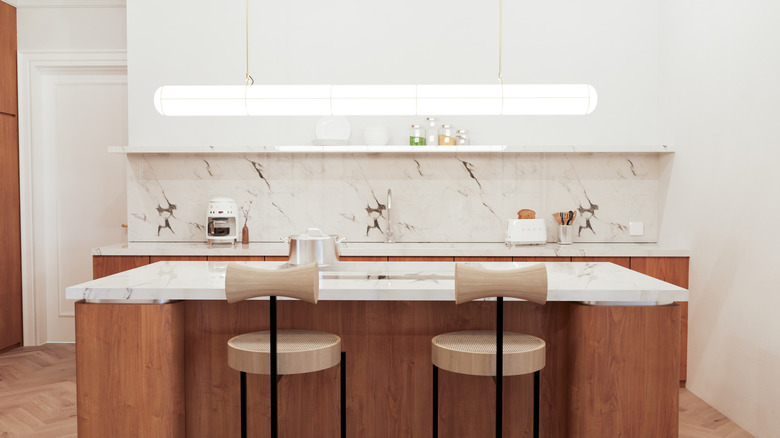
In theory, more can always seem merrier when it comes to kitchen islands. More countertop inches equals more workspace — what's not to love? However, opting for a large kitchen island can overwhelm the space visually, making it seem crammed and congested rather than open and inviting.
The first thing that interior designer Laura Medicus wants you to keep in mind is that islands require an ample amount of breathing space in the kitchen. "I try to give islands 48 inches of clear space around them at the perimeter and a minimum of 60 inches behind eat-in counters," she says. Before finalizing the size, it also helps to visualize different everyday scenarios, such as when multiple cooks are using the kitchen at the same time. "Think about someone standing at a stove and another person chopping vegetables at an island. If you don't have enough space, your new kitchen will feel outdated in a hurry," she says.
While there are several ways to get creative with adding an island to a kitchen, there are certain situations where an island might just not be the right choice for you — the rule of thumb is to forgo an island altogether if your kitchen is less than 13 feet wide. However, all is not lost. You can always add a rolling cart to your kitchen for whenever you need some extra workspace for putting together meals for large gatherings.
Opting for the wrong shape
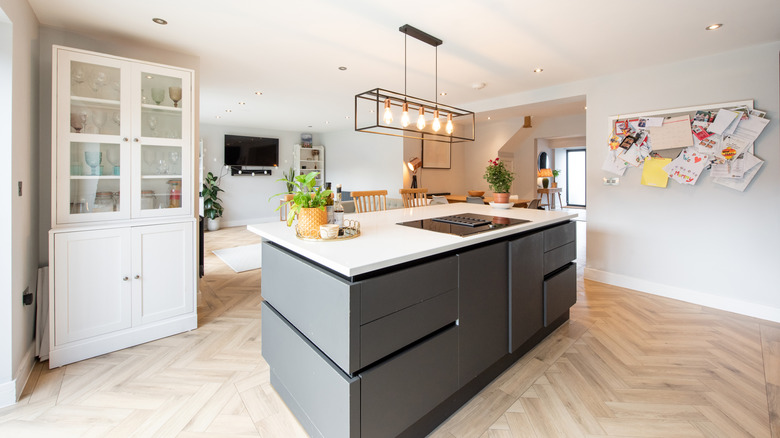
So you found the kitchen island of your dreams that made you stop in your tracks. But why isn't it delivering the same show-stopping impact in your kitchen as it did in the showroom? If something feels a little "off" for some reason after you installed the island, it might be worthwhile to consider whether the shape works well for your space. Not all island shapes work well for every kitchen. "In a small space, try to avoid islands that are overly deep," Laura Medicus says.
Square and rectangular islands are generally preferred because they work well for kitchens of different sizes — if you are working with limited space, you can always opt for a slim peninsula that won't monopolize the walkways. However, you'll want to steer clear of adding avant-garde or abstract shapes that can create awkward corners and block the circulation of your space. Attempting to store appliances within curved cabinetry can also be a challenge. Medicus agrees and adds, "Rectangles are preferred as you can use every part of the rectangle for storage or seating. Anything bowed or rounded will have some wasted space."
Going with a bulky base
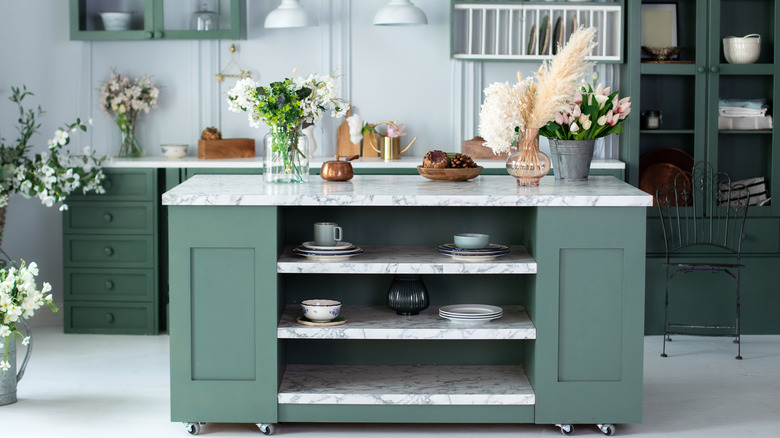
When choosing design elements for a kitchen with space constraints, you need to be ruthless in weeding out any silhouettes that add visual weight or block sight lines in the space. Kitchen islands with a bulky base are, unfortunately, a repeat offender, as they can throw off the sense of proportion that is so integral to a kitchen.
"An island with chunky legs or heavy raised panels is going to visually take up more room than an island with slim tapered legs or one with no legs at all," Laura Medicus says. Bulky wooden legs with sculpted latticework might read well in an architectural magazine, but in reality, might add unnecessary visual bulk to a small space. Likewise, you'll want to avoid excessive cabinetry — no matter how tempting the notion of a built-in bookshelf for your vintage cookbook collection might sound — as this visual barrier can unintentionally shrink the space.
On the other hand, there are certain base designs that can do the exact opposite by creating a sense of breezy openness in the kitchen. "Hidden steel supports are a great way to extend a counter out in a small kitchen where you may not want any legs at all," Medicus says. It also helps to consider transparent or acrylic legs that will allow light to bounce around happily through the space, making the kitchen appear bright and airy during the day.
Not choosing the right placement
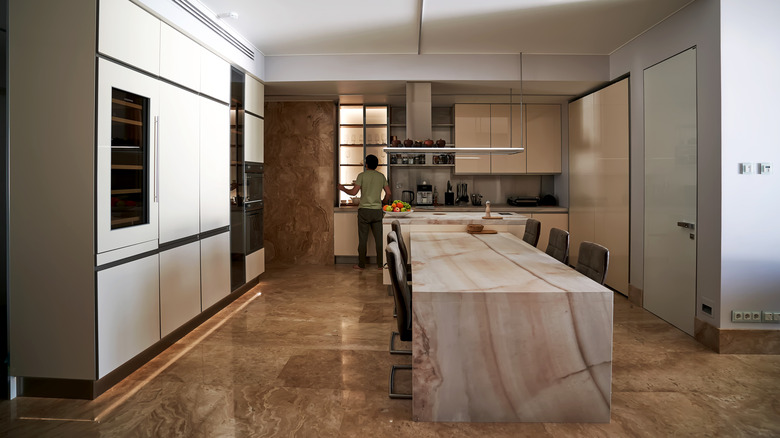
The golden triangle has served as the go-to design rule for mid-size kitchens since the 1940s, and it is easy to see why. Once you master the perfect distance between the stove, the sink, and refrigerator, you'll be able to optimize your workflow in the kitchen. However, an island that is tucked away in a hard-to-reach corner or one that is divorced from the action will end up hindering, rather than helping, your everyday routine. This is why nailing down the right placement is one of the top factors that experts want you to know when choosing the perfect kitchen island for your space.
While adequate circulation is necessary around a kitchen island, Laura Medicus also believes that the placement is crucial. If you are managing to clock in your daily step count just by carrying groceries back and forth from the island to the cabinets, you may have a problem on your hands. "Islands offer great support counters for food prep and if you place them too far away from where the action is at the stove, you may as well not have an island," she says.
For a compact kitchen, it helps to start by mapping out 36 to 42 inches of clearance to ensure that your island won't get in the way of any appliances or cabinet doors swinging open. Depending on how much space you have available, you can choose a slim island to create an extra workspace without eating into your limited floor plan.
Opting for excessive overhang
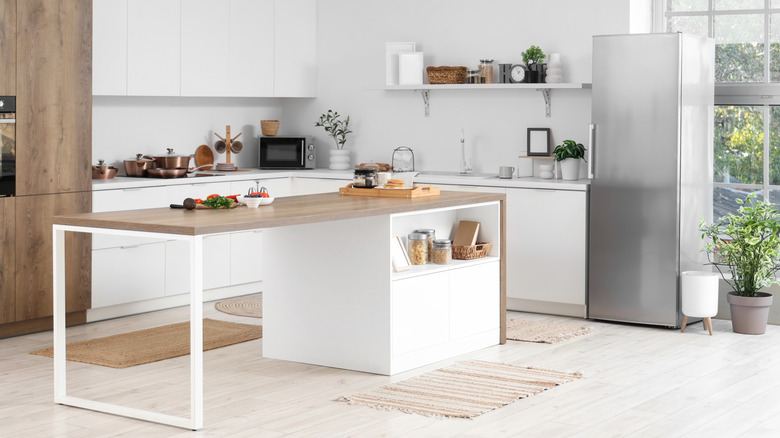
If you don't have the space to design the breakfast nook of your dreams, the kitchen island can make for a handy stand-in. With the addition of a few stools, this workspace can morph into a cherished spot to grab coffee with your loved ones before the 9-to-5 grind takes over your day. However, being too adventurous with the amount of space you allocate for your overhang can compromise the walkways needed for smooth circulation around the room.
An overhang is the area of the kitchen countertop that extends beyond the base of the lower cabinets. This space is necessary when adding seating to your kitchen island, from creating legroom under the island to tucking away stools when not in use. While deeper overhangs can appear visually attractive, Laura Medicus wants you to keep in mind that you will need legs to support this overhang. Bulky legs can create a bottom-heavy look that weighs down the space visually, while also eating into your free space around the kitchen. According to her, the standard depth for a countertop overhang is 11 to 12 inches so that you can stash stools underneath — any compromise on this space will make for an uncomfortable sitting experience.
Selecting dark, matte finishes
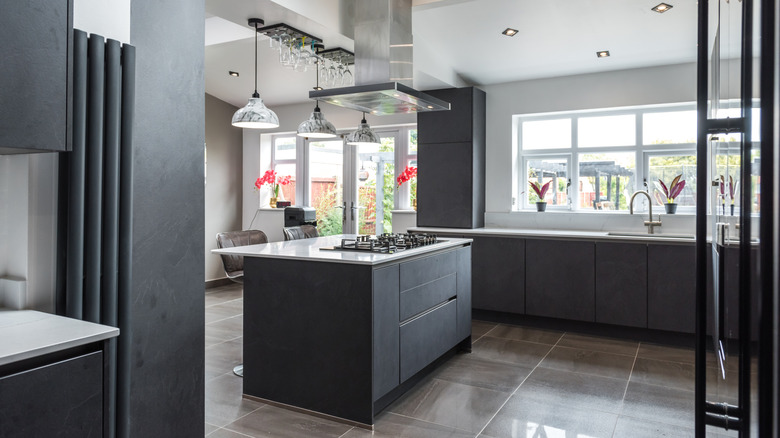
The all-white kitchen trend is on its way out of the door, but you won't want to call it quits on lighter hues just yet. This is especially pertinent when choosing a kitchen island for a compact space, as dark colors are notorious for absorbing light. The end result? A gloomy tinge that weighs down the visual breeziness of the room as well as your mood.
Opting for a matte finish along with moody hues will simply compound this design crime. "Matte finishes in a kitchen offer no reflectivity and can really confine a space, especially if everything is dark in color," Laura Medicus says. A dark, matte finish on the kitchen island will not hesitate to play up every fingerprint and smudge, requiring a heavier time commitment in your daily cleaning routine. Instead, you'll want to befriend paler hues on the color spectrum, such as warm neutrals, that dial up the brightness of the kitchen — the closer you go towards white on the swatch card, the more light you can expect the color to reflect.
For those who absolutely swear by matte finishes, Medicus recommends opting for a leathered stone countertop. This can then be teamed with satin cabinets and a glossy backsplash that will enhance the sense of visual airiness in the space. "The glossy backsplash will reflect light well and be a nice contrast to your countertop," she says.
Adding excessive seating
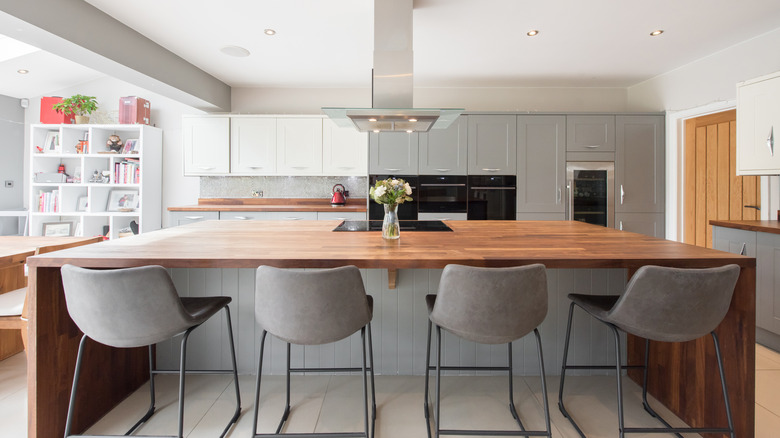
Once you have taken the leap and added an island to your kitchen, you'll justifiably want to get maximum value for your money by optimizing every square inch of the space. But trying to tuck in excessive chairs under the overhang can backfire by making a small space appear more cramped — and your dinner guests might not feel quite as forgiving after the third time they stub their toe on a jutting stool.
According to Laura Medicus, the standard rule for seating at the kitchen island is placing one chair at every 2 feet. "If you have a 6-foot long island, that's [three] chairs on the longest part of the island," she says. Visually, it might appear like you can squeeze in a few more stools in all of the space left empty, but it helps to consider the seating experience. Where will everyone place their elbows? Is there enough clearance to move out of the stool freely? Allowing a standard amount of 7.87 inches on either side of the seat will ensure that your family can enjoy their meals uninterrupted.
If you are working with a smaller island, Medicus believes that you can save space by opting for seating with no arms or a completely backless design. And what can you do about all those extra chairs that don't fit at your kitchen island anymore? This clever guide allows you to repurpose old bar stools in the kitchen or garden as plant stands.
Adding too much storage
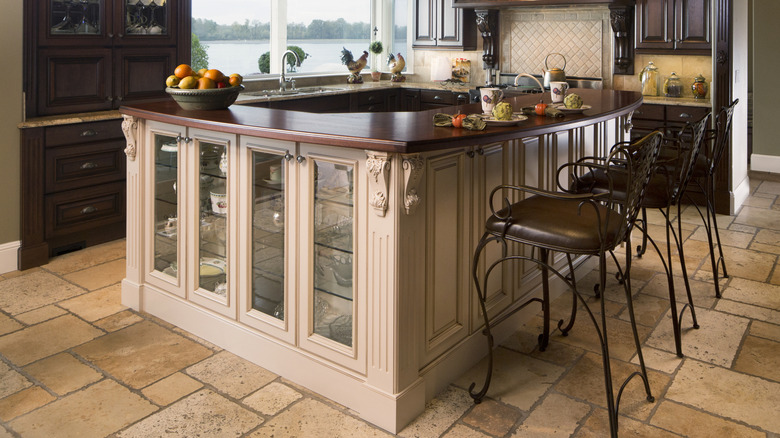
You can enjoy all the creative freedom that you'd like within a compact space as long as you stick by golden rules. Not opting for bulky silhouettes is one. Maintaining a sense of scale and proportion so that one design element doesn't overwhelm the room is another. Attempting to fit in too much storage under the kitchen island blatantly disregards these time-tested principles.
A kitchen island with slim legs enhances the sense of openness in a small space — almost like it is a piece of furniture. However, a bulky base with excessive cabinetry for storage makes for a solid, unforgiving chunk in the middle of the room that enhances the limited sense of space in the room in all the wrong ways. There are also some practical implications to be considered. Laura Medicus has observed that the crowd generally tends to gravitate around the kitchen island at get-togethers. "If you're storing everything in your island, you will be [shooing] people out of the way all party long," she says.
Instead, it helps to opt for a more balanced approach towards island storage in your kitchen. Medicus recommends allocating 12 inches of space on the eat-in side of the island — this space should be relegated for items you don't use every day. It might seem convenient to add in deeper cabinets, but she has found that you'll have a hard time accessing the items in the back.
Opting for the wrong countertop material
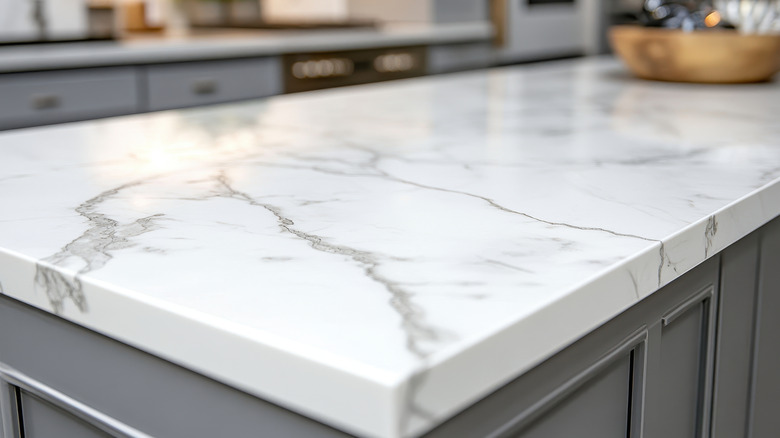
Let's recap everything we know so far about maximizing space in your kitchen: Dark colors are a complete no-no. Heavy silhouettes don't work within cramped spaces, either. You'll need to keep these guiding principles in mind when choosing the right countertop for your island. This means that the thick slabs of a butcher block are out — a compact kitchen can do without the bulkiness of this top-heavy silhouette. Moody, gloomy hues should be kept away from your mood board as well because these light-absorbing colors can make the kitchen visually shrink in on itself.
Instead, Laura Medicus suggests the ideal countertop be guided by soft colors and textures, such as quartz or stone. For those who prefer a sense of movement in the design, she suggests Calacatta quartz. Designed to mimic the sophisticated look of Calacatta marble, its quartz countertops make for a durable, low-maintenance alternative with veining that ranges from grey to gold.
But if you have lost your heart to the dramatic impact that only a dark countertop can make? Medicus believes that you can make this color work in a smaller space by opting for materials with softer movement and veining, such as soapstone or leathered black granite.
Not choosing the right decor
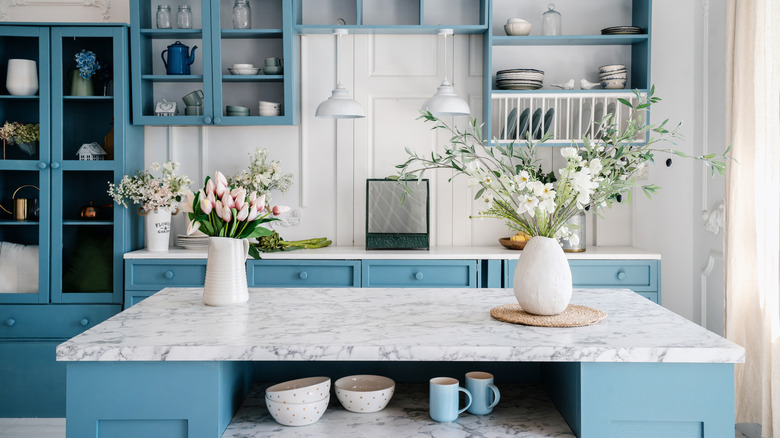
Given the island's vantage point in the center of the kitchen, you will want to use this canvas for adding decor that ties in with your chosen aesthetic. Tiered fruit bowls, statement utensil crocks, decorative lamps, oversized canisters ... there are endless ways to leverage this real estate for adding some personality to the room. However, your choices will need to work in tandem with the scale and proportion of the kitchen — anything too big or bulky runs the risk of blocking the light and sightlines within the space.
The first styling rule that Laura Medicus wants you to keep in mind? Your kitchen island can make an impact on its own and it doesn't need an intensive approach to decor. Every inch of spare space is sacred ground in a kitchen, and any flourishes that you do choose to add will need to work double-duty to serve a functional purpose beyond just adding to the aesthetic of the room.
Once you shortlist the decorative accents that speak to you, it helps to remember that your choices should not create visual overwhelm in the limited space available. Large figurines and oversized bowls might look pretty, but can quickly hoard perceived space in the kitchen and make the room feel confined. Instead, you'll want to group similar items together on trays and add color by way of fresh produce or antique jars for a space that feels as inviting as it is intentional.