

10 Large Features You Should Never Install In A Small Kitchen
Allow us to take a shot in the dark: a small kitchen was never on the top of your wishlist when you were house hunting. However, if your kitchen doesn't have as much space as you wish it did, it needn't be the end of the world. Instead of looking at the lack of space as a limitation, it can be your license to get more intentional with what you allow in your kitchen. If you are looking for pointers, there are several small kitchen upgrades that make a big style statement. However, at the same time, it is crucial to be equally wary of the large features that can choke the natural flow of the space and its sense of visual openness.
Floor-to-ceiling pantries can overwhelm a compact space. Heavy bar stools and oversized islands can crowd walkways. Even something as simple as your choice of cabinet color can dictate how cramped your space feels.
To ensure that you don't have post-purchase regret, we looked to Minnie Bhatt, founder of Minnie Bhatt Design, for help. From the appliances that are eating into precious countertop space to the accessories that are silently stealing the sense of airiness from your small kitchen, she details the large features that she never wants to see in a small kitchen.
Oversized island
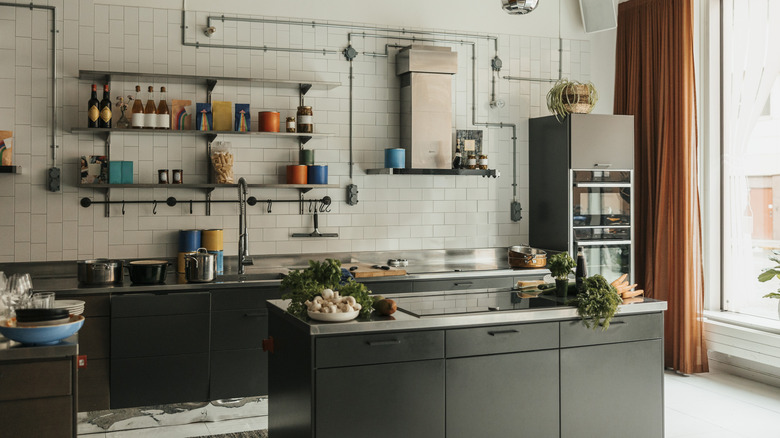
We have all been there — you spy a gleaming marble waterfall island while flipping through an architectural magazine once and suddenly, your kitchen feels meaningless without a grand, statement-making piece. But before you toss a coin to decide whether curved or sharp edges will work best for your kitchen island, it helps to consider whether its proportions work visually for a compact space.
Minnie Bhatt finds that large islands can often interrupt the natural flow of movement in the kitchen — picture everyone crammed into a narrow walkway on a hectic morning, knocking elbows as they try to reach appliances and cabinets with limited accessibility. "Oversized islands can also overwhelm the proportions of a small kitchen, making it feel cluttered and closed in rather than open and functional," she cautions.
In case you are in the pursuit of additional work surfaces in the kitchen, Bhatt also encourages you to look beyond conventional islands — think foldable counters that nestle snugly against the wall when not in use, pull-out extensions for ease of accessibility, and narrow peninsula designs that won't make your space shrivel up visually. "These solutions keep the kitchen efficient, airy, and comfortable while still offering the convenience of extra prep space," she explains. Portable islands, such as kitchen trolleys, also score high in her book. These can be easily rolled out for providing prep and storage space during the holidays and relegated to the garage when they aren't needed — while also serving as a renter-friendly investment.
Bulky double-door fridge
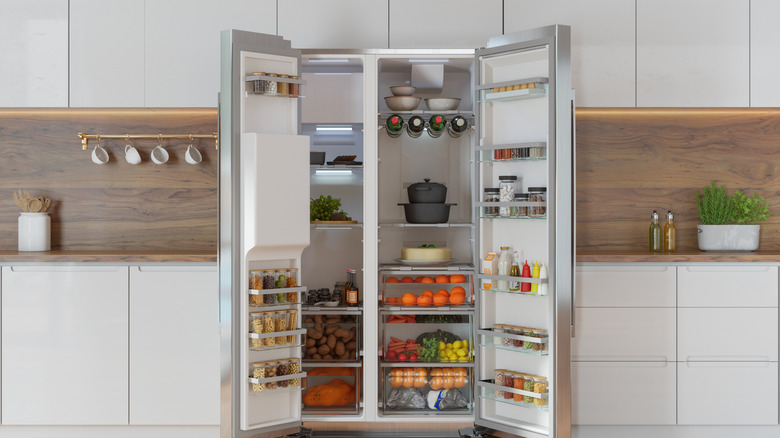
There are some crucial mistakes you need to avoid when buying a new refrigerator. Not accounting for your storage needs is one, getting swayed by expensive features is another. In case your kitchen has limited space to spare, you will also want to wheel your cart right past the Hulk-sized double-door options without making eye contact.
When choosing large electric appliances for a compact kitchen, Minnie Bhatt believes it is crucial to factor in the appliance-to-room ratio. "A double-door refrigerator can dominate both floor and visual space in a small kitchen, making it difficult to design efficient cabinetry around it," she says. By attempting to stuff an oversized, double-door fridge into a compact corner, you might hamper essential counter space and create awkward corners that are hard to use.
If your kitchen is starved for space, Bhatt recommends turning your attention to slim-profile or counter-depth refrigerators that are designed to align seamlessly with your kitchen counters. If you are looking to make a stylish statement, it also helps to consider built-in or panel-ready fridges. These can disappear seamlessly into your chosen cabinetry and create a sense of visual unity across the space. "This approach ensures function and aesthetics remain in balance," she explains.
Dark matte cabinets
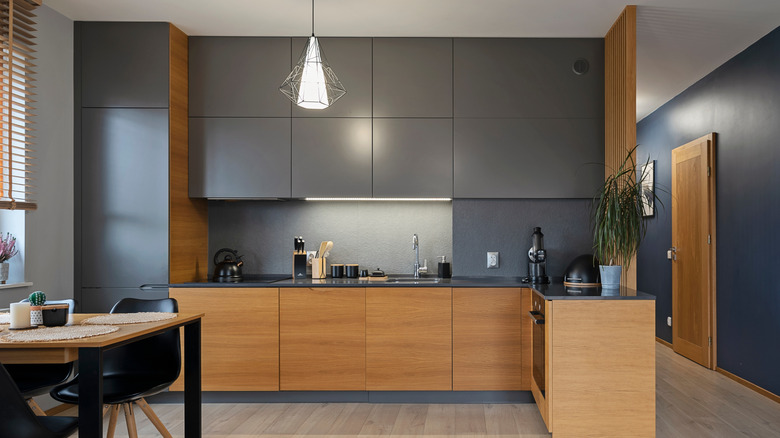
If you are looking to liven up your kitchen, painting your cabinets makes for an enticing weekend makeover project — as long as you make note of the types of wooden cabinets that you should never paint. As tempting as it may seem to reach for moody, noir hues to give your kitchen a luxurious finish, you'll want to first take into account whether these colors will work for a small space. Indeed, dark colors and matte finishes are your small kitchen's sworn nemeses.
"While dark matte cabinets can look sleek and dramatic, in small kitchens they tend to absorb light and shrink the sense of space, creating a heavy, enclosed feeling," Minnie Bhatt says. Matte finishes are also non-reflective, which means that they won't bounce morning rays merrily around the space. Instead, the kitchen may not only seem like it is clouded by a dull tinge but also seem even more compact.
So, what should you be opting for instead? Lighter shades, such as soft whites, pale greys, warm neutrals, and pastel tones, receive a nod of approval from Bhatt. If you are looking to create the illusion of space in a pocket-sized kitchen, you will also want to befriend high-gloss or satin finishes that can help reflect light around the room, while alluding to visual depth. "If you want contrast, use darker tones sparingly — perhaps on lower cabinets or as accents — while keeping upper cabinets light. This combination enhances visual height and makes the space feel expansive," she advises.
Large statement lighting
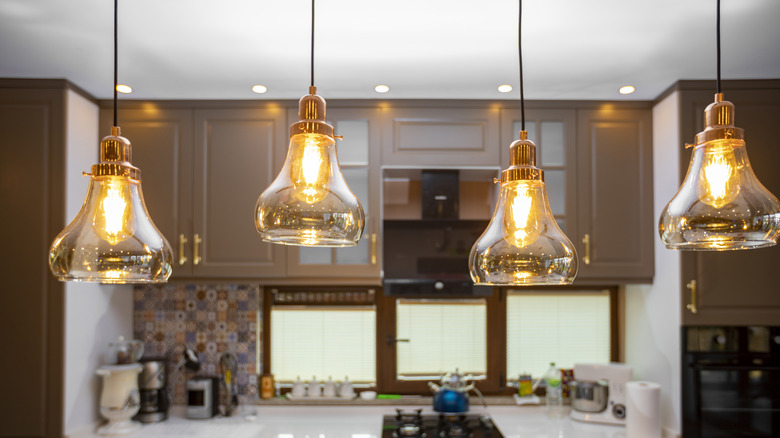
When choosing features for a small kitchen, every decision needs to be driven by practicality. This is especially true when choosing light fixtures. Choose wrong, and the dramatic pendant that was supposed to upgrade your kitchen to showroom-style finesse can actually backfire by disrupting the openness in the space.
"Oversized chandeliers or dramatic pendant lights can overpower a compact kitchen, visually lowering the ceiling and creating unnecessary bulk," Minnie Bhatt says. It is easy to grasp the wisdom behind her words. After all, dramatic pendants can also block your line of sight in the kitchen and make the space appear cramped and smaller than it actually is.
But all hope is not lost yet. You can still choose to make a big splash — just steer clear of these outdated kitchen lighting trends, and you will be golden. Once you are all caught up, Bhatt urges you to consider lighting solutions that are both subtle and impactful. Her favorites include slim linear pendants and recessed lighting. Small clusters of mini pendants can also work if you are looking to add ambient lighting for when the party inevitably spills over to the kitchen. With the addition of under-cabinet task lighting and track lighting on the ceiling, you can ensure that every corner of your small kitchen is bathed in light and not overwhelmed by it. "These choices help create a well-lit, open-feeling kitchen without sacrificing style or personality," she affirms.
Extra-wide range hood
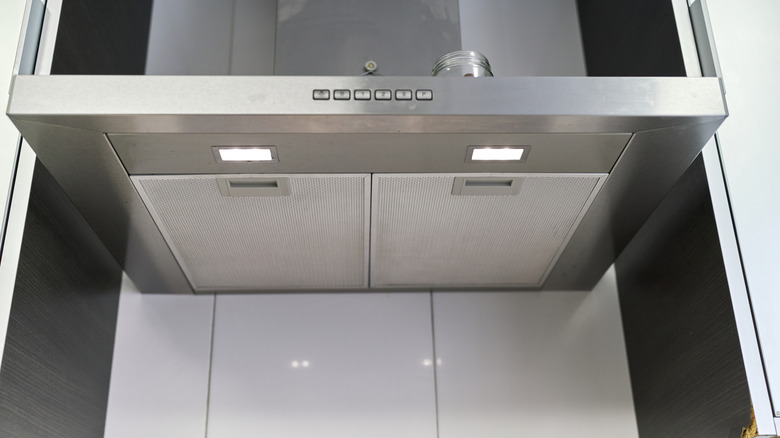
You can decide to put off that kitchen island or those high-end faucets you have been eyeing for later, but a kitchen can never function without an efficient range hood. When it comes to eliminating smoke and dubious odors from the kitchen, it can be natural to think that bigger is better. More ventilation power, less fumes — what's not to love? But before you make any big investments, it helps to consider whether the silhouette can work in tandem with your kitchen design.
"A large, dramatic range hood can become visually intrusive in a compact kitchen, drawing attention away from the overall design and making upper storage challenging," Minnie Bhatt points out. This top-heavy effect can further throw off the sense of balance and proportion that is integral for a small kitchen to feel efficient.
However, you needn't bid goodbye to your dreams of adequate ventilation in the kitchen. "Instead, slimline hoods, integrated vent systems, or under-cabinet models work better for small kitchens. These options provide powerful ventilation without dominating the room," she suggests. You might also consider adding a downdraft vent that pulls air and fumes horizontally across the cooktop, instead of upwards towards a hulking overhead range hood. According to Bhatt, this option will sit discreetly in your kitchen without making a peep when you're not using it.
Deep farmhouse sink
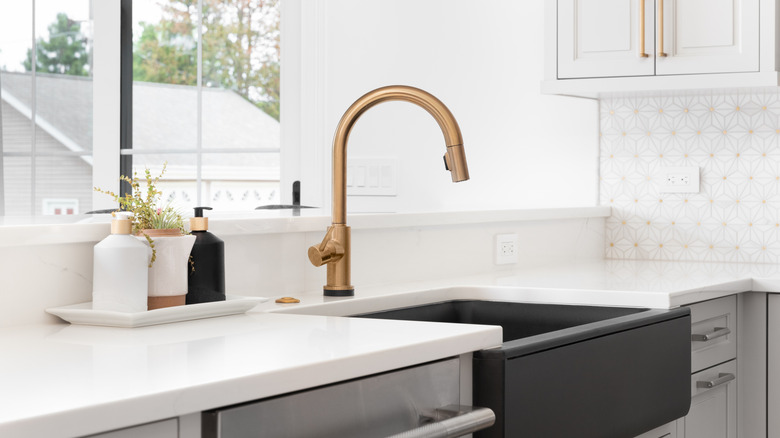
Long before plumbing had been invented, rural women used to draw water from wells and lakes. When taking care of the washing within the house, they needed large basins that could hold a significant amount of water at a time. And thus, the farmhouse sink was born. The passage of time has done little to dull its allure, and it is still sought after for its rustic charms.
Minnie Bhatt concedes that a farmhouse sink can appear tempting at first glance — but will its cavernous depths secretly eat into your counter and base cabinet space? The answer is an unfortunate yes. "Its depth also limits under-sink storage, which is already at a premium in compact layouts," she says.
If you are a fan of the farmhouse aesthetic, Bhatt wants you to consider more space-efficient alternatives, such as an apron-front sink that can give you the same exposed-front finish. When chosen in a smaller dimension, it can work as an effective compromise between your small kitchen's functional needs and design sensibilities. "Alternatively, a single-bowl undermount sink with a sleek design can deliver a similar look without taking up as much space," she adds. When you strategically add in fitted cutting boards, drying racks, and other accessories, Bhatt believes it can prove to be a workhorse without chipping away at your kitchen's limited square footage.
Heavy bar stools
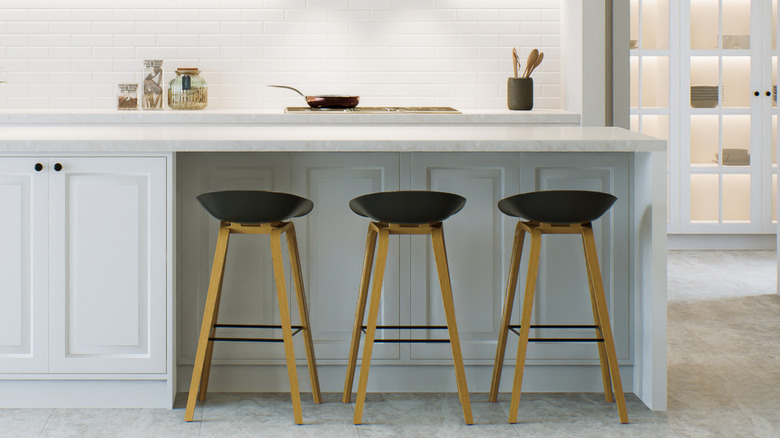
Working with a balanced sense of scale, proportion, and flow is paramount when attempting to optimize every inch of a small kitchen. Furniture that eats into your kitchen's small footprint is a big no-no, and bulky bar stools are topping the list of offenders.
For starters, oversized stools won't do any favors for the limited floor space you have available. Navigating circulation around a compact space can be challenging if it is not designed well, and bulky stools might make your guests tiptoe around the room through tight corners and jutting edges. "They can visually clutter the room and create obstacles when tucked under counters," Minnie Bhatt says.
When choosing stools for a small kitchen, she wants you to look for two factors: lightweight designs and slim silhouettes. Certain options can further enhance the sense of airiness in a petite kitchen, such as backless or low-back designs that can be tucked away unobtrusively under the counter when not in use. Materials such as acrylic and metal frames can also dial back the sense of visual heaviness that is present in oversized options. "Foldable or stackable options are another smart solution, offering flexibility without permanent bulk," Bhatt notes. "These alternatives provide both comfort and chic appeal without compromising movement."
Floor-to-ceiling pantry
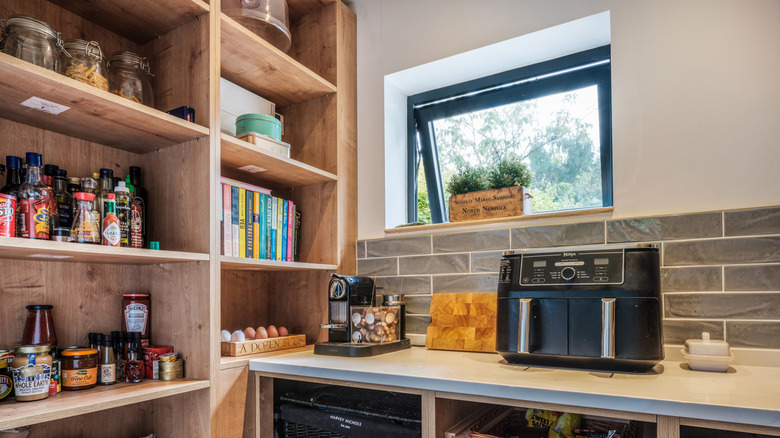
A small kitchen needs love, it needs attention to detail, and it needs a strategic approach. What it does not need is a ceiling-grazing pantry that towers intimidatingly above everyone else in the room, making the space feel closed off and confined. On paper, choosing to build your pantry all the way to the ceiling can seem like pure, unadulterated common sense — more is definitely merrier with kitchen storage.
But Minnie Bhatt advises a word of caution. "While a full-height pantry can seem like a good storage solution, in a small kitchen it often creates a heavy, imposing wall that reduces openness and natural flow. It may also make the kitchen feel narrower and darker," she says. The small sliver of space between the top of the pantry and the ceiling serves as an easy trick to add a sense of airiness to the space — and you probably already know that you won't be able to reach the uppermost shelves, anyway.
If you are looking to maximize the storage possibilities of a tiny kitchen, there are other worthy approaches to consider. Bhatt likes mixing closed cabinetry and open shelving to create an element of visual interest. Opt for glass doors or light colors to ensure that the kitchen feels open and welcoming. "This way, you preserve functionality while ensuring the kitchen retains a spacious, breathable feel," she agrees.
Thick butcher block
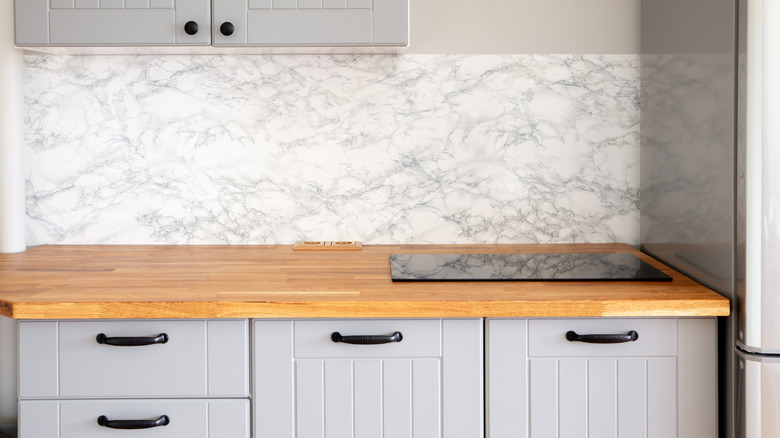
If you are looking to infuse warmth and natural textures into your kitchen, you would be hard-pressed to find a better candidate than a butcher block countertop. Despite hailing from the 1980s, the butcher block is a key comeback trend in kitchen design. Affordable, durable, and mostly scratch resistant, there is little that can go wrong with these countertops — as long as its bulky, top-heavy silhouette doesn't overwhelm your kitchen.
You won't find a chunky butcher block countertop topping Minnie Bhatt's wishlist for a small kitchen, and with good reason. By drawing the eye downward, she believes that it steals the element of visual lightness that is indispensable in a small kitchen. "The thickness also eats into valuable counter height, especially when paired with taller appliances or accessories," she observes.
The good news is that there are other materials to choose from. "For a similar sense of warmth without the bulk, opt for slimmer wood veneers, bamboo surfaces, or lighter wood-toned laminates. These materials provide the same natural charm while keeping the design airy," Bhatt adds. If you are feeling creative, you can team wood with durable surfaces, like quartz or stone, to ensure optimal functionality in the kitchen.
Full-size dining table
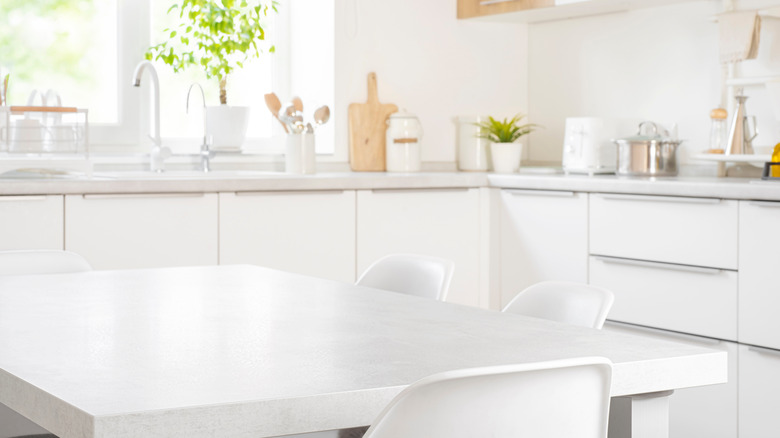
When a full-size dining table is allowed pride of place in a small kitchen, Minnie Bhatt believes that there are no winners. "Placing a large dining table in a compact kitchen almost always disrupts flow, limiting movement and making the space feel congested. It reduces the kitchen's flexibility and often forces people to squeeze around corners," she observes.
Want to make sure that the dining table of your dreams will fit into your kitchen before making a big investment? A good rule of thumb is to measure the length and width of the space where you plan to position it. Then, you will subtract 6 feet from the total — this allows 3 feet of clearance at the head and foot of the dining table.
But what if you want to break bread with your fam at one spot everyday and spend some quality time together? Bhatt recommends looking for versatile options, such as a fold-down, wall-mounted table for a small kitchen. An extendable console that can be transformed into a dining table also makes for a good choice, as it takes up minimal space everyday but still allows you the option of seating a larger gathering, when necessary. "These approaches allow you to enjoy the experience of dining within the kitchen while maintaining a sense of openness and ease of circulation," Bhatt surmises.