

7 Discontinued Old-School Beers Everyone Used To Drink
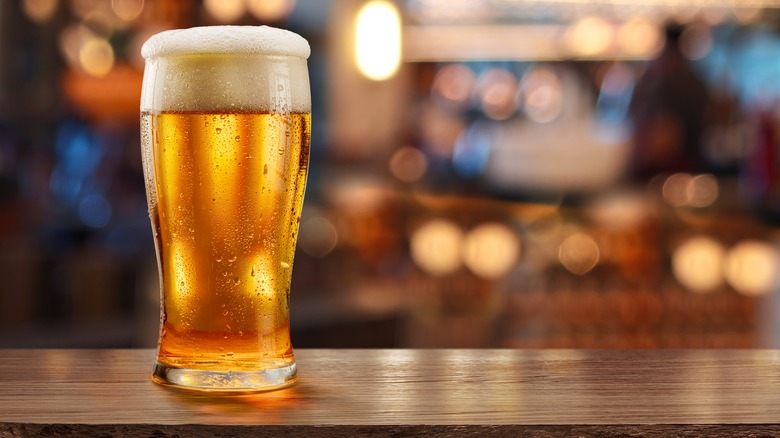
Even before Europeans landed in America, Native Americans were making their own beer with the help of ingredients like maize and birch sap. Today, the drink is still a household staple for many American adults. In fact, per a 2022 survey from Gallup, 35% of U.S. alcohol drinkers regularly opt for beer over alternatives like wine and spirits.
Now, the best-selling beer brand in the U.S. is Michelob Ultra. Other light beers that continue to reign in America include Bud Light, of course, and Modelo. But it hasn't always been this way. In the late 20th century, beers like Pete's Wicked Ale, Hamm's Special Light, and Falstaff were all the rage.
Want to take a few sips and walk down memory lane with us? Below, we've listed some of the most popular discontinued old-school beers that American drinkers loved in the 1980s and 1990s. Is your old favorite on the list?
Pete's Wicked Ale
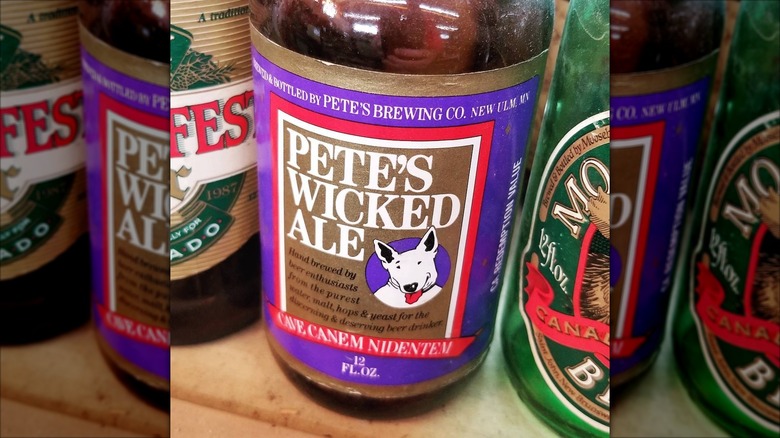
Back in 1758, in the Yorkshire town of Tadcaster, one of the oldest breweries in England was founded: Samuel Smith's Old Brewery. To this day, it produces lagers, bitters, and underrated beers like oatmeal stout. Apparently, back in the late 1970s, enthusiastic American homebrewer Pete Slosberg was a big fan of that hoppy, nutty, full-bodied drink, and in an attempt to replicate it for U.S. beer-drinkers, he created his own version, which he called Pete's Wicked Ale.
Pete's Wicked Ale, produced by Pete's Brewing Company, hit the market in the 1980s and was a major success. Americans appeared to revel in the new style of beer, because in the decades before, most beer on the market had been mass-produced lager. In fact, Pete's Wicked Ale was part of a movement dubbed the American Craft Beer Revolution. At one point, it was among the biggest names in the craft beer industry, alongside Boston Beer Company.
Plenty of beer fans remember taking their first sip of Pete's Wicked Ale and immediately developing an interest and passion for new and exciting craft beer blends. It's a little ironic, given that Pete's Wicked Ale was the product of an attempt at replicating a centuries-old English ale, but that's by the by. Sadly, though, Pete's Wicked Ale wasn't destined to last. In the 1990s, Texas-based The Gambrinus Company bought Pete's Brewing Company and changed the recipe of Pete's Wicked Ale. In 2011, it was discontinued.
Red White & Blue
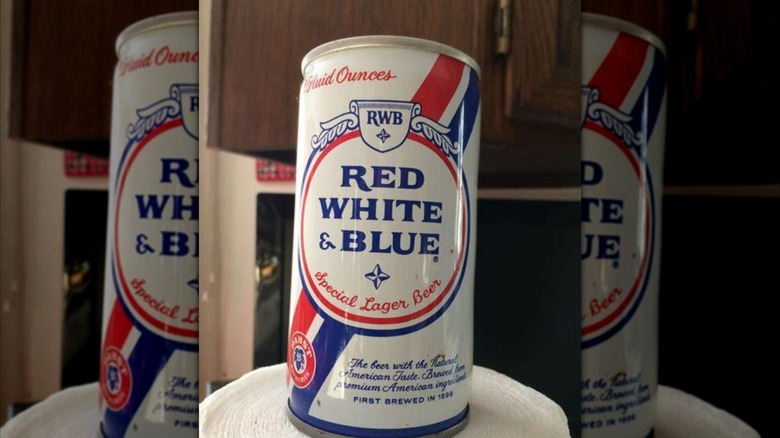
As you probably guessed already, given the name, Red White & Blue was developed especially for the Fourth of July. It was produced by the Pabst Brewing Company in the late 1800s, and remained a favorite over the decades for its patriotic marketing and mild taste. It wasn't anything particularly special flavor-wise, but it was a classic, drinkable lager. It was incredibly cheap, too, which certainly helped with its popularity during the recession years of the 1980s. Many remember sipping on cans of Red White & Blue in their college dorms, for example, or watching their dads or friends' dads drink it while fishing or manning the grill.
In the 2000s, Red White & Blue disappeared from the market, likely because it failed to live up to the competition. During the 2000s, the craft beer industry was really coming into its own, and there were more options on the market than ever before. In 2018, Pabst brought back Red White & Blue in Milwaukee, but only for a limited run.
Bud Dry
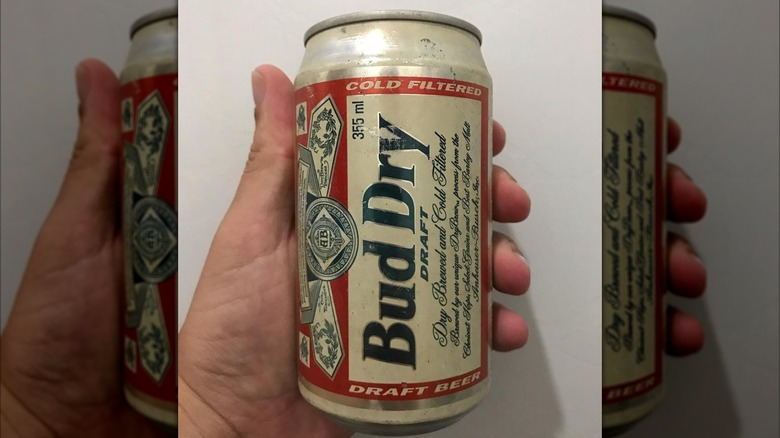
Since it was founded way back in the mid-1800s, Anheuser-Busch has launched many successful beers. Budweiser, for example, hit the market in the 1870s, and it's still produced and sold today by Anheuser-Busch, alongside other household staples like Bud Light, Stella Artois, and Busch Light. But in the late 1980s and 1990s, there was another popular name in the lineup: Bud Dry.
Anheuser-Busch launched the beverage in response to customer demand for Michelob Dry, the first dry beer in the U.S. Although both were dry beers, Anheuser-Busch noted that Bud Dry had a distinctive taste from Michelob Dry, and therefore wouldn't compete too much for sales.
Bud Dry, marketed with the catchy tagline "Why ask why? Try Bud Dry," was popular for a while, but in the end, it just wasn't loved enough to hold shelf space. Dry beers fell out of favor, and Anheuser-Busch's Bud Ice, launched in the mid-1990s, seemed to be much more popular in the end. Bud Ice is still available today, but Bud Dry was ultimately retired in 2010.
Hamm's Special Light
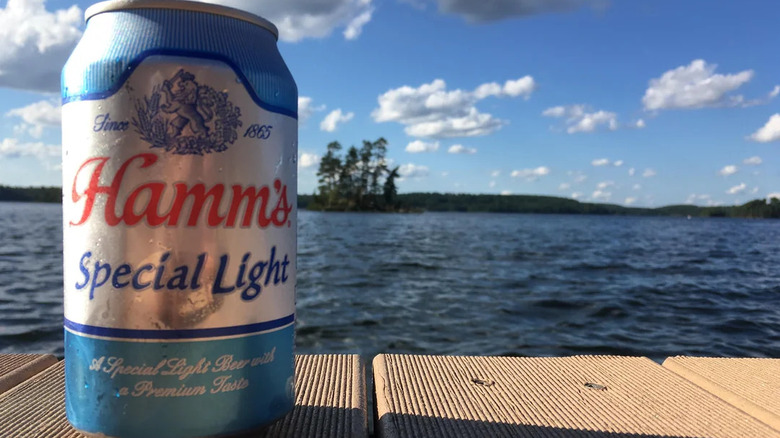
Molson Coors owns some of the most popular beer brands in the U.S., like Blue Moon, Coors Light, and Miller Lite. It also owns Hamm's, which, back in the 1980s, used to produce another popular variety of beer: Hamm's Special Light. The beer was light-bodied, mild, and slightly bitter. It was generally inoffensive-tasting, which made it quite the crowd-pleaser throughout the 1980s and 1990s.
Unfortunately, for many fans of Hamm's Special Light, however, Molson Coors made the decision to pull the beer from the market for good in 2021. This news did not go down well with Hammpions (that's what fans of Hamm's beer call themselves, just in case you were wondering), some of whom attempted to start a petition to stop Molson Coors from retiring the beer, but it was ultimately not successful. In response, some Hammpions stockpiled the beer and are still eeking out their remaining supply for as long as possible.
Brown Derby
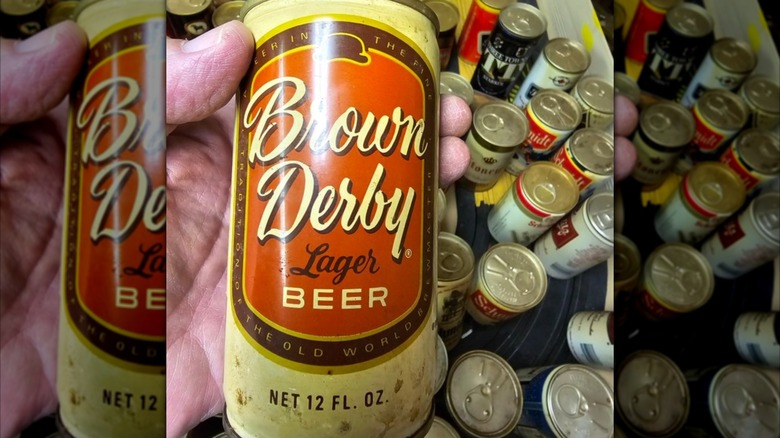
Would you pay $93,600 for an empty beer can? We'll hazard a guess that the answer is probably a big no from most people. But in 2024, someone did just that. The beer in question? A 1935 can of Brown Derby.
Brown Derby was first produced after prohibition in 1933 for West Coast Grocery, but by the 1950s, it was being exclusively sold in Safeway stores. The designs of the cans changed several times over the years (which means that older designs are rare and evidently extremely valuable).
Brown Derby (which was inspired by the restaurant of the same name) held its own until the late 1980s, when it was discontinued to the dismay of its fans, after Safeway sold stores to Vons. The beer was a favorite with students, for example, not just because it was cheap, but also because it had puzzles underneath the bottle caps.
Extra Gold Lager
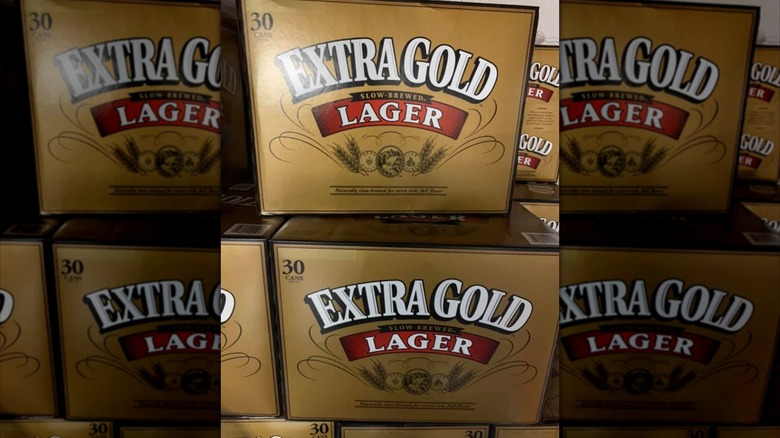
Extra Gold Lager, formerly known as Coors Extra Gold, hit the market in the mid-1980s and was promoted thoroughly throughout the early 1990s. The beer, with its full-bodied taste and golden color, was marketed as an alternative choice to Budweiser. And it worked: Many people remember the beer fondly, thanks to its smooth texture, bright golden color, sweet smell, and crisp, dry finish. The flavor and mouthfeel were both similar to Budweiser (so it makes sense why the two were often pitted against each other), but Extra Gold was considerably cheaper.
Around the same time as Hamm's Special Light, though, in 2021, Molson Coors appeared to send Extra Gold Lager into retirement. There aren't any official statements about the disappearance of the beer online, but several social media posts from retailers in 2021 urged customers to stock up on the beer before it left their shelves for good. Extra Gold is also no longer listed on the Molson Coors website.
Falstaff
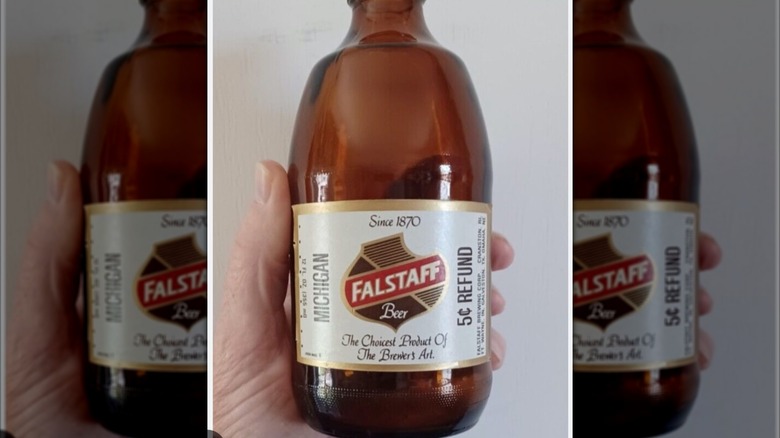
William Shakespeare came up with many iconic characters. Romeo, Juliet, Macbeth, and Hamlet, for example. But one of the legendary English playwright's favorites was probably Sir John Falstaff, considering the drunk was used as comic relief in four of his plays. That's why in the early 1900s, St. Louis-based Lemp Brewery decided to rebrand as the Falstaff Brewing Company. What better way to market your beer than through the beloved character of a man who couldn't get enough of it?
Falstaff, which was a slightly sweet, grainy, slightly bitter, generic-tasting lager, stood the test of time through the 20th century, becoming a national hit. By the 1960s, it was one of the biggest brewers in the whole of the U.S. It landed in some trouble from the 1970s onwards, with several of its breweries closing their doors, but the beer was still a hit with the American public. Today, many people have great memories of drinking it in the 1980s and 1990s (or watching their moms and dads drink it around them).
Unfortunately for fans of the beer, their love wasn't enough, and Falstaff was discontinued in 2005. Some people haven't let go of the dream, though. You can still find Falstaff clone recipes in several online homebrewing groups.