

The Material You Should Avoid For Your Kitchen Cabinets At All Costs
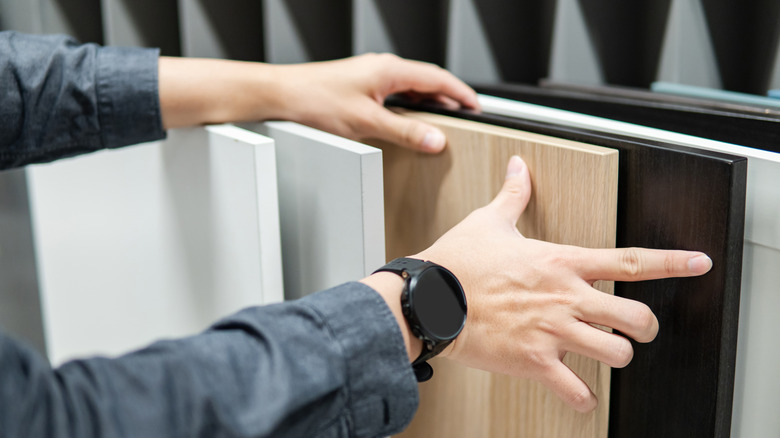
Upgrading your cabinets can end up being the most expensive part of a kitchen remodel. With this in mind, you should choose a material and design that is both attractive and durable so that your furniture will last as long as possible. Unfortunately, many affordable kitchen cabinets are made from cheap, low-quality materials like particleboard and medium-density fiberboard (MDF). And there's one kind of material you should avoid at all costs: thermofoil.
Cheap thermofoil cabinets are constructed from a core of engineered wood, typically MDF. This wood is covered with a thin, flexible vinyl film that is heated and applied with a vacuum. While this creates a smooth surface that mimics the appearance of natural wood or paint (they're an affordable alternative to natural wood cabinets), thermofoil cabinets are not built to last.
Notably, thermofoil cabinets are not resistant to heat or steam and may become discolored with age. Although they are touted for being moisture-resistant, MDF is not completely waterproof. This means that your cabinets may blister, bubble, or develop mold or mildew if you live in a humid environment. Thermofoil cabinets are also prone to chipping, cracking, and peeling, which will make them look outdated before their time. Even with proper maintenance, they will not last as long as other cabinet materials, like natural wood. Plus, if you're looking for ways to prioritize sustainability in your kitchen remodel, thermofoil isn't a great choice, as it's made from nonrenewable materials.
The problem with thermofoil cabinets
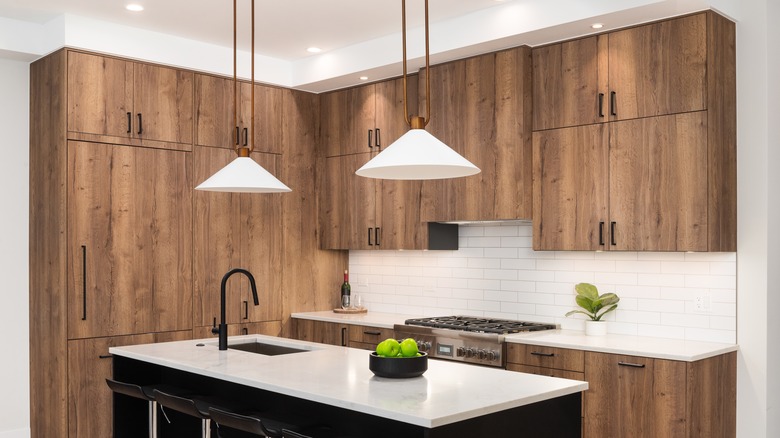
Most thermofoil cabinets are marketed as an affordable alternative to natural wood models. While some are made from higher-quality materials, most are made from cheaper options. Inexpensive thermofoil cabinets are often only available in limited colors, and you might not be able to find options that align with your personal taste or aesthetic. You will also be limited as to the design of the cabinets, as they're only available in one-piece doors.
Although the MDF used to make thermofoil cabinets is made of 75% recycled materials, it is processed and treated so much that the cabinets themselves may not be recyclable once their lifespan is over. The vinyl laminate thermofoil cover on the fronts of the cabinets is also not sustainable or eco-friendly. Manufacturing the vinyl laminate contributes to microplastic pollution and greenhouse gas emissions. Plus, it's hard to repair thermofoil once it becomes discolored, starts to peel, or shows other signs of damage. This means that you may need to replace your kitchen cabinets completely rather than finding a more eco-friendly alternative, like upgrading, repurposing, or selling your cabinets (Jenn Todryk of HGTV's "No Demo Reno" suggests the latter).
Overall, thermofoil cabinets don't handle heat or steam well, don't look attractive for very long, and are hard to repair or replace. Although they are affordable, they can quickly become unattractive or outdated, and you may end up spending more money replacing them than you would have if you had invested in a higher-quality cabinet material like natural wood or metal, which is a sleek cabinet trend that has been quietly sneaking into modern kitchens.