

15 Vintage Desserts Everyone Loved In The 1950s
At the end of a hearty meal, most of us crave a little something sweet. It's been that way for centuries. The ancient Egyptians, for example, ate boiled mallow plants with honey. During the medieval era, people often indulged in poached pears cooked in wine with mulberries. During the reign of Queen Victoria, people would frequently indulge in treats like treacle tart and sponge pudding. And the 1950s? Well, that was a time of baked Alaska, coffee cake, and banana cream pie.
Below, we're taking a trip down memory lane and revisiting all of the desserts that people enjoyed during the 1950s. Some are well and truly out of fashion (sorry, Jell-O salad), but others have managed to stand the test of time. In fact, you might recognize a few from your dinner table today. The only difference? Unlike 1950s housewives, you probably don't rely on a vintage Betty Crocker cookbook to make them (said cookbook factors a lot in this list, just a pre-warning).
Baked Alaska
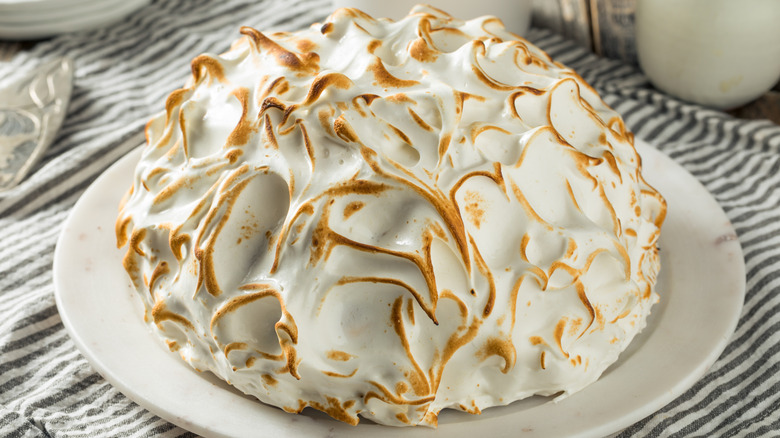
Baked Alaska was an iconic 1950s dessert, but it wasn't actually invented in this decade. One commonly accepted theory is that it was created at New York steakhouse Delmonico's years before, in the 19th century (fun fact, this is also where wedge salad was served for the first time). Initially created to celebrate the 1867 Alaska Purchase, the original name of the dessert wasn't baked Alaska, but Alaska, Florida. The name was supposedly chosen to represent the dessert's juxtaposition of cold ice cream, covered in cake that is baked in the oven (the chill of Alaska, and the heat of Florida, you get the gist).
Baked Alaska, which is an evolution of the French dessert omelette à la norvégienne, took a while to take off. After all, it's not the quickest or easiest dish to make. It involves covering half a tub of ice cream with sponge cake, baking it in the oven, and then covering it with browned meringue to make an impressive-looking dome. But it was perfect for the 1950s, however, which was an era of extravagance for many households.
Armed with "Betty Crocker's Picture Cook Book," published in 1950, as well as more sophisticated mixers than ever before, housewives across the U.S. would make baked Alaska to impress their friends and family at dinner parties. It was very much a showpiece, not an everyday dessert, and would often be served after other 1950s classic dinner recipes, like beef Wellington and savory Jell-O salad.
Chiffon cakes
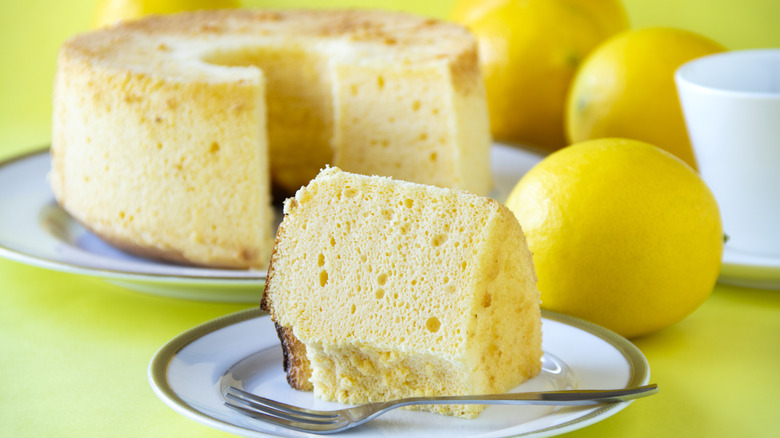
Like baked Alaska, chiffon cakes really came into their own in the 1950s, but the original recipe was actually developed years before, in the 1920s. And who came up with the light, fluffy, moist, melt-in-your-mouth cake that's kind of like a sponge cake but better? Was it a baker? A talented housewife? No, it was an insurance agent, of course.
Harry Baker (yes, that was his real surname) was an insurance agent to the stars of Hollywood. He would make his signature chiffon cakes for celebrities and the Brown Derby Restaurant, but no one else. That was until General Mills gave him an offer he couldn't refuse in the late 1940s, and he sold the recipe, which was then published in the Better Homes and Gardens Magazine just before the turn of the decade.
Baker's recipe was a hit, and the cake became a staple of 1950s dinner parties and birthday celebrations. There were even chiffon cake contests, sponsored by General Mills. The secret to Baker's chiffon cakes, in case you're wondering, was vegetable oil in the place of butter, which helps to give the final bake its signature airy texture.
Pineapple upside down cake
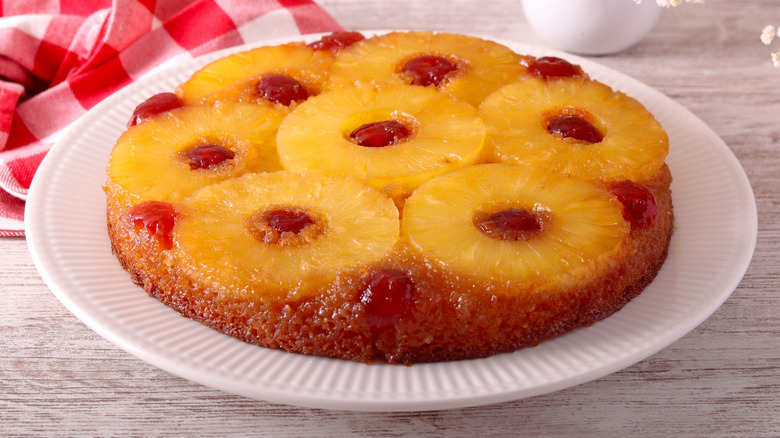
Pineapple upside down cakes are basically skillet cakes, which means they are cooked in a skillet, and then (you guessed it) flipped upside down to reveal the cake topping. This method has been used for centuries, but it was in the 1920s, when the Hawaiian Pineapple Company sponsored a pineapple recipe contest, that pineapple skillet cakes (or pineapple upside down cakes) became popular. The recipe is pretty simple, as it involves baking pineapple slices from a can with sugar in a skillet, pouring cake batter over the top, leaving it to bake, and then turning it upside down to serve.
By the 1950s, pineapple upside down cakes were truly in their element. They weren't quite as impressive-looking as say, a baked Alaska, but they still looked good, and they were easy to make, comforting, and infinitely customizable with different nuts and fruits. The cake stayed popular into the 1960s, and even today, people are still making them. They have been featured multiple times as a technical challenge and a showstopper on "The Great British Baking Show," for example.
Peach cobbler
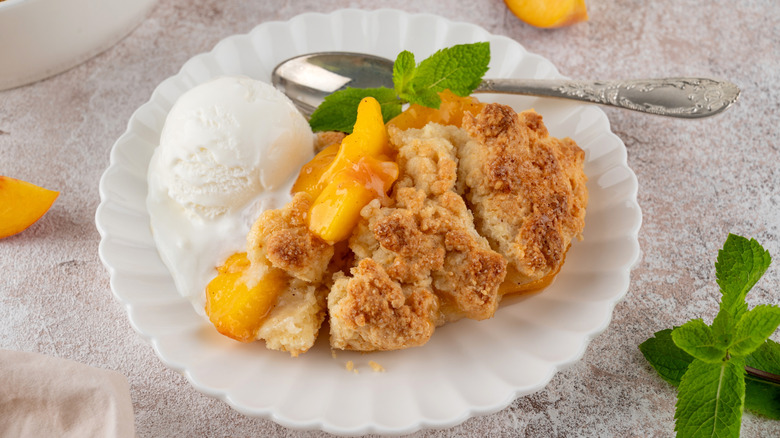
Arguably, the best peach cobblers are made with fresh peaches. Their sweet flavor and juicy texture go beautifully with biscuit-like dough and spices, like cinnamon and nutmeg. Served warm with chilled vanilla ice cream, it's the perfect summer dessert.
Peach cobblers were probably first made in the U.S. by English settlers in the 19th century, but over the decades, the dish became increasingly popular. By the 1950s, it was a household staple. That was almost definitely helped along by the Georgia Peach Council, which started National Peach Cobbler Day during this decade.
The holiday is in April, which is outside of peach season. That might seem like a big amateur error on the part of the council, but it was actually a very deliberate decision. The council wanted to sell more canned peaches, and what better time to do that than when fresh peaches are nowhere to be found?
Coffee cake
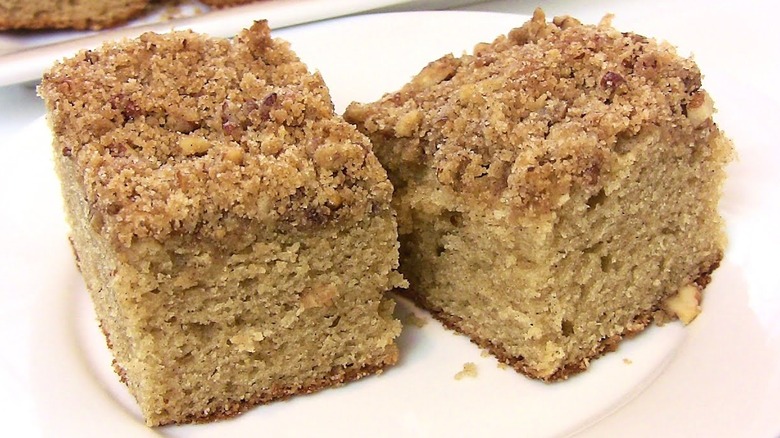
In 2019, YouGov asked more than 3,850 American adults a very important question: What's your favorite cake? Most (nearly 30%) said chocolate; vanilla, carrot, ice cream, and red velvet were also popular choices. On the other hand, only 4% of respondents answered with coffee cake. However, if you had asked that same question to Americans in the 1950s, you might have gotten a much higher percentage of coffee cake lovers, especially if they were young and you were anywhere near Los Angeles.
In 1954, the Los Angeles Unified School District (LAUSD) introduced its now-iconic coffee cake for the very first time. It was a big hit with students, thanks to its light, tender texture (that comes from vegetable oil, thank you, Mr. Baker), warm cinnamon-y flavor, and crumbly streusel topping. Even to this day, many think of this original recipe with feelings of nostalgia (the coffee cake is still served in schools now, but the recipe has changed somewhat from the original due to updated dietary guidelines).
Angel food cake
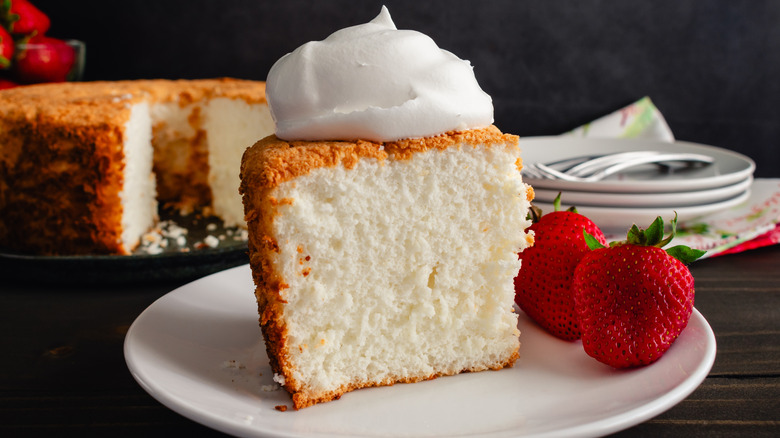
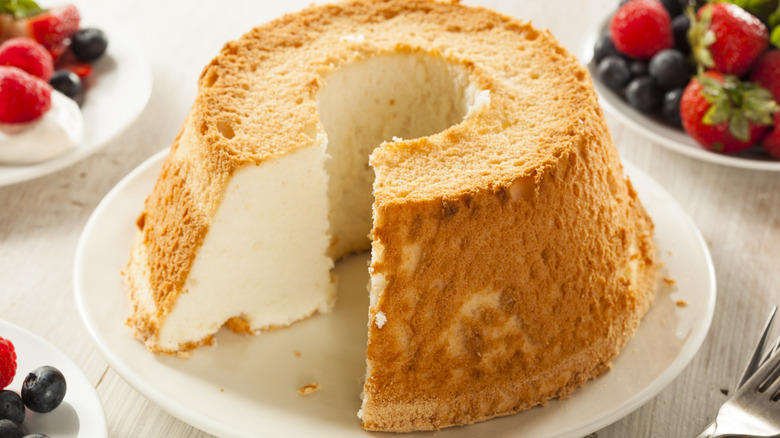
Angel food cake, with its light, fluffy, delicate texture and subtly sweet taste, has been an American favorite for a very long time. In fact, research suggests it probably originated in Pennsylvania in the early 1800s. By the end of the century, it was much easier to make thanks to the invention of the egg beater, and it became even more popular with home cooks across the U.S.
In the 1950s, cherry angel food cake was a particularly popular choice because of the way it looked, with the addition of colorful and decadent maraschino cherries. Remember, housewives at this time were all about showing off to their friends, husbands' colleagues, and family members at fancy dinner parties.
"Betty Crocker's Picture Cook Book" also had a particularly impressive-looking version of angel food cake. Named Angel Food Waldorf, the recipe involved making a classic angel food cake and then stuffing the center and slathering the top with chocolate whipped cream. The iconic 1950s cookbook also featured a recipe for cherry angel food cake, as well as angel food cakes with peppermint, almond cream, and lemon extract.
Banana cream pie
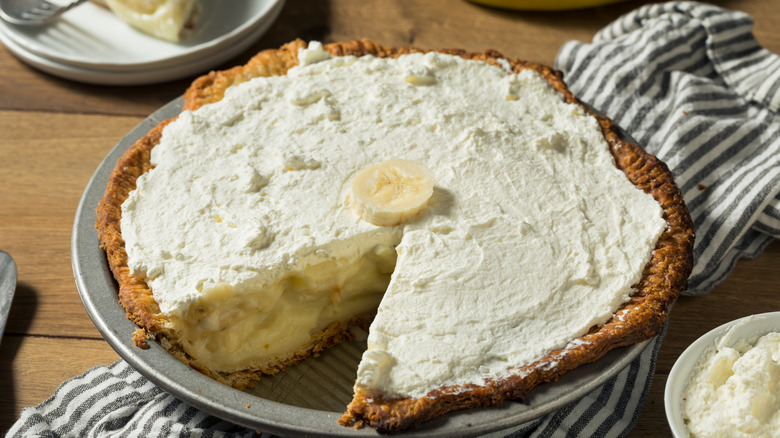
Bananas have long been a beloved dessert ingredient, thanks to their natural sweetness and creamy texture. So it makes sense that, in the 19th century, people started baking them into pie for the first time. Over the years, the recipe for simple banana pie evolved; people made it even more indulgent by adding powdered sugar, for example. By the 1950s, it was made with ingredients like toasted coconut, whipped cream, and banana pudding, bringing it closer to the style of banana cream pie we're all familiar with today.
Banana cream pie is still a firm favorite. In fact, it even has its own day, on March 2. Today, there are many variations on the classic recipe. You can make it with added chocolate or form the crust with speculoos cookies, for example. If you're in the mood for a tipple, you could even make it extra boozy by adding a little whiskey to the whipped cream.
Cinnamon buns
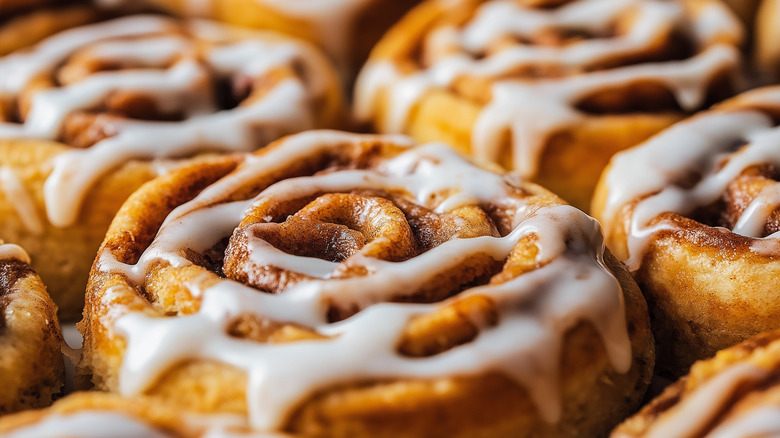
If you weren't aware, we're sorry to break it to you, but Betty Crocker was never a real person. However, her fictional character, created by the Washburn-Crosby Company (which would later become General Mills), still connected with women all over the U.S. Her hugely popular recipes were designed to reflect what was really being made in kitchens all over the country at the time, which is why "Betty Crocker's Picture Cook Book" is such a useful insight into 1950s cooking.
Compared with baked Alaska and Angel Food Waldorf, the cinnamon buns from the Betty Crocker 1950 cookbook were incredibly simple. In fact, some list it as being the very first recipe they made from the iconic pages (which many credit with teaching them how to cook in the first place). The recipe involved combining biscuit dough made with butter, cinnamon, and sugar, and topping it with glaze. But while many cinnamon bun recipes have existed since then, for many, nothing compares to Betty Crocker's version from 1950.
Orange sherbet Jell-O
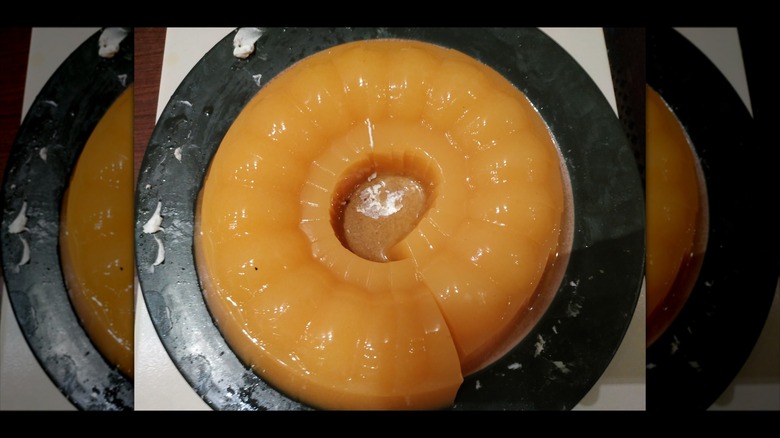
If you were invited to a dinner party in the 1950s, there was a good chance you'd be offered a Jell-O salad at some point. Yes, salad. A savory dish. With Jell-O. That was the norm. In fact, people served Jell-O with tomatoes, with carrots, with cabbage, with cream cheese, and even with seafood, like tuna and shrimp. But we're not here to dwell on this reality; we're here to talk about a much more appetizing Jell-O recipe from the 1950s: Orange sherbet.
Orange sherbet Jell-O could be served as a side dish, but it was also sweet enough for dessert. It was a simple mix of water, orange gelatin, orange sherbet, canned oranges, and whipped cream, which was all blended together and then poured into a ring mold, before being left in the refrigerator to set. The taste has been compared to an orange creamsicle — what's not to love?
Milkshakes
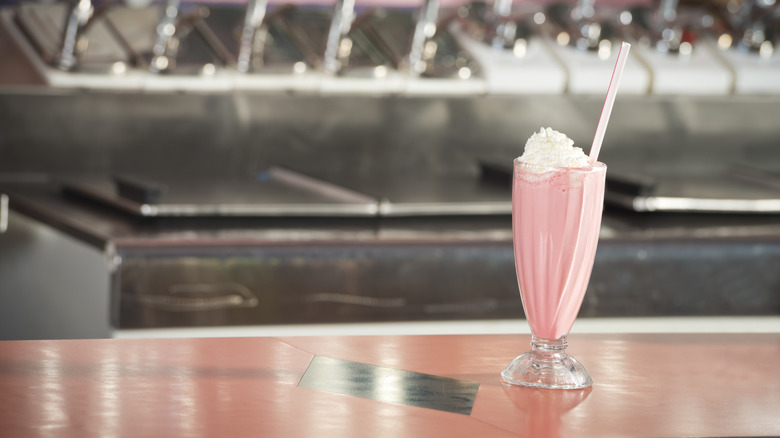
Since they were invented in the 1920s (at Walgreens, surprisingly), modern milkshakes, made with a mix of ice cream, milk, and syrup, have never gone out of style. You can still find them in restaurants and diners everywhere, or grab packaged versions from the store. According to Market Research Future, the entire milkshake industry is expected to exceed $22 billion by 2032.
So milkshakes are still beloved today, sure. But arguably, there was never a cooler time to drink a milkshake than in the 1950s. This was an era when young people could afford to spend their time at drive-in restaurants with their friends, or head down to the nearest diner or burger joint just to hang out. And most of the time, their order of burger and fries came complete with a thick, creamy shake. They would, of course, enjoy all of this while rock and roll blasted from the jukebox. Picture a scene from "Grease," and you'll get the idea.
Chocolate eclairs
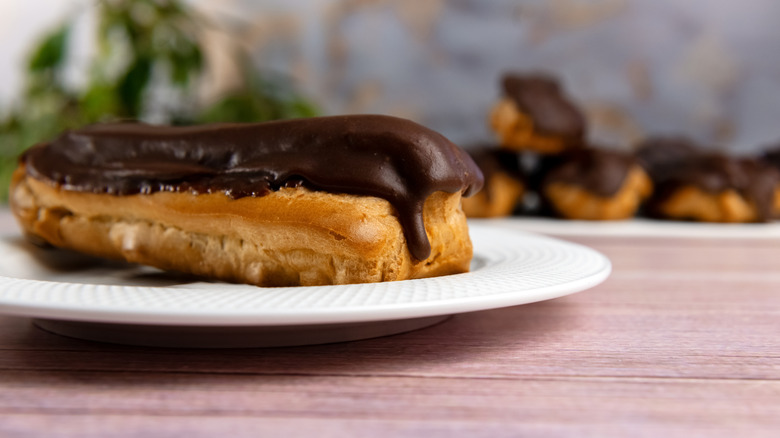
While teens and young adults were hanging out drinking creamy milkshakes in diners with their friends, their moms (yes, it was usually moms; that's the 1950s for you) were in the kitchen, whipping up Betty Crocker recipes from scratch. Yep, it's time to open up "Betty Crocker's Picture Cook Book" again, and this time, we're looking at the Chocolate Eclair page.
Eclairs were not an American invention. They were actually first created in France (where they were originally known as pain à la duchess) in the 1800s. But in 1950s America, French recipes were all the rage, and the eclair, which is basically a cream puff filled with custard with chocolate on top, was no exception.
"Betty Crocker's Picture Cook Book" wasn't the only 1950s cookbook with a recipe for eclairs. There was also a tutorial for the sweet treat in the 1953 "Better Homes and Gardens Cookbook." In this version, the eclairs were still glazed with chocolate, but filled with vanilla ice cream or cream instead of custard.
Cream puffs
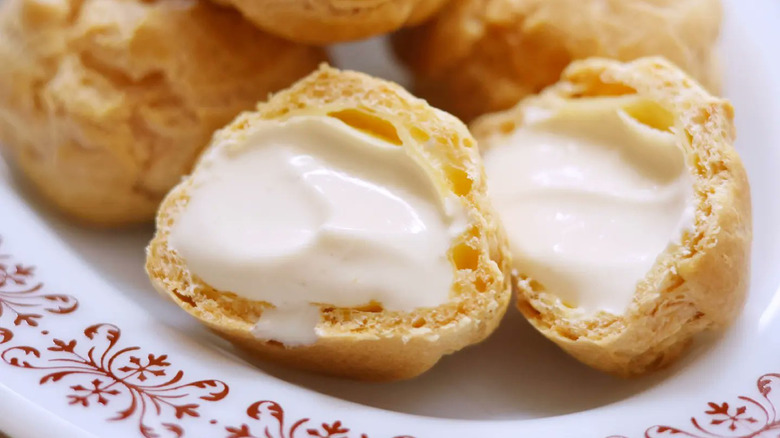
America really likes to give certain dishes their own time to shine. In case you were wondering, National Cream Puff Day falls every year on January 2. This dessert, which has been popular for decades in the U.S., is similar to an eclair, but it's a much rounder shape. Usually, there isn't any chocolate on the top either (unless it's a profiterole, which is closely related to the cream puff).
In the 1950s, Betty Crocker (yes, it's her again) was committed to helping the housewives of America provide their families with tasty cream puffs for dessert. In fact, in the late 1950s, she (ahem, General Mills) started selling packet mixes for cream puffs to make things even easier. The advertisements included recipes for different twists on the classic cream puff. There was the Fluffy Fruit Puff, for example, which involved mixing a can of fruit cocktail into the filling, and Spiced Puffs. The latter were similar to the Fluffy Fruit Puffs, but with added nutmeg.
Bread pudding
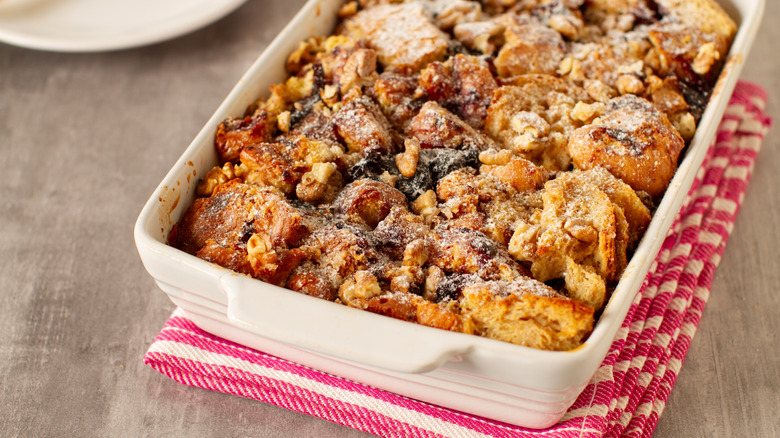
Bread pudding has been around for centuries. In fact, research suggests that the first recipe for the dish, which combines stale bread with ingredients like custard and spices, dates all the way back to 11th-century England. It hasn't really gone out of style, but it has evolved. One 1950s English recipe, for example, calls for stale bread, milk, brown sugar, butter, eggs, raisins, and ground mixed spices.
You may not be at all surprised to learn that there was a recipe for bread pudding in "Betty Crocker's Picture Cook Book," indicating that it was also a favorite in American households in the 1950s. In fact, many people remember having bread pudding as a treat throughout their childhood, which would often be seeded with sultanas and spread with jam or marmalade.
Today, there are many different variations on bread pudding. Some replace the bread with cinnamon rolls, for example, while others swear by stale sourdough. Some even make theirs with plantain for an extra sweet, caramel flavor.
Blancmange
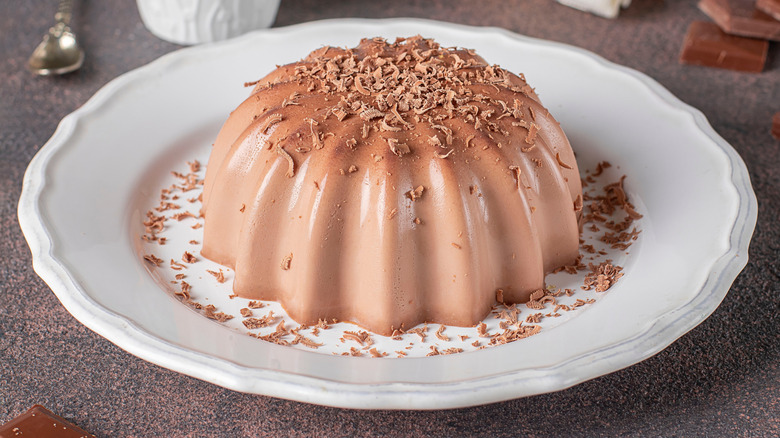
When you think of blancmange, you probably don't think of stew. But this is actually how the dessert started out: As a wobbly medieval English almond and rice stew, usually served with meat or fish. Thankfully, though, people started making the jelly-like dessert with sweet ingredients in the centuries after the medieval period.
In the 1950s, blancmange was increasingly sold in packets by brands like Pearce Duff's. Each packet would offer several different flavored sachets, like chocolate, raspberry, vanilla, and strawberry, which would be mixed with milk to make the wobbly, sweet mass that was the blancmange. Sometimes, the blancmange would be poured into a mold (just like the Jell-O salads) and presented on the table as a dessert centerpiece.
Blancmange could also be made from scratch, of course. Enter, our old friend, "Betty Crocker's Picture Cook Book." According to the cookbook, all you had to do to make the homemade sweet treat was boil sugar, cornstarch, salt, and milk together, before adding vanilla and a little butter for flavor.
Pre-packaged ice cream
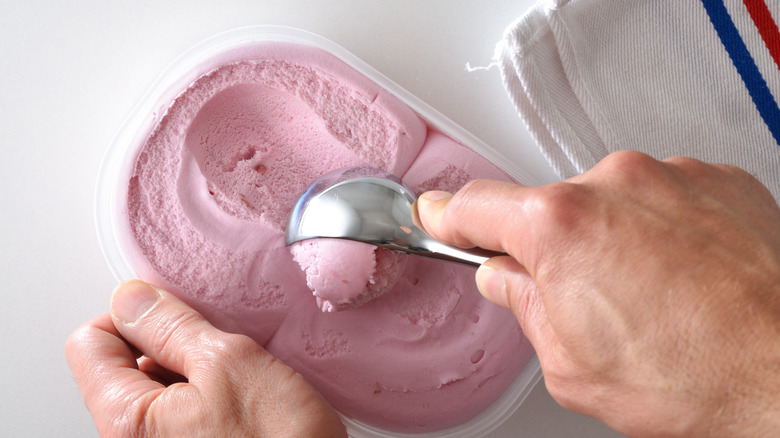
Nowadays, most of us take it for granted that we can head to the store and grab a pint of our favorite ice cream. But in the 1950s, buying pre-packaged ice cream outside of the parlor or the diner was a big novelty. In fact, buying ice cream to freeze at home wasn't really a thing at all until the end of the 1940s.
That said, not everyone could indulge in the luxury of pre-packaged ice cream in the 1950s, because not everyone had a freezer. While refrigerators were common, freezers didn't really go mainstream until the 1960s. But for those who did have a freezer, or knew someone who did, pre-packaged ice cream was a seriously big deal. Borden's was one of the most popular brands of the time, offering pre-packaged ice cream in a range of exciting flavors like cherry, chocolate almond, and praline pecan.