

Create More Space In Your Kitchen By Avoiding These 10 Mistakes
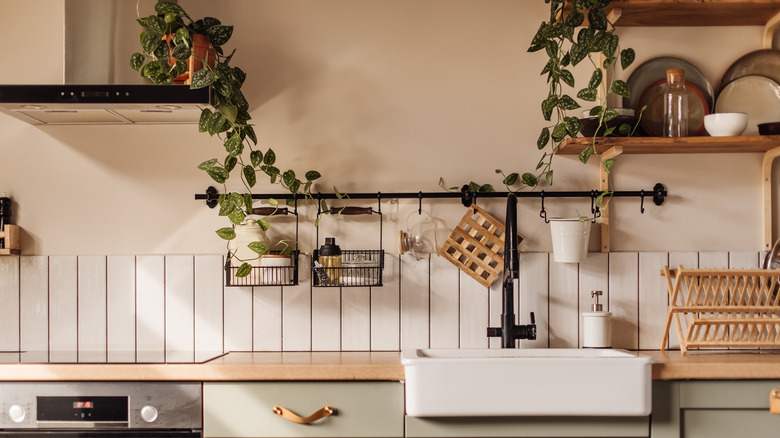
When it comes to generating more space in the kitchen, it can be easy to imagine big-picture changes. Hands up if you have ever daydreamed about tearing down all the walls and bringing the living room into the kitchen, allowing space for a butler's pantry, breakfast bar, and a second kitchen island — because, why not?
While it is a tempting fantasy, creating more space in your kitchen needn't involve a renovation crew. By simply taking a closer look around your space, you might be able to pick up on the kitchen storage mistakes to avoid. There is a chance that you are storing duplicate items, takeout containers, and bulky packaging that you don't really need. On a larger scale, bulky furniture might be overcrowding your space or unused gadgets might need to be kicked to the curb. Some changes might be small, others might require a set of helping hands, but once you start noticing the storage mistakes that are stealing space in your kitchen, there is no going back. You may not have Marie Kondo on your speed dial, but this easy round-up of kitchen storage mistakes to avoid serves as the next best thing.
Cluttering countertops
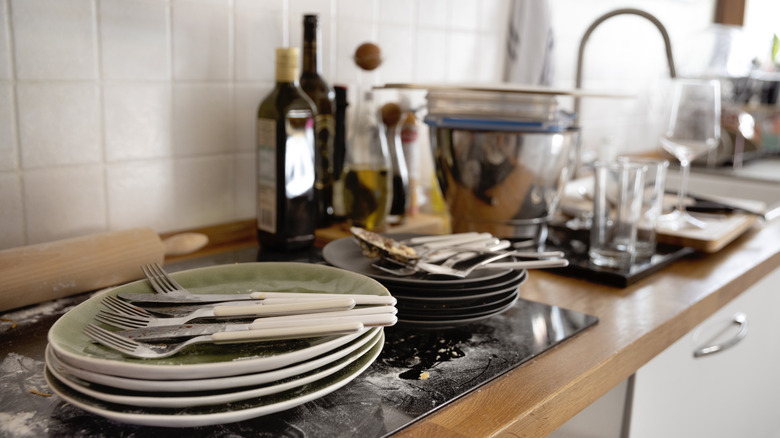
On paper, countertops are designed to serve as a vital workspace for all your cooking and chopping needs. However, it isn't uncommon for this area to devolve into an indiscriminate landfill. All of that produce doesn't fit in the fruit bowl anymore? The junk mail and keys that you don't quite know where to land? All of those free chopsticks that have been piling up with every takeout? Day by day, the clutter creeps in and takes over until your countertop plays home to everything — except for space for actual cooking.
The road towards a calmer cooking experience begins with organization hacks that will help you create more countertop space. Start by looking for creative ways to store your essentials, such as stashing lightweight spice jars on the top of appliances. Collapsible dish racks can also free up crucial inches on your countertop as they can be folded away once your dishes have dried. If all else fails, you can always rely on the renter-friendly trick of creating additional countertop space for yourself by wheeling in a kitchen trolley or bar cart.
A key element of creating more countertop space also lies in understanding what shouldn't be placed here. Everyday utensils should be stored in easy-to-access drawers instead of being displayed on the countertop, and the same holds true for small appliances as well. Decorative flourishes, such as canisters and large bowls, should also be minimized to save space for more vital cooking tools.
Ignoring vertical space
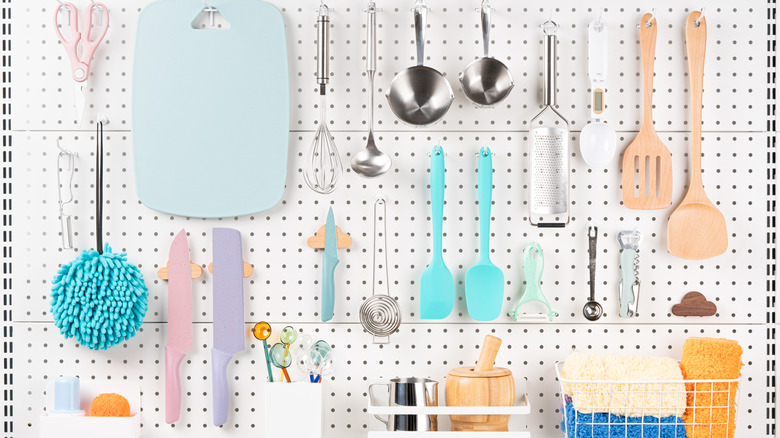
If you were to sit down with any home organizational expert for five minutes, you'd leave with the words "vertical space" tattooed on your brain — and it is easy to see why. When looking to generate more space in the kitchen, most tend to think horizontally while ignoring the vast swathes of area lying bare above the stovetop, sink, and backsplash.
Instead of cluttering counters by piling up more things around your elbow, it helps to consider which items can be upgraded to vertical storage. Swap that chunky knife block in favor of a magnetic strip, which will place all your knives within arm's reach near your prep area. If your backsplash has been sitting bare, you can hang up a pegboard to give oddly sized spatulas, ladles, and graters a new resting place.
While rooting around for empty vertical spaces that can be maximized in your kitchen, don't forget to consider doors. Instead of leaving the inside of your pantry door idle, look for over-the-door organizers for storing spices that can be easily slung on without any drilling or installation. Instead of having to crouch at an awkward angle to reach those condiments at the back of the shelf, you can now have everything clearly displayed and accessible.
Holding onto unused gadgets
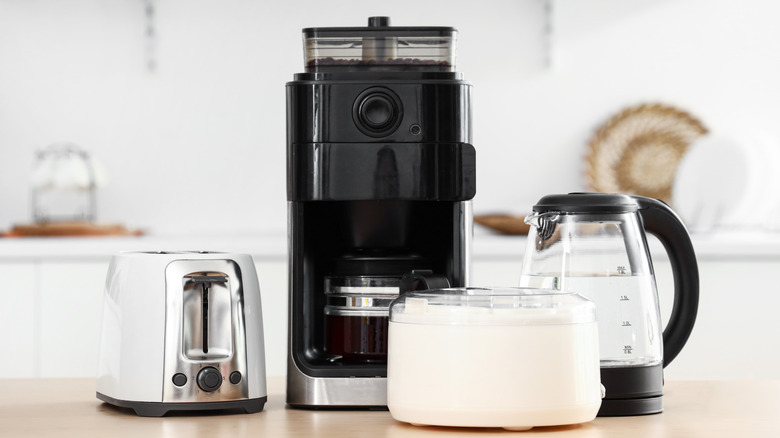
The modern kitchen is evolving at the speed of light and there's always a must-have gadget, appliance, or tchotchke on the horizon to suit a very specific need — after all, why toss your own salad when you have an electric salad spinner that can do it for you? But seemingly innocuous gadgets have a nasty habit of piling up and dominating the precious countertop inches you need for prep and cooking.
Holding onto infrequently used items is a key kitchen storage mistake to avoid, although the verdict on what qualifies as necessary differs for everyone. Someone who bakes muffins every week will likely need a digital scale at hand to measure out ingredients. But if you can't remember the last time you opened the oven, all of the baking paraphernalia and gadgets are simply stealing the amount of workspace you have available.
If you aren't sure where to begin the process of decluttering, it helps to round up all the single-purpose appliances and thoroughly interrogate yourself as to the last time it was used. If you haven't used something in two years, it would be better to donate it to a charity while it is still in working condition. While decluttering, remember to also keep a vigilant eye for duplicates of a single item or gadgets that aren't functional anymore.
Oversized decor items
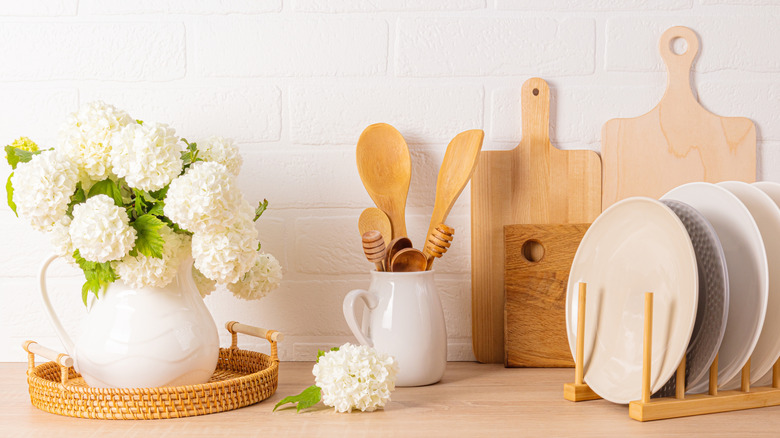
When it comes to decorating a kitchen, it can be hard to know where to draw the line — especially once you are tempted by all the unexpected places to score affordable kitchen decor. While oversized pieces can make a big impact, they can also visually overwhelm a small space and hamper access to everyday essentials. Between the vintage ceramic dishes you picked up at a thrift store and the bulky sculptural vases you discovered at the flea market, decorative flourishes can easily take over the amount of area you have available for more essential tasks, such as setting down the groceries.
We live in an era where countertop decorations are more useful than ever, from decorative dish drying mats to tiered hanging fruit baskets. This means that you have zero leeway for piling up countertop decor that doesn't serve a purpose as well. To avoid squandering the storage potential of your kitchen, it helps to opt for a more intentional approach by selectively choosing pieces that complement the colors of your kitchen while adding glimpses of your personality to the space. You will also want to make the switch to smaller seasonal accents, such as autumnal pumpkin arrangements or pinecones in a jar, which can be upgraded to match the mood and the time of the year.
Neglecting open shelving
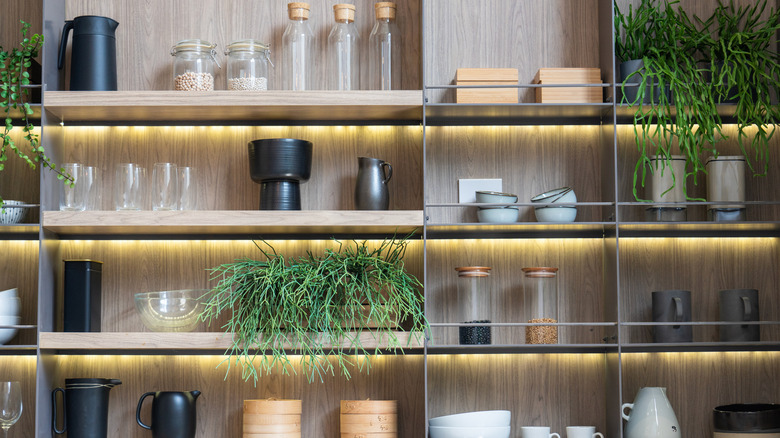
When looking to maximize vertical space in the kitchen, open shelving can be your firmest ally. For starters, they create a sense of openness and airiness in the kitchen as opposed to bulky cabinets. What was once a blank stretch of wall suddenly becomes a means of showcasing decorative utensils, cookware, and frequently used staples that would have otherwise cluttered countertops. Shelf risers can further help you optimize this space by offering an additional layer of storage on each shelf.
However, it is essential to ensure that this space is used for displaying thoughtfully curated decor and kitchen essentials, and not as a drop-off zone for items that don't really have a designated space, such as expired space jars or chipped mugs that nobody uses anymore. Heavy dishware, oversized appliances, and pointless knick-knacks are also unwelcome here. Instead, you'll want to start by adding frequently needed essentials at eye level and then work in a few decorative flourishes to create a visually pleasing vignette.
Open shelving can also serve as a magnet for dust, grime, and grease. You'll want to wipe down visible items every other week and follow up with a more intensive cleaning routine once a month to ensure that the shelves look guest-ready at all times.
Unnecessary duplicates
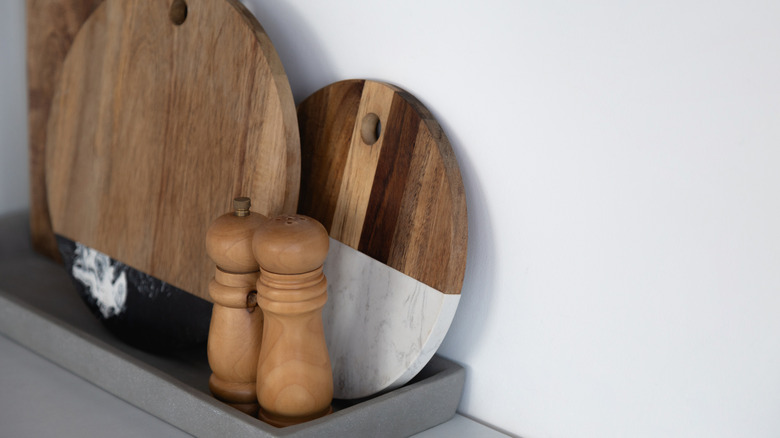
Buying two of the same item is not something that one sets out to do intentionally — until you notice that it is handy to have a backup cutting board when your current one is in the dishwasher. However, not all duplicates are equally necessary and, if left unattended, your kitchen can soon play host to a landfill of multiple versions of the same items.
So, how do you work on weeding out all the duplicates that are sneakily stealing space in your kitchen? One popular decluttering theory is to opt for the chaos method — a process wherein you dump out everything from the drawers and only set it back once everything has been laid out in the open. When you can visually grasp the entire magnitude of your culinary belongings, it becomes easier to make the call on which extra sets of dishes, utensils, and ladles are actually serving a purpose.
Nonetheless, having backups of certain items can be useful, such as pans, storage containers, and dish towels. If it is a functional item that you use frequently, feel free to hold on to it. However, rarely used items that aren't adding much value to your everyday cooking process deserve to find a new home.
Neglecting underutilized nooks
"I have enough space in my kitchen," said no one ever. While modern storage solutions are multiplying at a brisk pace, so is our list of everyday essentials. If your countertops are starved for space, it helps to cast a glance around your kitchen to scout for any underutilized nooks that could be put to better use — think vacant corners, empty recesses in the wall, and even the unused space above your refrigerator.
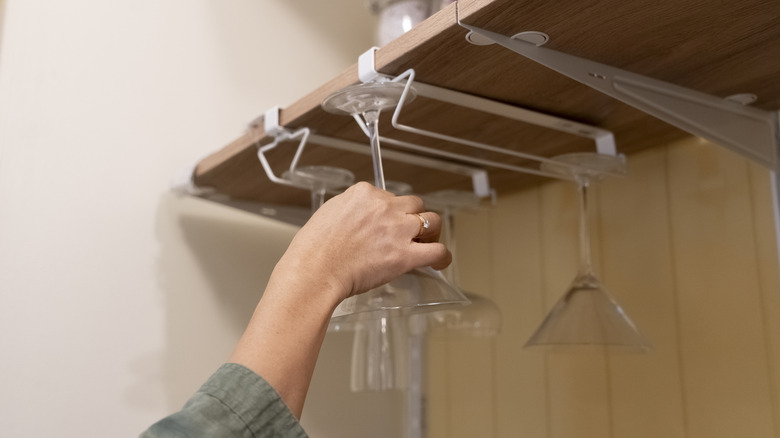
It would be easy to assume that having a smaller kitchen limits your storage capabilities. However, you will look around the space in an entirely new light once you notice all the clever storage spaces that are already hiding in your kitchen. The sides of the refrigerator? A blank canvas for hanging up spice racks and freeing up your counters. The underside of the kitchen cabinets? A handy space for attaching under-shelf holders for tissues and mugs. Even the toekick area can be used for stashing shallow, non-perishable items, such as manuals or parchment paper.
Once you look around your kitchen with a keen eye, new avenues will jump out at you. Take the empty space between the top of the refrigerator and the ceiling, for instance. When planning a kitchen remodel, you can request your contractor to install vertical shelving units in this space to store less-used appliances.
Bulky furniture choices
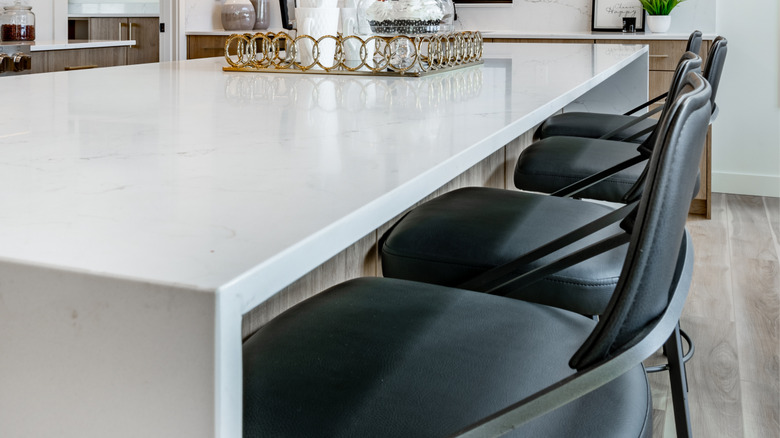
With the lines between cooking and entertaining getting increasingly blurred, modern kitchens now play host to a wide array of furniture — from banquette seating and dining nooks for hosting guests to sideboards and hutches for displaying glassware. When chosen strategically, furniture can enhance the functionality of your kitchen. But if you are constantly tiptoeing around on busy mornings to avoid jutting edges and crowded pathways, it might be time to rethink your furniture choices.
One of the most common mistakes when buying kitchen furniture is forgetting to account for clearance. Designing a breakfast nook is easier than ever before, but you need to remember to leave legroom and enough clearance for the chairs to slide back. That antique wooden hutch might be an excellent way to add Tuscan-style charm to your kitchen, but is there enough space for the doors to swing open? When small details like these are overlooked, the walkways can get blocked and the kitchen can appear smaller than it actually is.
For generating more space in the kitchen, it helps to choose furniture that is proportionate in terms of scale and doesn't overwhelm the room. Before making any big purchases, it helps to map out the non-negotiable space you need between the rows of cabinetry — the rule of thumb is to leave a minimum width of 36 inches in the walkways.
Hoarding takeout containers
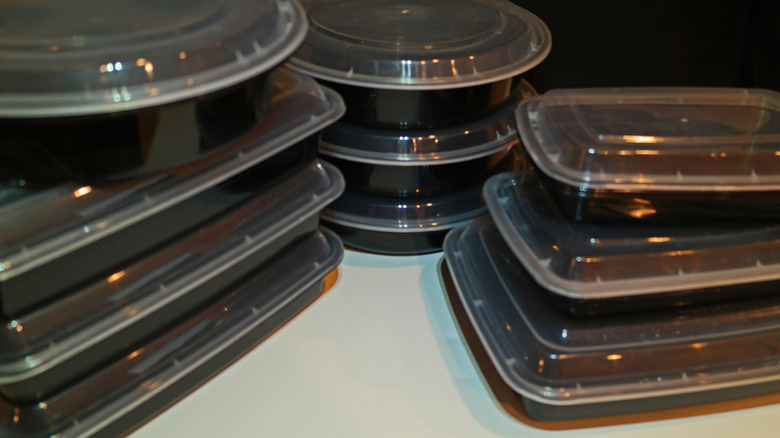
Nobody ever sets out to build a collection of takeout containers, it just happens organically. A set of chopsticks here, a plastic bowl there. Before you know it, your kitchen is dominated by towering stacks of takeout containers that are waiting to be used someday — a day that won't come anytime soon, and good luck tracking down the matching lid for each box.
For starters, it helps to get clear on the potential longevity of your takeout containers. Glass containers might make for durable and reusable options, but single-use plastic doesn't have much to offer beyond its initial use. Given the lack of transparency in the plastic manufacturing industry and the abundance of chemical additives, deli containers generally cannot be used in the microwave for reheating food or put in the dishwasher. If you are set on keeping a few takeout containers at hand to send home leftovers with guests, it helps to replace your stash every few months. Over longer periods of time, there is a higher chance of microplastics breaking free from the surface and finding their way into your food. Take care of excess containers by using them around the house as drawer organizers or for grouping together small items, such as LEGO bricks and craft supplies.
Keeping bulky packaging
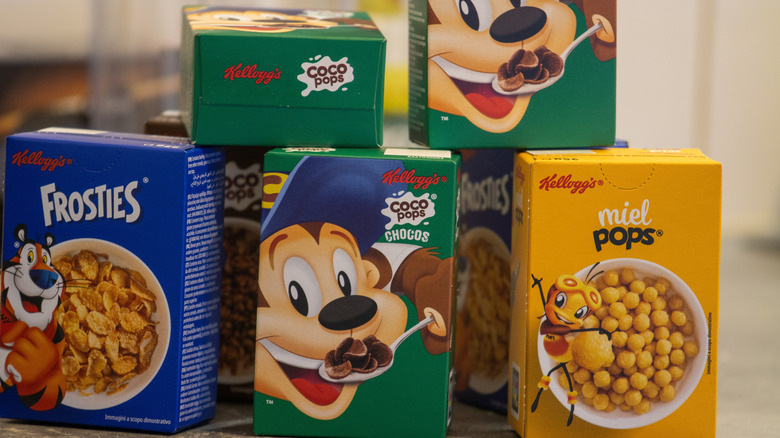
Whether they're tall cereal boxes, value-sized detergent bottles, or mismatched snacking containers, it might be tempting to hold onto bulky pieces of packaging after your monthly Costco haul for those "just in case" scenarios. However, oversized bags and boxes often physically and visually overwhelm the kitchen, and chances are you have similar containers lounging in your kitchen already.
Instead of holding on to oversize packaging, decant your pantry staples into clear jars and boxes so that you can keep an eye on when you are running low on supplies. If you are a stickler for details, you can ensure that your labels are perfectly aligned by sticking a piece of masking tape across multiple jars in a row. Apply the labels directly below the tape on each jar and peel off the tape when done.
Feel free to reuse packaging for alternative purposes. After treating glass jars to a warm, soapy bath to dislodge the labels, you can use these containers to store cereals and pulses. These jars can also be used as a sustainable alternative to the plastic wraps used for marinating meats. However, bulky boxes and single-use plastics won't serve a greater purpose in your kitchen. In the words of the ice queen Elsa, "Let it go."