

10 Absolute Best Companion Plants For Tomatoes
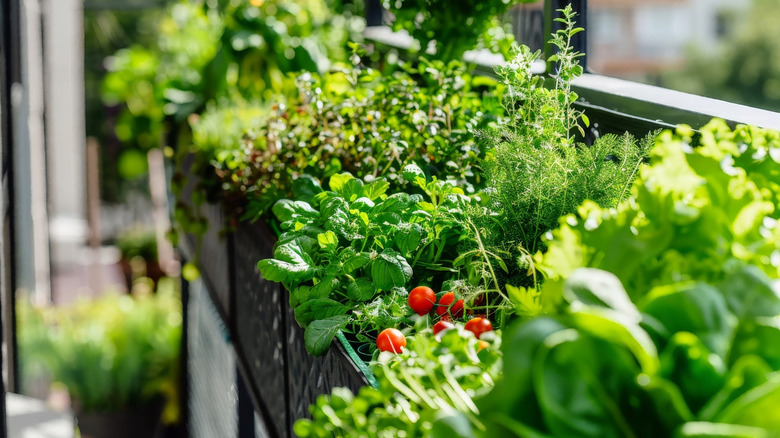
Tomato season is a source of profound joy for many gardeners, especially when their plants yield large, juicy fruits that can only be destined for sandwiches slathered in mayonnaise. However, growing up surrounded by these plants each summer, I know that tomatoes are not always easy to grow. They can be plagued by everything from aphids to poor soil quality, and there are even certain plants that you should never plant with tomatoes to prevent them from competing for nutrients. To learn more about what companion plants can be utilized to better support the growth of healthy tomatoes, I consulted Avery Indermaur, a farmer and environmental scientist who works at Ten Mothers Farm in Cedar Grove, North Carolina.
Of the many fruits, vegetables, and herbs that may grow in your garden, tomato plants are among the ones that will benefit the most from companion plants. According to Indermaur, companion plants can, among other roles, "attract beneficial insects; deter pests and predators; and/or supply, boost, or balance nutrients in the soil." Plus, they propagate healthy microorganism populations in the soil and support biodiversity, which Indermaur explains can make a garden more resilient.
So, why are tomato plants in such dire need of companion plants? Well, they are particularly susceptible to disease "in hot humid climates or in seasons with a lot of rain," says Indermaur. "Some of the most common diseases are bacterial spot, leaf mold, botrytis, tomato blight, and blossom end rot." Additionally, hornworms, armyworms, and aphids can attack tomato plants at various times throughout the season. Not to mention, the delicate balance of nitrogen, potassium, and phosphorus can easily be disrupted. Now that it's clear why your tomato plant needs friends, here are some suggestions for finding your plant's future besties.
Sweet Annie
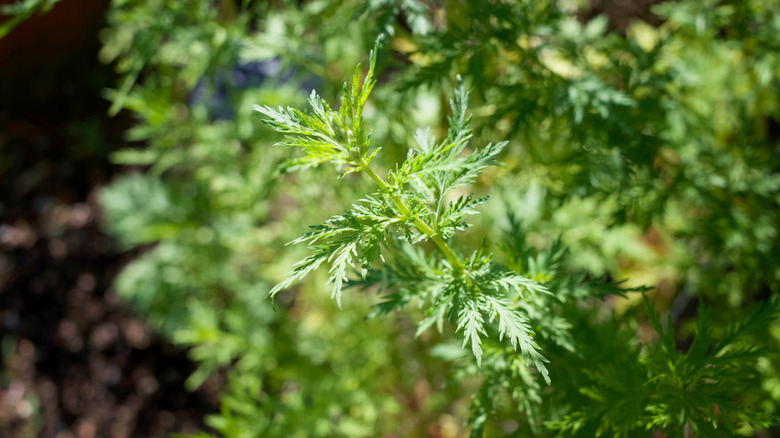
Sweet Annie is more than just a hit single by the Zac Brown Band. This plant, which you may also know by names like sweet wormwood or qinghao, is commonly used in traditional Chinese medicine. It can also show up as a strikingly beautiful component in dried flower wreaths and bouquets, where it is prized for its delicate yellow flowers and sweet fragrance.
Of course, this fern-like plant can also strike up a great friendship with your tomato plants in the garden. "These plants attract beneficial insects and pollinators that support tomatoes," says Avery Indermaur. "They are particularly helpful in the spring with attracting lacewings and ladybugs to curb aphid populations." Aphids, Indermaur further explains, "pose a significant threat to tomatoes and harm the health of the plant by sucking sap containing vital nutrients out of its leaves." Thankfully, the humble ladybug can eat as many as 50 aphids each day. Meanwhile, in addition to aphids, lacewings can help keep bugs like mites and thrips at bay.
You should plant Sweet Annie in the spring in an area with plenty of sunlight. Indermaur states that these plants, which can grow copiously once established, "can be placed at the ends of beds when tomatoes are first planted." This helps ensure that there is plenty of room for the Sweet Annie to expand as it matures. However, Indermaur also shares that for smaller gardens, a single plant can be placed next to your tomatoes for the same benefits.
Basil
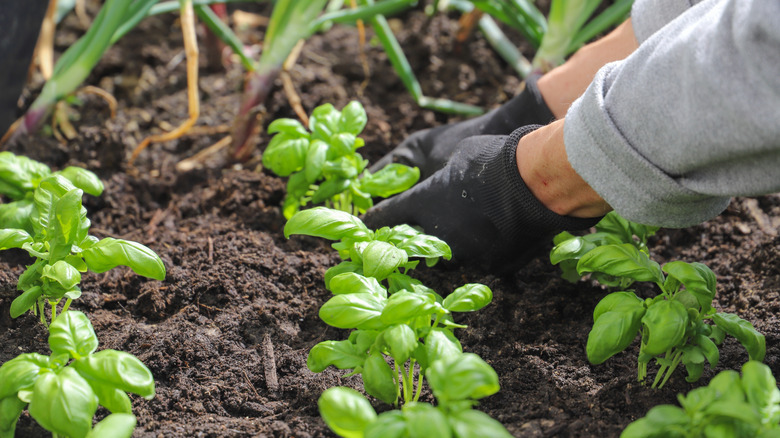
Who doesn't love a bowl of pasta generously doused in bright green pesto or a Margherita pizza tastefully garnished with a few sweet basil leaves? Now you have an extra reason to plant this versatile herb in your vegetable garden. Tomatoes thrive when basil is nearby because the herb naturally repels pests. Indeed, Avery Indermaur shares that "basil's strong smell can deter pests like aphids and horn worms." Plus, its scent is often inimical to thrips, a type of insect that feeds on plants and can transmit tomato spotted wilt virus. When mapping out your garden, keep in mind that you should avoid planting basil and rosemary together because they thrive in different amounts of moisture. There are many types of basil from which you can choose; Genovese basil is ideal for pesto, but other varieties include holy basil (otherwise known as tulsi basil) and Thai basil.
Indermaur further explains that "the difference in root depth between tomatoes and basil means there is less nutrient competition when they are grown close to each other." You don't want to crowd your tomatoes, though. "You can plant basil within your tomato planting, just make sure to space them at least a foot, ideally 18 inches, apart from each other to give the tomato roots ample space," says Indermaur. So, if you tend to plant your tomatoes in single BHK pots, consider trying them alongside basil in a garden bed or lengthy planter instead to reap the friendly benefits. You'll be harvesting tomatoes and basil alongside one another, so the two plants can continue to assist each other all season long. In fact, their shared growth timeline is one reason why tomatoes and basil so consistently show up together in recipes.
Chives
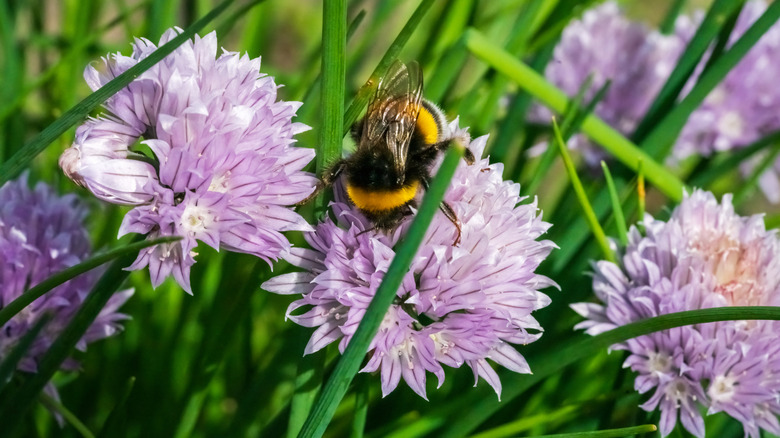
If you ask me, chives are an underrated herb, both in the kitchen and in the garden. They don't get featured in enough recipes (though, there are plenty of wonderful ways to use them), and their potential to attract pollinators is often overlooked. Known by the scientific community as Allium schoenoprasum, chives are closely related to garlic, green onions, and shallots. This helps explain the presence of allicin in chives, a sulfuric compound that can help keep pests like Japanese beetles and aphids away from your precious tomatoes. Just be careful not to overwater or overcrowd your chives, as doing so can invite pests like thrips.
That said, this plant doesn't require much maintenance, especially if you live in an area with relatively warm temperatures year-round; in such climate zones, chives can survive the winter, eliminating the need for replanting. Plus, chives are sun-loving plants that can grow well in a bit of shade from other plants and even various types of soil.
If you have ever seen a chive plant bloom in the spring or summer, then you should easily be able to infer why they are attractive for pollinators; their bright purple blooms are composed of up to about 30 flowers apiece. If there is one place in our garden where I know I will find bees, it's by the pot of chives. A chive plant's roots don't grow very long, and they won't compete with your tomato plants for many nutrients, either. In fact, chives are so self-sufficient that you probably won't be tempted to treat them with much fertilizer at all. Once your plant is growing prolifically, there are plenty of ways to use chives in your recipes (and even use their flowers!).
Thyme
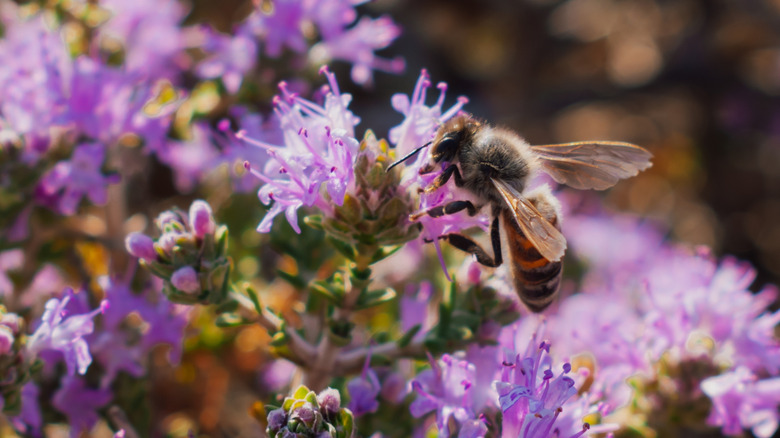
Thyme features a woody, somewhat floral scent that can add a lovely touch to your dishes. Although this aroma is enticing for humans, it repels certain pests in the garden, including tomato hornworms and spider mites. Thyme even helps keep deer at bay (I have personally never seen deer eat tomatoes, but I am told that it happens). Meanwhile, the plant can erupt into a plethora of small blooms in the spring, helping invite pollinators such as butterflies and bees. The flowers, which range from white to pink to purple, are even attractive to parasitoid wasps, a notion that might seem scary at first but becomes desirable once you realize these insects are harmless and their larvae have a hearty appetite for tomato hornworms.
When I first started cooking, I had no idea just how many varieties of thyme there are in the world. I only knew that the small packets I bought of this fragrant herb in the refrigerated section were prohibitively expensive. I much prefer the thyme we grow in our own garden, anyways, especially because I can pick it in the morning when the herb's flavor is at its peak. Thyme and tomatoes are a match made in heaven and feature prominently alongside one another in many dishes. One of the most conspicuous ways to test their affinity for each other is by flavoring tomato soup with several sprigs of thyme. I also love adding sprigs of lemon thyme to mocktails and incorporating French thyme into marinades for tempeh.
Carrots
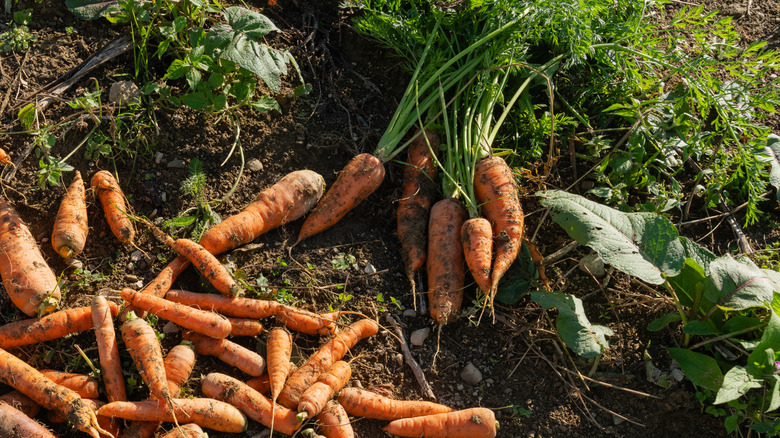
Carrots and tomatoes can be great pals in the garden, and luckily, carrots are also one of the easiest fruits and veggies for beginner gardeners to grow. As long as you have healthy soil, you won't have to tend to these root vegetables very often. Granted, you might get funny looking carrots from time to time until you figure out the optimal conditions, but they will nevertheless taste delicious.
"Carrots can help with tomato growth by naturally aerating the soil," Avery Indermaur explains. "The growth of their large starchy roots helps break up compaction." Indermaur also notes that unearthing carrots further increases soil aeration. "This process," she says, "gives tomato roots an easier time expanding and taking hold, leading to healthy, well-established plants." However, you'll need to consult your calendar before setting up a play date with these two companion plants. It almost goes without saying that fall carrots offer fewer benefits than spring carrots, as their seeds are often sown around the time that tomato harvest is in full swing. "Carrots need to be planted and harvested in the area where tomatoes are going before you hope to plant [the latter]," Indermaur advises. "To be safe, this would mean putting the carrots seeds in the ground three months before you're hoping to start your tomatoes."
As for how to use your harvest, carrots and tomatoes star alongside one another in countless recipes. Carrots are an easy vegetable to sneak into pasta sauce for a nutritional boost, and I also like adding them to Indian preparations like tikka masala.
Garlic
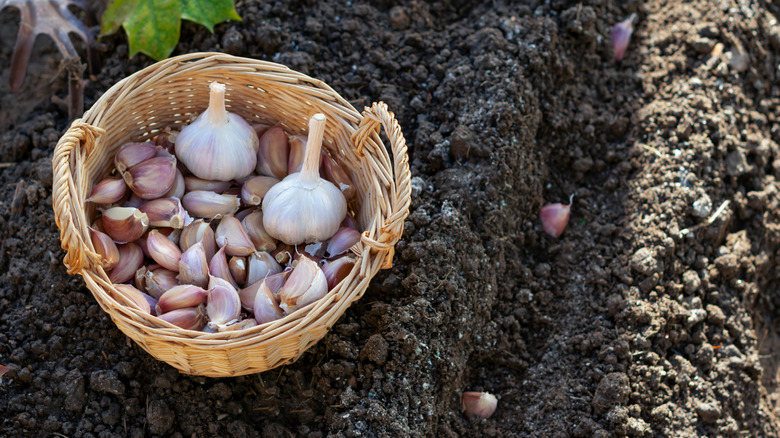
Did you know that by planting several cloves of garlic in the fall, you could be rewarded with full bulbs of the pungent pantry staple the following spring and summer? While you are cozying up with a mug of hot chocolate in front of the fireplace, your garlic will be thriving outside underneath a light layer of soil. In several months' time, it will be mature enough to serve a special purpose, too: Those pungent bulbs will not only help ward off vampires, but they will also help deter pests and prevent your tomato plants from getting sick.
This latter point makes sense, given that humans have long used garlic to help fight infections. That's because when agitated, the alliin in garlic transforms into allicin, a sulfuric compound that in turn gives way to other compounds that provide immune benefits to both humans and plants (the antifungal and antibacterial benefits of sulfur is why it is sometimes used in organic fungicides). Furthermore, allicin and other compounds in garlic — including diallyl disulfide, diallyl sulfide, and garlic leaf agglutinin — help fight pests like aphids, spider mites, and whiteflies.
Because garlic is used across so many cuisines, often in conjunction with tomatoes, it's not entirely necessary to list out recipes where the two join forces. I will say, however, that the sharp, pungent nature of garlic can often be balanced by the sweetness of tomato, as well as complemented by its acidity. When making pizza sauce, I find that roasting garlic is particularly helpful in capitalizing on the flavors of broiled tomatoes.
Clover
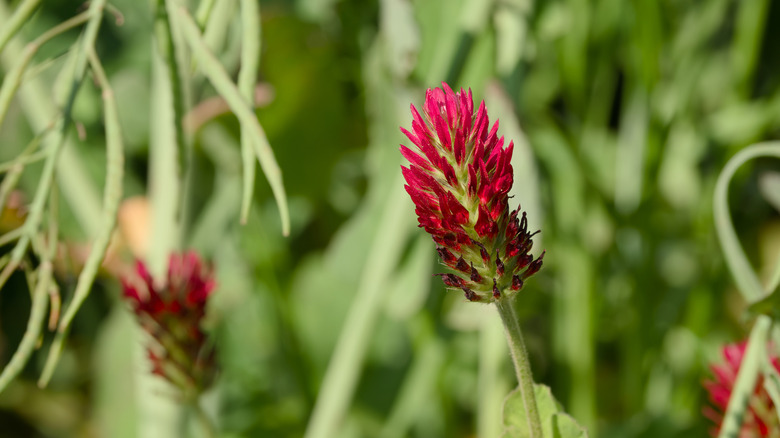
"Clover is a cool companion plant for tomatoes when planted as a ground cover," Avery Indermaur shares. "The clover then acts as a living mulch, helping to insulate the soil, prevent weed growth and erosion, and increase photosynthesis, which provides more accessible nutrients to feed your tomatoes." Plus, clover helps fix nitrogen in the soil, reducing the need for fertilizer. There are a few different types of clover that are readily available and would work well in your garden. White clover is easily sourced, but strawberry clover and red clover are also common. Crimson clover (which is not the same as red clover) particularly stands out for its beauty, and it's no wonder that its vibrant flowers attract pollinators like bees and butterflies.
To get the most out of these companion plants, Indermaur recommends that you "sprinkle some [clover] seeds underneath your tomato plants after they are planted, though you want to make sure that the tomatoes are healthy and well-established before trying to germinate clover." If you plant clover too soon, she says, it might compete for nutrients with your tomato plants; after all, the former grows much faster than the latter. In case your clover crop grows too prolifically, she adds, you can trim it. Then, when you have harvested the last of your juicy, red tomatoes, Indermaur says that your clover can continue to function as a cover crop until the frosts arrive. Alternatively, you can pick clover to be used in the kitchen; clover flowers lend flavor to jellies and teas, their greens can be tossed into salads or stir fries, and their sprouts can be used as garnishes for soup or toppings for sandwiches.
Lavender
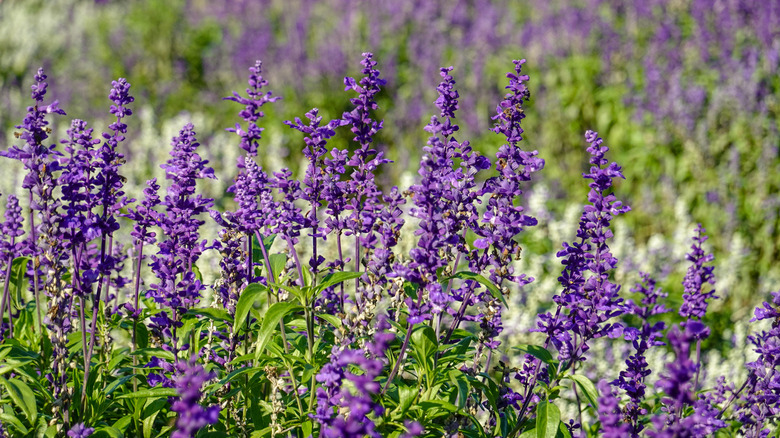
You don't need many excuses to plant lavender in your garden. It smells fantastic, it's drop dead gorgeous when it flowers, and it is a surprisingly versatile ingredient in the kitchen. I love to sprinkle lavender over smoothie bowls or add it to steaming cups of hot chocolate. You can even make a simple lavender syrup for adding to cocktails, lemonade, and coffee. Indeed, this herb adds an elegant touch to dishes of all kinds, but don't forget to plan ahead and plant the right lavender variety for your intended recipes.
Lavender plants are easy to grow in a variety of conditions and do not require much maintenance. They can even survive the winter. But if you need one more reason to plant Lavandula, as it is known scientifically, it's that this herb is one of the best companion plants for tomatoes when planted appropriately. Why? Lavender's aroma helps deter pests like aphids, moths, and mosquitoes, while its flowers are a common meeting ground for pollinators like bees. Lavender and tomato plants thrive in different types of soil, though, so it's best to keep the two in a long-distance relationship by planting them in separate beds or pots.
It is also worth noting that lavender and tomatoes share a common risk for contracting a type of fungus that may lead to septoria leaf spot. To help prevent either plant from falling sick, avoid overcrowding your garden. You should also aim your watering hose toward the base of each plant rather than the leaves. Similarly, lavender and tomato plants can be afflicted by several of the same pests; try keeping whiteflies, leafhoppers, spider mites, and other undesirables at bay with treatments of neem oil or insecticidal soap.
Nasturtiums
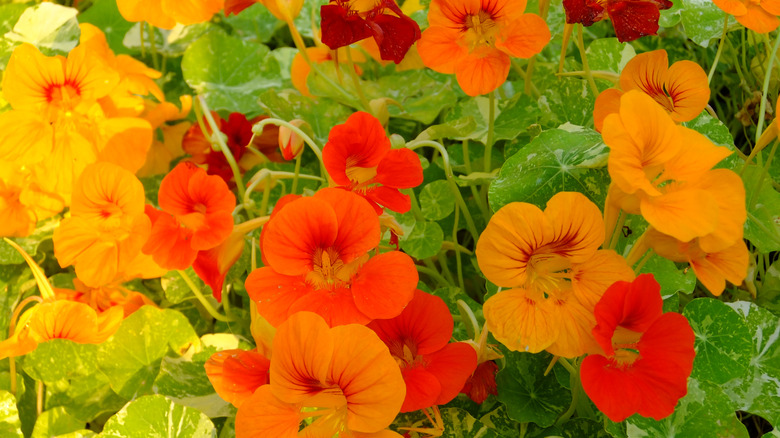
While nasturtiums are admittedly difficult to pronounce, it's worth reading past this plant's name and looking further into the myriad roles it can play in your garden. Many folks love nasturtiums for their colorful blossoms, which come in varying hues of red, yellow, pink, orange, and cream. Nasturtiums aren't just ornamental, though. They attract hummingbirds, bees, butterflies, and other pollinators, while simultaneously luring in the aphids, slugs, and whiteflies that might otherwise prey on your tomato plants. Furthermore, nasturtiums' large leaves can help mitigate waterlogging and drought in your garden. This is great news for tomato plants, which require well-drained yet suitably moist soil to grow.
If you are growing your tomatoes and nasturtiums in a traditional garden bed, opt for the bush variety as opposed to the trellising or climbing variety. Either kind works when it comes to the kitchen, however. Beyond just using the flowers as a colorful glow up for your dishes, you can make the most of their peppery, somewhat bitter flavor by sprinkling them over pizza or tossing them into salads. The leaves and stems are also edible, and you can even reach for the former as an alternative to grape leaves when cooking dolma. Finally, when soft and green, the seed pods can be harvested, yielding seeds that, when pickled, function as delightful (and budget-friendly) caper substitutes.
Marigolds
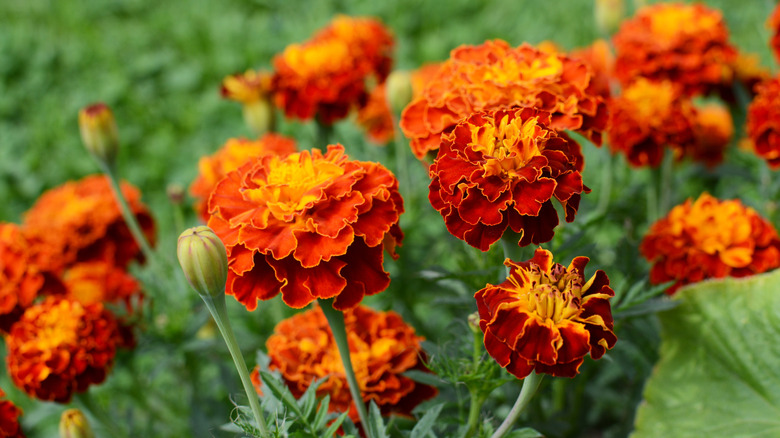
According to Avery Indermaur, marigold plants would make fantastic companions for your tomato plants. "Marigolds help tomatoes by attracting beneficial insects that eat pests of tomato plants, like lacewings and parasitic wasps, which target aphids and hornworms respectively," shares Indermaur. In addition to insects with a carnivorous appetite, Indermaur says that marigolds entice bees and butterflies, both of which help pollinate tomatoes. One of the most fascinating aspects of marigolds, however, is the fact that they contain limonene, a volatile plant compound (VPC) that whiteflies despise. Planting this flower variety in your garden, therefore, may save you quite a bit of time, money, and effort in fighting to eliminate one of the tomato plant's most notorious pests. Both French and African marigolds can offer these benefits, so your selection may depend on other factors like availability and garden size (the latter variety tends to be more expansive).
Marigolds, with their predominantly yellow, orange, and red blooms, have a place in small and large gardens alike. You can plant marigolds at the ends of a bed if you have a large tomato patch," suggests Indermaur, "or just put one plant near the tomatoes in your garden if you have a smaller operation." No matter what, make sure they are somewhere visible so that you can enjoy their beautiful hues all summer long. If you plan to use marigolds in your recipes solely for decoration, any variety will do just fine. However, if you want to tap into the flavor of marigolds in dishes like salad or roasted chicken, you should experiment with different varieties to find the right balance of spicy, citrusy, and bitter flavors.