

10 Tips For Designing A Walk-In Pantry
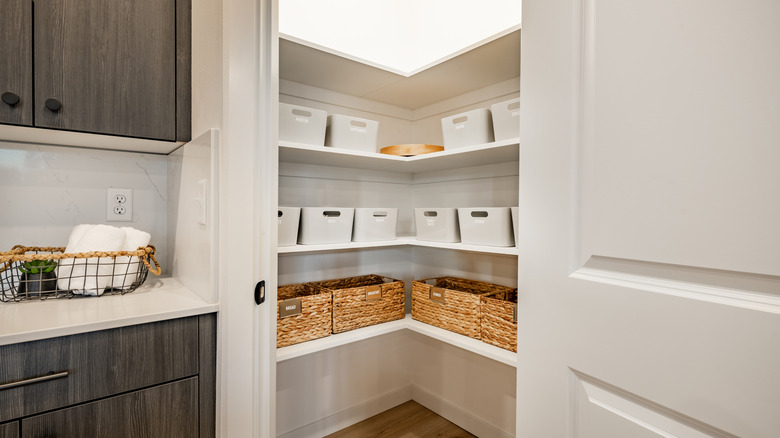
You may have always assumed that a scullery belongs in the sepia-toned frames of a historical British drama. But you can achieve the same ease of storage and organization by adding a walk-in pantry to your kitchen. As a handy resting place for non-perishable goods and appliances, this area remains closed off from the main kitchen. Say goodbye to cluttered countertops and all those hours of prepping your kitchen before entertaining dinner guests.
As complicated as it sounds, designing a walk-in pantry in your existing kitchen is not a cumbersome project. Where should you place yours? Any unused annex in your kitchen will do, and you might even get lucky by chancing upon a recess in the walls. Once you have zeroed in on the space, it is time to get creative with design ideas — in other words, your license to snoop online through your favorite celebrity kitchens. With the right layout for optimal traffic flow and imaginative design flourishes, such as patterned wallpaper, you can design a space that doesn't just store goods but transforms your everyday workflow. To help you get started, Monica Gounaropoulos, founder of Spiti Interior Design, shared her best advice for turning an idle corner of your kitchen into the walk-in pantry you have always dreamed of.
Look for creative design ideas
Whether you are looking for tips on how to choose a kitchen sink or you can't ignore the telltale signs that it's time for a kitchen remodel any longer, everything starts with inspiration. It could be a color, a design trend, or even something as fleeting as a mood that you are attempting to capture. Every interior project starts with a creative spark, and the quest to design a walk-in pantry is no different.
When you are able to finalize and execute the pantry ideas that suit your everyday needs, you can shut the door on future regrets and negate the need for a do-over. The good news is that there's no dearth of creative inspiration in today's hyperconnected world. Monica Gounaropoulos, founder of Spiti Interior Design, finds that there are several viable sources to help you visualize the walk-in pantry of your dreams, from celebrity kitchens to home organization accounts on Instagram. If you are feeling old school, you can even flick through a kitchen magazine and cut out any ideas that catch your eye.
When scouring for inspiration, it helps to pay closer attention to specific details: How is the shelving and storage organized? Are there dedicated zones or stations to group similar items together? Make a mental note of any layout ideas, colors, and finishes that suit your lifestyle and needs.
Choose the optimal layout
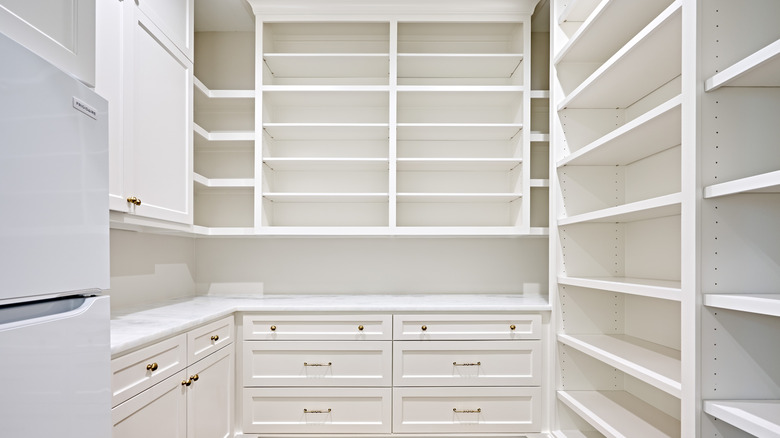
Before any heated debates can begin on the color scheme of the walk-in pantry, you'll want to first hammer out the layout of the space. When designed with care, the right layout will help optimize every available inch and to ensure a smooth traffic flow on busy mornings.
According to Monica Gounaropoulos, your walk-in pantry needs to be easy on the eyes but it should also work as hard as you do. She finds that a good starting point is to visualize the space in terms of accessibility: Which layout will make it easy to enter, grab what you need, and exit swiftly? L-shaped and U-shaped layouts will help you ensure that you aren't wasting any corner space, while those with some space to spare will want to consider adding an island for prep work.
Smaller pantries might appear at a disadvantage in terms of limited wall space, but Gounaropoulos believes that you can easily work around this by leveraging vertical space and using the back of the door for additional storage. Within especially cramped spaces, you can consider nailing a bookshelf to the wall to store all your kitchen staples with ease. The bottom line? Every inch counts.
Incorporate a mix of open and closed shelving
From the depth of the shelves to the configuration, the right kind of shelving can make the difference between a walk-in pantry where all items are clearly and aesthetically displayed and one where you'll discover a bag of squished tomatoes during your annual spring cleaning.
For Monica Gounaropoulos, there is merit in exploring both open and closed shelving. Within the former, you can decant items that look visually pleasing. Closed cabinets, meanwhile, can keep bulky, unsightly items hidden from view. "For large kitchen equipment that you use less frequently, make sure you create shelves that are large and deep enough to store these bulky items. Pull-out drawers are brilliant for grabbing items from the back of the cabinets easier, so these make the overall space more usable," she says.
However, your work isn't done just after choosing the design. Gounaropoulos recommends paying special care to your choice of material as well. After all, your walk-in pantry shelves will be playing host to everything from bulky kitchen appliances to heavy cans. Resilient wood wins her vote, and you can always add iron-on veneer banding on the edges. If you live in a particularly humid climate, it helps to opt for wire shelving as wood can get distorted when consistently exposed to moisture. Perforated aluminum shelves, meanwhile, make for a decorative way to display your favorite condiments and spices.
Save space with sliding doors
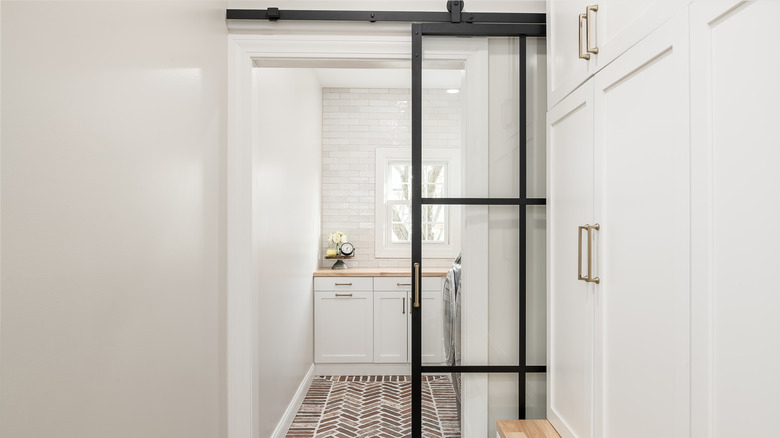
Doors are non-negotiable for a walk-in pantry for both temperature control and keeping messes out of sight. But when sifting through design options, you'll want to ensure that your choice doesn't block the pathway or any counters.
The most common mistake that Monica Gounaropoulos has observed with walk-in pantries is the addition of a door that swings inward and eats up precious pantry space. Beyond cramping the inner space, it can also hamper your ease of movement as you rush in and out during mealtimes. "Depending on your space, sliding doors are a great option for a sleek finish for a pantry," she says. Given that these doors move from side-to-side, you don't have to allocate space within your pantry for the door to swing open. For those who favor a seamless finish, pocket doors make for a popular choice. Designed to disappear within the wall when opened, these doors require a hollowed-out recess within the wall. This can be achieved by modifying the existing wall or adding a false stud wall.
Gounaropoulos also believes that Crittall-style doors with glass panels and slim metal frames also make for a worthy finishing touch — especially for those looking to create a sleek minimalist kitchen. Glass doors can allow sunlight to stream into a cramped space but if you can't live up to the pressure of having your walk-in pantry look picture-perfect at all times, she recommends opting for reeded or frosted glass.
Opt for durable flooring
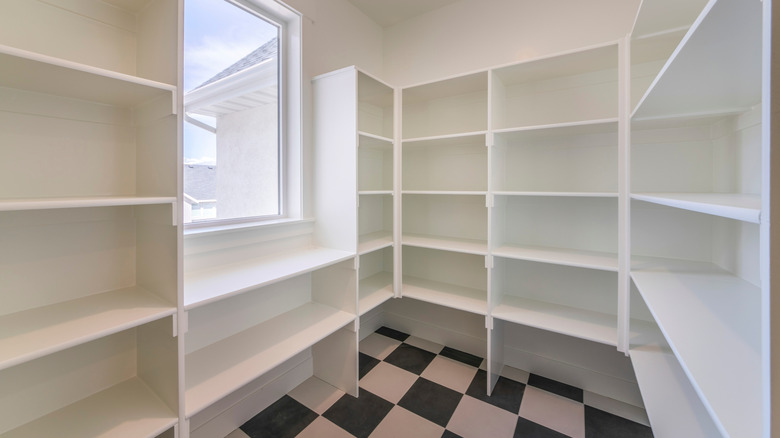
The pantry area is designed to do the heavy-lifting in the most literal sense — after all, this is the area where you will be stashing fresh produce and bulk goods as well as specialty kitchen equipment. Your flooring needs to be able to handle the constant weight without buckling under pressure. Of course, it helps if there is design continuity from the kitchen to the walk-in pantry.
If you aren't sure whether your existing flooring can handle all the weight, it helps to have it replaced with a more durable option while designing the rest of the pantry area — an easy task once you are well-versed in all the ways to save money on kitchen flooring. Your work will start by weighing the pros and cons of different kitchen flooring materials. If you are looking for easy-to-clean options, Monica Gounaropoulos recommends opting for ceramic tiles, vinyl, or hardwood. While tiles are resistant to moisture and any messes can be easily mopped up, it helps to opt for hardwood in areas where there is minimal risk of moisture and spills. Checkerboard tile makes for a timeless option with added visual interest.
Layer your lighting
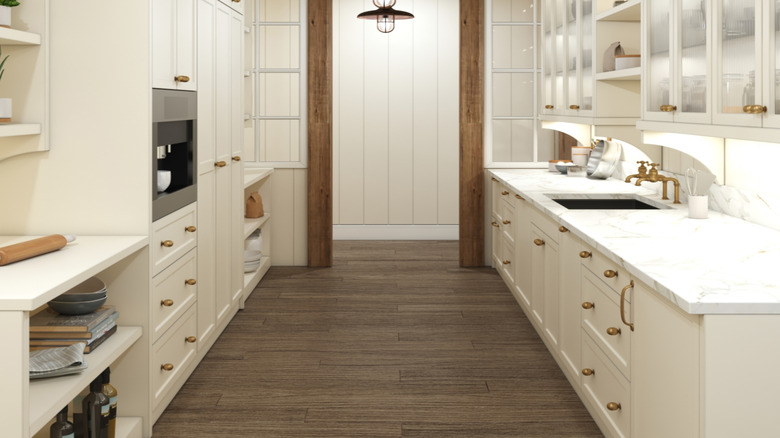
Nothing can liven up a walk-in pantry tucked into a cramped corner like bright, mood-enhancing lighting that makes the space appear more spacious than it actually is. The right lighting can illuminate ignored corners and help you locate everyday essentials at a glance. "When a pantry doesn't have the right lighting, it can really underwhelm the space and even become an irritating daily nuisance," Monica Gounaropoulos says.
To truly illuminate this space, it helps to opt for a multi-pronged approach — just make sure that you steer clear of outdated kitchen lighting trends. Gounaropoulos believes that simply adding spotlights or a solitary source of ceiling lighting won't suffice, as it will get concealed by shelving. The end result? A walk-in pantry that feels dark, gloomy, and uninviting. "Strip lighting on each shelf is a great way to illuminate the goods you have so you can see it all at a glance," she says. For a high-end finish, she recommends adding in-cabinet lights.
If your pantry allows the space for an island or countertop, Gounaropoulos recommends devoting your attention to task lighting. Generally, this exists in the form of a direct beam of light that allows you to grasp smaller details of tasking such as decanting, organizing, or even chopping without shadows. Your options range from overhead pendant lights and strip lighting under overhead cabinets to wall sconces.
Add wallpaper in light hues
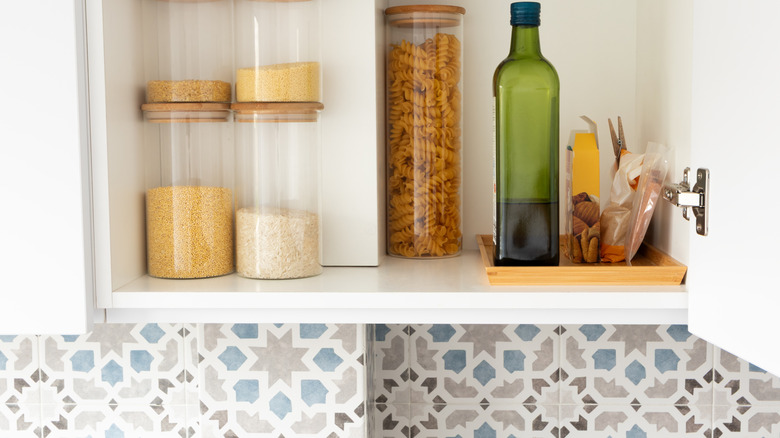
It isn't every day that you encounter patterned wallpaper in a walk-in pantry but then again, you aren't designing any ordinary pantry, either. For an eclectic makeover that feels uniquely you, it helps to add prints and patterns by way of cut-and-paste wallpaper.
"Wallpaper is a beautiful way to make your pantry feel personal for you. Using wallpaper on the back of open shelving, for instance, can be a real pleasure to see every day as you use the space," Monica Gounaropoulos says. If you are feeling adventurous, you can even choose to add patterned paper on the front of cabinet doors or even line your drawers with wallpaper for an unexpected touch.
When it comes to design, Gounaropoulos favors light and airy neutrals that pair well with wood finishes. Choosing the same primary colors as your kitchen can be a good way to ensure that both of these areas are in fluid conversation with each other. The same basics of how to apply wallpaper to the kitchen stand true here. Look for moisture-resistant materials, such as vinyl as opposed to paper, as the latter may not withstand the moisture emanating from the kitchen. Opt for light colors to make a small space appear larger, such as soft whites, pale grays, or pastels.
Leave room for an appliance garage
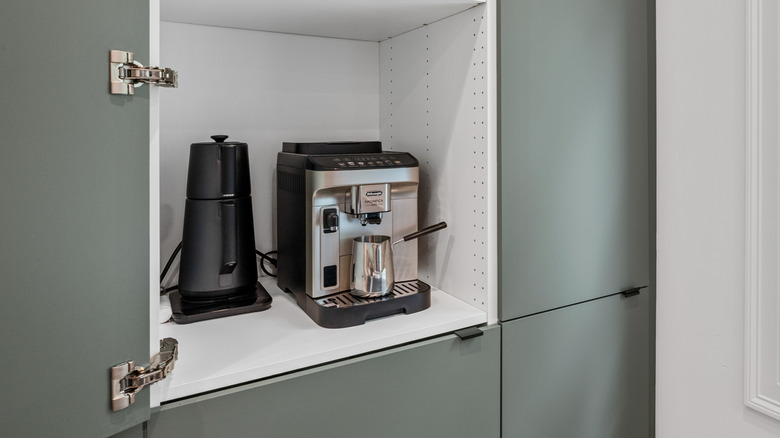
The secret to a clean, organized kitchen ready to welcome guests without any advance notice? Ensuring that your countertops are not overrun with a motley crew of oddly sized equipment by creating an appliance garage in the walk-in pantry. Think of this space as a miniature hideout for all those bulky eyesores sitting on your kitchen counter — out of sight, but never out of mind.
It is true that toasters and blenders are needed for everyday use. But specialty appliances — ahem, waffle makers and fondue pots — can be relegated to a dedicated storage space within your walk-in pantry. "Remember the adjustable shelves? These will adapt to your bulky kitchen equipment now, and when you add more in the future," Monica Gounaropoulos says.
Once you have allocated space within your walk-in pantry for your appliances to hang out, you can get creative with your choice of doors. If space is tight, consider adding bifold doors that fold in on themselves when opened, as opposed to traditional doors that take up space when they swing open. Or, you can choose to lean into the garage moniker by adding tambour or roll-up doors that also won't require extra room.
Add a prep counter
With the simple addition of a prep table, your walk-in space is elevated to the status of a butler's pantry. The prep table is a must-have, trendy addition to any contemporary kitchen. If you entertain often, you will especially cherish this additional workspace as a staging area for assembling meals out of sight of your dinner guests. It also serves as a handy resting spot for an overflow of dishware. After all, as Monica Gounaropoulos puts it, who couldn't use more countertop space? "It helps for [decanting] goods, grabbing, and using items or even as another countertop extension from your kitchen when you need more prep space," she says.
When designing a prep counter, she recommends opting for low-maintenance and durable materials. Your choices range from popular favorites, such as quartz and granite, to the classic butcher block, which can add warmer hues to the space. While marble is great for making the space look luxurious, it also serves as a magnet for stains because it's porous. Instead, she recommends opting for lookalike laminates to nail the same aesthetic. If you are truly committed to the cause, you can consider adding a tiny sink and dishwasher to truly optimize this area.
Ensure adequate ventilation
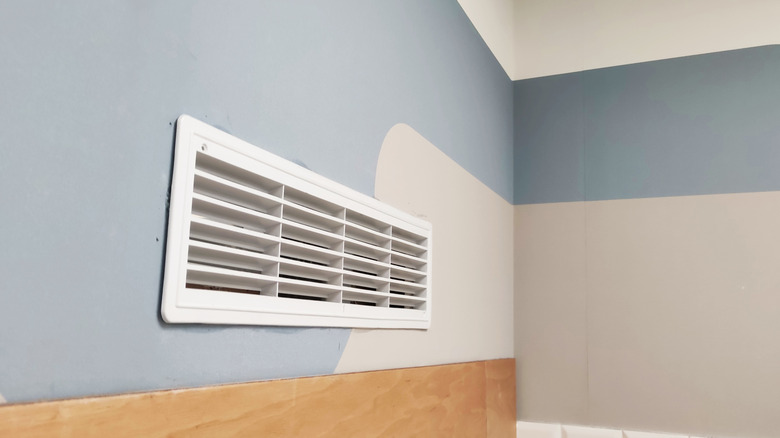
You wouldn't design a kitchen without a range hood for circulating air, and a walk-in pantry is no different. Given the copious amounts of goods that are crammed into this space for extended periods of time, it is essential to ensure adequate circulation of air to prevent mold from crashing the party. You'll also want to remember the proximity of this space to all the heat being generated in the kitchen and the resulting condensation that will settle on the walls. At the first sign of mold, you will need to scrub it clean with a solution of white vinegar and water. If you are living in a particularly humid environment, Monica Gounaropoulos recommends investing in a dehumidifier to dial back the moisture buildup.
The easiest way to ensure air circulation within the space is to add a ventilation grill or drill decorative holes into your pantry doors. Slatted doors can also help keep the pantry enclosed while allowing air to pass through. "Ideally, the pantry will be located in a cool part of the house away from direct sunlight, but you can also ensure there's a gap under or vents on the door to allow for natural air flow in and out of the space," Gounaropoulos says.