

8 Facts About Soursop You Should Know
We may receive a commission on purchases made from links.
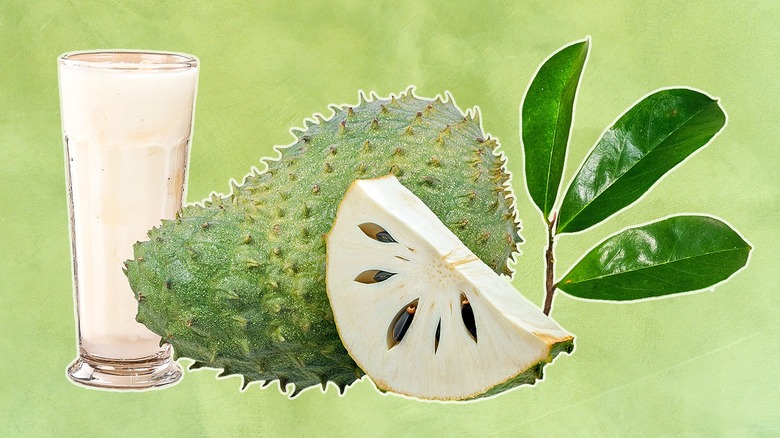
Various types of pineapples and mangoes are commonly incorporated into cherished recipes, from pineapple upside-down pound cake to mango coconut pudding. But there are so many other intriguing tropical fruits around the world that are not as renowned or as globally consumed. Let's take a closer look at soursop, which goes by several different names, such as Brazilian pawpaw, evo, prickly custard apple, sirsak, graviola, corossolier grand, sorsaka, or guanabana.
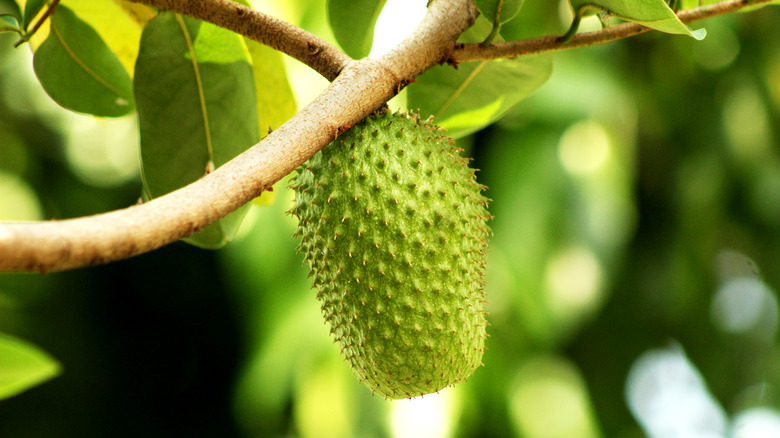
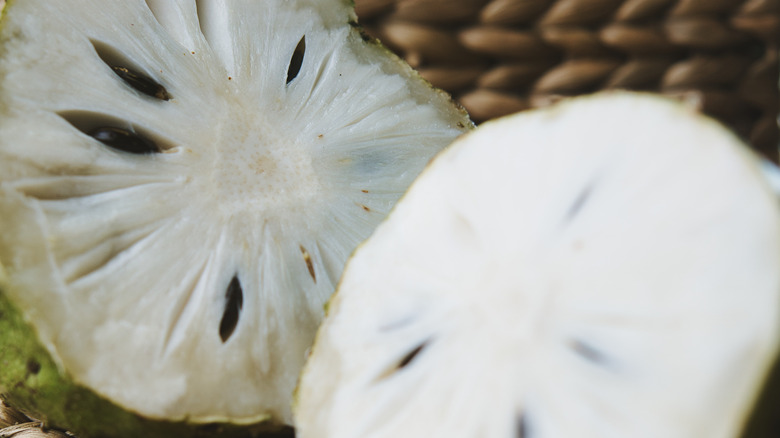
This large, spiky fruit was first cultivated in the Caribbean region and in Central and South America. Relatively oval-shaped, it typically has a prickly and bumpy green skin, with yellowish or brownish patches when it reaches full maturity. The pulp is white and pleasantly soft and custardy but filled with large black seeds. As for its flavor, it's been described as both sweet and mildly tangy. More precisely, some say it delivers a distinctive combination of pineapple, strawberry, and citrus, with a refreshing coconut and banana aftertaste.
Let's delve into some of the most interesting tidbits about soursop, from its precise cultivation and harvesting conditions to its numerous kitchen, medicinal, and domestic uses; its availability in the United States; and its possible side effects.
Soursop grows in humid lowlands and in very specific conditions
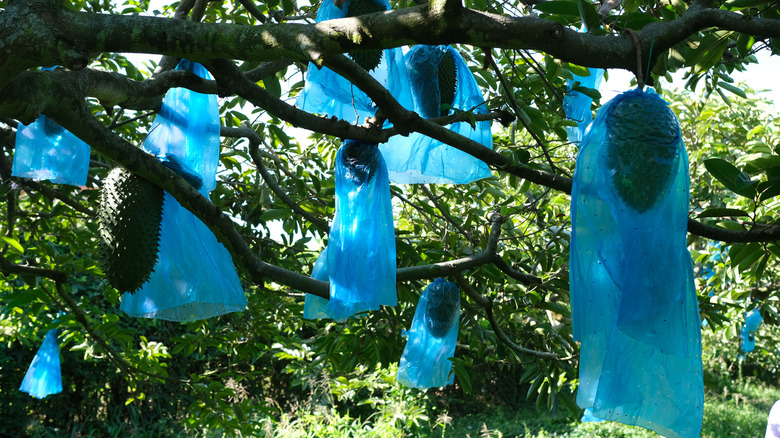
Though it originates in the tropical Americas, soursop is now widely planted in Africa, Southeast Asia, and even southern Florida at a maximum elevation of 3,900 feet. The evergreen soursop tree, which is very sensitive to frost, is small to medium in size: It can reach a height of 30 feet and spread its canopy to a width of 15 feet. Typically, it thrives in a warm and humid climate with temperatures above 41 degrees Fahrenheit, it needs at least six hours of full sun exposure per day, and it must have well-drained, slightly acidic soil. Light pruning on a regular basis is recommended.
As for soursop flowers, which are of a yellowish green color and grow directly on the branches or the trunk, they're thick and fragrant, while the leaves are smooth, shiny, and dark green. Given its aesthetic and scented aspect, it's no wonder this tree is hailed for its ornamental value. You'll often find it in the backyards of homes in the tropics. Should you want to plant soursop trees, though, make sure to consult local environmental and gardening specialists because this species is considered invasive and may affect the growth of other plants in its vicinity. The individual fruits can grow up to 8 inches long and weigh up to 10 pounds.
Fun fact: The largest soursop plantation can be found in Belize, the country that brought us hudut, a coconut fish stew. TKO Farms in Belize houses more than 85,000 soursop trees.
Soursop varieties and cultivars can be sweet, acidic, or subacid
Known by the scientific name Annona muricata, soursop spans several varieties, the most common of which are widely produced in countries like Colombia, Brazil, and Venezuela. Mexico, Costa Rica, and Puerto Rico are believed to be among the largest exporters of the fruit, be it in raw or frozen form. Some of the sweetest specimens can be found in El Salvador, such as the guanaba azucaron (best consumed raw or in drinks), and in the Dominican Republic, like the guanabana dulce.
As for the Philippines, it grows two popular subacid varieties, the aguinaldo and the davao, while one of the most acidic-tasting soursops, the guanaba acida, is also cultivated in El Salvador. This variety definitely puts the "sour" in soursop and is, therefore, exclusively reserved for juices and cocktails.
Also worth mentioning is the Cuban fiberless cultivar, which made its way into Florida in 1959. Its tree produces big white flowers and dull, smoky-hued leaves, and it requires a balanced fertilizer and protection from strong winds, diseases, and pests. As for the pulp, it has an extremely smooth texture, and it's quite sweet, making it ideal for juicing.
This fruit is often harvested before it fully ripens
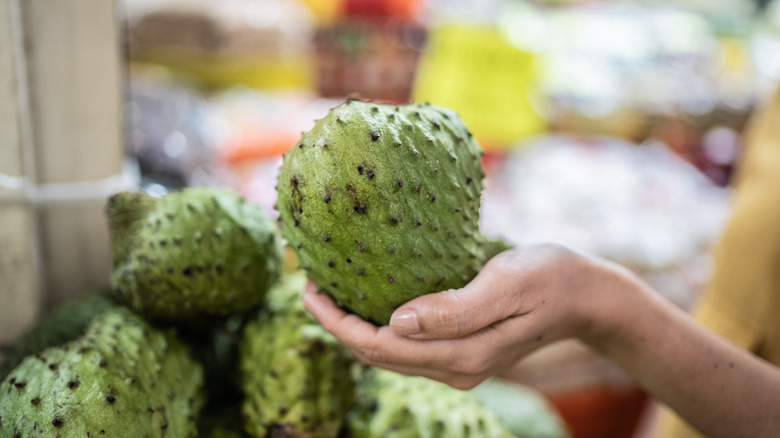
The soursop crop usually matures at 15 to 21 weeks after flowering. Unless you're traveling in Southeast Asia and somehow end up at one of Singapore's edible gardens, you can mostly buy this spiky fruit from the exotic produce section. As it's usually picked while technically still unripe, it's displayed while it's still green and a little hard to the touch. All you'll have to do, then, is leave it on your kitchen counter or store it in a cool, dark area.: You'll know it's ready for consumption when it starts turning a yellow-green color.
Once soursop is mature enough to eat, you can enjoy it right away or keep it in the fridge for two or three days. Alternatively, you can choose to de-seed the pulp and freeze it in silicone molds or a tightly wrapped plastic bag for later use. The fruit can be used in a rich smoothie or even an unconventional fruit pie.
Soursop can be consumed in a variety of ways
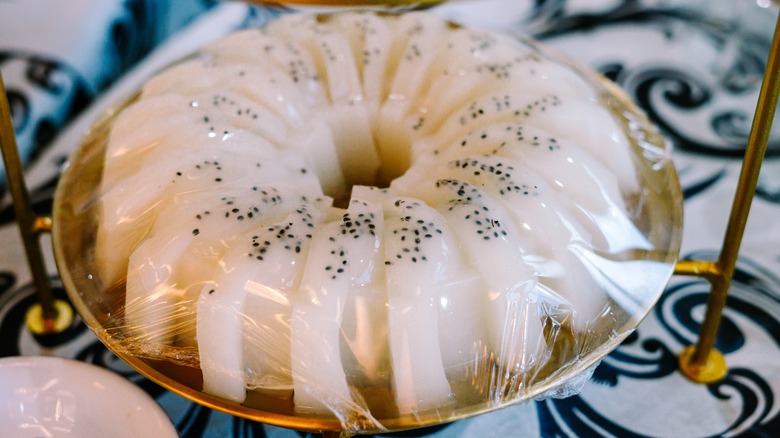
With its sour to sweet flavor range and banana-like texture, soursop can be enjoyed as- is, juiced, or incorporated into a drink, dish, sauce, or dessert. To eat it raw, simply cut it lengthwise, discard the seeds, and scoop out the flesh for a refreshing, filling snack. You can also add it to your yogurt or oatmeal snack, or use it to make popsicles, ice creams, smoothies, cakes, jams, breads, and other baked goods.
For a fiber-loaded chia soursop pudding, for instance, combine the pulp with coconut milk, chia seeds, and honey or maple syrup, and top the dessert with fresh berries or bananas. You could also mix the flesh with diced red onion, cilantro, and tomato to prepare a salsa that will pair wonderfully with your grilled chicken or fish. Or just mix the pulp with brown sugar, ketchup, Worcestershire sauce, and apple cider vinegar for a creative barbecue sauce.
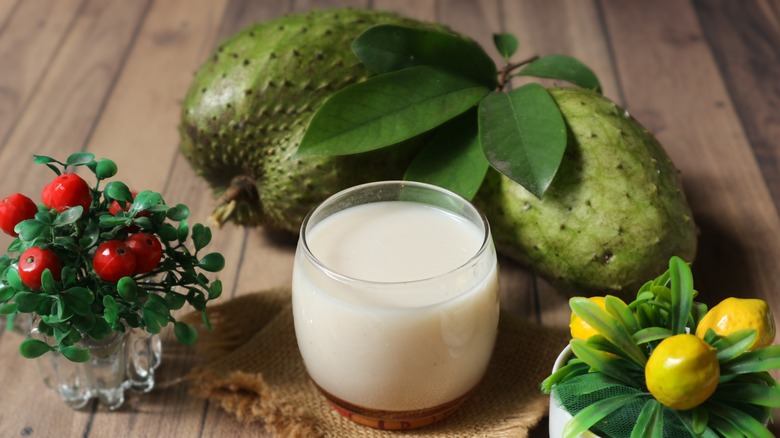
In the main countries where soursop is cultivated, its freshly squeezed juice is sold abundantly on the street and often drizzled with honey or mixed with lime juice, milk, or spices. Naturally, the bottled or carton version is available online and in grocery stores and hypermarkets, but you can easily concoct your own refreshing drink by straining the pulp and then blending it with vanilla, honey, and ginger, for example. A mango soursop smoothie would also do wonders on a hot summer day.
This fruit and its byproducts may be expensive online and in the U.S.
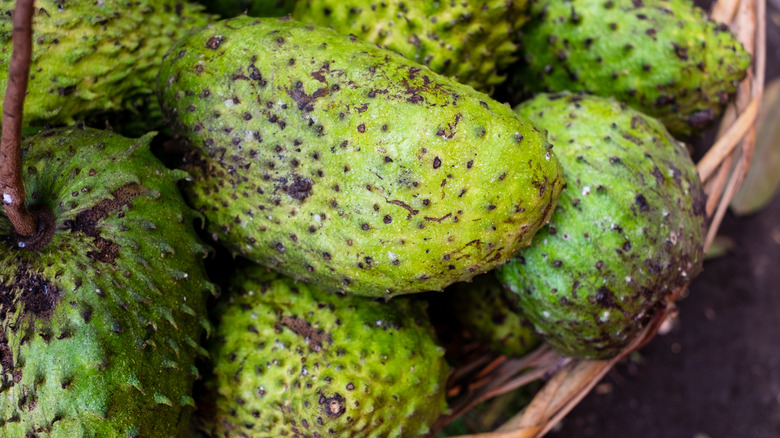
While soursop or graviola is widely available and relatively affordable in countries where it is mass produced, consumers may find it rather expensive on e-commerce websites or in stores and farms within the United States. For instance, three 8.82-ounce packs of soursop chunks from Colombia are sold on Amazon for $29.99. You can also buy a 5-to-7-pound box of organic soursop fruit online from iHeartFruitBox for $139.99. A single soursop from Miami Fruit goes for a whopping $77.
Alternatively, you can choose to skip the fresh fruit itself and look for soursop in the form of dried leaves or juice. A bag of 200-plus leaves for herbal tea can be ordered online through Walmart, for example, for $13.37, while a 33.8-ounce bottle of 100% soursop juice is offered online for $18.94. Soursop, which is often listed as graviola, can also be found in the form of a powder, liquid drops, or health capsules.
Soursop is very nutritious and may benefit the body, hair, and skin
Many tropical fruits, even ones as controversial as durian, boast health and medicinal benefits. Soursop, too, has significant nutritional value: It contains vitamins B1, B2, B3, C, folate, calcium, iron, magnesium, potassium, zinc, phosphorous, and copper. Per Health HQ, a cupful of pulp provides 52% of the daily value for vitamin C, while WebMD reports that a single fruit offers 6.25 grams of protein and 21 grams of fiber.
Additionally, the National Library of Medicine states that soursop's high antioxidant content may counter free radicals and prevent cell damage. Other studies have revealed it helps with diabetes, ulcers, hypertension, and diarrhea. Furthermore, it has potent antibacterial and antiviral properties and may accelerate wound healing.
In traditional medicine, soursop is used in beauty, hair, and skin treatments. Leaf and oil extracts, in particular, are combined and incorporated into calming, antimicrobial, and antibacterial treatments. Even the seeds have their topical uses: Apparently, they can be crushed to prepare a hair wash that is believed to treat head lice. Should you decide to give this unusual hack a try, avoid contact with your eyes, as that mixture may cause irritation.
There may be some side effects to consuming soursop
For all its benefits and various kitchen and domestic uses, graviola should probably not be consumed excessively. According to the National Library of Medicine, studies in the Caribbean region have linked this fruit's alkaloid and acetogenin content to nerve damage and atypical Parkinsonism.
Additionally, overconsumption could dangerously interact with certain diabetes and high blood pressure treatments, as reported by Medical News Today. Pregnant and breastfeeding women as well as diabetic patients, in particular, should probably consult their doctors, lest this tempting fruit affect the potency of their much-needed medications and supplements. Moreover, Pharma News Online, a Nigerian health journal, reports that soursop may cause digestive discomfort, hypotension, nausea, fatigue, preterm labor, and vomiting, but that these adverse reactions are likely caused by frequent consumption or a plain allergy.
Soursop is sometimes confused with three similar-looking fruits
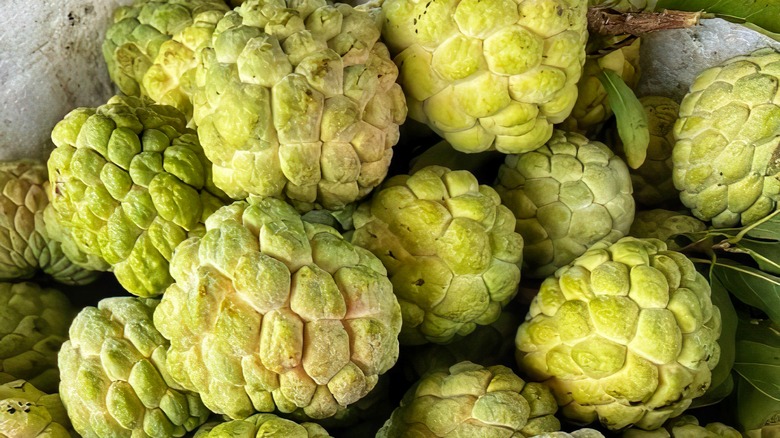
The Annona family includes other species that may be mistaken for soursop fruit due to their slightly similar size, green skin, white pulp, dark seeds, and rich flavor. The first candidate is cherimoya, scientifically known as Annona cherimola. Hailing from Peru and Ecuador and growing on trees with hairy leaves, this sweet, heart-shaped fruit can weigh up to 10 pounds, and its light green skin is recognizable by its protruding, overlapping scales.
Then there's Annona squamosa, commonly called sweetsop, sugar apple, or saramuyo. Not only is it smaller and more aromatic than its cousin, but it also has a smooth, spike-free skin and, you've guessed it, a sweeter flavor.As for the third species that may be mistaken for graviola, it's none other than atemoya, a graviola and cherimoya hybrid. With its 6-inch diameter, it's comparable to a small artichoke, but it actually tastes like a mix of pineapple, wintergreen, and vanilla.