

Mango Wood Is The Underrated Material You Shouldn't Overlook For Kitchen Pieces
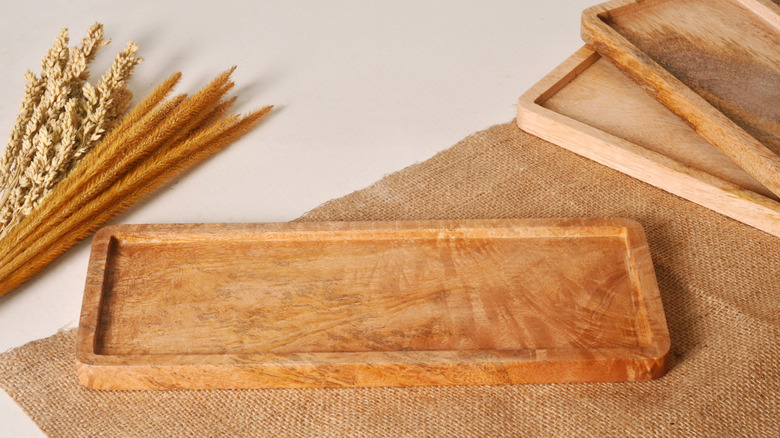
If you're updating your kitchen cabinets, choosing new wooden surfaces, or getting a custom piece like a dining table made, you've probably become a bit of an expert on hard woods. Hickory, cherry, oak, maple... they all have pros and cons. But there's one underrated wood you might not have considered. Mango. It might sound a little unusual, but the wood of the mango tree is attractive, hardwearing, and relatively cheap. So, opting for mango over a more expensive hardwood might allow you to be more creative than you expected in your kitchen design.
In addition to costing less than comparable durable hardwoods, mango is relatively easy to work with. This makes it a great choice for custom kitchens. If you need cabinets designed to maximize space in a small or awkwardly-shaped kitchen, want detailing on cabinet doors, or choose curved edges over sharp for your kitchen island, mango wood could make the whole process easier and quicker, and even reduce labor costs.
In terms of looks, mango wood is often compared to mahogany or teak. Usually, mango wood is a warm golden brown, although sometimes parts of the heartwood can be darker, veering towards black. It can also be lighter and include multiple colors, including pinks. The wood has a visible medium-course dark grain, which can be straight or interlocking, creating interesting patterns that add visual texture to mango-wood furniture. Both the visible grain and variations in color mean that everything made with this wood is unique. That's why it can make budget kitchen renovations look like a million bucks. And if you're not looking to renovate any time soon, using mango for smaller touches can transform a tired kitchen into a space you love.
Mango wood might be easy to work with, but it'll stand the test of time
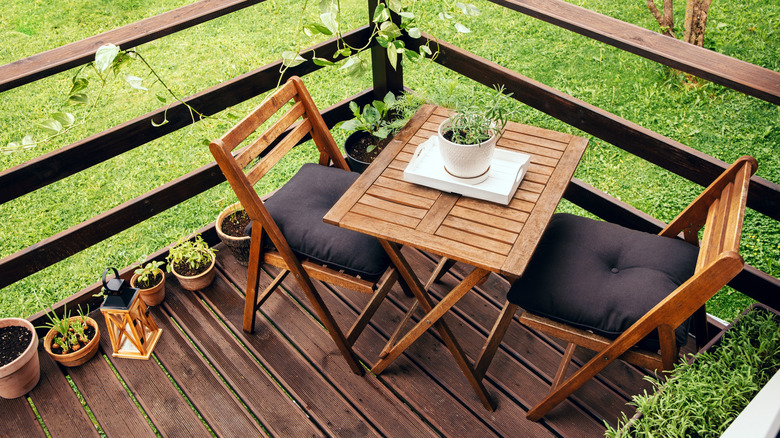
Mango scores 1,120 on the Janka scale, which tests how much force it takes to embed a small steel ball into the surface of various species of wood. It might sound like an oddly specific experiment, but the Janka scale is the industry-standard for comparing how hardwearing various types of wood are. According to the scale, mango is nearly on a par with alternatives like oak, birch, and walnut and stronger than Southern yellow pine.
The wood of the mango tree is also highly water resistant, so it's an appropriate material for countertops, butcher blocks, and high-quality cutting boards. Mango is popular for outdoor furniture, too, so if you're considering investing in an outdoor kitchen or an outdoor dining set, don't discount it as a material. It's still wood, of course, and will need to be cared for. This means cleaning up spillages as soon as they happen, regular polishing, and careful cleaning without harsh or abrasive chemicals. Smaller kitchen pieces, like chopping boards, salad bowls, and other wooden kitchenware, can be treated with a food-safe oil like mineral- or walnut-based options. Even coconut oil works. Oiling or waxing wood monthly protects it from other liquids and stops it from drying and warping. Finally, it brings out the colors in your wooden furniture or accessories, so they always look their best.
As the wood of a fruit tree, mango is sustainable
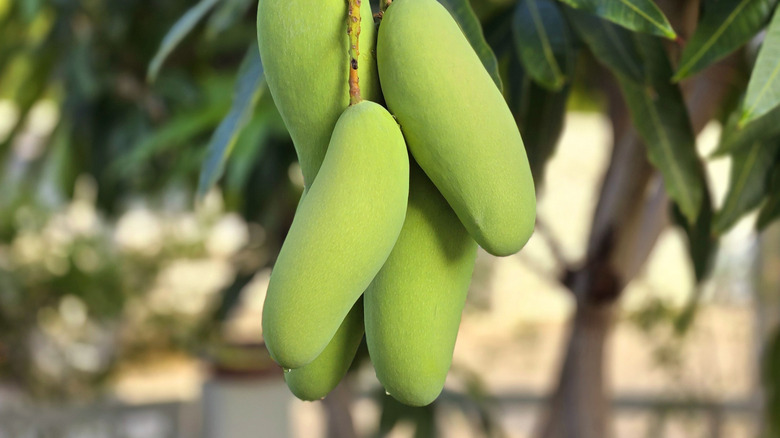
You probably know more about mangos than mango wood. That's because the trees are primarily cultivated for their fruit, with their wood a useful byproduct of the booming mango industry. This makes mango a sustainable lumber option, and factors into its relatively low price point. Productive, healthy trees aren't cut down and processed into usable wood. Rather, older trees are felled when they stop producing fruit. If there's enough demand for mango lumber, they're then processed and exported from mango-production hotspots like Hawaii, India, and Vietnam. As mango wood is easy to work with, it's also easy to process. This makes the outgrowth of the timber industry from the fruit industry a no-brainer and further assists in keeping the material affordable.
Mango trees can also help mitigate deforestation, thanks to the speed at which they grow. They reach maturity after around 15 years, which is considerably faster than some hardwood options. Sugar maples, in comparison, mature after 30 to 40 years, while oak trees take 75 years. With sustainable furniture predicted to be a growth industry in the U.S. between 2025 and 2030, according to market research from Mordor Intelligence, you could be at the forefront of a trend if you choose a sustainable kitchen remodel.