

Here's How To Remove Grease From Your Kitchen Walls
We may receive a commission on purchases made from links.
Even if you're fastidious about cleaning, walls are one of those places you might not think to clean in your kitchen (but definitely should). Over time, kitchen walls get dirty and greasy due to exposure to cooking smoke, oil, and grease. While cleaning walls isn't necessarily fun, it's important to do it every few months to prevent damage to your kitchen paint or wallpaper. Before you start, spray your walls with a mix of one part white vinegar to two parts water. Let the solution sit on your walls for about 20 minutes, then spray again. While the walls are still wet, wipe them dry with a soft, clean sponge. This will remove dust and dirt from the surface so that you can start degreasing. Next, you'll want to decide what degreasing solution you want to use.
Windex is one of the best household cleaners for removing kitchen grease from walls, but you can also use Fantastik All Purpose Cleaner or Zep Heavy-Duty Degreaser. If you would prefer to use a non-toxic degreaser, make your own all-purpose cleaner using 3 cups water, 1 cup white vinegar, 1 cup baking soda, and ½ cup degreasing dish soap like Dawn. Mix the ingredients in a spray bottle or large bowl and apply the solution liberally to small sections of the wall. Use a non-abrasive sponge or a soft cloth to wipe away grease. Finish by rinsing the walls with clean water and a clean sponge, then dry each section carefully.
Avoid common cleaning mistakes when removing grease from kitchen walls
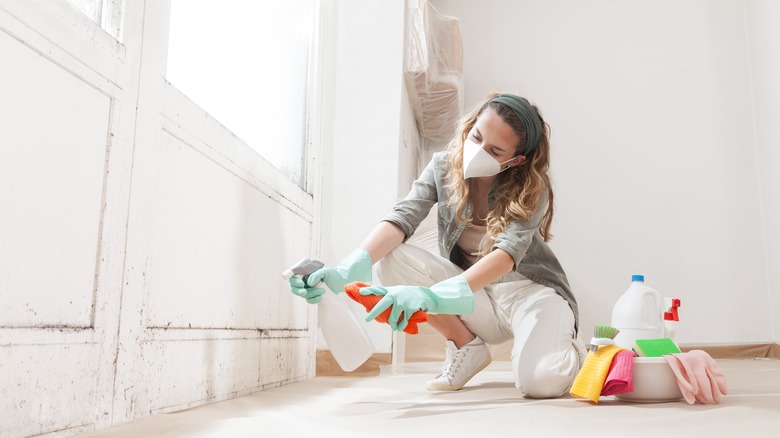
While some cleaning mistakes could damage your walls, other common cleaning mistakes can become toxic. Always wear gloves when using chemical cleaners, as the chemicals could irritate or damage your skin. Make sure your kitchen has proper ventilation if you are using chemicals like bleach. Additionally, never mix store-bought all-purpose cleaning products or chemicals.
If you are making your own cleaning solution, do not mix bleach and vinegar together or use ammonia or any ammonia-based cleaners with any other type of cleaning product. Oh, and be careful when cleaning with hydrogen peroxide. Always test that the cleaner you are using is safe by applying it to a small section of the wall first. Choose a hidden spot like behind the stove or near the baseboards and let it sit for an hour or so before checking to make sure it hasn't damaged or stained the wall.
It's also important to follow all manufacturer instructions when using cleaning products and tools. Read the instructions before you begin, and don't use a product that doesn't have sufficient instructions. Use products for their intended purpose; for instance, don't use an oven cleaner on your wall. Take care when choosing cleaning tools as well. Avoid metal tools, steel wool, or heavy-duty brushes on painted or wallpapered walls, as they can cause damage. Instead, choose soft tools like sponges, microfiber cloths, soft-bristled brushes, or toothbrushes.