

15 Iconic Foods That Were Invented By Women
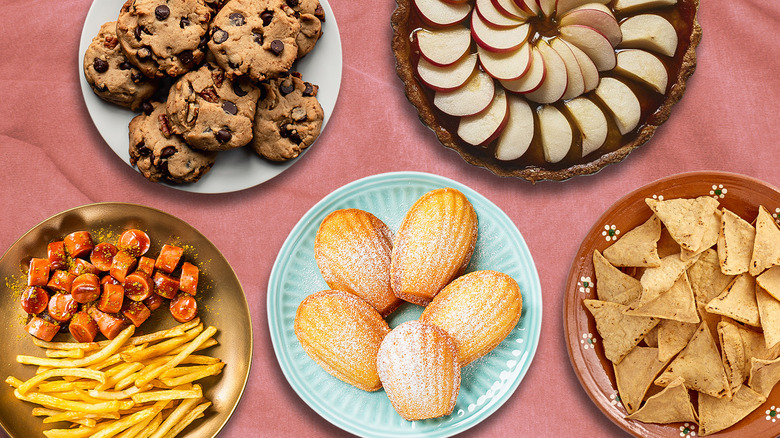
Without women, the way many of us live our lives would look very, very different. That slice of toast you reach for in the morning? That's all thanks to Sarah Guppy, a British inventor who developed the precursor to the modern-day toaster. The cold milk for your cereal? That's down to New Jersey housewife Florence Parpart, who patented the modern electric fridge. The coffee that gets you going in the morning? German entrepreneur and housewife Melitta Bentz was the first to come up with coffee filter paper.
And that's just the beginning. Women all over the world have also had a major influence over the exact foods we eat, too. In fact, they have invented some of the most iconic foods of the last few centuries. Think currywurst, chocolate brownies, chimichangas, and fluffernutter sandwiches. We've got all the details on the origin stores of all of these foods and many more below.
1. Currywurst
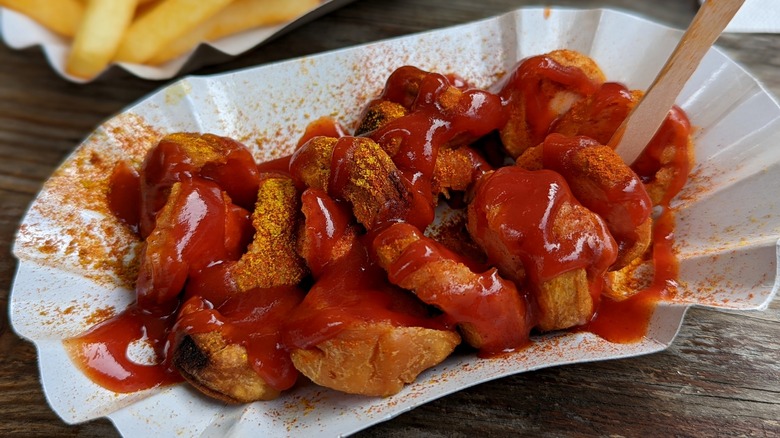
Currywurst is one of Germany's most iconic and beloved foods. The simple mix of grilled bratwurst sausages and curry ketchup sauce was invented in Berlin, but today, it's eaten all over the country. In fact, according to Berlin's former Currywurst Museum (yes, there was once a museum dedicated just to currywurst), around 800 million servings of currywurst are eaten across Germany every year. And the woman responsible for all of this enjoyment? Herta Heuwer.
After World War II, Germany was in a state of devastation. People were struggling to piece their lives back together after the Nazi regime, and food was scarce. Heuwer, however, was on a mission to make the best of the situation. In 1949, she combined ketchup, Worcestershire sauce, and curry powder (which she managed to get hold of through some British soldiers), and created her own signature sauce called Chillup.
Heuwer sold the sauce, slathered on bratwurst sausages, from her snack bar in Charlottenburg, West Berlin, and it was a major hit. Word spread, and people across the city couldn't get enough of Heuwer's creation, which she dubbed "currywurst." The street food is a major source of pride for Germany's capital. In 2003, Heuwer, who died in 1999 at the age of 86, was even awarded her own commemorative plaque.
2. Chocolate chip cookies
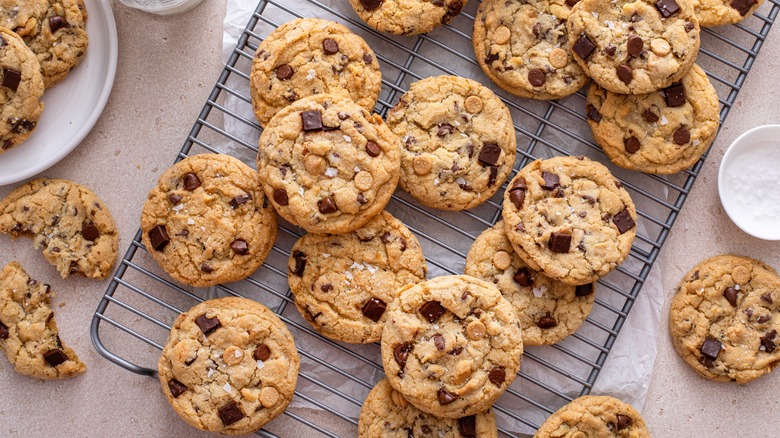
In 2022, a survey by OnePoll and Crumbl Cookies found that more than 60 percent of Americans believe it's hard to beat a chocolate chip cookie. The treat is so beloved, it even has its own day in the U.S. (August 4, in case you were wondering).
Chocolate chip cookies were first baked and sold in the 1930s by a woman called Ruth Graves Wakefield. Back then, she was running a restaurant in Whitman, Massachusetts, called Toll House, and she enjoyed experimenting with different desserts. She'd been offering her customers a butterscotch nut cookie with ice cream, which was a hit, and she was inspired to keep going. Next up? A chocolate chip cookie, made with chopped up squares of a Nestlé chocolate bar (because she didn't have any other chocolate on-hand), and history was made. Today, most chocolate chip cookies recipes follow very similar steps to those that Wakefield took nearly a century ago.
3. Frozen pizza with a crispy crust
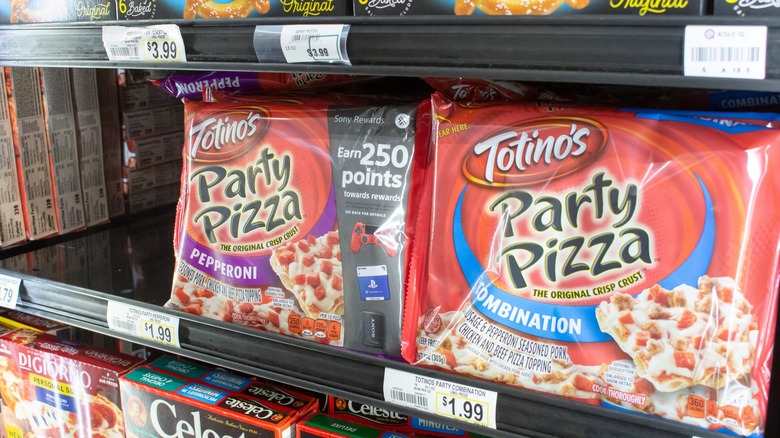
It's hard to imagine a world without frozen pizza. According to GMI Research, the global market is set to exceed $24 billion by 2029. The convenience food is ubiquitous; you probably have one in your freezer right now. But back in the 1950s, frozen pizza was far less common. In fact, it had only just started to appear on the shelves.
A man called Joseph Bucci was likely responsible for coming up with an effective way to freeze pizza dough without it getting soggy. But a decade later, Rose Totino and her husband Jim of Totino's Italian Kitchen in Minnesota changed the frozen pizza game. Their small pizzeria was so popular that the married couple decided to try their hand at starting a frozen pizza business called Totino's Finer Foods.
By the 1970s, that frozen pizza brand was one of the biggest names in the industry. But Rose wasn't done yet. In 1979, a few years after the company sold to Pillsbury for $22 million, she filed a patent for Crisp Crust technology. The innovative invention meant that the crust on frozen pizza would always remain crispy, just like in restaurant-quality or homemade pizza, even after the product had been thawed and baked. Rose died in 1994, but Totino's, now owned by General Mills, lives on as one of the nation's leading frozen pizza brands.
4. Bagged potato chips
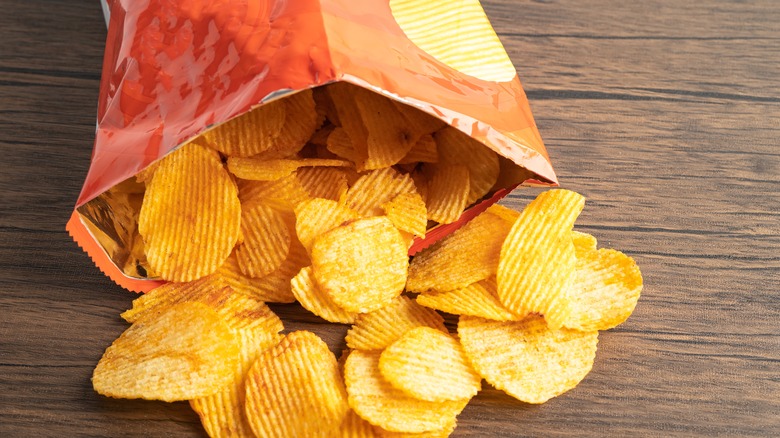
Potato chips are popular everywhere, but they're especially loved in the U.S. In fact, according to the USDA, American consumers spend around $7 billion on potato chips every year. It's nothing new; people in the U.S. have been in love with potato chips for more than 170 years.
Back in 1853, George Crum, who was a cook at a Saratoga Springs, New York restaurant, accidentally invented them to please a difficult customer. The customer kept requesting his fried potatoes be cut thinner, and in the end, Crum cut them so thin that they had to be eaten by hand (a fork would just cause them to snap). The customer loved them, and so did many future diners at the restaurant. The potato chips were a hit, and the invention eventually made it onto store shelves.
But there was a problem: The glass containers for those first store-bought potato chips simply didn't keep them fresh enough. But luckily, in the 1920s, a nurse called Laura Scudder had a solution. She worked out that by ironing sheets of wax paper together, you could create a sealed bag that was much better suited to keeping all of the potato chips inside nice and crispy for longer. Scudder's invention paved the way for the mass production of potato chips. She died in 1959, but her eponymous brand, Laura Scudder's, is still selling potato chips today.
5. Tarte Tatin
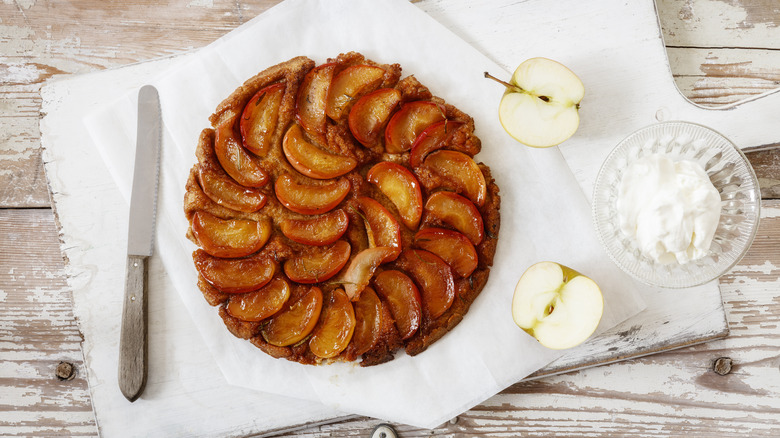
Tarte Tatin is a classic French dessert, made with a base of caramelized apples that are covered in pastry. It's a favorite of many chefs, including the late Julia Child, a pioneer of French cooking in America, who always made hers with flaky, golden-brown puff pastry and Golden Delicious apples. Each chef and home cook has their own carefully considered spin on the dessert, but the original was likely made by accident. Well, that's how the legend goes, anyway.
In the late 19th century, in a French village called Lamotte-Beuvron in the Loire Valley, two sisters, named Caroline and Stephanie Tatin, ran their father's hotel, L'Hotel Tatin. It was Stephanie's job to cook for the guests, but one day, she was in such a rush during the hotel's busy period, that while making an apple pie, she left the apples cooking in butter and sugar for too long. The apples burnt, but she didn't throw them away. Instead, she attempted to cover up her mistake with pastry. The unexpected result? The hotel's guests loved the accidental dish, and a new dessert, called tarte Tatin after its creator, was born.
This is the most commonly accepted story about tarte Tatin's origin. However, another theory states that Stephanie was inspired by another similar recipe, which was created by a visiting cook who worked for a wealthy Parisian family.
6. Chocolate brownies
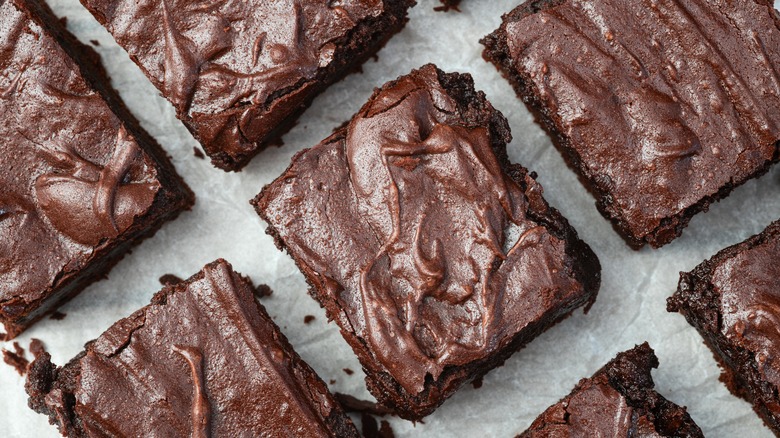
Back in the 1890s, Bertha Palmer was an extremely busy socialite. Based in Chicago, she was an advocate for women's rights, an anti-poverty campaigner, and an art collector. But somehow, despite her busy schedule, she still found the time to invent chocolate brownies. And it's not an exaggeration to say that hundreds of thousands of Americans are incredibly grateful that she did. According to the National Brownie Committee of America, people in the U.S. eat more than 1.4 million chocolate brownies every year.
So, how, exactly, did Palmer invent the brownie? Well, in 1893, a major fair called the World's Columbian Exposition took place in Chicago to celebrate 400 years since Christopher Columbus landed in the America. Palmer was asked by the organizing committee to make a special sweet treat for the event, and she came up with a dessert that looked very much like the modern day brownie. One key difference was that Palmer's version was covered in an apricot glaze, but the chocolate, nutty, fudgy cake underneath looked and tasted just like the brownies we all love today.
7. Princess cake
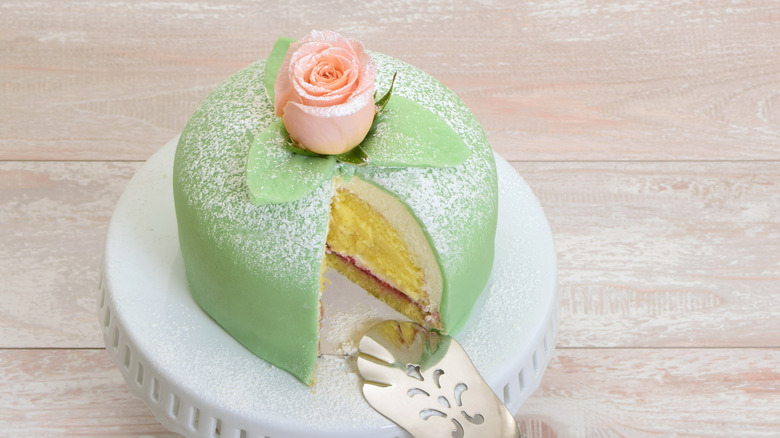
On birthdays and weddings in Sweden, it's not uncommon for princess cake, or prinsesstårta, to make an appearance. The green marzipan dome-shaped cake, filled with sponge cake and cream and usually decorated with a sweet pink rose, is visually impressive. It's fit for a princess, or three princesses, to be exact.
In the 1930s, Swedish pastry chef Jenny Åkerström created the cake especially for the three princesses of Sweden, Princess Margaretha, Princess Märtha, and Princess Astrid. The cake was an elegant masterpiece, and it tasted great, too, which is why it eventually became a firm favorite throughout Sweden.
Today, many people have put their own spin on the recipe. Some make it with chocolate, for example, or swap the green marzipan for pink, yellow, or red, but usually, the core of the recipe is the same. And most takes on princess cake look just like Åkerström's very first version.
8. Madeleines
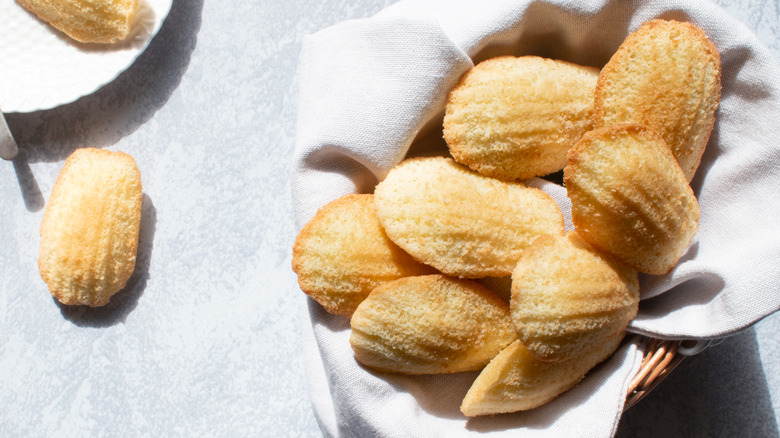
Many tasty, sweet treats have come out of France. As well as tarte Tatin, there are macarons, millefeuille, and Madeleines, for example. For the latter, many historians believe we likely have a woman to thank: Madeleine Paulmier.
Back in the 18th century, Paulmier was working as a servant for the King of Poland, Stanisław Leszczyński. In order to please the king, who was also the Duke of Lorraine, Paulmier baked special bite-sized, shell-shaped sponge cakes with a crispy edge, which would later be known as Madeleines. As well as Leszczyński, the sweet treats were also loved by King Louis XV's court.
But it wasn't King Louis XV or Leszczyński or Paulmier who made the cakes famous. That was all down to the French novelist Marcel Proust, who wrote about Madeleines in his seven-part novel "In Search of Lost Time" two centuries after Paulmier allegedly first served them to the Polish king.
9. Lemon meringue pie
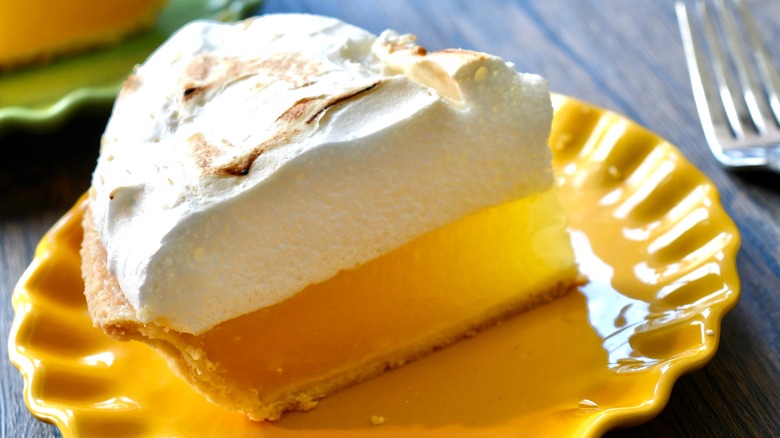
Every August, a very special day rolls around in the U.S. We're talking, of course, about National Lemon Meringue Pie Day on August 15. It's not surprising that the citrusy dessert is popular enough to have its own day. Made with a combination of meringue, a tart lemon filling, and a buttery crust, it's fluffy, indulgent, and full of zesty flavor.
The origins of lemon meringue pie aren't clear cut, but many food historians believe the recipe we're all familiar with today was likely developed in the 19th century by the Philadelphian pastry chef Elizabeth Goodfellow. Fun fact: Goodfellow was also the founder of one of the first-ever cookery schools in the U.S.
Unfortunately, there is no written record of Goodfellow's lemon meringue pie recipe. However, one of her cookery school students, Eliza Leslie, did write of Goodfellow's signature lemon pie with meringue in her own cookbooks.
10. Modern no-knead bread
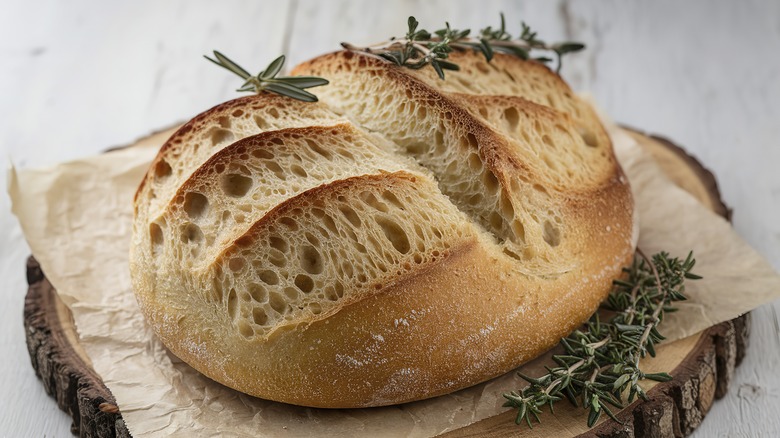
The technique of making no-knead bread (which involves making bread without the laborious kneading process) is actually ancient, but it was only recently popularized again. In the last few decades, several bakers have attempted to bring their own signature techniques into the mainstream. But who is responsible for pioneering modern no-knead bread?
One of the biggest names associated with no-knead bread is Jim Lahey of Sullivan Street Bakery. In 2009, he wrote the renowned book "My Bread: The Revolutionary No-Work, No-Knead Method," which received rave reviews from The New York Times and Nigella Lawson. But, actually, while Lahey often gets the credit for bringing modern no-knead bread techniques into the mainstream, there were many women who paved the way in the decades before.
In 1999, a decade earlier, a Californian baker called Suzanne Dunaway also published a book on no-knead bread, titled "No Need to Knead: Handmade Italian Breads in 90 Minutes." Before that, in 1945, Sharyon Duke shared a no-knead bread recipe with the readers of The Nevada Daily Mail. And before that? A woman named Doris Grant published similar no-knead bread advice in a paper called the Sunday Graphic. You get the gist.
11. Tortilla chips
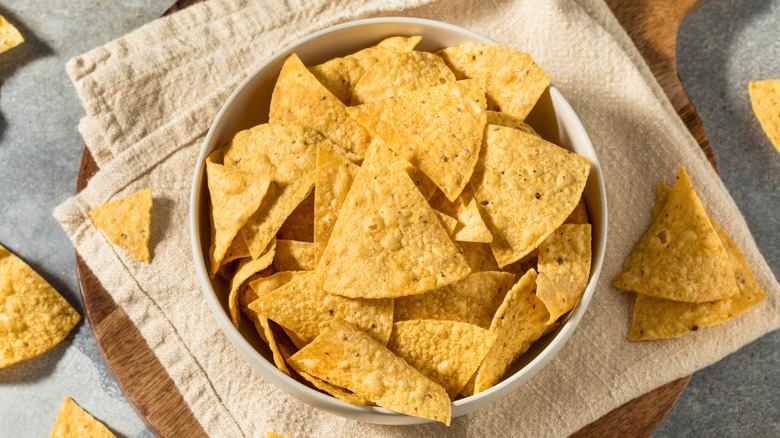
One of the biggest names in the American mass-produced tortilla chip world is, without a doubt, Doritos. But this global juggernaut, founded in 1964, didn't invent the snack it's most famous for. Nope, that was Mexican-American entrepreneur Rebecca Webb Carranza in the 1940s.
Carranza was the company president of her family's El Zarape Tortilla Factory in Los Angeles. The story goes that in the late 1940s, she collected some discarded, misshapen tortillas from the factory, and instead of throwing them away, she cut them into triangles and fried them. She took the fried tortillas to a family party, and they were a hit. So, of course, the family business started selling them, and soon enough, the Tort Chips (as they were known then) were one of El Zarape's best-sellers.
Today, thanks to Carranza, who died in 2006 at the age of 98, the tortilla chip industry is global, and still growing rapidly. In fact, by 2032, Sky Quest predicts that the entire tortilla chip market will be worth more than $46.6 billion.
12. Dubai chocolate
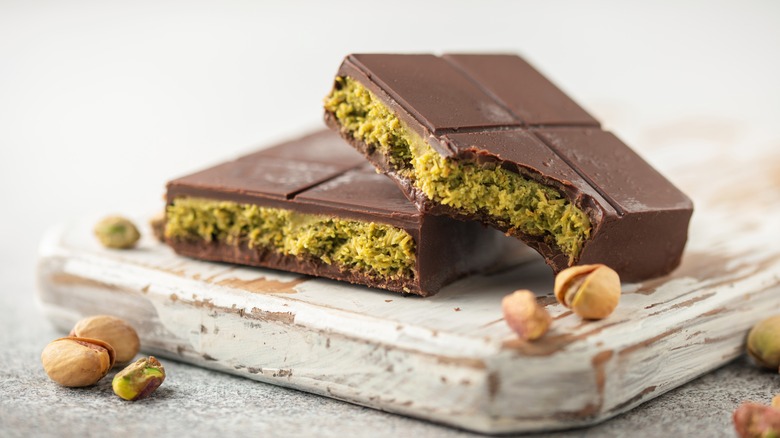
The most recent invention on this list is Dubai chocolate, which hit the mainstream just last year. And in true 2020s fashion, it all started with a TikTok. But let's start at the beginning, before the viral fame.
Back in 2021, Dubai-based British-Egyptian entrepreneur Sarah Hamouda started her own chocolate brand, Fix Dessert Chocolatier, as a side hustle. Inspired by the Middle Eastern favorite knafeh (which combines pastry with ingredients like rose water and pistachio) and motivated by pregnancy cravings, Hamouda decided to create her own pistachio-laden chocolate bar, called Can't Get Knafeh Of It. As it turns out, people really, really could not get enough of it.
After influencer Maria Vehera posted a TikTok of herself eating the chocolate bar in 2023, sales of Can't Get Knafeh Of It, or "Dubai chocolate" as it's now nicknamed, skyrocketed. Today, there are even countless knockoffs of Hamouda's original product, sold everywhere from Lidl to Costco.
13. Camembert cheese
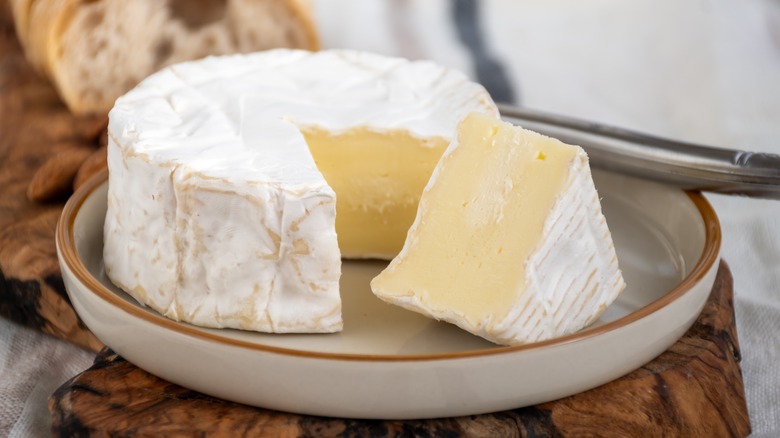
France is renowned for many different cheeses, but one of the most iconic has to be Camembert. Traditionally made with raw milk, the creamy, earthy, soft-ripened cheese with a white skin is usually sold in wheels. It can be eaten at room temperature, but one of the most popular ways to enjoy it is baked until it's ultra-gooey and perfect for dipping.
Camembert cheese comes from the village of Camembert in Normandy, and according to legend, it was invented by a French cheesemaker called Marie Harel more than two centuries ago, who developed the recipe after speaking to a priest from Brie. It was the French Revolution and anticlerical sentiment was strong, so the priest, Abbot Charles-Jean Bonvoust, was in hiding at the Manor of Beumoncel where Harel worked. He taught the cheesemaker how to make Brie, but she altered the recipe to be more suited to Normandy's milk, and Camembert was born.
It took a while for Harel's creation to take off, but the legend continues, she had a little help from Napoleon III. The cheesemaker's son managed to get the emperor to taste it, and he was sold instantly. Per Business Insider, now, France produces around 360 million wheels of Camembert cheese every year.
14. Fluffernutter sandwiches
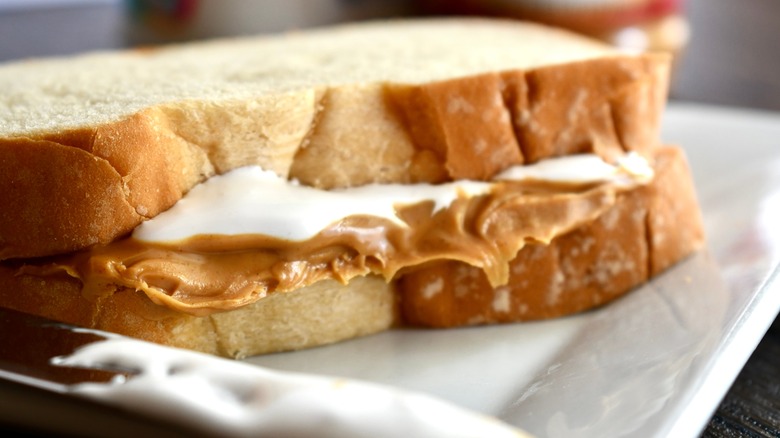
Sibling to the PB&J, fluffernutter sandwiches have long been a staple of college dorms, kids' birthday parties, and late night snacks. Everyone has their own twist on the simple snack, which, in its most basic form, is just marshmallow cream and peanut butter in two slices of bread. Some say they're best served with a handful of potato chips in the middle for extra crunch, while others choose to swap out the bread for peanut butter cookies.
America has Minnesota to thank for the fluffernutter sandwich. There, it was created for the very first time by confectioner Emma Curtis. It was after the First World War, and meat was scarce. People needed another way to get their protein, so Curtis came up with the "Liberty Sandwich," which, today, is the iconic fluffernutter. And the marshmallow cream inside that sandwich? It was her family's very own Snowflake Marshmallow Créme, made by her brother, Amory Curtis. The spread was a predecessor to Marshmallow Fluff, which was invented four years later by another Minnesota confectioner, Archibald Query.
15. Chimichanga
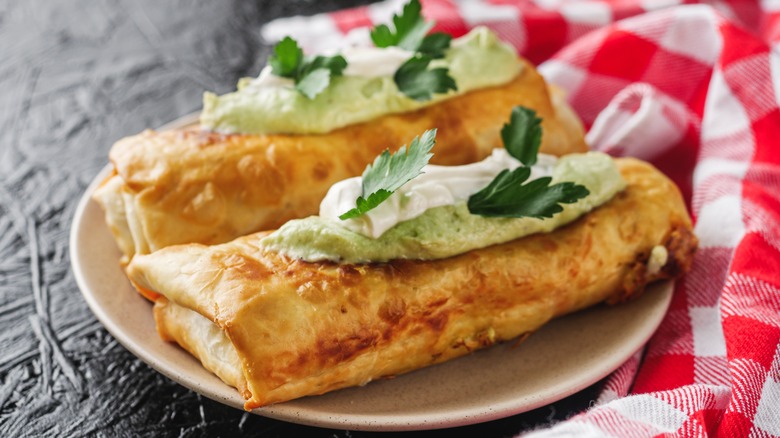
Per YouGov, chimichanga is in the top nine most beloved Mexican dishes in the U.S. At number seven, it sits just behind fajitas and guacamole, and above chili con carne and huevos rancheros. But chimichanga, which is, of course, a deep-fried burrito, likely wasn't invented in Mexico. Actually, the crunchy treat likely comes from border state Arizona.
There are quite a few different theories about how the chimichanga came to be, but they all stem back to 1950s Tucson. Some believe it was Woody Johnson, the owner of Mexican restaurant Macayo's, for example, who invented it when he accidentally dropped a burrito into a deep-fat fryer. But one of the most commonly accepted chimichanga origin stories doesn't involve Johnson, but another Tucson restaurant owner: Monica Flin.
Flin died in 1975, but according to her surviving relatives, the fact that she invented the chimichanga is cut and dried. Their story goes that Flin, who owned El Charro Café, was in the middle of a late-night babysitting session when she got hungry. She fixed herself a bean burrito, and was about to eat it when one of the children bumped into her. The burrito went flying into a nearby vat of hot oil, and, instead of swearing, she exclaimed "Chimichanga!" Thus, the iconic Arizona Tex-Mex favorite was born.