

10 Fruits And Veggies You Should Grow In Your Fall Garden
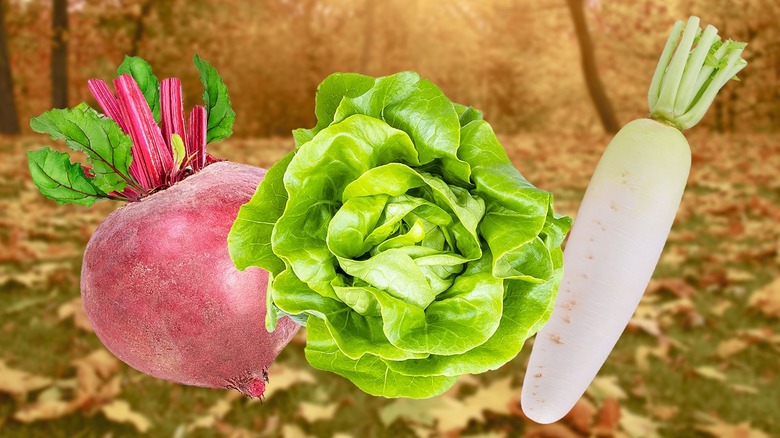
There are many reasons you may want to grow food in your fall garden. Perhaps you've had a successful summer harvest, and want to continue your growing adventure. Or maybe you've missed the traditional growing season and want to make up for lost time. Whatever the answer, you're thankfully not short on options. There are many foods you can plant later in the year that will either give you a fall harvest or set you up for bountiful produce when the warm weather comes back around.
I run my own garden business, and a big part of that is ensuring I make the most of the colder months. Cool-weather crops and those that need preparation for the spring are a big part of this. I've had experience with growing all of these fruits and veggies. That allows you to learn from the failures I had in my early years, along with my expert advice on how to grow them now. By the end, you should have a great range of options for how you can extend your growing season into the fall and beyond.
1. Lettuce
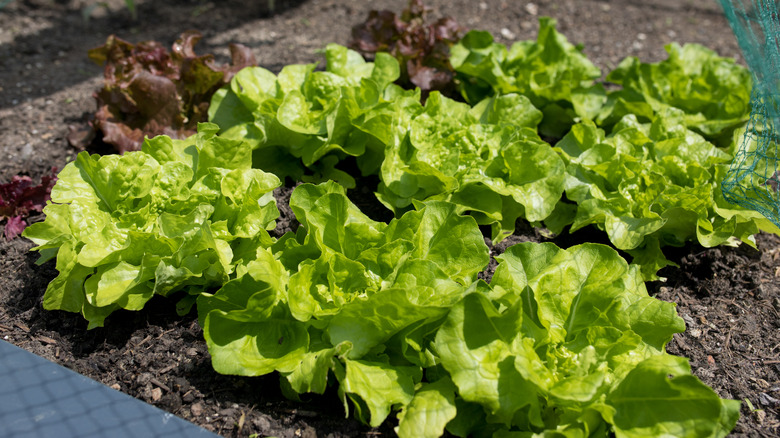
If a beginner gardener asked me what the easiest fruit or veggie to grow, my answer would be lettuce. The biggest problem you have with lettuce is that it can bolt when temperatures get too high. Bolting is when a lettuce plant grows a large central stalk to produce flowers and eventually seeds. When this happens, the leaves will go bitter. Growing lettuce in your fall garden helps to avoid this issue due to the cooler temperatures, keeping the leaves consistently tasty. You must keep an eye out for pests, but it's otherwise hard to go wrong here.
A part of the reason for it being both a great beginner plant and good for the fall is its rapid growth. There are some varieties that can be harvested in as little as 28 days, with most others not taking much longer than that. Loose-leaf varieties can be continuously harvested whenever you need a few lettuce leaves and will keep going until that first frost hits. Given it thrives in small spaces and containers, it works in garden beds but can even be grown inside. There are countless varieties to choose from, so make sure you're growing one of your favorites. When many other fruits and veggies have died or have gone dormant, lettuce can keep you full of homegrown produce deep into the calendar year.
2. Radishes
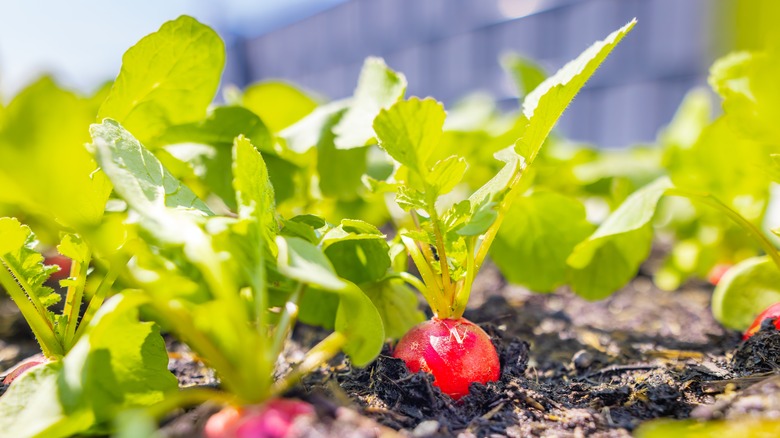
The radish is one of several root vegetables that are ideal for a fall garden. Root vegetables are simply those that grow underground. As with radish, many of them thrive in cool weather that allows them to retain their crisp texture. It also allows them to be a little sweeter and milder than if they were grown in the heat of the summer. As with lettuce, one of the best things about radish is the speed at which it grows. Some varieties can mature in as little as 20 days. If you love radish, this can allow you to sow successive plants throughout the season for a constant harvest.
As with most root vegetables, they need well-drained soil to thrive. This means that if you are planting them into the ground, make sure the soil quality is high. Otherwise, they are great for containers and raised beds. There are also plenty of different varieties of radish to explore. The Cherry Belle is probably the classic choice, but you may opt for something different, such as a Daikon (long and white) or French Breakfast (oblong and red). It's not just the root that's edible with a radish, as you can also enjoy the greens, too. If you like adding a peppery taste to your salad, they are perfect.
3. Spinach
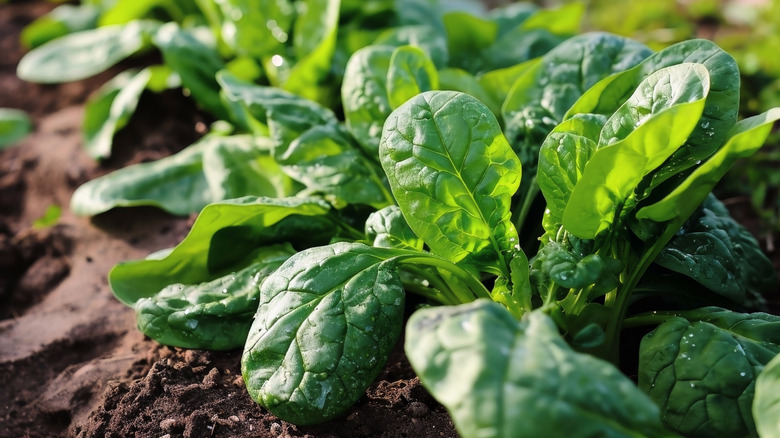
Spinach is not a fan of the heat at all. There are some heat-resistant varieties around, but most of the time, spinach can struggle to grow tasty leaves and will bolt easily if temperatures get too high. The plus side is that it makes it one of the easiest crops to grow in a fall garden. Spinach can seem a bit counterintuitive at first, as you wouldn't expect a plant to enjoy shorter days and cold air. I've even found that its leaves can taste fresher when temperatures have hovered around the freezing point. Spinach can pretty much be grown anywhere, as it's not too fussy about soil requirements. It doesn't require much space either and can often be ready to harvest in six weeks.
The leaves do regrow after harvesting, or alternatively, you can keep planting every couple of weeks. Spinach can survive winter, but the growth of the plant will slow down drastically in long, cold spells. When spring comes around, it will bolt. Due to this, there's no point trying to keep the plant alive during winter, so just pick the leaves until you have no more to pick. However, if you grow several plants, you can still enjoy fresh spinach deep into winter. Spinach is a powerhouse of nutrition, and having your own supply can be a great way to enjoy the incredible range of recipes it enhances.
4. Carrots
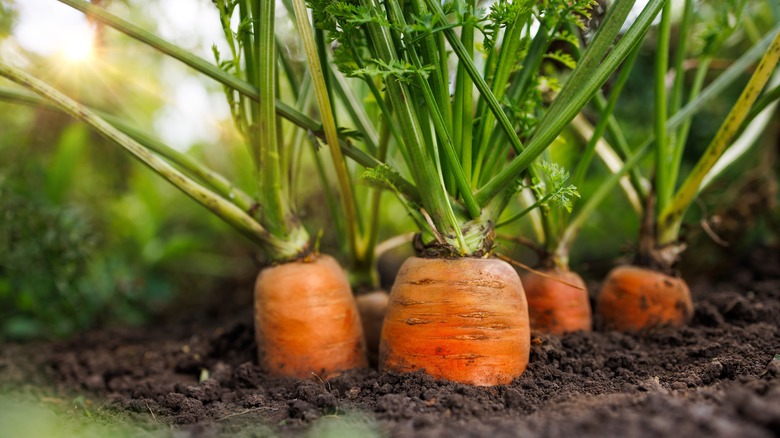
Carrots are one of the most popular vegetables, and another one that is ideally suited for the colder weather. Unlike some others on this list, they can be easily grown in the spring and harvested in the summer, but they won't have quite the same crisp taste. They are best planted in the autumn, where you will get to enjoy their sweet and crisp taste at their very best. You can even experiment with different varieties, especially with color, as there are purple, yellow, white, and red options available.
They are also low maintenance and can either be sown directly into soil or started indoors if you want to have closer control over the process. They do prefer a sunny spot and can take longer to grow than a few other options on this list, with at least a couple of months of growing time. A great aspect of carrots is that they don't need to be picked as soon as they mature. A fully-grown carrot can be left in the ground for several weeks, allowing you to pick them when you want. Due to this, you don't need to worry about planting too many and having them going to waste. This can be fantastic for gardeners, as by the time you finish picking them, you can often start the process of growing your summer crops right away.
5. Garlic
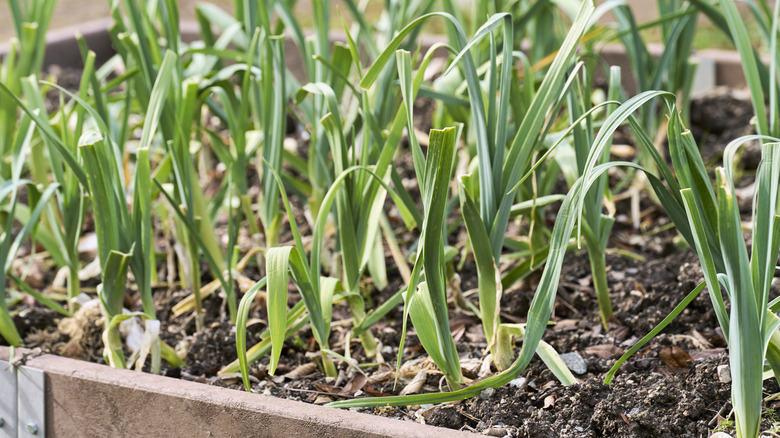
Garlic is one of only two options in this list that shouldn't be harvested in the fall. However, they do need to be planted in the fall, ready for a beautiful spring harvest. That long time to harvest may put off beginner gardeners, but it can be satisfying to see your hard work pay off when the good weather comes back around. The reason they need to grow through the winter is that the cold weather signals to the plant to form a bulb. While growing garlic in one growing season is possible, you'll never get the same great results. Despite the long growing time, garlic needs minimal maintenance.
All you need to start is a garden clove, which you can easily save from your kitchen scraps. You want to give it well-draining soil to prevent the bulb from being waterlogged, and you still want it to get plenty of sun. It's also a good idea to use mulch, which is a layer of any material on top of the soil. Wood chips, bark, and grass clippings are just some examples. This not only helps with moisture retention but can also help to insulate the plant on the very coldest of days. Not being able to harvest for around 9 months may put some people off, but if you love garlic, it can be worth the wait.
6. Beets
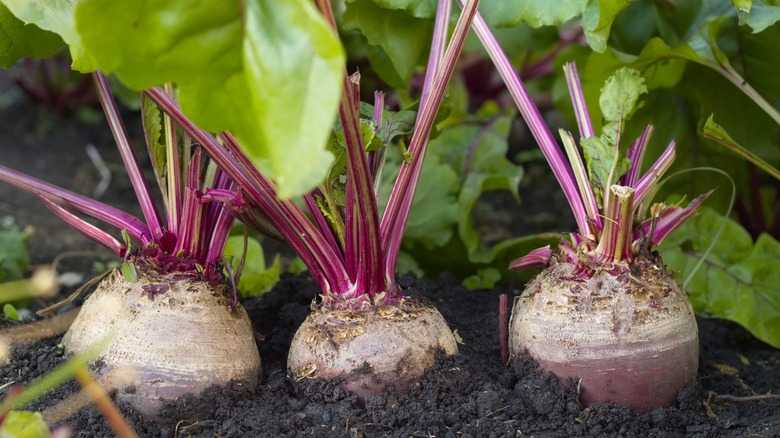
Even though they don't get hit by direct sunlight, there are often negatives when root vegetables go through a period of intense heat. They can get more woody in texture with their flavor becoming bitter. The lower temperatures that come with fall help beets to have a deeper and richer flavor. This is similar to carrots, and there are a few other similar growth habits the two share. They are also a vegetable that can be grown directly in the soil in either late summer or early autumn. And as with carrots, they can stay in the ground for quite a while, even tolerating light frosts. There is also a wide range of colorful types to choose from, away from the classic red.
It's best to give them some mulch for extra protection, with cold frames also being another choice. Every part of the plant is edible, with the tops being a flavorful addition to salads, along with many uses for the beet vegetable itself. For those with smaller gardens looking for maximum efficiency, it makes them a great choice. As for growing needs, there are no special requirements here. Full sun, well-drained soil, and consistent moisture will lead to healthy growth.
7. Green onions
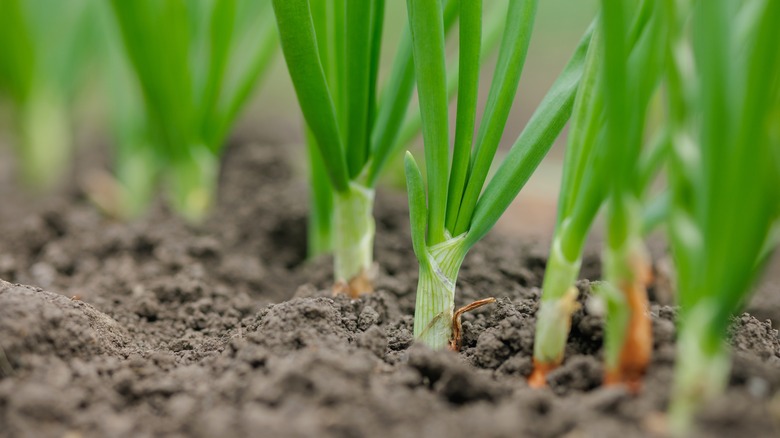
If you want a simple root vegetable to grow that doesn't take up a lot of space, green onions are a great place to start. Also known as salad onions, spring onions, or scallions, they grow quickly, and it's hard to go wrong with them. With mild temperatures, they will grow steadily without any fear of them bolting. From seeding to harvest will only take a couple of months, and you can continuously plant them throughout the season for a steady supply of food. One of the greatest features of green onions is how little space they take up. Their growth remains slim and upright. This means they can be grown in spaces such as between other foods in garden beds or in small containers.
They can be grown anywhere, and as long as they receive constant watering and a decent amount of sun, they'll be happy. If you do grow your own and are looking for uses for them, you'll see how versatile and underrated they are. Grilled green onions can even be a brilliant BBQ side dish, along with their uses in a wide range of recipes. You can harvest them at different times, depending on what flavor profile you want. Younger plants usually are sweeter and tender, with older stalks having a bolder and sharper flavor. If you like the idea of growing root vegetables but are nervous about where to start, go with green onions.
8. Strawberries
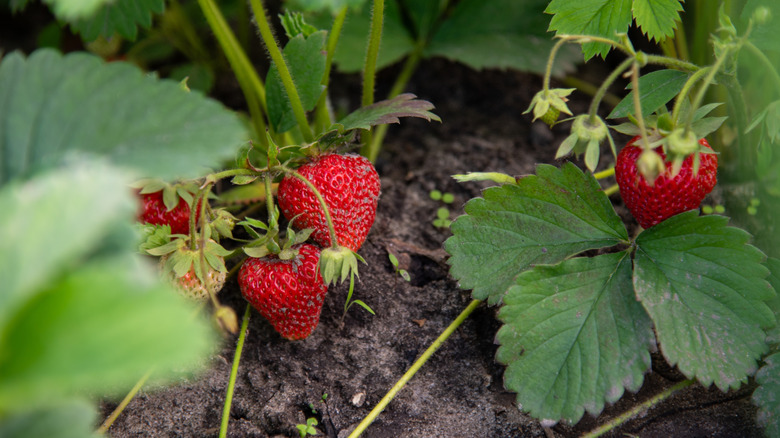
There are plenty of interesting foods out there that can only grow for one season and will die off over winter. Strawberries are a perennial, meaning they will continue to fruit year after year. This means that if you plant them in the autumn, you can set yourself up for a bountiful selection of strawberries from next spring. In the colder months, strawberries focus their energy on root development rather than fruiting. This is why some varieties won't fruit in their first year, which is another reason to start them in the fall. They also take a long time to grow from seed, which can end up being disappointing for those who sow them in the spring, hoping for fruit throughout the summer.
That long growing time is a barrier to adding them to your fall garden. You can either grow them indoors from seed or buy runners to establish outdoors. As long as they have a decent root system, they will survive the winter. It's important to check what variety you are planting. Not only is it a personal choice here, but you almost certainly will want an everbearing variety that will continue to fruit throughout the warm months. This contrasts with other varieties that produce all their fruit at once before going dormant again. I didn't want to pack this list with fruits that all have the same requirements, but the advice here also applies to almost all berry plants.
9. Pak choi
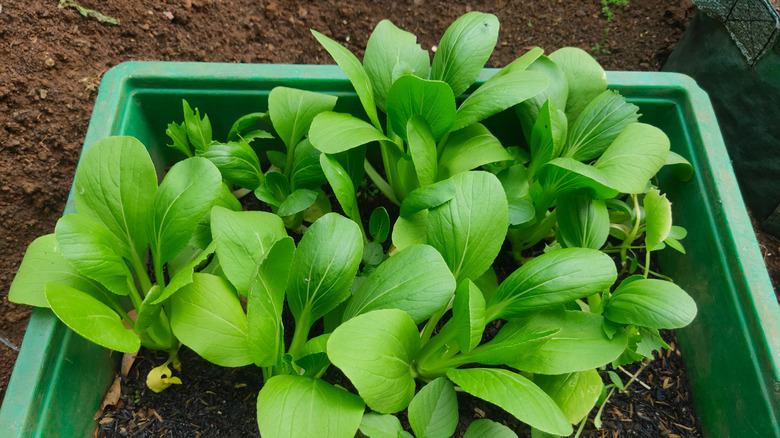
Bok choy (also known as pak choi) is another crop that prefers colder climates. As with plenty of others on the list, it is prone to bolting, and the fall weather helps to keep the stalks crisp and the leaves tender. You're much more likely to get the succulent and sweet flavor you're looking for when compared to growing it in the summer. Heat can make the stalks bitter, and while there are ways you can reduce this through blanching, it's a step you can often avoid depending on when it is grown.
It's fairly easy to grow, with the common requirements of needing full sun and well-drained soil. It can be sown outdoors, but I always prefer to start my seeds indoors. This is simply for closer control over the process and to protect them from pests, especially slugs. Its baby leaves can often be harvested in as little as a month after sowing, making it ideal for those who are worried about missing the growing season. Full leaves can take up to two months to grow. As with lettuce and spinach, you can use it as what's called a "cut and come again" green, which means as long as you don't harvest too much at a time, it will regrow leaves for a continued harvest.
10. Turnips
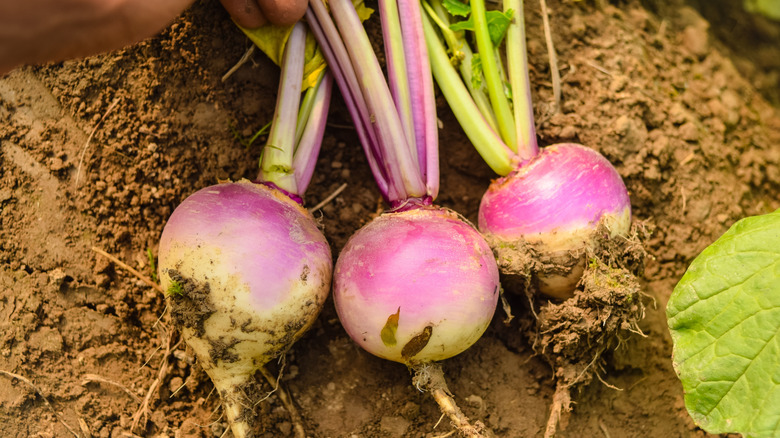
If you're not used to growing food, you may be surprised by how many crops not only can be grown in the colder months, but actually prefer it. Again, turnips are one of these. They can be grown in the summer, but when they are, they are best harvested early to prevent the common issues of woody texture and bitterness. When nice and cool, you'll get tender and flavorful roots that can often have a lovely natural sweetness. In terms of growing requirements, it's not anything you haven't read before here — full sun, well-drained soil, and keep that soil moist.
I've talked a lot about well-drained soil, but what does this mean? Here, you want soil that water will run through rather than accumulate in. You want dark soil that holds a soft shape in your hand but crumbles easily under pressure. Soil that doesn't crumble is usually too heavy, and soil that runs through your hand easily probably has no organic material left in it. The soil quality that people have in their gardens can vary massively, so make sure to check yours. If it's poor quality, utilizing garden beds and containers is an easy solution. Turnips take about two months to grow, and they are also a dual crop with tasty edible greens. As with everything on this list, turnips show that just because the cooler weather is on its way, there's no need to stop growing food.