

15 Wingstop Facts Worth Learning
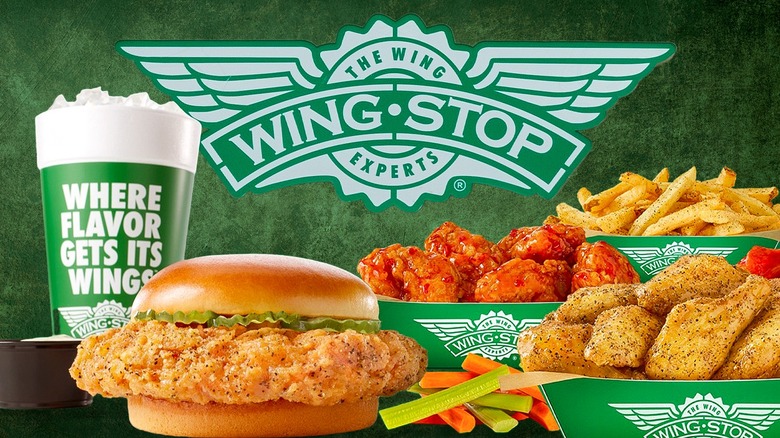
You may have gone ham on a 20-piece order of Wingstop's hot honey rub wings before, but how much do you know about the brand behind the bite? In 1994, a little aviation-themed restaurant opened in Garland, Texas. Nobody knew then that it would one day fuel TikTok challenges and attract investors like Rick Ross, who owns more Wingstop franchises than some people have pairs of sneakers. From receiving celebrity shout-outs on social media to making cameo appearances on your favorite shows, Wingstop isn't just any fast-casual chain. It's grown from a humble spot with a focused menu into a billion-dollar global powerhouse, with no signs of slowing down.
Maybe you've ordered 100 wings for game night, argued with friends over the best flavor, or have yet to try this spot's iconic dishes (shame on you). Either way, Wingstop deserves its props. It turned a single menu item into a full-blown obsession. These facts reveal exactly how it happened, and why its story is far from finished.
Wingstop's founder ditched pizza for chicken wings
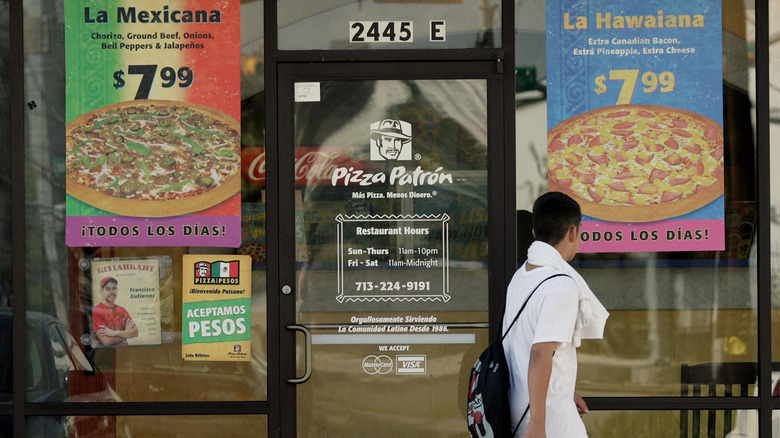
Before Wingstop, Antonio Swad was in the pizza game. He co-founded Pizza Patrón in 1986, a Dallas-based pizza joint catering specifically to Hispanic communities. Famed for its freshly made dough, headline-hitting promotions, affordability, and classic as well as Latin-inspired flavors, Pizza Patrón quickly grew to four stores eight years in, but Swad didn't think franchising was his best move at the time. As he later shared on the "Biz Doc" podcast, it felt premature because it lacked true differentiation in the restaurant scene. So, Swad instead channeled the earnings into his new vision for Wingstop in 1994. Of giving chicken wings the spotlight, he later explained to Franchise Times, "It was a fresh idea, and it's still the best restaurant concept ever invented."
Andrew Gamm, executive VP of Pizza Patrón, recalled Swad inviting him over to talk about branding for the new wing concept. When he arrived, Swad was in his living room surrounded by deep fryers, testing out wing flavors himself. Though the original plan was carry-out only, Gamm convinced him to include dine-in. With Pizza Patrón running smoothly, Swad focused on Wingstop, growing it to over 90 locations before selling it to Gemini Investors in 2003.
Its original design is inspired by early aviation
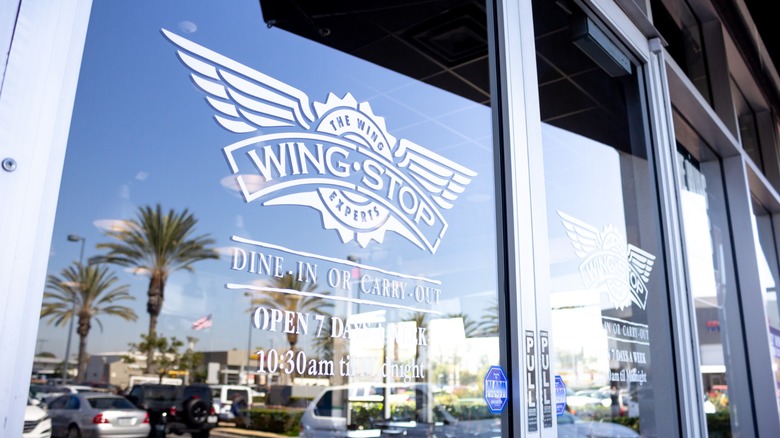
Wingstop's visual identity has evolved over the years, but its commitment to an aviation-inspired theme has remained consistent. Early restaurants even featured vintage aviation memorabilia, salvaged aircraft parts included. But as sourcing such pieces became difficult, the brand modernized. According to NRN, John McDonald, the VP of design and construction at the time, led the rollout of Wingstop's first major redesign in 2009. It featured a more defined art deco style from the 1930s-1950s, laminated aviation-themed tabletops, stainless-steel diner edges, and a B-17 bomber mural, McDonald explained. "The older style of the restaurant was warm and cozy, it didn't really reflect any particular era," he noted. "This has a much tighter grip on the whole theme of the store."
By 2013, the brand leaned into larger, more welcoming store formats, especially in areas favoring family and group dining. Seating capacity grew from around 30 to 70-80. Simultaneously, Wingstop began testing new concepts that felt fresh. This included an upscale 3,600-square-foot aviation-free prototype called Wingstop Sports, launched in Las Vegas with a sports theme, full bar, and expanded menu.
Some Wingstop locations still embrace the original aviation theme, however. At Singapore's City Square Mall, for example, the restaurant's layout is reminiscent of an airplane parked in its hanger. It features hand-painted designs and curving timber-and-steel ribs that envelop a large communal table in the center, which anchors the space.
Wingstop's fries are hand-cut fresh daily, not frozen
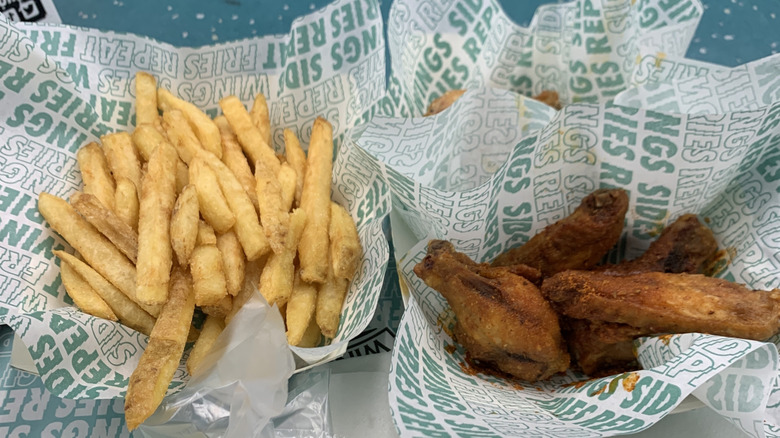
Unlike most quick-service chains that rely on frozen, pre-cooked fries for convenience, lower labor costs, and consistency, Wingstop takes a hands-on approach. Fries are hand-cut fresh in-store each day. Reviews note the presence of employees peeling and hand-cutting potatoes throughout the day at Wingstop locations, then frying them until golden brown and tossing them in Wingstop's proprietary seasoning blend before serving them hot.
The chain's fry lineup goes beyond the basics, offering loaded options like fries topped with jalapeño cheese sauce, Voodoo fries with cheese sauce, ranch, and Cajun seasoning, and buffalo ranch fries with ranch dressing and Wingstop's Original Hot sauce. This dedication to fresh, made-to-order preparation delivers a bolder, more flavorful fry — even if some argue that frozen fries have the edge on taste — setting the franchise apart in a category that usually treats fries as an afterthought.
The chain created a virtual brand because of a chicken wing shortage
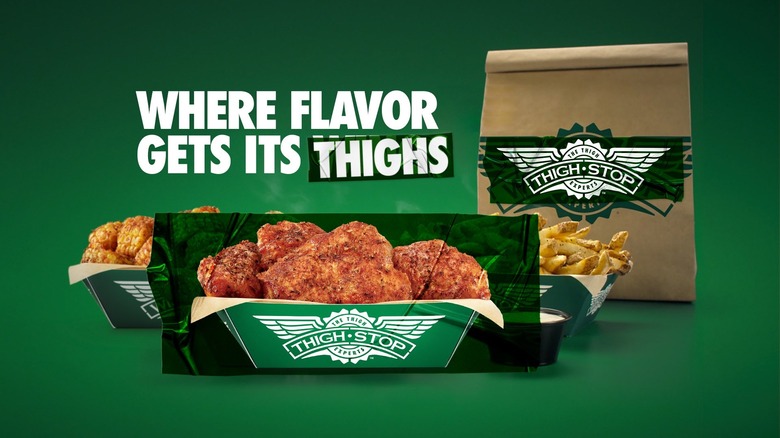
In June 2021, facing soaring wing prices and supply chain disruptions, Wingstop introduced Thighstop, a delivery-only concept that reimagined chicken thighs as a center-of-the-plate item, which was launched through over 1,400 U.S. locations. Available through DoorDash and Thighstop.com, the virtual brand served both bone-in and boneless thighs in 11 of Wingstop's signature flavors, alongside sides like blue cheese dips, rolls, fried corn, and fries.
As wing prices surged from under $1 to over $3 per pound, CEO Charlie Morrison positioned the shift as part of a "whole bird strategy" to stabilize costs and protect franchisee margins in an interview with Forbes. He further explained to CNN Business that thighs, priced at roughly half the cost of wings, offered a financially viable alternative. Wingstop had begun testing bone-in thighs in late 2020 but fast-tracked the full rollout in the following year due to supply pressures. A few months after launch, Wingstop officially integrated bone-in thighs and boneless Thigh Bites into the core menu. It also introduced Thigh Thursday, offering deals like a $13.99 meal for two via its app and website.
Rick Ross owns dozens of Wingstop franchises
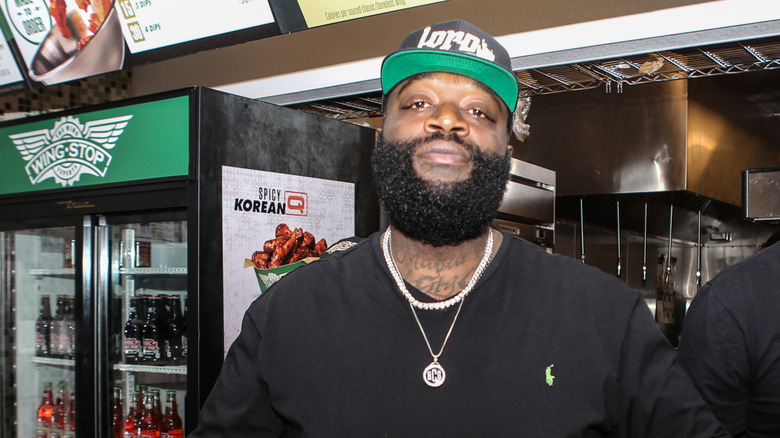
Rapper-turned-entrepreneur Rick Ross didn't just rap about loving Wingstop's wings in his 2010 track "MC Hammer," he backed it up by becoming a franchisee. Since opening his first location in Memphis in 2011, Ross has grown his footprint to nearly 30 Wingstops across the U.S. He's credited the brand's lemon pepper wings as the hook that drew him in and made him decide Wingstop was an investment to pursue. Ross, who reportedly earns $200,000 a year from some locations, also name-dropped the flavored wings again on Gucci Mane's 2012 song "Trap Boomin'."
Rather than remain a passive investor, Ross is known to show up at openings, regularly references the chain on social media, speaks about Wingstop in interviews, and personally engages in brand initiatives. He even gifted his son a Wingstop spot for his 16th birthday in 2021. Unfortunately, five of his Mississippi locations were fined $114,427 by the U.S. Department of Labor for wage violations and other labor infractions. "When you running a business, there will be mistakes," Ross said in an apology video on his Instagram Stories. "But as the biggest boss, you never make the same mistake twice."
How Wingstop's lemon pepper wings became a hip-hop icon
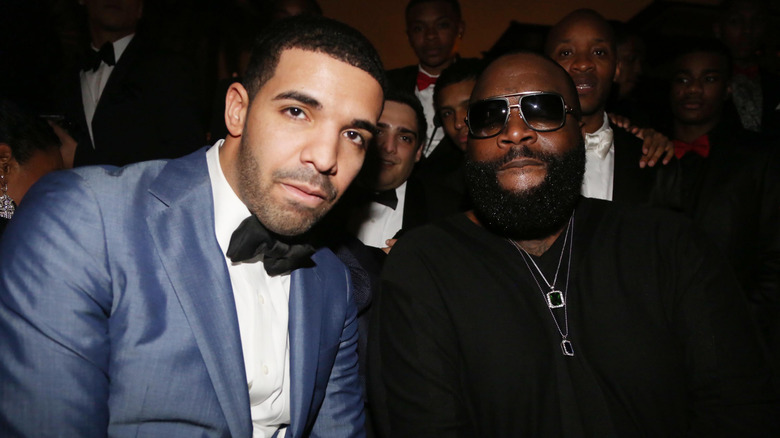
Wingstop's lemon pepper wings have transcended mere menu item status. What started as a zesty flavor profile evolved into a fixture in the world of hip-hop symbolizing both Atlanta's influence and the crossover between music and food, and that transformation has everything to do with celebrity endorsements. It all started when Rick Ross began referencing them in his music, as previously mentioned. Then came Drake's 2021 track "Lemon Pepper Freestyle," which featured Ross and the iconic line: "Lemme get a lemon pepper order, please."
Jamie Foxx also showed his love on Instagram in 2024 by hilariously singing his massive lemon pepper wing orders over the phone, complete with piano accompaniment. Kylie Jenner and Anastasia Karanikolaou also praised the same flavor in a mukbang TikTok video. Wingstop's senior director of culinary, Larry Bellah, told QSR, "Lemon pepper is one of our most talked about flavors, with a proven place in pop culture."
The fries are dusted with a secret sugary spice blend
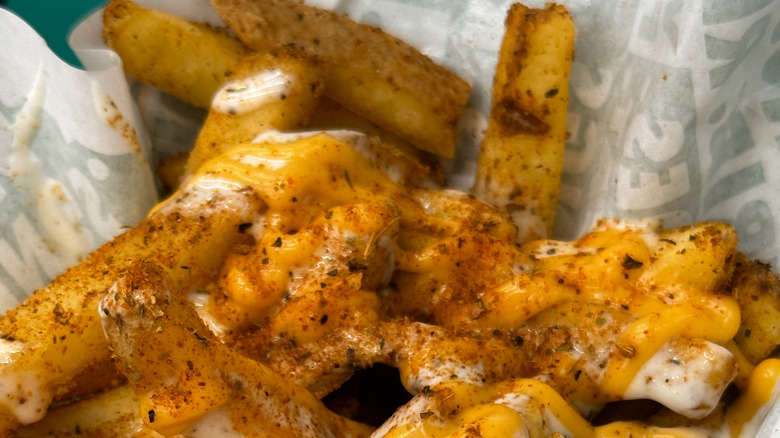
You might think the secret behind Wingstop's cult-favorite fries is just a hearty dose of salt, but you'd be way off. What really makes them unforgettable is a sneaky dash of sweetness. That's right: Wingstop coats its fries in a sugar-enhanced seasoning blend. Former employees have actually confirmed on Reddit that this isn't just another foodie urban legend.
While the exact recipe remains top secret, multiple sources suggest the mix includes white granulated sugar, brown sugar, black pepper, salt, chili powder, garlic powder, and paprika. The sweet-savory flavor profile isn't just delicious, it's seemingly strategic. Sugar boosts cravings, delivers a dopamine hit, intensifies the golden-brown fry color during cooking, and helps set Wingstop's fries apart in a crowded fast-casual and fast food landscape. Still, reception is mixed. Many Wingstop loyalists argue that the fries are the best item on the sides menu and praise it online, but others hate them.
Wingstop's original menu didn't include boneless wings
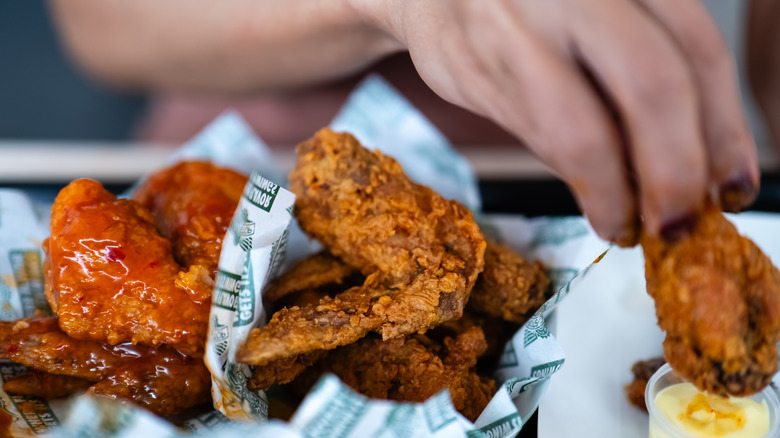
When Wingstop first launched, the focus was strictly on bone-in wings, seasoned fries, and sauces. But during the 2007 recession, as wing prices soared, boneless options gained traction industry-wide. Wingstop eventually joined the trend with its own take: battered and breaded all-white chicken breast pieces seasoned and sauced to match the bold flavor of its traditional wings.
First tested in Denver, Las Vegas, and Houston, the offering quickly proved to be a hit. At the time of the nationwide launch, Wingstop's executive VP of marketing and R&D, Andy Howard, told QSR that the goal was to expand variety. Guests could even mix boneless and bone-in wings in a single order, giving them more flexibility at no extra cost. Despite bone-in wings remaining the heart of the brand, boneless quickly became a staple, especially in newer markets. By 2013, boneless menu items already accounted for over a third of Wingstop's sales, and they provided a cheaper, quicker alternative without straying from Wingstop's core identity.
It launched a cashless 'restaurant of the future'
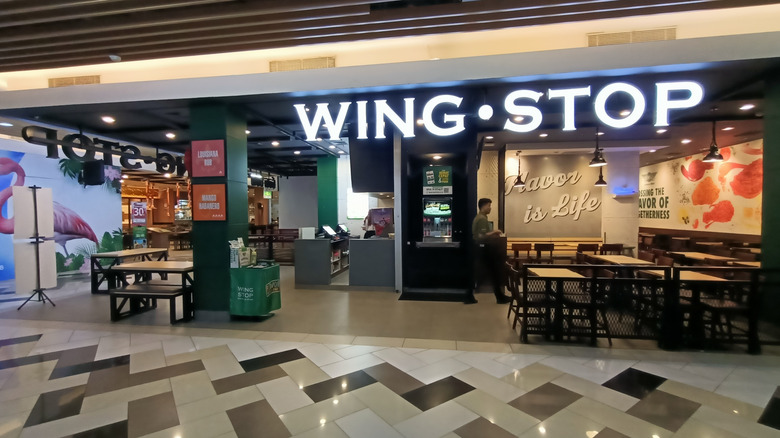
In 2022, Wingstop launched what was dubbed its "restaurant of the future" prototype in Dallas. This cashless and digitized restaurant, which focused on carryout and delivery, eliminated dining rooms for a smaller, 1,300-square-foot space designed to optimize off-premise service and sustainability.
Building on this, Wingstop developed its AI-powered Smart Kitchen in 2025, which uses hundreds of data inputs like weather and local events to predict demand every 15 minutes. There's a big screen at the front, so real-time order tracking is visible to staff and customers, enhancing transparency. As a cool touch, each order gets printed stickers detailing the containers' flavors. Thanks to this upgrade, wait times reportedly dropped by half to just 10 minutes in-store. Ordering in? Wingstop can get to your door in under 30 minutes. This tech-driven approach even cut Super Bowl wait times to around 16 minutes. After two years of training the system, Wingstop expanded Smart Kitchens to over 400 locations, aiming for a full rollout by end of 2025.
Wingstop's ranch dressing has more of a cult following than you might think
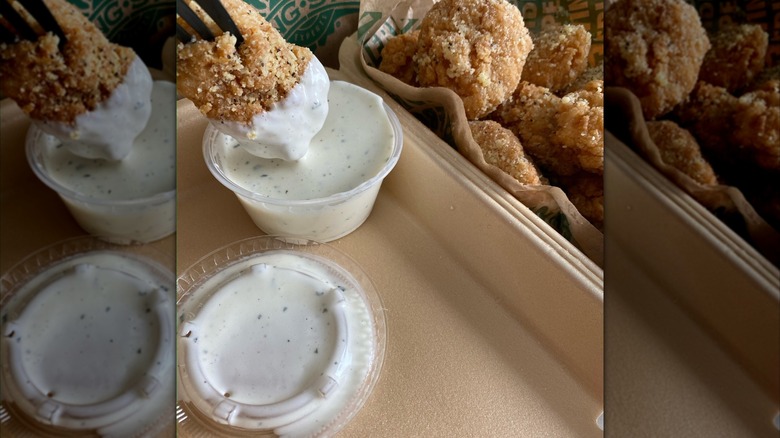
As one of the chain's most beloved dips, Wingstop's ranch dressing has developed an unexpectedly passionate cult following over the years. To mark National Ranch Day in March 2025, the chain auctioned off its first (and, as of this writing, only) official bottle of house-made ranch on eBay, alongside a year's supply of refills, plus a certificate of authenticity signed by chef Larry Bellah, Wingstop's head of culinary. The winning bid, which benefitted Wingstop Charities, reportedly went for at least $1,750.
Due to the ranch's popularity, many customers have expressed frustration at not being able to purchase a bottle for home use. Luckily, TikTok videos by former employees reveal the simple yet surprising composition — mayonnaise, buttermilk, and a Hidden Valley-style seasoning — it's garnered millions of views. The dressing has even inspired unique fan expressions, such as ranch fountains and people featuring it at wedding receptions. It's thick, rich, made fresh in-store, and delicious, contributing strongly to repeat visits and brand differentiation. Wingstop even introduced a limited-time ranch-scented soap in homage to this iconic dip.
For those who want to recreate it at home, copycat recipes emphasize using equal parts heavy-duty mayo and whole-fat buttermilk, plus a packet of ranch seasoning. If store-bought ranch seasoning isn't available, you can easily make your own at home.
The chain quietly tested (and briefly withdrew) its chicken sandwich
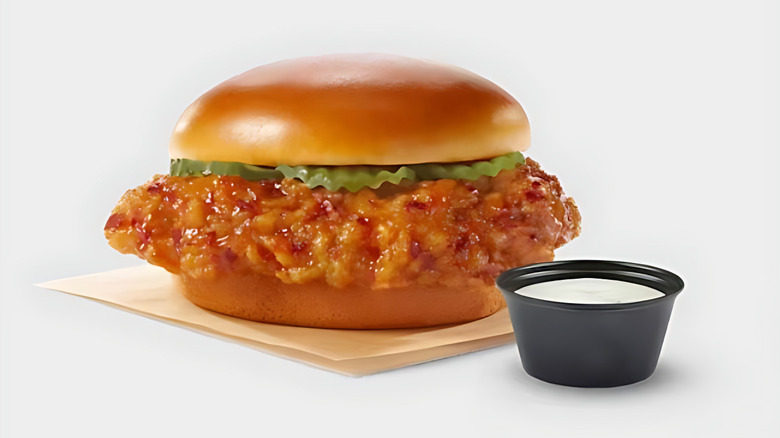
Months before its nationwide debut in 2022, Wingstop quietly tested its chicken sandwich in 60 restaurants across Columbus, Fresno, Las Vegas, and Orlando. Guests could order the hand-sauced chicken breast, topped with pickles on a toasted bun, in any of Wingstop's signature flavors a la carte or as a combo.
To hype it, the chain offered a viral campaign called Chicken Sandwich Split, giving away 100,000 sandwiches to customers who "broke up" with other chicken sandwich brands. When Wingstop launched this item nationwide that August, it sold more than 1 million sandwiches in less than a week, wiping out a full four weeks' supply in many locations and forcing a temporary withdrawal. This frenzy brought the chain its highest single transaction day ever. While some social media users speculated scarcity marketing might have been at play, analysts emphasized it was more of a forecasting error.
Wingstop was doing delivery before it was cool
Long before the COVID-19 pandemic forced restaurants to pivot, Wingstop was already betting big on digital ordering and delivery. Since CEO Charlie Morrison joined in 2012, Wingstop prioritized simplifying and standardizing the ordering experience by consolidating POS systems and creating an enterprise-grade online platform. This made it easy for franchisees to push digital orders across every channel and set the stage for Morrison's bigger goal: to digitize all transactions.
Prior to 2020, digital orders already made up about 40% of Wingstop's sales. That early investment paid off in a huge way. While many restaurants scrambled to adjust, Wingstop was already wired for a fully off-premise experience. Digital sales grew from 47% at the end of the first quarter to 65% by early quarter two, before holding steady and finishing the year at 62.5%. The company had already built a seamless delivery and order-ahead experience through its website and mobile app, and had forged delivery partnerships with DoorDash.
As a result, while others were shutting doors, Wingstop was opening new locations, growing same-store sales by 21%, and seeing earnings soar — showing continued momentum toward that 100% digital goal. Per NRN, Morrison has credited Wingstop's success to the company's focus on digital and its culture.
There's a secret hack to order extra-saucy wings for free
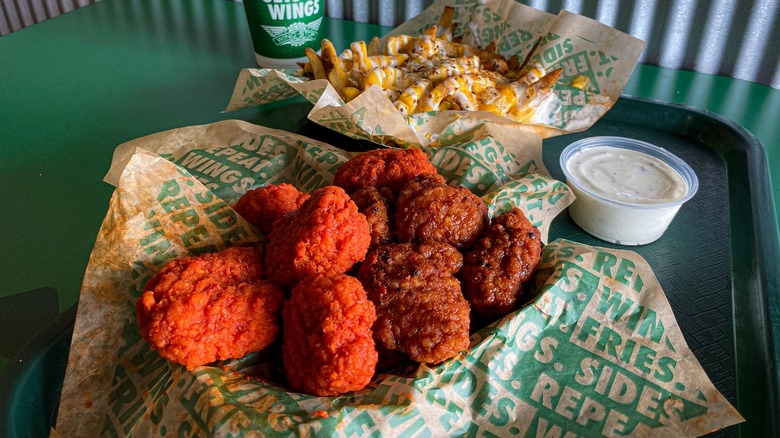
One of Wingstop's best-kept secrets isn't on the menu — but it's well-known among savvy fans. You can ask for your wings "wet" to get them doused in extra sauce at no additional cost. While ordering extra sauce technically incurs a surcharge of $1.99 at most locations, this subtle insider trick will get you the same result without the upcharge. Instead of lightly tossed wings, you'll get juicy pieces drenched in sauce and packed with flavor. This pro tip has made the rounds on TikTok, and Reddit threads also confirm the hack works — though some users mention results may vary by location, since around 98% of Wingstop locations are franchised and pricing is up to each owner.
To boost your odds, order in person or call instead of using the app, and be sure to ask for your wings "extra wet" or "extra sloppy." Just note that the extra sauce will likely be poured over your wings, not served on the side, so expect a messier experience. Also, for those wondering, the hack unfortunately won't work for the chain's beloved ranch sauce.
The chain's flavors draw inspiration from various global cuisines
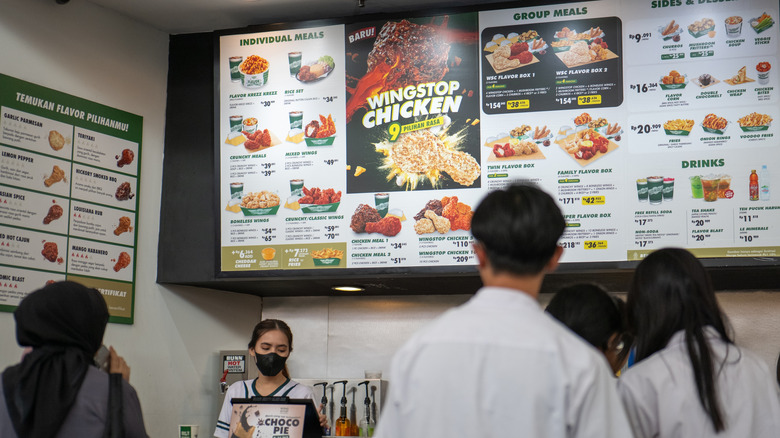
Wingstop's flavors are inspired by food cultures around the world, giving customers a unique and diverse taste experience. Take Spicy Korean Q, for example — it's a fusion of ginger, garlic, soy sauce, crushed red pepper flakes, and Sriracha, delivering a sweet-meets-spicy, Asian-inspired kick. Then there's the Louisiana dry rub, which is rooted in Cajun tradition, blending garlic among other spices and Creole flavors. It's milder than classic Cajun sauce but still rich with Southern depth.
Beyond these, Wingstop offers other globally inspired flavors. The Hawaiian flavor blends tropical citrus with Asian undertones. The Brazilian citrus pepper is a dry rub packed with zesty citrus and piri piri — a chili pepper, known for its slow-burning heat, that's native to Africa and a staple in Brazilian cuisine. This flavor leans more on bold, bright taste than upfront spice, delivering a sweet, fruity flavor with just enough heat to keep things interesting. Meanwhile, Singapore's kecap manis offering combines red chili flakes with sweet Indonesian soy sauce.
In France, Wingstop has even tailored its menu to suit local tastes. The golden mustard flavor is a regional creation. The classic garlic Parmesan also gets an upgrade, enhanced with herbes de Provence, a beloved French herb blend. By incorporating international flavors, Wingstop attracts diverse customers looking for unique and adventurous wing options.
Wingstop more than tripled its footprint in under a decade
Since 2015, Wingstop has more than tripled its global footprint. The company went public that year with 785 locations and had already grown to 1,252 locations by the end of 2018, thanks to strong franchise demand. Despite the headwinds of 2020, Wingstop maintained its growth trajectory, closing the year with 1,538 restaurants globally and 153 net openings. 2023 saw the chain hit 2,214 worldwide locations with 255 new units, setting a then-record for annual development.
Fast forward to 2025, and Wingstop had already opened 126 new restaurants, bringing its total footprint to 2,689 locations during its first quarter. President and CEO Michael Skipworth made it clear that Wingstop isn't easing up. With strong unit economics, its digitized ordering system, and a pipeline full of eager franchise partners, he stated, "This growth is leading us to another record-breaking year of development and moving us along our path of becoming a Top 10 Global Restaurant Brand."