

10 Tips For Designing An '80s-Inspired Kitchen
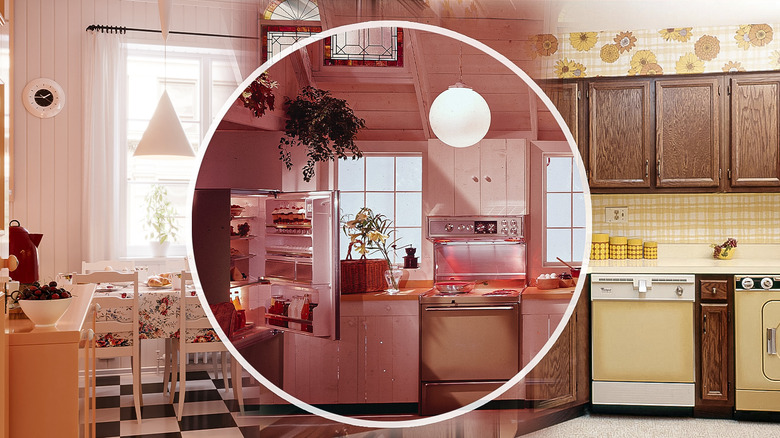
If you were to quiz your parents or anybody from the 1980s about the design hallmarks of the era, they'd probably have one answer: the hair was big, the shoulder pads were impossibly bigger. And this anything-goes mood often declared itself in kitchen design as well. If the 1970s were about kitschy design, the '80s took the neon hues and bold colors and dialled them up to manic proportions.
Of course, not everything from the decade has fared well over time: RIP, all the dated 1980s kitchen design trends that no one remembers anymore. But as contemporary kitchens grow almost austere in their minimalism, it serves as the best possible reason to truly shake things up with an '80s-approved, pattern-soaked approach to design.
For starters, Shabrin Momm, principal designer and founder of Skew Studio, would like you to step away from barely-there prints and muted neutrals. After all, why have your kitchen design shy away into oblivion, when you can stand out? Instead, she wants you to dream of a turquoise backsplash teamed with coordinated appliances, lucite bar stools lined up next to tiled countertops, and neon flooring assuming pride of place against muted cabinetry. If you have been detecting a sense of monotony creeping into your kitchen design, this is your cue to turn this space into an '80s-inspired fever dream — in the best possible way.
Opt for cheerful colors
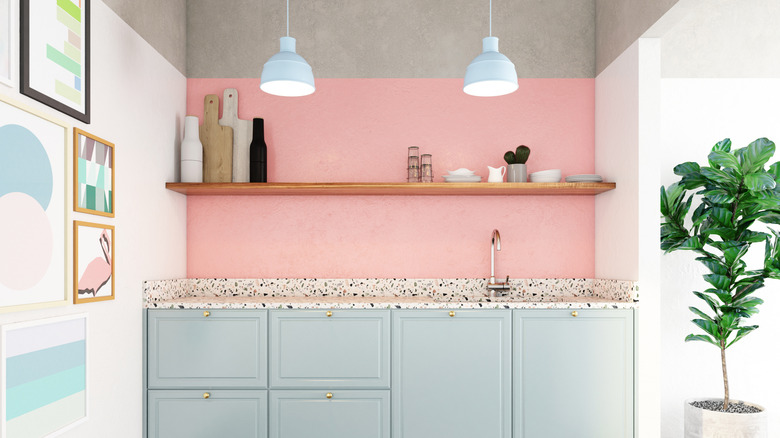
If you were to close your eyes and visualize a kitchen in the 1980s, what would come to mind? Chances are you think of this decade as the era of excess — perhaps you are already picturing a bold geometric backsplash and appliances in head-turning hues of red or turquoise?
While this era did embrace bold hues, the foundation of a classic 1980s kitchen is often laid with warm, earthy tones. Shabrin Momm wants you to begin your search by opting for the muted hues of beige, cream, or almond. A touch of whimsy can be thrown into the mix with playful pops of color, such as teal, mauve, peach, and dusty rose. According to her, this grounded color palette works well with oak cabinets with brass or wood handles. These were often coordinated with patterned laminate countertops doused in delicate pastels in the 1980s.
While working your way through swatches and samples at the hardware store, it helps to bear in mind that certain colors can detract from the nostalgic charm you are aiming to achieve. Momm's list of no-nos is headlined by ultra modern minimalism and sleek monochromes. She has also found that moody tones and glossy black cabinetry can feel too contemporary to slot in with the laidback 1980s vibe. "Keep the look warm, cheerful, and a little fun for that perfect '80s feel," she says.
Choose nostalgic materials
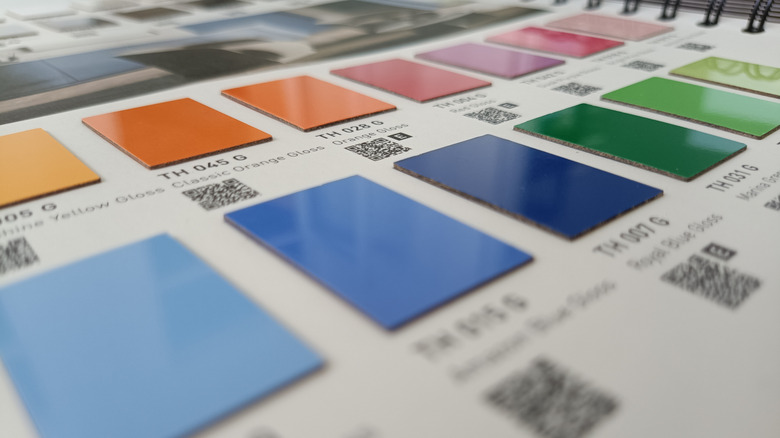
Beyond just a cooking workspace, the kitchen served as the hub of the home where the family gathered for leisurely meals. This cheery vibe can truly come to life with your choice of materials: think warm, nostalgic surfaces that will transport your dinner guests to another era.
Laminates might be considered as an outdated countertop material in contemporary kitchens, but the 1980s welcomed this material with open arms. To make this glossy finish feel nostalgic rather than dated, Shabrin Momm recommends opting for laminate countertops in light tones or soft patterns. These can be easily paired with oak or wood veneer cabinets for nailing the assignment.
If you are looking to start out slow and easy, ceramic tile backsplashes make for a popular 1980s-approved choice — choose subtle prints and pastel colors if you are looking to add subtle hints of retro charm. Linoleum or vinyl flooring, together with brass or wood hardware, will serve as the ideal finishing touch for the space. The one piece of advice that Momm wants you to keep in mind? "Try to avoid modern choices like glossy acrylic cabinets, concrete countertops, or too much stainless steel, as these can make the space look sleek and contemporary rather than cozy and inviting. Aim for a practical, colorful, and welcoming aesthetic," she advises.
Lean into retro charm for the countertops
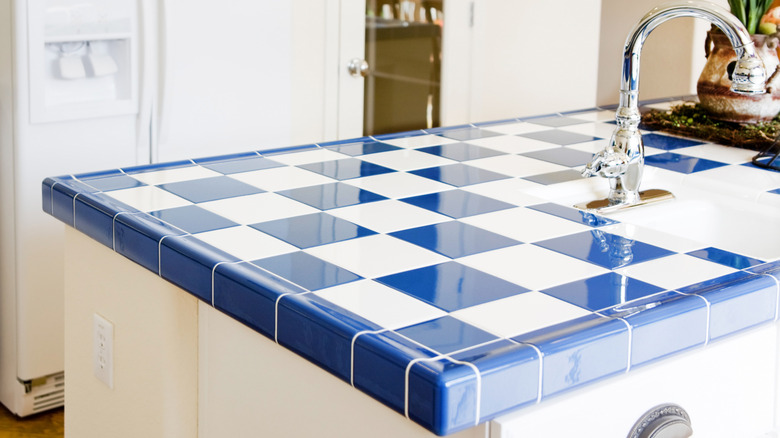
As ground zero for splatters, spills, and food stains, it is safe to say that the choice of countertop is not a decision that can be taken lightly. Of course, all of this is before you consider that countertops visually dictate the vibe of the kitchen. Choose wisely, and your countertops can effortlessly bring the 1980s mood to life. Snap decisions and spur-of-the-moment choices, on the other hand, can make the kitchen look disjointed — which is why it helps to keep post-purchase regret at bay by reading up on how to pick the perfect countertop material for your kitchen.
What should be topping your shopping list when looking for countertop candidates for an '80s-inspired kitchen? "Think bold, clean lines with materials like quartz or solid surface in soft matte finishes," Shabrin Momm rattles off. For those hoping to work in vintage character, she has found that tiled countertops pay a reverential nod to the era when done right.
In terms of color, Momm prefers earthy tones, muted greens, terracotta, and creamy whites as a way to temper the bold cabinetry that was synonymous with the era. "Consider adding a waterfall edge or extending the counter into a small breakfast bar if space allows. It's all about blending function with personality, respecting the past, but making it feel like today," she says.
Embrace bold patterns for the tiles
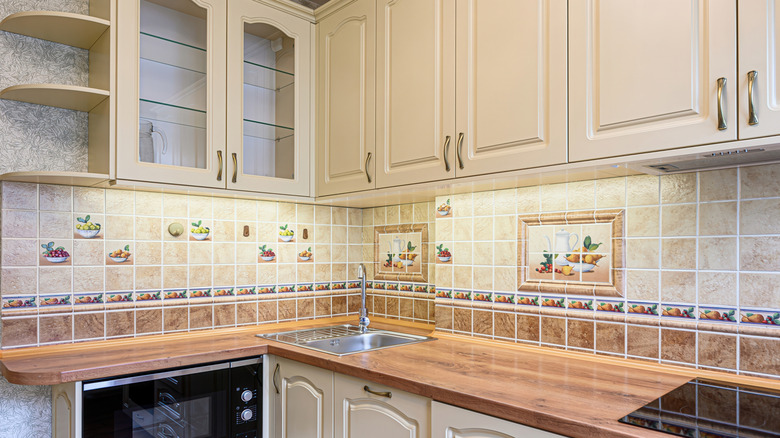
Minimalists will want to proceed with caution beyond this point. The more-is-merrier memo reigned supreme in the 1980s, and this flair was often expressed through kitchen tiles. Geometric patterns on the backsplash! Fruity, floral motifs on the range hood! Pressed-tin slabs on the ceiling! If your tiles don't serve as the proverbial exclamation mark of your 1980s kitchen design, you are doing something wrong.
Not quite sure where to begin? Momm urges you to consider statement backsplashes or a feature wall. "The key is to strike a balance between nostalgia and modern comfort, just enough retro to make it fun, without overwhelming the space," she says.
For recreating that foot-tapping 1980s energy in your kitchen, Momm recommends allowing bold patterns and playful color combinations to lead the charge. "Think geometric shapes, checkerboard layouts, or even a pop of Memphis-inspired design," she suggests. These patterns can come to life in candy pastels — peach, mint green, and powder blue are flagbearers of the era that work well with glossy finishes. Once you have found the patterns that speak to you, you'll want to consider the materials. Ceramic or glazed porcelain tiles serve as a worthy vehicle for bringing these patterns to life. "They echo the era while still feeling fresh today," Momm adds.
Make bold decor decisions
When looking to design the retro kitchen of your dreams, you won't want to leave the decor as an afterthought. Cabinets and countertops have an important role to play, but it is often the small yet thoughtful flourishes that transform the kitchen from an impassive space into the pulsating heart of the home. "The key is mixing statement pieces with practical elements, so it feels playful and functional. A little kitsch goes a long way in capturing the spirit of the decade," Momm advises.
Decor in an '80s kitchen design doesn't tiptoe. Instead, you'll want to think shock and awe by opting for lucite bar stools, glass blocks, and mirrored finishes. You'll also find neon accents and retro-style light fixtures playing a commendable supporting role. Once the larger flourishes are taken care of, Momm recommends strategically working in pops of color through vintage canisters, patterned dish towels, or even a quirky wall clock.
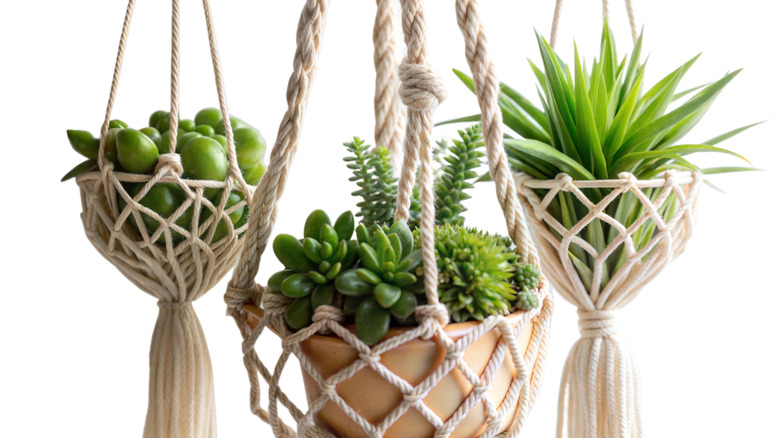
Before you close the chapter on kitchen decor, you'll want to pay attention to your houseplants. Momm has found that when slung in macramé hangers, they can weave a nostalgic spell. If you are fond of the tactile nature of this textile, it can take shape in your kitchen in myriad ways: how about a hanging spice jar detailed with macramé or woven bread boxes that will double up as a decorative accent beyond just storing your baguettes?
Get playful with the backsplash
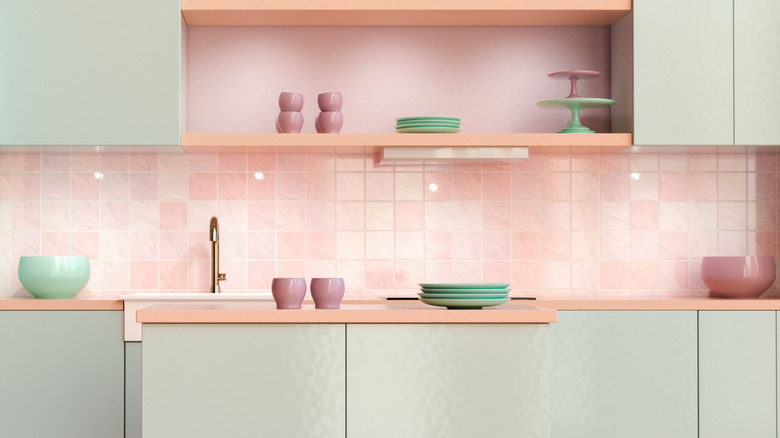
Unlike Scandinavian minimalism that demands all-grey-everything, Shabrin Momm's tips for designing an '80s kitchen afford leeway for getting creative. Instead of just being a functional element, the backsplash can become your canvas to let your personality shine through.
Start designing the ideal backsplash by carefully considering your colors. According to Momm, soft pastels like peach, mint green, pale yellow, or dusty rose were a common sight on 1980s backsplashes. These colors were often paired with simple white tiles.
Not ready to go home until you go bold? Momm suggests throwing bold accent colors into your palette — perhaps a turquoise backsplash teamed with coordinated appliances and white shelving? "Geometric patterns were a big trend too, so small squares, diagonal designs, or even checkerboard styles can work well," she muses. With Art Deco energy bleeding into the geometric patterns of the era, the tiles often leaned into dynamic contrasts and repeating combinations, such as vibrant chevrons or octagon-and-dot mosaics. As long as you steer clear of ultra-modern metallic looks, she believes that you'll be able to achieve that authentic retro feel.
Use neon hues in moderation
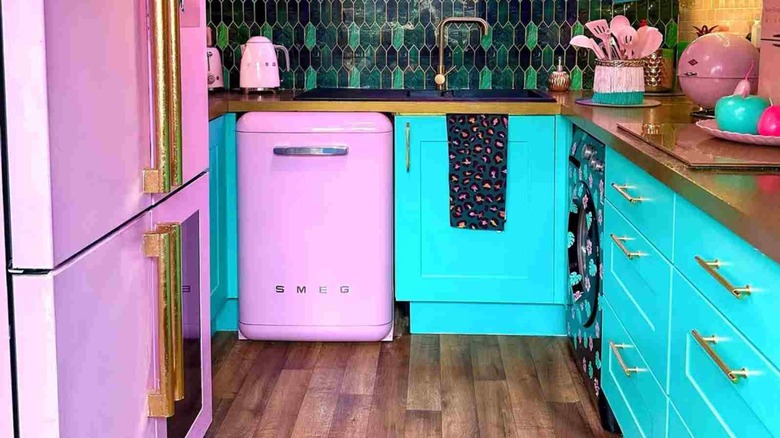
In case you haven't picked up yet: 1980s kitchens weren't big on idling away in neutral territory. Instead, loud-and-proud pops of color, geometry, and playful contrasts are topping Shabrin Momm's tips for designing an '80s kitchen. While pastel colors were a common sight in the kitchens of this era, they were often combined with powerful elements to create a striking visual contrast.
When used in moderation, Shabrin Momm believes that there is no reason to fear pops of neon, such as electric blue or hot pink. "Consider Memphis-style patterns for prints, such as zigzags, squiggles, and abstract shapes; alternatively, try checkerboard tiles or wall decals that resemble grids," she says.
Once you are ready to level up, you can grant these eye-popping hues a more dominant role in your kitchen design. From tile accents and grout, these fluorescent hues can serve as a visual focal point: imagine neon yellow flooring against pale cabinetry or a statement-making lime green island in an all-white kitchen. Color blocking, or using contrasting blocks of primary colors, is another option to be considered. With laminated panels and glossy finishes, Momm believes you can walk the tightrope of lively yet practical in your kitchen design.
Make a statement with the flooring
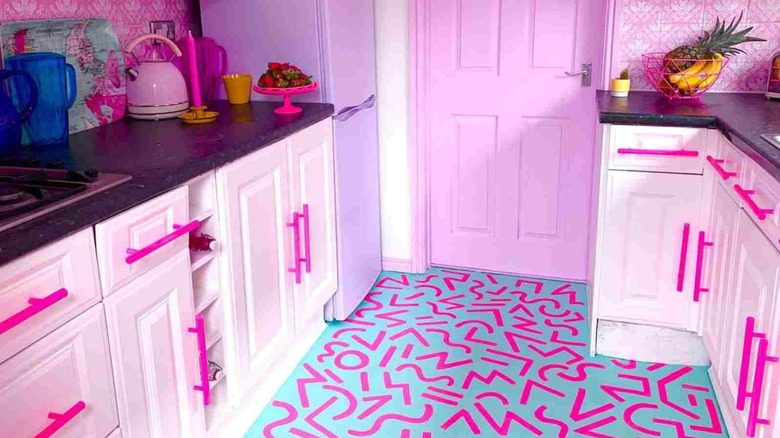
When sharing tips for designing an '80s-inspired kitchen, Shabrin Momm emphasizes that the choice of flooring should be functional yet striking and entertaining. Her top suggestion? "The decade's signature black and white checkerboard tiles are a popular choice." And it is easy to see why. The visual impact and satisfying symmetry of this classic monochrome design makes it a memorable choice. You can juxtapose yours with brightly colored appliances or even relegate it to a specific area for effortless zoning, such as when designing a breakfast nook in the kitchen.
Beyond checkerboard tiles, several candidates are vying for your attention. Momm recommends geometric vinyl or linoleum flooring. "Choose beige or off-white tiles with vibrant borders or grid patterns if you like a more subdued look," she suggests. Terrazzo is another popular calling card from the era, and she advocates pink, blue, and gray accents.
Once you've chosen the tiling, you'll want to pay attention to this nifty flooring addition that can instantly elevate your kitchen: "To complete the style, don't be scared to add a funky area rug with geometric or Memphis-inspired prints," she says.
Add character with soft furnishings
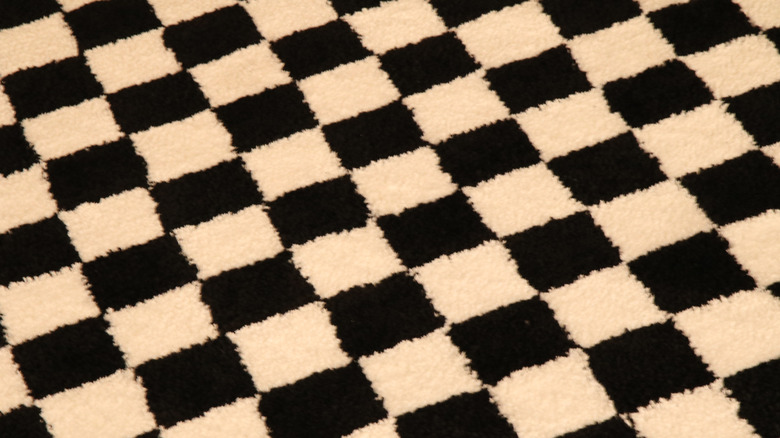
Amongst all the hard surfaces of the countertops, kitchen islands, and cabinets, the welcome touch of soft furnishings lends any kitchen a cozy, lived-in feel. When leveraged wisely, this staple can further your '80s-inspired design narrative by doing all the talking for you.
"Start with striking upholstered furniture, such as breakfast benches or bar stools with fabric or vinyl cushions featuring geometric or color-blocked designs," Shabrin Momm says. For added nostalgia, you can opt for curtains or valances in pastel checks, stripes, and Memphis-style designs. She believes that it is imperative to opt for lightweight fabrics, such as polyester blends, that are known for durability. Other low-maintenance options include linens and cottons that won't trap odors within the space. Once done, she wants you to add a patterned rug in front of the sink or beneath the eating area — bonus points for scoring checkerboard or abstract patterns.
When looking to infuse personality in your '80s-inspired kitchen, it would be a fatal error to neglect table linens. "Placemats, runners, and napkins with vibrant designs or neon accents can complete the ensemble," she says. Graphic '80s prints can also be welcomed into your tea towels, oven mitts, and potholders to create a cohesive finish. "Use hues like mint, mauve, peach, and electric blue to keep the mood lighthearted but unified," she adds.
Avoid overly-themed finishing touches
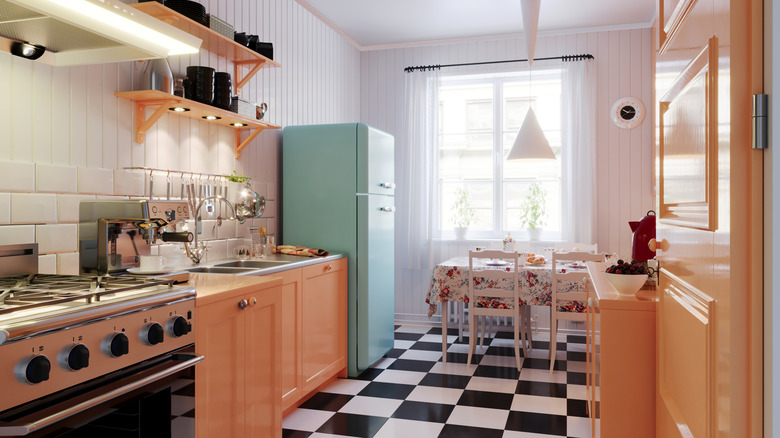
As tempting as it may be to toss everything '80s-inspired into your shopping cart, there is a fine line between tastefully themed and flat-out kitschy. For bringing balance into the mix, it is essential to spotlight a few statement elements and allow other accents to play a supporting role. The goal is to borrow classic elements from the era without turning your kitchen into an aged crypt frozen in time.
Carry the design memo with thoughtful additions rather than an everything-but-the-kitchen-sink approach. "When creating a kitchen inspired by the '80s, it's the finishing touches that truly bring everything together," Shabrin Momm says. Personally, she favors chrome and brass hardware to recreate the flair and luster that was synonymous with the decade.
Other lively additions include neon under-cabinet LED strips, graphic coasters, or a statement wall clock. Thrift stores, antique shops, and online marketplaces can be a good place for scoring pastel storage containers with 1980s typography, vintage-style appliances, and pop art from the era. "These elements help evoke the essence of the '80s while avoiding an overly themed or excessive appearance," she concludes.