

Patina Vs Damage On Cookware: How To Know When Discoloration Is Worth Preserving

You stand in your kitchen, eyeing your well-worn cast iron skillet and a copper sauté pan. Their surfaces, mottled with a spectrum of darkened spots, shimmering hues, and bumpy patches of what some might call grime, pose the question: Is this crust a badge of honor, proof of countless meals and seasoned mastery, or a scummy layer that demands an aggressive session of steel wool and elbow grease? The answer lies in distinguishing patina from damage.
Patina is the natural color and texture that develops when metal reacts gently over time with heat, oils, and air. It's the visual evidence of the oxidation and seasoning process that protects your pan from rust, reduces sticking, and imparts a subtle complexity to the dishes you create. Tarnish and rust, in contrast, are signs of corrosion. They are uneven, flaky, and often destructive layers that, if ignored, can eat away at the metal and shorten your pan's life.
Recognizing the difference matters because patina preserves and enhances, while damage diminishes. Copper's blush of greenish patina can be aesthetically pleasing and protective, and cast iron's silky black sheen indicates a well-seasoned surface. When discoloration feels rough, powdery, or flaky, it's time to intervene. The goal is not to scrub away every imperfection, but to nurture the pan's natural armor, letting it mature into a surface that cooks better and ages beautifully.
Crust or corrosion?
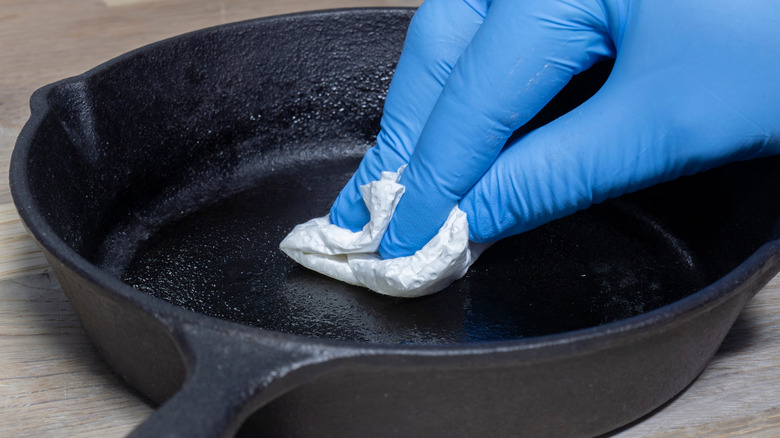
When you repeatedly heat cast iron with oil, a polymerized layer forms; it's essentially a hard, slick coating of carbonized fat that resists rust and food sticking. This seasoning is a dynamic shield that requires gentle care to maintain. Copper patina develops through a slow chemical reaction with oxygen and moisture, producing a thin layer of copper oxide or carbonate. While some patinas protect, unchecked corrosion, like verdigris, can be harmful and toxic.
Cleaning cookware with harsh abrasives or acidic detergents risks stripping away this protective coating. Instead, maintenance focuses on gentle cleaning with warm water, soft brushes, and drying thoroughly. Re-seasoning your cast iron regularly replenishes its non-stick surface (you could even use a potato to help clean stubborn cast iron), whereas copper may need polishing only if the patina becomes unsightly or hazardous. To keep patina healthy on copper and cast iron, avoid soaking the cookware, dry it immediately, and apply a thin layer of oil to cast iron after each use. For stubborn spots, use salt scrubs or baking soda paste before resorting to more aggressive methods. With care, your cookware develops character and performance, turning everyday cooking into a ritual where the pan's history infuses every meal.
With stainless steel, aluminum, or enameled cast iron pans, sometimes the best approach is to use Ina Garten's cleaning tip and let your pans soak gently before tackling stuck-on bits, because what some might generously call a "patina" is usually just stubborn buildup from burnt-on oils and food residue, or stains from pigmented ingredients like tomato. To remove it, a mixture of gentle abrasives, such as baking soda, and grease-cutting detergents, like Dawn, combined with non-scratch scrubbers or nylon sponges, can break down the residue without damaging the surface.