

Soy Vs Pea Milk: How Do The Plant-Based Beverages Differ?
We may receive a commission on purchases made from links.
Once upon a time, your choice of milk would have been cow milk or nothing. Then, you would have had a choice between dairy and soy milk. Now that you're fortunate enough to live in a time with so many different types of plant-based milk, your biggest concern is probably how to choose between them all. With pea milk gaining steady popularity, how does it compare to soy?
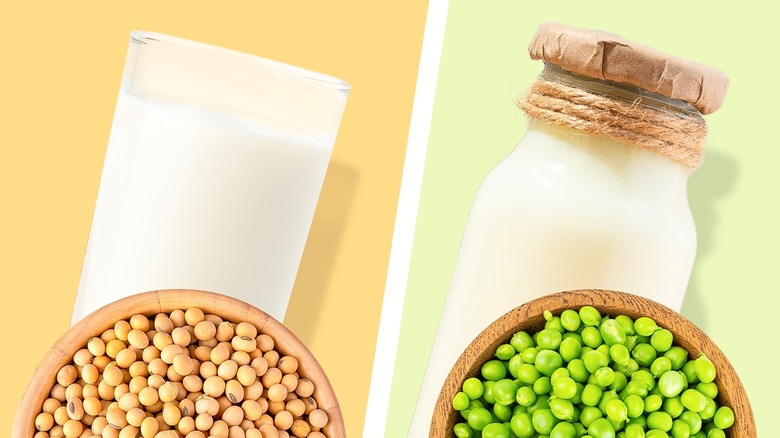
Soy milk has been readily available for decades now, so you might think you know a fair bit about it. Pea milk, on the other hand, is a relative newcomer to the mylk aisle. Both soy and pea milk are made from legumes — soybeans and yellow peas, respectively — and both are suitable for vegans, individuals with lactose intolerance, and those with nut allergies. Both are designed to be one-to-one plant-based replacements for dairy milk in coffee, cooking, and drinking.
However, because they are derived from two distinct plants, there are some differences in taste; however, the two share a similar nutritional makeup. Pea milk, especially when commercially made, requires additional processing and ingredients to achieve the taste and texture of milk, but is considered a more environmentally sustainable plant-based milk option than soy.
What is soy milk?

The popularity and commercial availability of non-dairy milks might seem like a relatively recent development, but their lineage dates back much, much further. The first recorded history of soy milk can be traced approximately 2,000 years ago to ancient China. It then had a stint as a popular street food in the Asian country as early as the 1700s, and then started getting mass-produced in the U.S. by the 1930s.
Whether store-bought or homemade, soy milk is made in generally the same way. It starts with soaking raw beans in water to soften them and make it easier to remove the skins. Once hulled and drained, the beans are blended with fresh water. This mixture is strained to remove solids, then boiled to neutralize enzymes that make it difficult to digest. That is soy milk in its most basic form, which can be used for smoothies, vegan buttermilk, savory cooking such as bechamel sauce, or in soup. Where fresh soy milk doesn't fare well is in tea and coffee, as it tends to curdle. However, barista-style milks are designed to withstand sudden heat.
The content of soy milk will depend on the brand, whether it's homemade, and whether it's sweetened or unsweetened, among other factors. Typically, an 8-ounce glass contains around 7 grams of protein (compared to 8 grams in dairy) and around 4 grams of fat. Although soybeans naturally contain calcium, commercially made soy milk is often fortified with calcium and other goodies to make it a more nutritionally complete replacement for dairy milk.
What is pea milk?

Compared to the rich history and culture of soy milk, pea milk is a modern innovation, first introduced to the U.S. market by Ripple Foods in 2015. Pea milk is not derived from green garden peas, but rather yellow split peas, and there are two methods for making it. The first is similar to how soy milk is made, but the peas are cooked before being blended and strained. Pea milk also needs oil (usually sunflower oil) to stop it from separating. Oil adds creaminess and helps to better replicate the mouthfeel of dairy.
The second method for making pea milk is typically reserved for commercial use. The dried peas are milled into flour, after which the protein is separated from the starch and fiber. The pea protein is then mixed with water and oil. This is why you might see some brands labeled as pea protein milk. The process of removing the fiber and starch helps to eliminate the pea flavor, resulting in a more neutral taste.
As with soy milk, store-bought pea milk is usually fortified with just as much calcium as dairy milk, often to 150% more than what is found in cow's milk. An 8-ounce serving contains 8 grams of protein and 4.5 grams of fat. Just as with soy milk, pea milk can be used pretty much anywhere you'd use dairy. However, if you're making your own pea milk from scratch, you'll find it has a stronger, earthier flavor that might not be a good match for your breakfast cereal.