

15 Tomato Dishes From Around The World
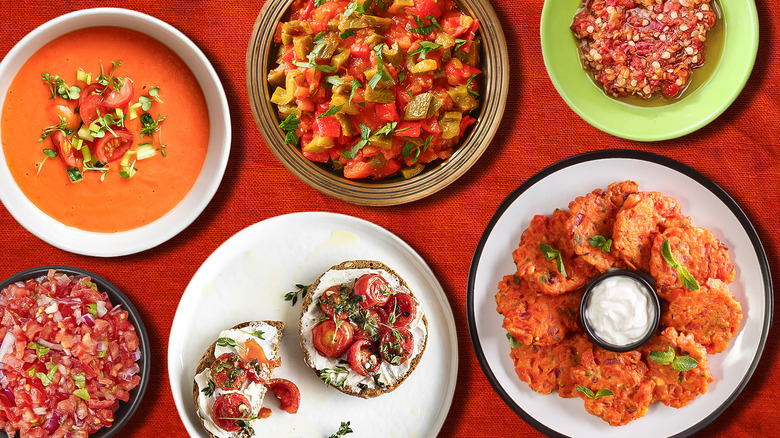
Tomatoes are one of the world's most beloved foods. In the U.S., they are enjoyed by more than three-quarters of the population, according to YouGov. It's hardly surprising. There is much to love about tomatoes, which are botanically a fruit but treated like a vegetable in the nutrition and culinary spheres. They're juicy, subtly sweet, aromatic, and they can bring a rich flavor to many different dishes. They're also packed with goodness, as they're a source of nutrients like vitamin C, fiber, potassium, as well as the potent antioxidant lycopene.
Around the world, many cultures have made great use of tomatoes. Italy and Spain are both home to a number of tomato-rich recipes. But northern India, Morocco, Greece, and Southeast Asia have also created some flavorful, tomato-heavy traditional dishes. Think masala, for example, which forms the basis of many Indian curries. You can learn more about it here and discover many other delicious tomato dishes from around the globe.
Bruschetta - Italy
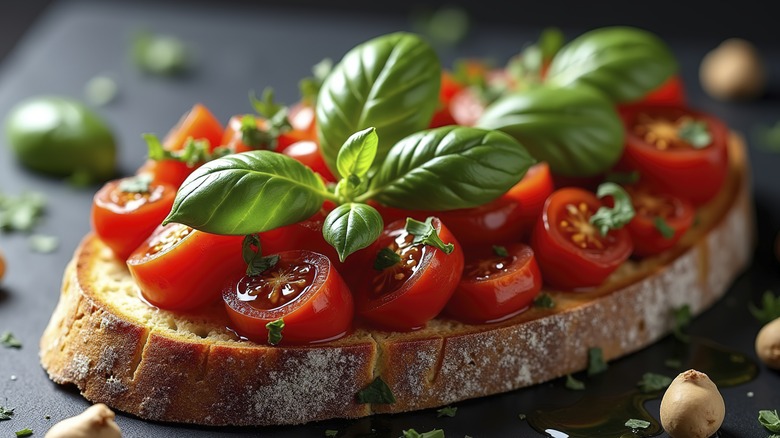
Italian cuisine is so tomato-heavy, you might assume that the fruit is native to the European country. But actually, tomatoes didn't arrive in Italy until around the 1500s. Two centuries later, Neapolitans started to top the flatbread with tomatoes, and that's why we have pizza (more on that shortly). But pizza, of course, isn't the only Italian dish that's laden with the fruit. Lasagna, spaghetti al pomodoro, and Caprese salad are all tomato-centered dishes, but don't forget bruschetta as the ultimate tomato-heavy classic.
Bruschetta is incredibly simple. It's just toasted bread rubbed with garlic and topped with cold fresh tomatoes, olive oil, and salt. The dish likely originated in Tuscany, but today it's served in restaurants across Italy (and beyond). There are infinite ways to adapt bruschetta. Some prefer roasted tomatoes, but there are many other tips for making bruschetta, such as incorporating ricotta, basil, or anchovies.
Bruschetta recipes also tend to vary from region to region. For example, in Piedmont, it is often served topped with a single slice of tomato and grapes.
Onion tomato masala - India
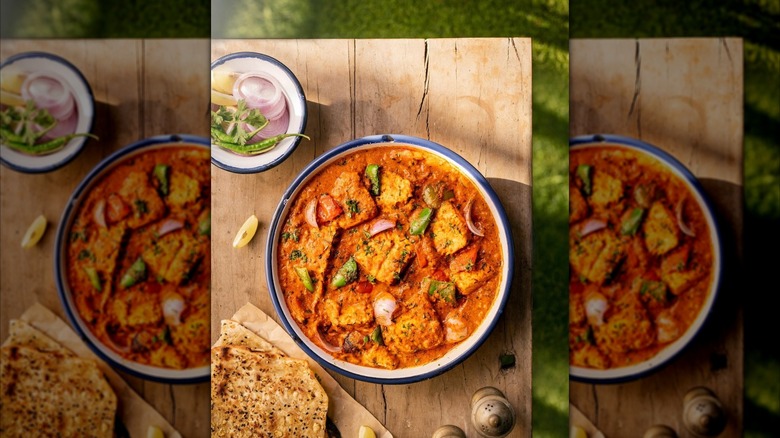
Tomatoes are a staple in Indian cooking, but again, they didn't actually arrive in the country until the 1600s, when they were brought over by the Portuguese. Much like in Italy, tomatoes didn't take off instantly. It wasn't until the 1800s, amid colonization by the British (who were really into their tomatoes), that the fruit started to show up in Indian recipes.
Today, North Indian dishes are particularly tomato-rich. Many are built on onion tomato masala, which is a rich, thick sauce, full of tomato flavor. It's incredibly versatile and can be mixed with coconut cream, chili peppers, and a wide variety of spices to create different flavor profiles. Punjabi fish masala, for example, is made with an onion tomato masala base, and you can also use the sauce to make aloo paneer curry, paneer tikka masala, or curried red lentils.
Other Indian tomato-rich dishes include ruangan chaman, a Kashmiri recipe that combines paneer and tomato gravy, and the Sindhi favorite tamatar ji kadhi, which combines tomato puree with vegetables like okra, green peas, and lotus stem.
Fried green tomatoes - United States
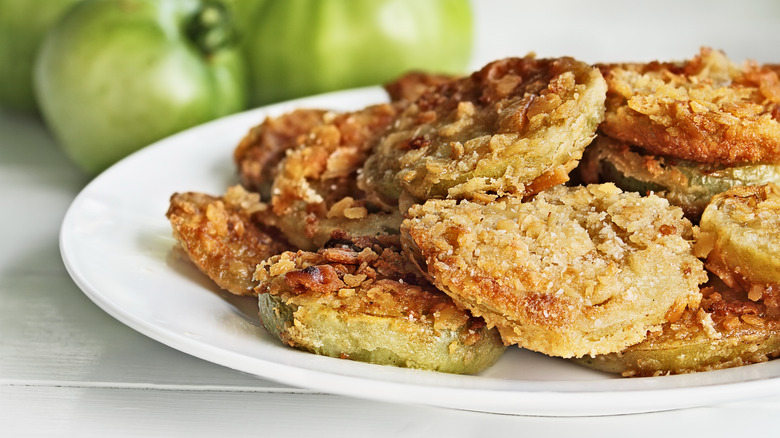
Fried green tomatoes are a Southern U.S. favorite. The dish, which many associate with the 1991 movie "Fried Green Tomatoes at the Whistle Stop Cafe," is pretty much exactly what it sounds like — green, unripe tomatoes, which are tarter and tangier than ripe tomatoes, are sliced, breaded, battered and then fried. The dish can be served in many different ways; some opt for remoulade on the side, while others stack them in a sandwich or a burger bun.
Fried green tomatoes have an interesting history. They're a Southern staple now, but they likely entered the U.S. with Jewish immigrants. In fact, there are a lot of recipes for fried green tomatoes in 19th and 20th century Jewish and Midwestern cookbooks. This makes sense: In colder parts of the U.S., tomato-growing season was considerably shorter, and therefore people were more likely to eat the fruit before it was ripe.
It turns out, it was likely the 1991 movie that turned fried green tomatoes into a Southern thing. Since then, it's been served in cafes and diners across the South, where it's become a firm menu staple.
Pico de gallo - Mexico
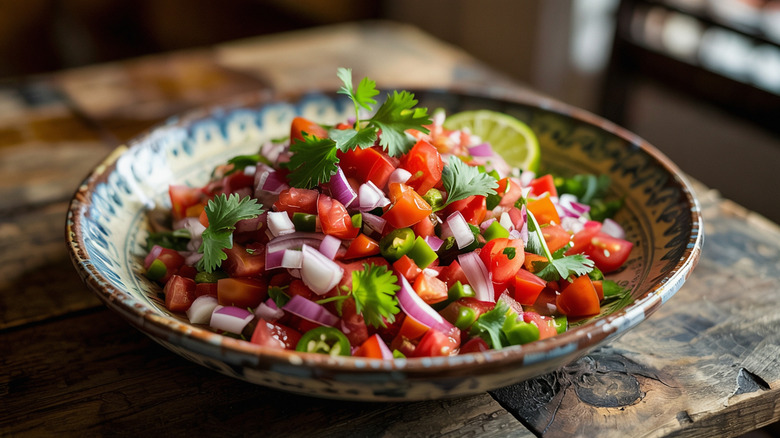
Tomatoes have a long history in Mexico. In fact, it was probably the first place to domesticate the fruit, which used to grow wild across the Andes. This is why tomatoes are called tomatoes — the name comes from the Aztec word "tomatl." With this history in mind, it's no surprise that tomatoes show up in a lot of Mexican dishes, including pico de gallo.
Pico de gallo, which has Aztec roots, is essentially a chunky salsa side dish. Tomatoes are a key ingredient, of course, but the dish also relies on ingredients like onions, jalapeños, cilantro, and lime juice. The juice of the tomato is essential for the dish's marinade, as it works together with the lime to bring out that signature tangy flavor. Pico de gallo is fresh, zesty, and usually served with classic Mexican dishes like tacos, burritos, and nachos.
One of the most fascinating things is how pico de gallo got its name. Strangely, even though it is an entirely plant-based dish, pico de gallo translates to "rooster's beak." One theory is that this likely comes from the traditional way of eating this salsa dish, which is with the thumb and forefinger (like a beak!).
Brazilian vinaigrette - Brazil
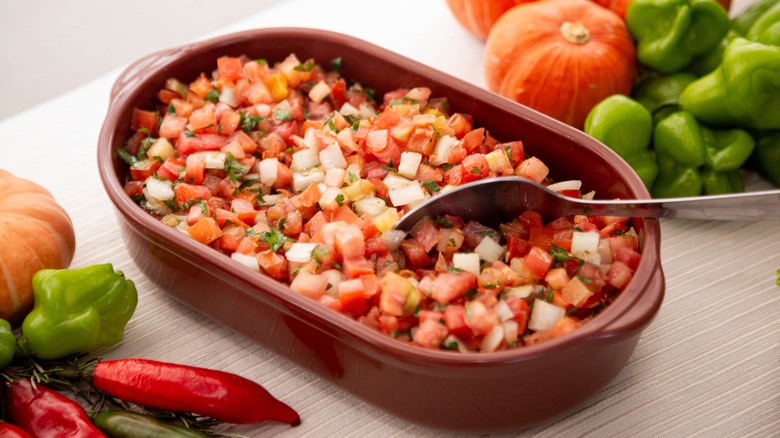
Like many South American countries, Brazil has a long history with tomatoes, and the fruit is still very important to the country. Today, Brazil is one of the biggest tomato producers in the whole region, alongside Argentina and Chile. In 2023, it produced more than 4.1 million tonnes of tomatoes, per World Population Review, making it the eight biggest tomato producer in the world.
One of the most popular tomato salad dishes in the country is Brazilian vinaigrette. You'll usually find it served alongside grilled meat at barbecues and on most steakhouse menus. Though it sounds like a salad dressing, this vinaigrette is actually a chunky salsa that is very similar to pico de gallo. It's made with tomatoes, onions, and cilantro. But one of the key differences is that Brazilian vinaigrette is made with vinegar instead of limes. It's also usually made with bell peppers, not jalapeños. For that reason, it's not a spicy dish, but has more of a fresh and tangy flavor profile.
Pizza marinara - Italy
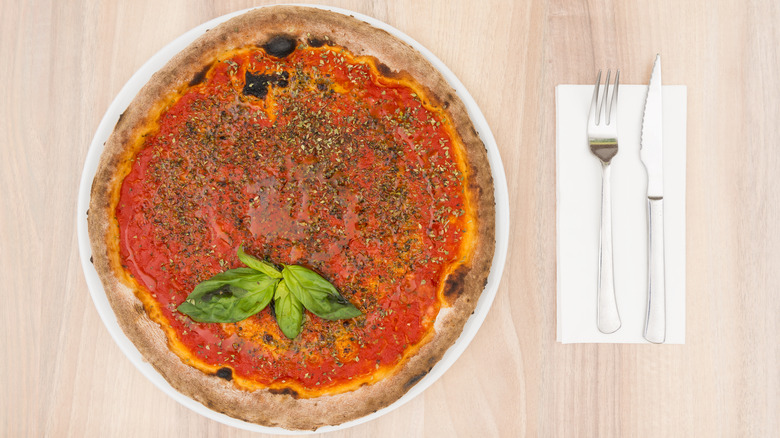
The people of Naples were the first to start topping flatbread with tomatoes. The dish wasn't just tasty, but it was quick, easy, and affordable, especially for the city's large deprived population. Tomatoes were easily accessible and cheap to buy in the city. This was the very first version of pizza, and it's still eaten across Italy today, but it's particularly popular in its birthplace of Naples.
Of course, there are many, many different types of pizza in Italy now, most of which are topped with tomato sauce. But today, pizza marinara, usually loaded with rich, fresh San Marzano tomatoes, is still one of the cheapest street food dishes you can buy in Naples. For a taste of true authentic marinara, a visit to Antica Pizzeria Port'Alba is a must. It's likely the oldest pizzeria in the world, and sells classic marinaras for just €6 a pie.
Taktouka - Morocco
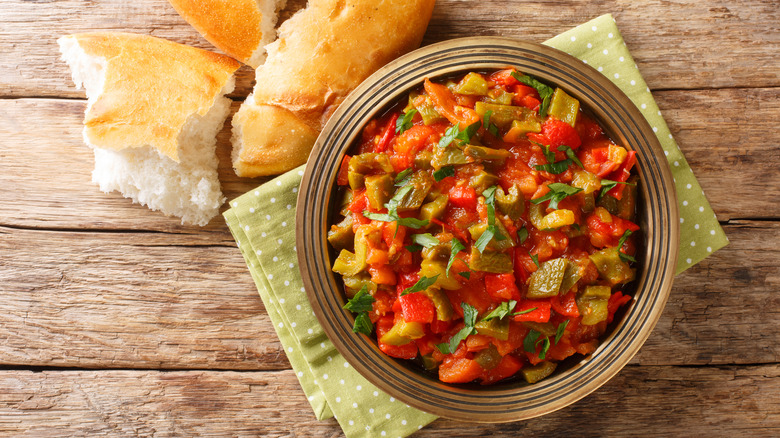
Tomatoes landed in Africa as a direct result of European colonization. However, you could be forgiven for thinking they're native to the continent as many traditional dishes are made with tomatoes. In Nigeria, for example, red stew (which gets its color from tomatoes) is a favorite in many households, while the popular shakshuka is beloved for the combination of chunky tomatoes, peppers, spices, and eggs. But right now, we're looking at taktouka, a popular North African warm salad from Morocco.
Taktouka is very similar to shakshuka. It's made with fresh tomatoes, as well as onions, garlic, and olive oil, but one key characteristic of taktouka is that it's made with charred green peppers. The dish is usually stewed to get maximum flavor, which is just the right mix of garlicky, spicy (thanks to the red chili flakes), and smoky (thanks to the paprika).
Taktouka is often served as an appetizer, but you can enjoy it in many different ways. It would make for a tasty lunch when served with pita or crusty bread, or you can always grab some chips and start dipping.
Arroz de tomate - Portugal
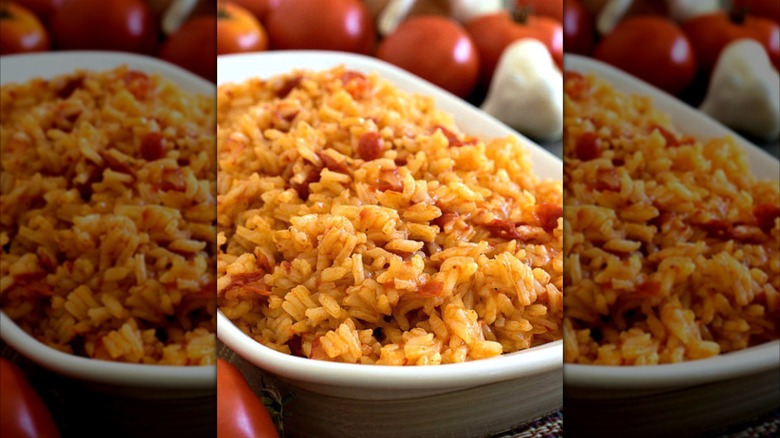
Portugal started to embrace tomatoes at some point after they were brought back from the Americas around the 16th century, after they were confirmed as safe to eat (people were initially concerned they might be a toxic nightshade vegetable). Since then, the fruit has been a staple of Portuguese cuisine. In fact, some estimate that tomatoes are included in most Portuguese stews.
There is much competition, but arroz de tomate remains one of the most culturally significant tomato dishes in Portugal. Across the country, you'll find it served with everything from fish to chicken or simply topped with a fried egg.
Arroz de tomate translates, quite simply, to tomato rice. And true to its name, the Portuguese classic is incredibly refined. It's a mixture of fresh tomatoes and rice (of course), as well as stock, chili flakes, parsley, olive oil, garlic, and onions. All of these ingredients are simmered together in a pan to create an aromatic, light, slightly sweet dish that's bursting with flavor.
Dakos - Greece
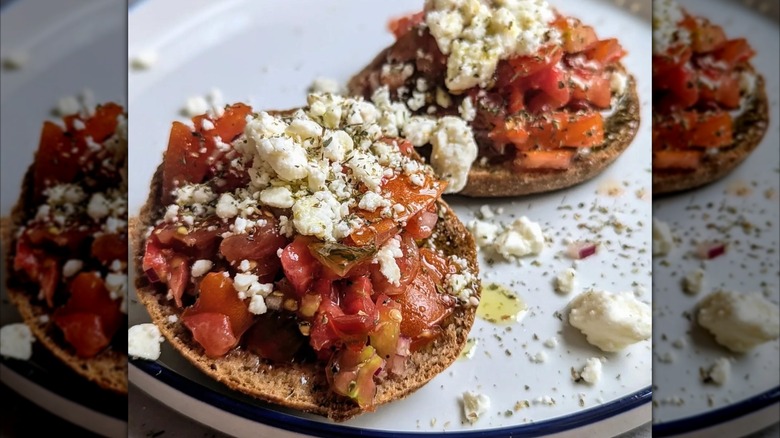
Interestingly, while many Greek dishes are made with tomatoes, the fruit wasn't introduced to the country until the early 19th century. The story goes that some monks in Plaka were the first to start growing tomatoes in their monastery, and they were closely followed by people in Athens. From there, the tomato became a Greek favorite, forming the basis of many traditional dishes, like dakos.
If you like bruschetta, the chances are very high that you'll enjoy dakos. The dish, which comes from the Greek island of Crete, is a mixture of tomatoes and feta served over a barley rusk (a Cretan favorite made with double-baked barley bread). The tomatoes, which are usually combined with other Mediterranean ingredient classics like olive oil and capers, should always be fresh from the vine for the best, sweetest flavor.
Most Greeks eat dakos on its own like bruschetta, but it can also be served as a side dish alongside other classic Greek dishes like souvlaki. Some opt to crumble the bread and mix it with the tomatoes, olives, onions, and cheese.
Hogao - Colombia
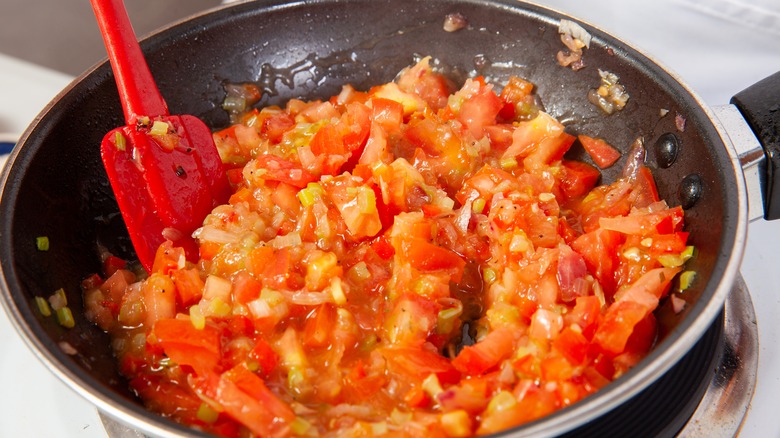
Unsurprisingly, many South American countries have their renditions of tasty tomato sauces and salads. Alongside Brazilian vinaigrette, there's Chilean pebre, a salsa made with diced tomatoes, onions, scallions, garlic, and cilantro, and Bolivian Ilajwa, which combines tomatoes with red onions, spicy locoto peppers, and quillquiña. And then there's hogao, which is one of the most versatile and common cooking sauces in Colombia.
Hogao has likely been around for a very, very long time, as it's a blend of both indigenous cooking techniques and Spanish ingredients. Basically a mix of tomatoes, onions, scallions, and spices, which are chopped and fried together in oil. This simplicity means it is endlessly customizable. It can be used as a base for stews, as a dipping sauce, or as a topping for arepas. Whichever Colombian dish you fancy, it's likely it will pair well with hogao.
Sambal tomat - Indonesia
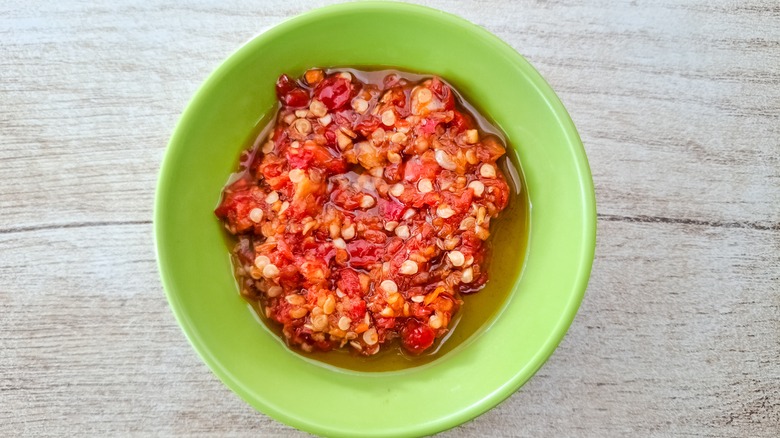
If you've ever been to Southeast Asia or eaten in a Southeast Asian restaurant, you've likely come across sambal. The sauce, which is essentially just pureed or ground chili peppers, is used in countless recipes across the region. In Malaysia, for example, sambal telur consists of sambal and boiled eggs. In Singapore, sambal is often served with hawker-style noodles or laksa. And one of the favorites in Indonesia is sambal tomat, which, as you may have guessed, is sambal with tomatoes.
Like many of the tomato dishes on this list, sambal tomat is incredibly simple but still rich and aromatic. Often served with nasi goreng to add extra spicy, zingy flavor, it's a mixture of hot red or green chili peppers, garlic, shallots, salt, lime or lemon, and lots of tomatoes. But the sauce is versatile, you can keep it plant-based, or combine it with anchovies or shrimps.
Besides nasi goreng, you can eat sambal tomat with a range of dishes. Some enjoy it with white rice and salted fish, while others opt to combine it with raw vegetables or fried tempeh. You can also make tasty fusion dishes with sambal tomat. It works beautifully in place of marinara with spaghetti, for example.
Fan qie chao dan - China
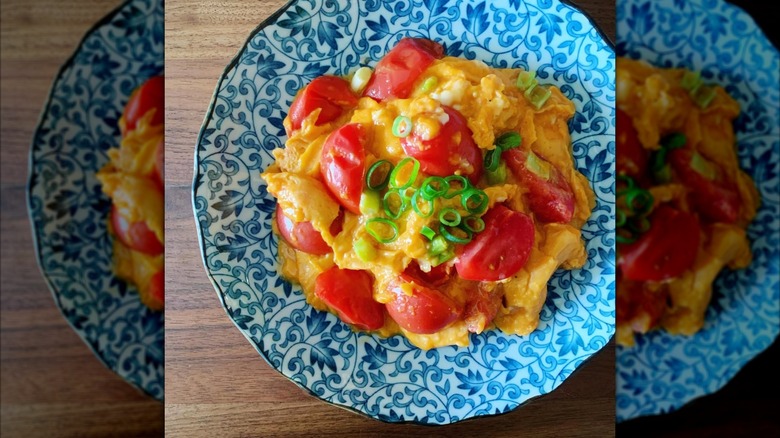
Due to Spanish colonization, the Philippines was the first country in Asia to become familiar with tomatoes. The fruit soon spread across the region, and around a century ago, they started to appear in Chinese dishes.
Unlike in Europe, tomatoes still aren't a frequent occurrence in Chinese cuisine, but there are some Chinese tomato-centered dishes. One example is fan qie chao dan, which is basically a stir fry with tomatoes and eggs. The tomatoes are wok-fried with scrambled eggs and eaten for breakfast with rice. It's a comforting and nourishing dish, usually enjoyed shared with family. It's also infinitely customizable, and many people have their own versions of fan qie chao dan. It can be made with scallions, while Shaoxing wine is sometimes added to provide some umami.
In China, it's not unusual to combine tomatoes with eggs. Another example of a traditional dish is the tomato egg drop soup, which is often served in the summer months when tomatoes are in season.
Tomatokeftedes - Greece
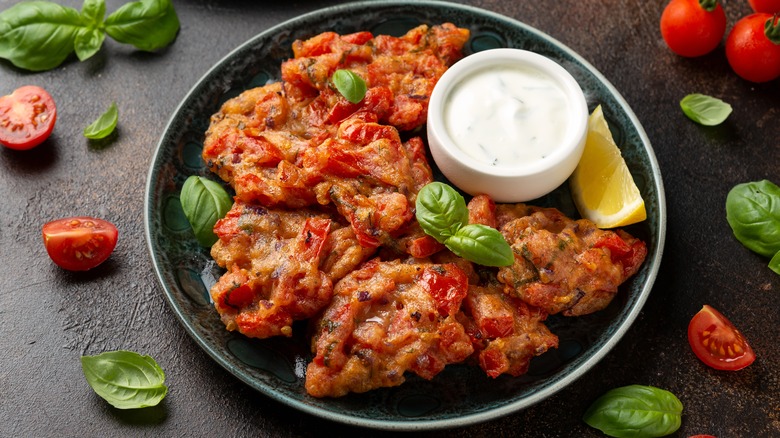
Crete isn't alone. Another Greek island to produce a delicious tomato-based dish is Santorini, which is known for tomatokeftedes. To put it simply, these are fried tomato fritters, but it's nothing like fried green tomatoes. Traditional tomatokeftedes recipes also call for onions, eggs, herbs, and feta cheese, which are mixed in with the tomatoes, shaped into fritters, and then fried until crispy.
Tomatokeftedes are traditionally enjoyed as a simple appetizer or as part of a larger meze board, alongside other Greek and Mediterranean favorites like hummus, tzatziki, and taramasalata. But you can also enjoy them on their own as a snack, perhaps with a glass of cloudy ouzo.
Want more Greek tomato recipe ideas? The country is also known for gemista, consisting of tomatoes stuffed with herbs, rice, nuts, olives, and feta, but you can also try ntomatosalata, a simple tomato salad made with onions, salt, olive oil, and oregano.
Ratatouille - France
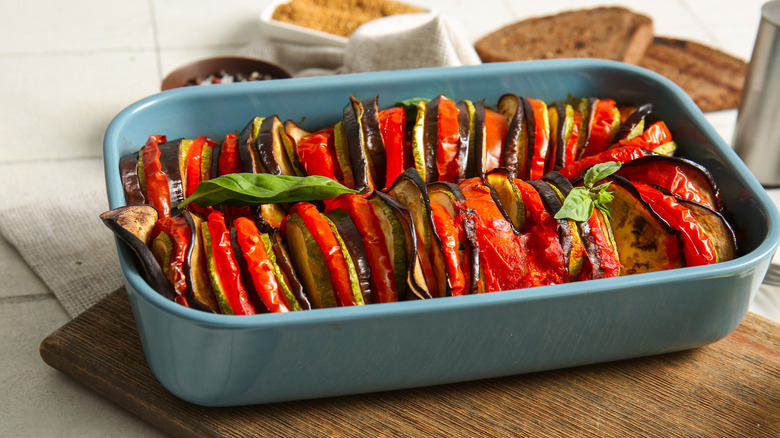
Like many European cuisines, French food is pretty tomato-heavy, and packed with dishes such as tomates farcies, a Provençal recipe for stuffed tomatoes, or tomato velouté soup. But ratatouille is one of the most iconic tomato-packed recipes. The dish was made world-famous by Pixar, but it has been eaten in Provençal regions for centuries. In fact, it was likely eaten in the countryside, where many fresh fruit and vegetables were farmed, as far back as the 1700s.
Ratatouille is incredibly simple. It's basically a stew filled with tomatoes and sauteed vegetables, like eggplant and peppers. Much of the flavor comes from the tomatoes and the combination of various herbs, like basil and thyme, as well as garlic, onions, and olive oil.
For those who love to experiment, this simple dish is open to interpretation. You can combine it with shakshuka, for example, to make a tasty Moroccan-French fusion recipe. Another tasty way to enjoy ratatouille is to stuff it in a panini with herb aioli.
Gazpacho - Spain
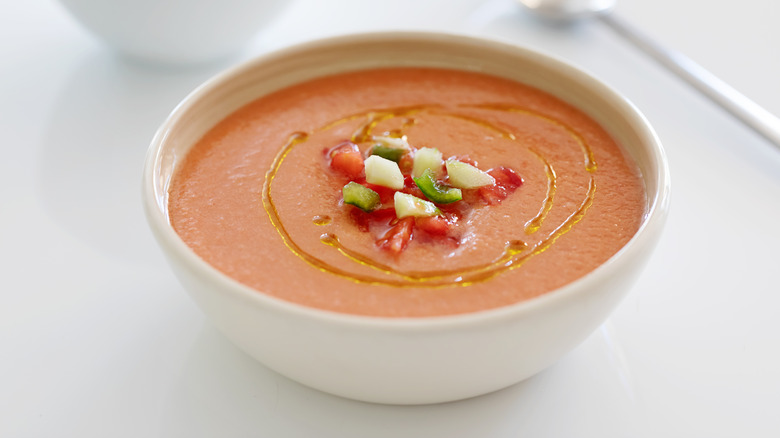
The Spanish were responsible for introducing tomatoes to most of Europe, so it makes sense that the country's cuisine is rich in the fruit. It's often added as one of the key ingredients in paella, for example, which is considered by many to be Spain's national dish. But for true tomato-lovers, one of the best Spanish dishes has to be gazpacho.
Gazpacho, which comes from Spain's Andalusia region, is a cold soup made with lots of tomatoes (usually the freshest, ripest ones you can find), as well as cucumbers, peppers, olive oil, onion, garlic, salt, and bread croutons. Because gazpacho is chilled, it's the perfect soup for enjoying in the warm, summer months.
There are many variations on the traditional gazpacho recipe. Some make it with crab, while others combine it with cherries to give it more of a Moroccan vibe. If you try your hand at gazpacho and the tomatoes taste too acidic, just add a sprinkle of sugar for a perfectly balanced lunchtime dish.