

10 Common Tomato Plant Problems And How To Fix Them
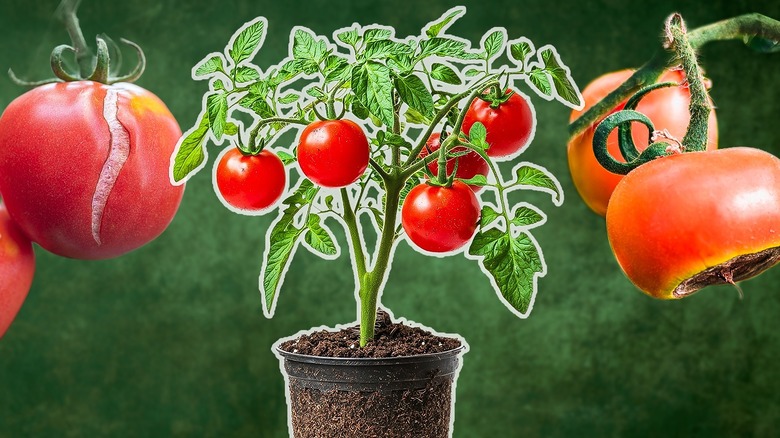
Tomato plants can be hugely rewarding to grow. If you choose the right variety, you can get plants that will grow tall and provide a consistent harvest throughout the summer months. When you get comfortable with how to care for a tomato plant, they can be easy to manage. However, it's easy to make mistakes and cause the plant to be vulnerable to a wide range of issues. Thankfully, I'm here to guide you through the most common tomato problems and how to fix them.
I run my own gardening company, which includes selling tomato plants. This means I have a lot of experience with not only growing but also identifying and solving problems. Some of these issues I never have anymore due to knowing how to meet their growing needs, whereas others can still be an issue due to environmental factors. As a tomato grower, you can never be complacent when caring for your plants. Once you've finished reading my advice here, you'll be much more confident in not only identifying and solving issues, but also preventing them from coming back.
Leaf curling
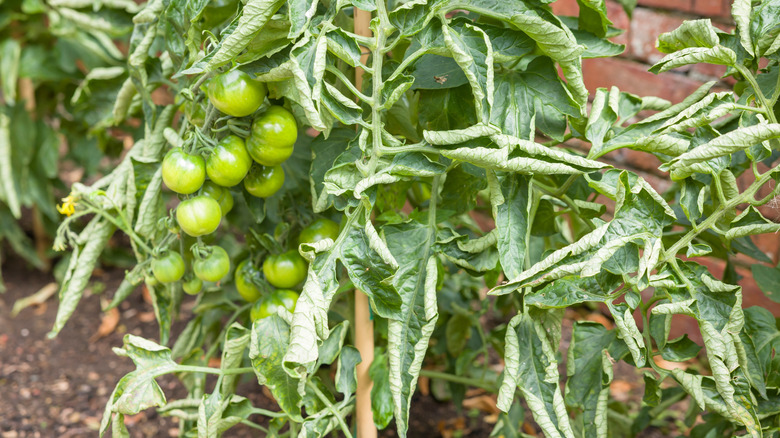
Leaf curling is perhaps the most common issue your tomato plant will have. This is a response to stress, but it can usually be easily solved. This is their attempt to conserve water, which, unsurprisingly, most commonly happens when there is a lack of water in the soil. Tomato plants are extremely thirsty, and as soon as the soil starts to dry out, the leaves will curl up. When watering these plants, you need to water them deeply so that it soaks through to the roots, and the soil should be consistently moist. Sometimes the leaves will also curl up as a defense mechanism against intense heat and wind. In all of these situations, the plant will quickly recover when its conditions become more favorable.
If it's a simple watering issue, then you'll marvel at how a tomato plant can go from looking as though it's just about to die to fully healthy within the span of a day. The reason why I wanted to put this problem first is that leaf curling can also be caused by other issues, such as nutrient deficiencies and viruses. However, when this is the case, the curling is also accompanied by additional signs we'll explore further down the list. If there is leaf curling on its own, it's usually only a minor issue, and you should soon see your plant burst back into life.
Blossom end rot
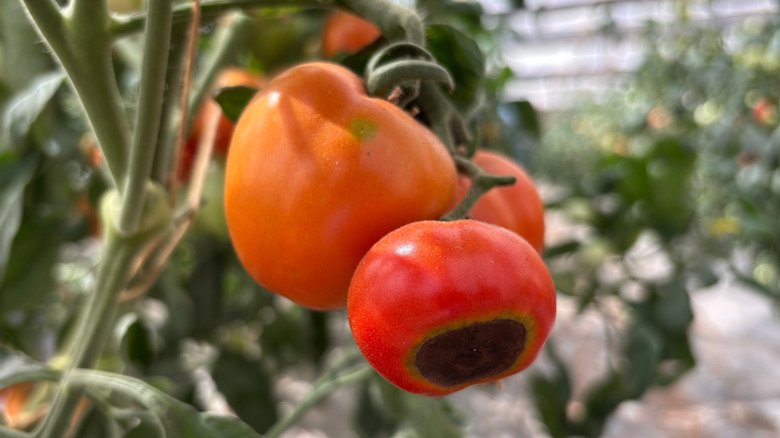
Finding an issue with your tomato plants can be disheartening, but the first thing you'll want to know is whether it's curable or not. Thankfully, with blossom end rot, the solution is a simple one. This issue is instantly recognizable and easy to diagnose. There will be a dark, sunken spot on the blossom end (the bottom) of the fruit. You don't need to worry about this being a fungal or bacterial disease, as it's caused by a lack of calcium. Tomatoes need a steady source of nutrients throughout the growing season. This problem can usually be avoided from the outset by using tomato feed that contains calcium. It's good to double-check this, as not all of them do.
Even if there is calcium in the soil, this issue can be exacerbated by irregular watering. If you leave the ground to go completely dry and then soak it, the plant can struggle to absorb nutrients. If you think you've been guilty of this, change to a regular watering schedule first, and you should find that the plant cannot absorb the calcium in the ground. If this is not working, lime, gypsum, or calcium carbonate can be used for added minerals. These can usually be easily bought in powder form. No tomato that shows blossom end rot can be saved, so these should all be removed from the plant. With the right care, your plant will recover quickly, and any new tomatoes that come through should be free from the problem.
Poor fruit quality
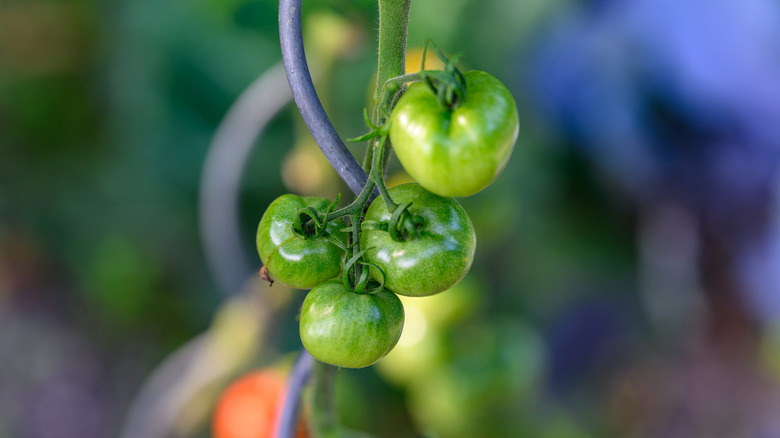
It can be hugely disheartening to watch your tomato plant grow, only to find the fruits aren't growing to the size you hoped for. Not only that, but undersized tomatoes often are oddly textured and bland. If there are no other negative signs that you'll read about here, it's probably because you're not meeting their growing needs. There are other factors involved when growing the juiciest tomatoes, but the biggest considerations are the container, fertilizer, sunlight, and watering. The growth of many plants will be limited by the size of their containers. Unless you've planted them in the ground, this could be an issue. I'd recommend at least a 15-inch pot as this will give your plant plenty of space to spread its roots and access any nutrients in the soil. A small pot means a small plant, and a small plant means small tomatoes.
You also need to use fertilizer specifically for fruit production. Handily, these are usually called tomato feeds even though they can be used for other fruiting plants. A general fertilizer will give you beautifully lush green leaves, but without the potassium required for large fruit growth. I've mentioned a lot about watering already, so as a reminder, keep the soil moist and water deeply. Inconsistent watering can stress a plant out, leading to poor fruit growth. The final key tip is sunlight, as your tomato plant needs as much of it as possible. Very harsh direct sunlight can damage the fruit, but generally, the plants can't get too much of it. Six to eight hours a day is the minimum they require for full growth.
Fungal diseases
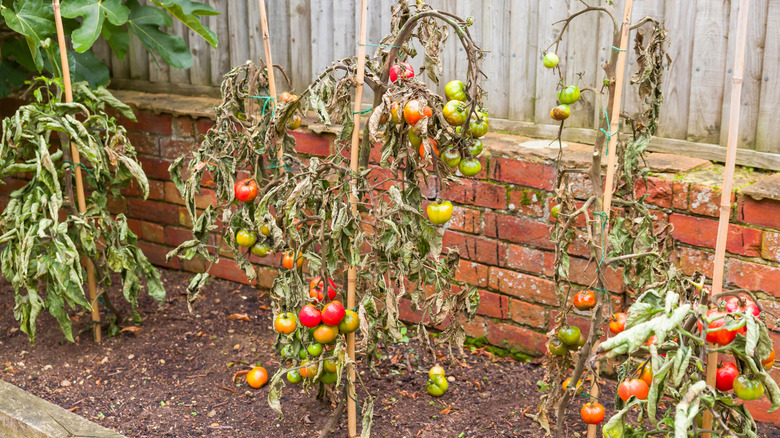
Fungal diseases can come in many different forms. The most common are early/late blight, powdery mildew, septoria leaf spot, and fusarium wilt. These all present a significant threat to plant death, so early detection is important. All fungal diseases are different, but many of them present with yellowing leaves. Added to this, there will be either dark spots on the leaves or white mold. They can require individual treatments, but there are general steps that can be taken with all fungal diseases. The first is to remove all the affected leaves immediately and destroy them. If you have a young plant with only a few leaves, remove the most seriously affected. Once you've done that, you'll want to buy a fungicide, and there are organic options available.
With early detection, this is usually enough to save the plant. If you have several tomato plants and only one of them is showing signs of disease, it can be the best idea to destroy that plant to save the rest of the crop, but this is your call. Once you've done these steps, you want to improve airflow by pruning and potentially replanting your tomatoes further apart. These fungal diseases thrive on wet leaves, which airflow can help to solve. This is also why you should water your tomatoes at the base and not overhead. Finally, it's a good idea to place mulch around your tomato plant. This will not only help it retain moisture but also prevent the splashing of soil spores into the air.
Sunscald
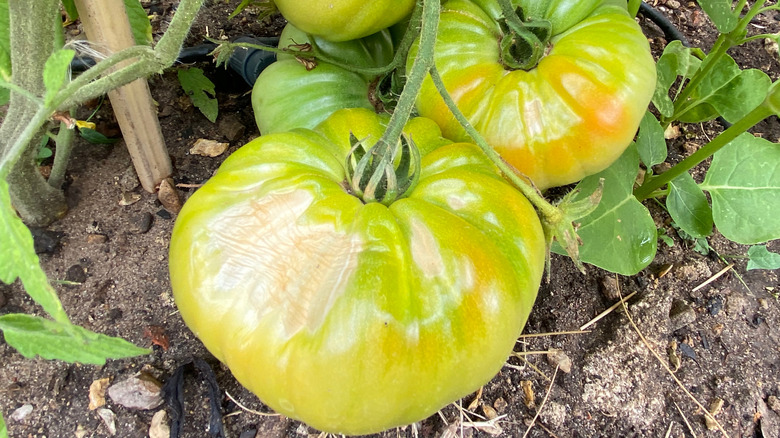
Tomatoes love the sunshine and usually can't get enough of it. However, there is a point where extreme heat can cause tomatoes to be damaged. Generally, this will only happen when temperatures reach 104 degrees Fahrenheit and above. When this happens, pale patches will start to grow on the fruit's surface. The skin of the fruit won't recover, but this doesn't immediately make the fruit inedible, so you don't have to remove the tomato. It does make it more susceptible to infections and rotting if it's severe. Due to this, if there are only a few unripe tomatoes that have been damaged, it's best to discard them.
The solution to this depends on the forecast and leaves. If the temperature is soon to fall, the issue isn't going to become worse, and your newly developing tomatoes won't have the scarring. If temperatures remain high, look at the protection your tomatoes are getting from the leaves. Tomato plants usually develop a canopy over the fruits to protect them. If this is sparse due to pruning or damage, your plant may need some shade from the harshest parts of the day. Covering the plant with a light cloth or netting is usually the best way to protect it. Tomatoes can be ripened inside after they've had their first blush of color. Therefore, if intense heat is on the way, it can be a good idea to pick any that aren't fully green to protect your harvest.
Cracked fruit
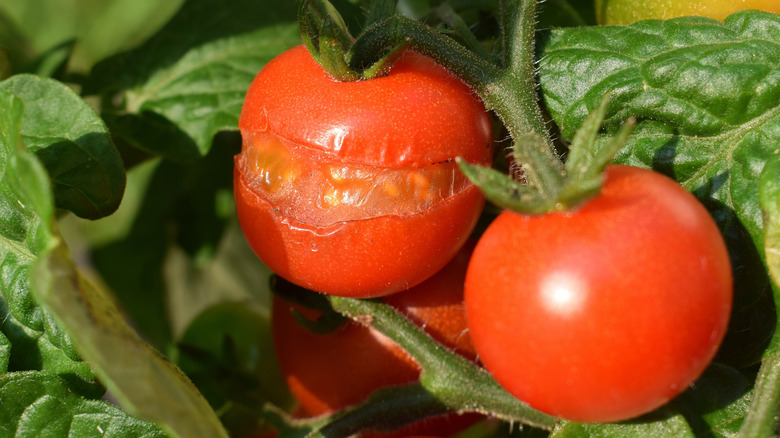
As humans, if we have a rapid growth spurt, then we can often get stretch marks. This is because our skin can't keep up with the internal growth. The cracked fruit of a tomato happens for the same reason: the tomato expands rapidly, and the skin can't catch up. Whereas for humans this can be a completely natural process, in tomato plants, it's a sign of neglect. That's because cracked fruit happens when tomatoes suddenly have access to a large amount of water after a period of drought. The roots suck up all that moisture and feed it into the tomato. The skin can't accommodate this sudden growth, and it cracks. These cracks then become vulnerable to rot, pests, and disease.
These tomatoes need to be removed as soon as possible to prevent these issues. There is a chance they'll remain edible, but unless the damage was minor and they are ready to eat straight away, I wouldn't take the chance. Thankfully, the solution here is an easy one, which you've probably already worked out. Consistent watering and ensuring the soil doesn't dry out are key. If you have tomato plants that have been left out to dry, it's best to only water them slightly at first and then gradually increase to a full schedule over a few days. Any fruit that hasn't been damaged will continue to grow as normal.
Yellowing leaves
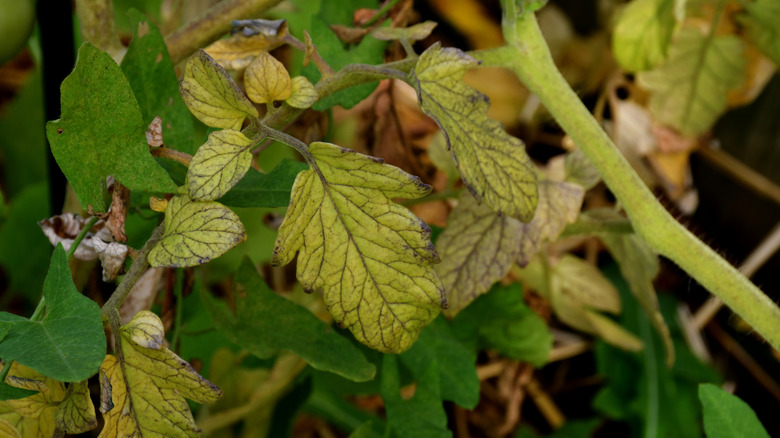
Yellowing tomato leaves are a tricky one to diagnose, as they can be a symptom of several issues. For example, most fungal diseases will cause yellowing leaves, but without black spots, it's probably not that. Leaves can also turn yellow when they are old. If only a few of your lower leaves are showing these signs, it could just be that the plant is focusing its energy on new growth. Yellowing leaves with no other obvious signs are usually a sign of a nutrient deficiency.
Too much nitrogen can cause a lack of fruit production, but too little of it can cause issues with leaf health. If you've not been giving your tomato plant any fertilizer at all, it may be suffering from poor soil quality and a lack of nitrogen. This is why tomato feed will still include nitrogen, just in a smaller ratio than general fertilizer. If you have yellowing leaves without other issues, then it may be best to use a general fertilizer for a while until the leaves recover. Also, add some blood meal to the base of the plant for an extra hit of nitrogen.
When the leaves recover, you can switch to a more specific tomato feed. Other issues that cause yellowing are poor drainage or environmental stress. Due to the wide range of issues, you shouldn't rule out something more sinister until your leaf health improves. Imagine yellowing leaves as a high temperature for humans. It's something to keep an eye on, but without any worrying signs, it's something that can be kept under control.
Aphid infestation
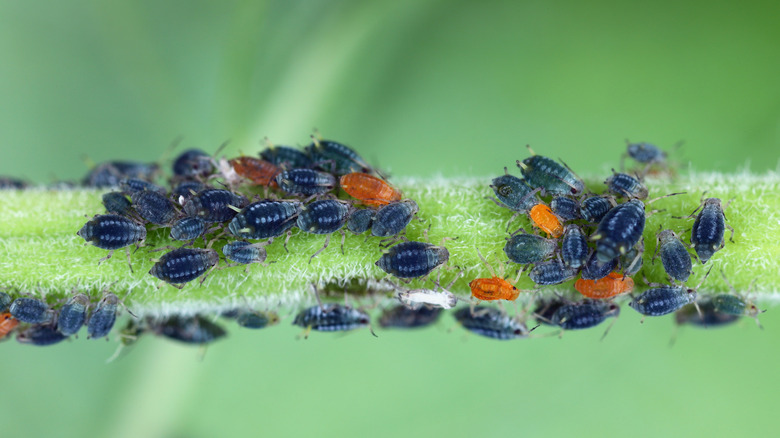
Unlike yellowing leaves, an aphid infestation is easy to diagnose. However, they aren't always the easiest to spot in the early stages. That's because they are often on the underside of leaves, but they can also be on new shoots and flower buds. If you only spot one or two without properly checking, you may easily mistake them for harmless pollinators. They can also be easy to miss as they are very small. While small, they can be a mighty big problem once they multiply.
Aphids feed on the plant's sap, which can starve it of nutrients. There is also the potential of them spreading viruses and encouraging mold growth. This is another issue that can cause yellowing of leaves, which, as I mentioned, is why a proper investigation is always required when you have that issue. The biological solution here is to attract predators, especially the beautiful ladybug. These insects will feed on aphids without damaging the plant. You can even buy ladybug larvae for this reason. Lacewings can also be bought for the same reason.
There are also a few flowers ladybugs love, such as marigolds, calendula, and alyssum. Keeping these close to your plant can be a good idea. For instant control, there are many garden-safe insect killers out there that won't harm the wider environment but will get rid of the problem. While it can be disgusting, it's a fairly easy problem to solve, and your tomato plant can quickly recover.
Tomato hornworm
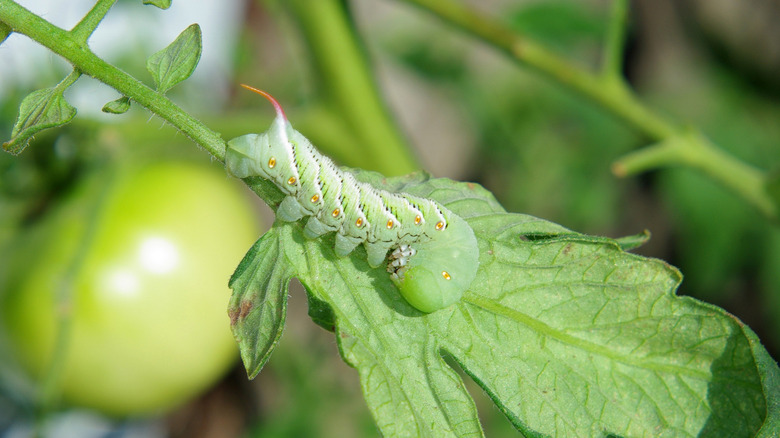
Aphids may be a nuisance, but at least they are small. Tomato hornworms, also known as green caterpillars, are a big problem both figuratively and literally. They can grow up to be 4 inches long and have a horn-like stinger on their rear, hence the name. These insects mostly munch on the leaves but can also attack the stems and fruit. Despite their size, tomato hornworms can be hard to spot as they have excellent camouflage. Your first sign of them will often be the leaf damage, which is another of the many reasons you should check your tomato plants often
If left unchecked, they can destroy a tomato plant, especially if there is more than one. Usually, it will just cause the plant some stress, and it will eventually recover. The best way to control them is to put on some gloves, pick them off, and dispose of them. If you have repeated problems or several hornworms, an organic pesticide can be used that contains Bacillus thuringiensis (usually just shortened to B.t.). This will specifically target caterpillars but without harming the beneficial insects you need for pollination. If you don't like large insects, then it can be a bit of a yucky problem to have, but it's one that can be easily controlled with early intervention.
Bacterial diseases
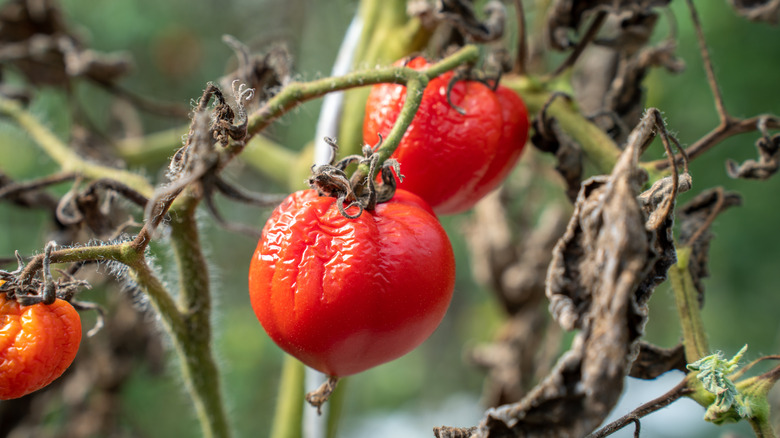
I started with the easiest issue to solve, and I ended with the hardest. Bacterial diseases are less common than fungal diseases, but can be more devastating. The most common of these diseases include bacterial spot, speck, and canker. All of these usually present themselves in the form of water-soaked spots that are very dark. There will also be sudden wilting, and these spots can even show up on the fruit. Bacterial canker can be more severe, causing stem lesions. Probably the biggest difference between fungal and bacterial injections is that spots with fungal issues are usually dry, and with bacterial issues, they'll be slimy or sticky. Unlike fungal diseases that are spread through spores, these diseases are often spread through contaminated tools or seeds. They can also be spread through the splashing of bacteria-infested water.
Getting rid of the bacterial disease is unlikely, but it can be slowed down with copper-based sprays. Bacterial canker is usually too aggressive to be stopped. My advice is that if the tomato is near harvest, slow the infection down until your tomatoes are ready. If it's early in the growth stage or you have several other healthy plants, it's best to destroy the plant and start again. For prevention, it's important to sanitize all your garden tools, which can either be done with an anti-bacterial spray or by soaking them in hot water or bleach. If you still have spare seeds, it's probably best to throw them away just to be safe. Also, ensure the leaves stay as dry as possible, the plant has good airflow, and avoid planting in the same spot.