

10 Pros And Cons To Adding A Sink In Your Kitchen Island

You may have figured out how to give your kitchen island brownie style points with a waterfall edge, but there is no denying that an integrated sink can also give this space a huge leg up in the aesthetics department. After all, there is something about the notion of taking care of all your cooking and cleaning needs within the singular expanse of a kitchen island that can make you have your own Martha Stewart moment.
But adding a sink to the kitchen island can prove to be a double-edged sword. On one hand, you have the added functionality of a convenient sink while you cook and clean. On the flipside, you might be looking at a monstrous renovation bill if your kitchen layout isn't designed in favor of an island sink. To help you get a clear picture of the pros and cons of a kitchen island sink, we picked the brain of Rohit Bhoite, founder of RB House of Design. Here's what he wants you to know before you make any big, and potentially irreversible, decisions.
Pro: Functionality
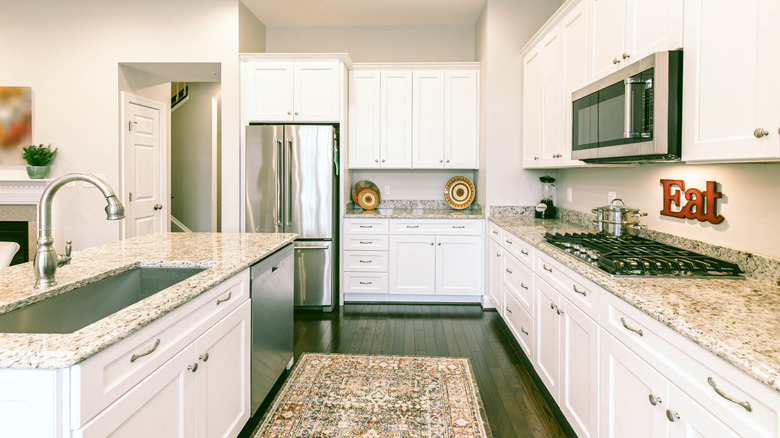
If you have decided to take the plunge and add an island to your kitchen, integrating a sink within the design serves as the next logical step. According to Rohit Bhoite, the island sink was devised to keep in line with the ideal triangular kitchen layout. But precisely what does the golden triangle mean for kitchen design? The theory posits that the stove, the sink, and the refrigerator should be placed within optimal distance of each other to maintain an efficient workflow within the kitchen.
By adding a sink to the island alongside a burner, Bhoite says, one can have handy access for essentially anything needed while cooking up a meal. "If your island is used as a breakfast counter for kids in the morning, the island sink becomes even more functional," he observes. For starters, you can expect to have access to drinking water from the tap at hand's reach. Having a sink on the island also makes post-breakfast clean-up easier on hectic mornings.
The wide canvas of a kitchen island also makes it an ideal candidate for a secondary prep sink. For kitchens with multiple cooks working simultaneously, a secondary sink allows everyone uninterrupted ease of access. A second sink located on the island also serves as an ideal spot for chopping, rinsing, and prepping ingredients without having dirty dishes in your way.
Con: Additional expenses
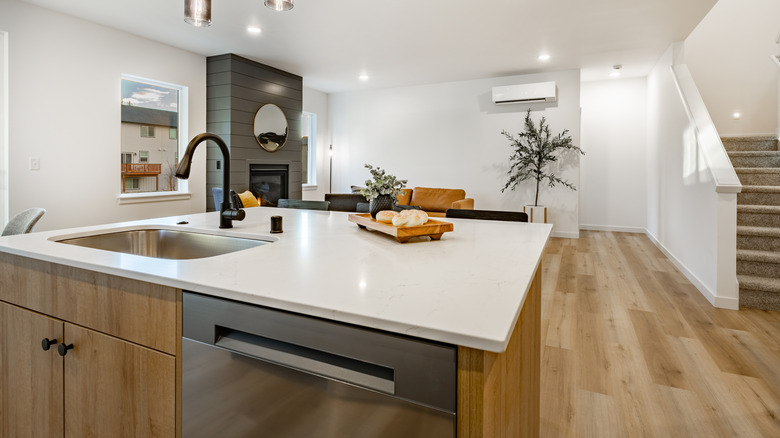
A kitchen island with an integrated sink might be easy on the eyes, but it often isn't quite as easy on the pocket. If your kitchen island doesn't already have plumbing provisions for a sink, you are saying hello to a long, protracted remodel. Rohit Bhoite concedes that adding a sink to a kitchen island can often balloon into a larger renovation project than you may have initially expected. "It often involves installing new plumbing lines and, in some cases, adding electrical connections for garbage disposals or water filters," he explains.
If you are looking to skip the headache with a pre-installed model, it helps to have a fair estimate in your mind before making any final decisions and long-term commitments. Kitchen islands with an integrated sink generally average somewhere between $3,000 to $7,000. This covers the cost of the sink, installation costs, plumbing, cabinetry, and countertops.
It also pays to bear in mind that your options for relocation are limited. If you hope to remodel your house at a future point of time, a standalone kitchen island can be moved to another location. But once a sink has been added with water and drainage pipes, it becomes a challenging task. It helps to be extremely certain about the location of the kitchen island before adding a sink to it.
Pro: Aesthetics
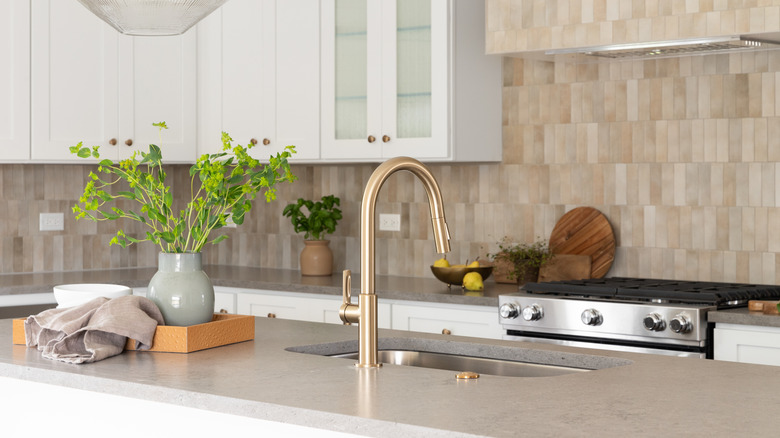
When considering the pros and cons of a kitchen island sink, the aesthetics will likely tip the scales in favor of the former. If you are looking to nail the memo on both form and function, adding a sink to the kitchen island can prove to be a valuable member of your kitchen design. A well-positioned sink can lend an air of symmetry to the kitchen island and become the focal point of the space.
Not sure where to get started? Rohit Bhoite recommends opting for a marble or a quartz sink to make a statement. Once you have decided on the material, there are endless options to express your creativity in ways that feel unique to you. There is the question of hardware: Will you coordinate the sink's hardware with the drawer pulls on the island? Or will you opt for a statement faucet? Vintage designs, set in finishes such as aged brass, will serve as a worthy conversation starter the next time you are hosting book club night.
Once you have zeroed in on the perfect materials, colors, and designs, a couple of handy finishing touches can seal the look. A pair of well-positioned pendant lights flanking the sink on either side can bring the kitchen design together in a cohesive manner.
Con: Installation and maintenance

It helps to also acknowledge the mountain of invisible work running in the background when mulling over whether to install a kitchen island sink. Rohit Bhoite cautions that installing a sink in the island necessitates additional plumbing work. Beyond just the time involved for installation, there are certain long-term strings attached. "... They bring added responsibility in terms of maintenance and planning, particularly if your kitchen wasn't originally designed with this setup in mind," he says.
Traditional sinks are generally placed against the wall, which offers a handy area to feed in drainage and vents. However, since islands are contained within a specific area, you will want to have a word with your contractor for preventing odors from sewer gases wafting into your kitchen.
To prolong the longevity of your investment, it helps to spend the time in some everyday maintenance efforts. The sink should be rinsed after every use with warm water to get rid of any odor-causing food remnants. Whenever you suspect that the sink needs a deep-clean, it helps to know this easy trick to clean your kitchen sink drain perfectly: Start by pouring half a cup of baking soda followed by half a cup of white vinegar to dislodge any residual food particles. As a rule of thumb, you'll want to avoid pouring any form of grease down the drain, as it can solidify over time and congest the pipes.
Pro: Social element

Wall-mounted kitchen sinks have been largely favored through the pages of American history. While sinks eventually started getting incorporated into the kitchen cabinetry from the 1930s onward, they are still largely nestled against corners and walls — a position that limits face-to-face interactions with your family and guests while getting the washing up done.
When the sink is positioned within the island, Rohit Bhoite believes that it can serve as the spot to socialize and to keep the conversation going by ensuring that you won't need to turn away from your guests every single time you need to rinse a glass. Hosting the entire fam for the holidays? Shallow sinks can double up as an ice bucket or a handy beverage station for putting together welcome drinks for your guests without having to exit the conversation.
If you have been looking to recreate the chef's counter experience at home, an island sink will again stand you in good stead. By placing the sink at a central position in the kitchen, you can easily prep and rinse ingredients while your loved ones grab a front-row seat to witness the culinary magic.
Con: Potential for clutter

An island sink usually occupies pride of place, serving as the focal point of the room — and often, it's the first place that guests will see if it is loaded with dishes after a hearty Sunday brunch. Beyond serving as a mess magnet, it will also be harder to get by with any stains or spots since this sink is centrally located.
In a pinch, a large chopping board can stand in as a sink cover to keep the mess out of sight. Opting for a deeper basin can also help you store more dishes at a time while also reducing splashes. Your other option includes recalibrating your needs for the island kitchen. If you have the space to spare during your renovation, you can opt for a secondary yet fully functional kitchen — known as a back kitchen or dirty kitchen — that's tucked away at the back and away from the main kitchen area, and keep the island sink as a secondary option.
Rohit Bhoite agrees and recommends relegating the island sink for light tasks, such as rinsing ingredients or nifty clean-ups rather than heavy-duty washing. "It adds to the overall value of the home. It becomes an extra amenity — functional, stylish, and smart," he says.
Pro: Space efficiency
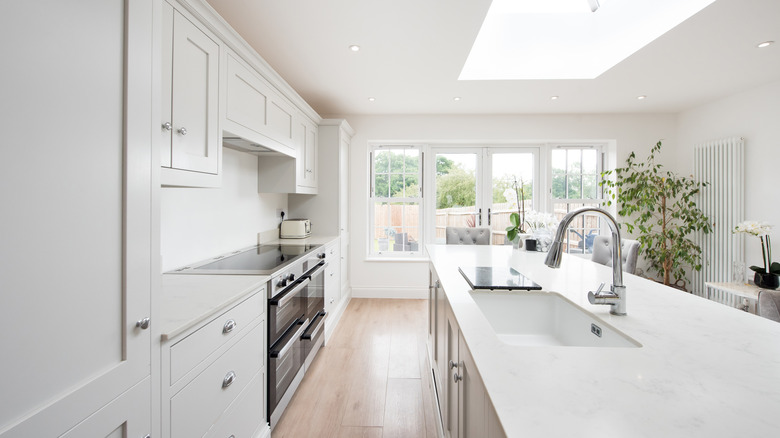
Whether slung with spice racks, hooks, or electrical outlets, it should come as no surprise that wall counters are precious real estate in the modern kitchen. A wall-mounted sink can usually eat into a good chunk of this space and take over a worthy corner with an awkward jumble of pipes.
By moving the sink to the kitchen island, you can blissfully reclaim all those inches of counter space along the walls. Beyond the basic essentials of an oven and microwave, there are a host of appliances that need to be accommodated against the walls. From toasters and blenders to coffee machines and air fryers, a host of everyday appliances need to be positioned close to electrical outlets — bonus points for knowing how to hide these sockets to enhance your kitchen's overall aesthetic. With the sink out of the way, every inch of countertop space along the walls can be optimized to house the glut of gadgets that are needed to keep a modern kitchen up and running.
In this case, you can also do away with an extended backsplash. Bid a jolly goodbye to dated backsplash trends, such as subway tiles running along the entire length of the countertop. Instead, rejoice in the new possibilities of liberated walls that can serve as a base for decorative shelving and additional cabinets. You can even choose to leave this space bare to reduce clutter and create a sense of openness in the kitchen.
Con: Size limitations
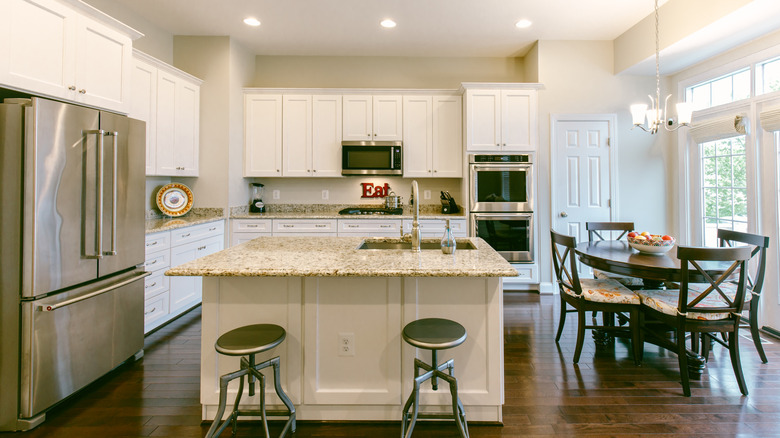
An island sink is designed to maximize the functionality of your kitchen island, but it can prove to be a burden rather than a boon in smaller kitchens. Need proof? Let's take a closer look at the numbers. On average, small kitchen sinks clock in below 25 inches. Rohit Bhoite has found that, if your kitchen island is small to begin with, attempting to squeeze in a sink can be an impractical task.
If you do have your heart set on having a sink integrated within the kitchen island, there are certain compromises that can make this situation work. You can choose to swap this feature for another one, such as adding a sink and letting go of bar seating to preserve space in a small kitchen. Instead, adding some storage shelves at the bottom can help you maximize the functionality of the island. You will also want to steer clear of statement-making designs, such as a farmhouse sink, that can monopolize the space and make it appear more cramped. Investing in some efficient tools, like over-the-sink drying racks, can help you further save crucial inches of your existing counter space on the island.
Pro: Increased home value
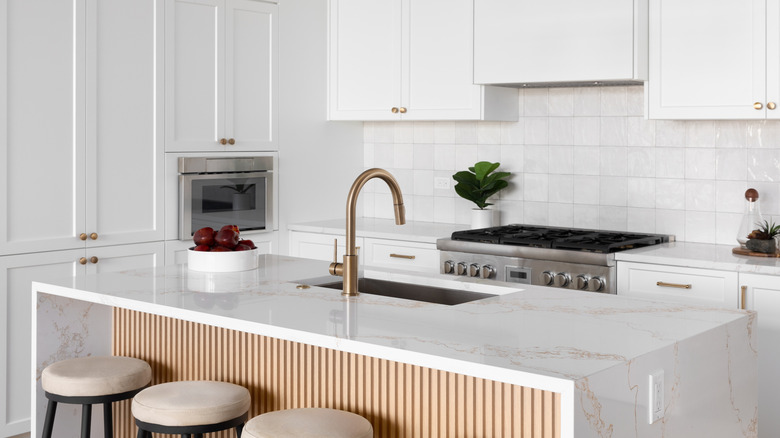
Beyond just upping the aesthetic appeal of the kitchen, an island sink can also prove to be a worthy investment in the long run. If you have future plans to sell the house, a sink situated within the kitchen island can add to its perceived value. The enhanced social aspect of being able to interact with guests, combined with the aesthetic value of a well-positioned sink, signals a well-planned layout — a factor that generally convinces buyers to open their wallets.
If you have the budget and the time to spare, you can choose to get creative with your choice of sink. You may not be quite ready to opt for an internet-breaking basin-less sink à la Kim Kardashian, but there are several imaginative options to be considered. Rohit Bhoite urges you to extend your list of possibilities to encompass everything from brass options to marble sinks integrated within waterfall-style islands.
If you are working within a budget, there are several materials that can create an expensive-looking finish, such as laminates that mimic the look of quartz or marble — just one of the many ways you can save money on countertops. With the right finishing touches, such as a statement vase and curated candles, the space around the sink can be transformed without breaking the bank.
Con: Design priorities
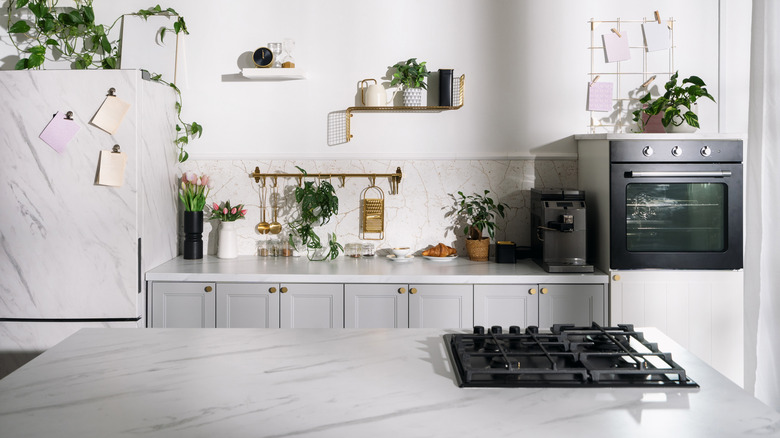
Modern kitchen islands are a multi-tasking workhorse — especially if you know how to get more out of this space beyond just additional counter space. From functional storage to integrated dishwashers, microwaves, and beverage coolers, the sky is the limit. However, if you have limited space in your kitchen to play around with, adding a sink to the island can often come at the cost of other, more important amenities.
If you are working with limited space and need to make a binary choice between adding a stove or a sink for the kitchen island, Rohit Bhoite believes that the former should take priority. "An island sink is typically an add-on and not essential to the kitchen's core workflow, especially when space is limited," he says.
Before deciding to add a sink to the kitchen island, you will need to sit down and figure out your priorities for this space. Is your current counter space sufficient for your cooking needs? Can your existing kitchen island afford to forego counter space in favor of a sink? Do you generally wash all dishes by hand? Do you require more sink space than what can be accommodated in the island? The answers to these questions will help you make the final call on whether adding a kitchen sink is a priority for your current needs.