

Here's What It Means When A Restaurant Declares Bankruptcy

On the list of stress-inspiring buzzwords, "bankruptcy" ranks pretty high. Declaring bankruptcy might seem like a closing sentence, but in reality, it can be a strategic move toward recovery. Still, in some cases, a bankruptcy declaration can mean that folks won't be able to chow down at their favorite eateries anymore. Feeling nervous that one of your go-tos might be on the rocks? There are a few tell-tale signs that a restaurant is about to go bankrupt to be on the lookout for.
Single-location restaurants and larger chains like Quaker Steak & Lube, Ryan's buffet, Logan's Roadhouse, and more have filed bankruptcy in recent years. Chain or not, there are two main types of bankruptcy for restaurants to file: Chapter 7 and chapter 11. In chapter 7 bankruptcy, businesses shutter their doors, sell off their assets under the guidance of a judge, and are absolved of any outstanding debts. In the more complicated, multi-stepped Chapter 11 bankruptcy, businesses remain in operation while creditors and the restaurant agree on a plan for debt repayment.
The chief appeal of declaring bankruptcy is that it immediately enacts a wave of financial protection over restaurants, halting collections and any outstanding lawsuits. From there, a thorough and often lengthy process begins in which restaurants work with lawyers and the court system to take stock of all their assets and figure out how best to allocate those assets to creditors.
In chapter 7 bankruptcy, restaurants close their doors
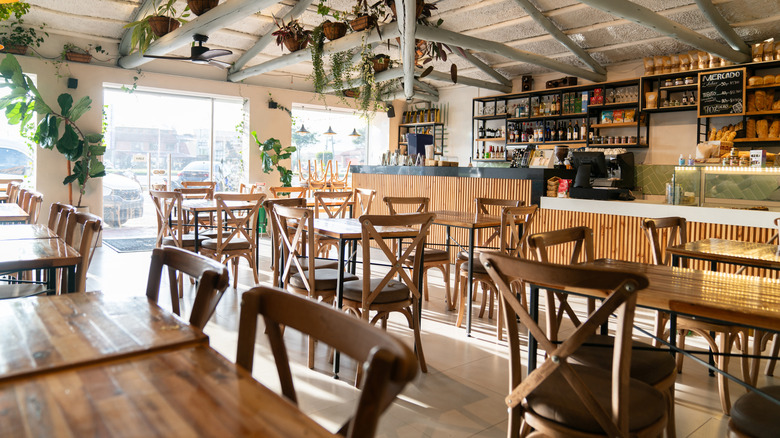
In chapter 7 bankruptcy, restaurants close (which can be sad and disappointing for the community), but they are also financially relieved of outstanding debt. When a way forward seems uncertain or unlikely, this can be the best move.
Uncontrollable external factors can affect a restaurant's fiscal bottom line. In recent memory, the COVID-19 pandemic caused restaurant revenue to drop by as much as 80% (as reported by Modern Restaurant Management). Another external factor out of business' control might include rising operational costs; meat prices are currently at an all-time high in the U.S., with a 10%-12% year-over-year increase due to shrinking cattle sizes caused by climate change. Egg prices have also seen drastic fluctuations over the past year, a staple ingredient for restaurants that can suddenly cost a lot more per capita. Rent and utilities (particularly in high-rent areas like major metropolitan cities) can also weigh on businesses and are more systemic than easily fixable adversaries.
The overall economic climate can also compound the issue, making recovery more or less possible for restaurants. Jonathan Carson, co-CEO of bankruptcy firm Stretto, notes that adverse economic factors on the consumer (i.e. student debt, the rent crisis, the labor revolution) also directly impact their ability to patronize restaurants and keep them open. As Carson told Fox Business, "The numbers are staggering and rising, and high interest rates don't help when it comes to the health of the consumer. ... The consumer is in a rough spot."
Chapter 11 bankruptcy keeps restaurants open, but might come with some changes

When restructuring and reorganizing are possible, chapter 11 bankruptcy enacts a shield of protection while restaurants get things sorted out. For chapter 11 filings, restaurants stay open while figuring out a way to become profitable again, including how long it will take them to repay each creditor. Declaring chapter 11 bankruptcy can be the right move for remediable internal issues, such as quality control, cash flow allocation, poor reviews, low foot traffic, meeting shifting consumer preference trends, and natural disaster recovery.
Restructuring rather than liquidating doesn't mean that everything stays the same, however. A chapter 11 bankruptcy filing might come with a reduced or changed menu (as in the case of TGI Fridays) or cut staff. Red Lobster, for instance, filed for chapter 11 bankruptcy in 2024 and is now well on its way to recovery. Although, it's worth mentioning that chapter 11 bankruptcy protects businesses, not necessarily the employees — and when Red Lobster suddenly closed dozens of lower-performing locations without warning, hundreds of employees were left without jobs.
To cushion ultra-thin profit margins, some restaurants (like Texas Roadhouse, which hiked menu prices three times in less than a year) have taken to price raising as a strategy, which can harm foot traffic. On the flip side, bulking out profit margins by accruing mounting debts can also choke out new growth. Sometimes, chapter 11 bankruptcy can be the most painless way forward for restaurants.