

The Pacific Northwest Version Of Chowder Features This Staple Fish Instead Of Clams
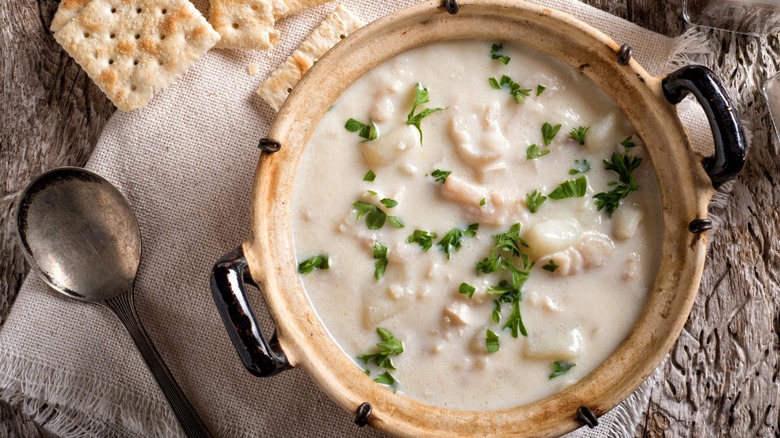
On a gray, rain-drenched afternoon in the Pacific Northwest, the kind that stretches on for months, there's certain comfort in a warm, creamy bowl of chowder. While most of the country thinks of chowder as clam-heavy and New England-born, out here, of course, it's salmon that fills the bowl. Chowder isn't a monolith or simply a clam dish with the fish swapped in; it's a broad category, one that's endlessly adaptable and shaped by the region's wild waters. This chunky soup can be made with clams, halibut, and even crab.
But salmon chowder is a delicious, deeply local expression of Pacific Northwest identity. Pink-fleshed salmon, seasonally available in local rivers and a cornerstone of regional foodways, brings a different richness to the dish and, if leftover cooked or smoked salmon is used, a subtly smoky flavor, too. It's also a great opportunity to make good use of the cuts of fish you might not know what to do with, such as the head, cheeks, wings, or tail.
While Seattle's Pike Place Chowder has made salmon chowder a tourist must-try, it's also a true regional dish that shows up at family tables, community potlucks, and rainy-weekend kitchens across Oregon, Washington, and British Columbia. Each bowl reflects a patchwork of influences and ingredients, sometimes studded with sweet corn, often creamy, and always hearty. Salmon chowder is a dish rooted in the bounty and resourcefulness of the Pacific Northwest, and it's definitely on the list of iconic Washington State foods you need to try.
Sacred rivers and new traditions
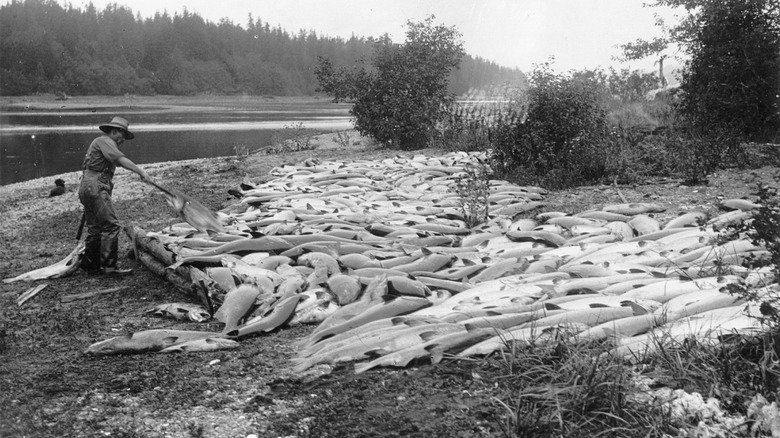
Long before chowder or Aplets & Cotlets arrived, salmon was the lifeblood of the Pacific Northwest. For thousands of years, Indigenous peoples built their cultures, diets, and economies around the seasonal runs, fishing rivers and coastal waters and drying and smoking fish to last through the year. Salmon are sacred, woven into ceremony and story. That connection remains profound; salmon is still central to Native identity and sovereignty in the region, a food that sustains and signifies in ways that can't be measured by recipes alone.
The word "chowder" likely comes from the French "chaudière," a nod to the communal cauldrons that once simmered with whatever the sea could offer. As the tradition migrated across the Atlantic, many different types of chowder evolved. It became a broad genre of creamy, chunky soups, with each region improvising with what was close at hand. By the late 19th and early 20th centuries, as canning and smoking industries boomed, a new kind began bubbling up in kitchens. Chowder is the perfect comforting soup to make at home when you have leftover salmon. It's just a practical, adaptable way to use preserved or leftover fish, a recipe built as much on thrift as on local abundance.
Potatoes, leeks, and cream reflected both the region's climate and its gardens, while jars of smoked or canned salmon offered a protein-rich backbone for feeding families through cold months. But the story of salmon in the Pacific Northwest is also one of loss. Over the past century, dams, pollution, overfishing, and climate change have sharply reduced wild salmon runs, some — particularly Chinook, or the king variety — down to a fraction of their historical abundance. This is threatening Native fisheries and reshaping local food traditions, including stirring up a pot of salmon chowder. No matter how you spin it, it's time to rethink our appetite for king salmon.
Salmon chowder for the next chapter
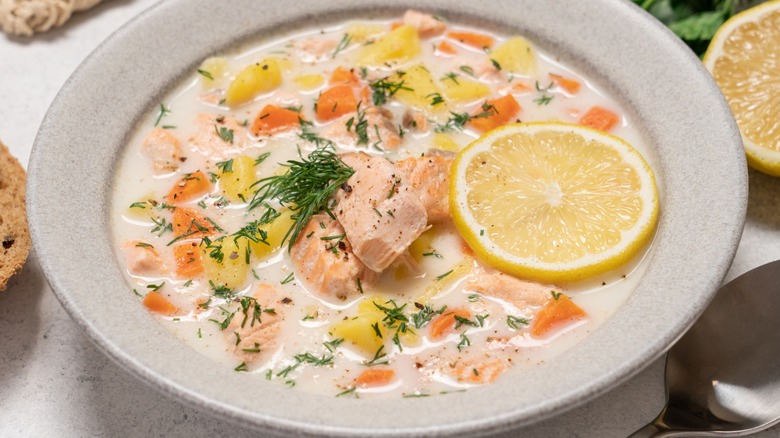
Across the region, communities and tribes have invested decades of effort into restoring salmon habitat and river health, from tearing down major dams to replanting stream banks and fighting for sustainable fisheries. While recovery is slow, some wild salmon runs are finally showing cautious signs of renewal, a testament to both the resilience of the fish and the people who rely on them. Every bowl of salmon chowder, whether made with leftovers from a backyard grill or fresh-caught from a tribal fisher, carries the memory of this living connection: A food shaped by tradition, loss, and the hope of return.
Making salmon chowder at home is mostly about building gentle layers, and the combinations are endless. The classic starts with sautéed onions, leeks, or fennel in butter; add diced potatoes and simmer in a mix of fish stock and cream until just tender. Flake in cooked, smoked, or even canned salmon, and finish with herbs such as dill or chives. For a true PNW touch, try adding sweet corn or a spoonful of the coveted local smoked goat cheese, Up in Smoke, also known as the most expensive cheese in America. Some cooks bring a shot of brightness with lemon zest and fresh tarragon, or sneak in garden greens like mizuna or baby kale.
But go ahead and riff: Add a pinch of cayenne, smoked paprika, or hot sauce for a gentle burn, or drift toward the region's Southeast Asian community inflection, with coconut milk instead of cow, and ginger, lemongrass, a splash of fish sauce, and handfuls of cilantro for a lighter, more aromatic bowl. Or, try this tom kha-inspired salmon and corn chowder recipe. Salmon chowder can also take on wild mushrooms and sake, or even roasted poblano and toasted masa for a Pacific–Southwest hybrid. However you improvise, the result is generous and restorative — and unmistakably PNW.