

10 Of The Most Popular Restaurant Chains In The 1980s
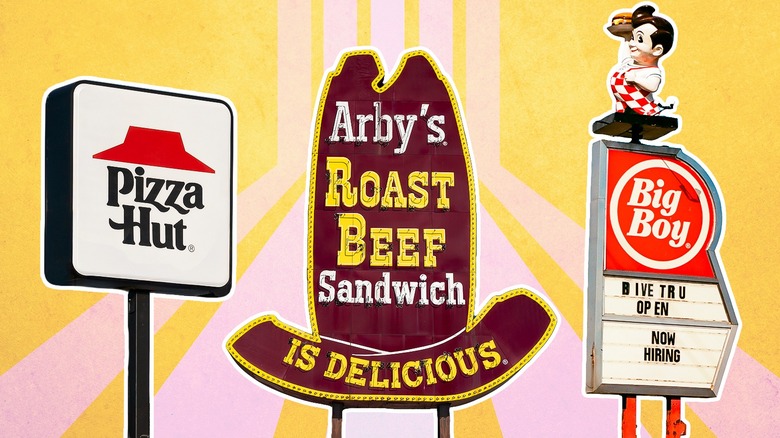
The 1980s were bold, loud, and unapologetically indulgent and the way America ate was no different. Ask anyone who grew up in the decade, and chances are their childhood memories are tied to food — birthday parties at Pizza Hut, drive-thru dinners, and a pantry full of then popular snacks and junk. While food trends over the years have shifted dramatically, the 1980s marked a turning point where eating became more about lifestyle than mere sustenance. Dining choices reflected identity, aspiration, mood, cravings, speed, and convenience, with more people eating out for social connection and emotional satisfaction. Fast food chains exploded, accounting for a staggering 40 percent of dining-out spending, driven by the demand for quick meals, buffet-style options, and family-friendly environments. Even health-conscious diners were lured in by salad bars and low-cal options served alongside greasy favorites.
This boom in dining wasn't limited to fast food; themed diners drew crowds by offering retro vibes and comfort food, while upscale chains catered to the growing class of "yuppies" who demanded sophistication. The restaurants that adapted fastest became household names. From sit-down pizza parlors to sizzling steak joints, franchises competed not just for customers, but for cultural relevance. Eateries became destinations, hangouts, and sometimes even status symbols. Here's a look at the biggest names that shaped how America dined out in the '80s.
Chi-Chi's
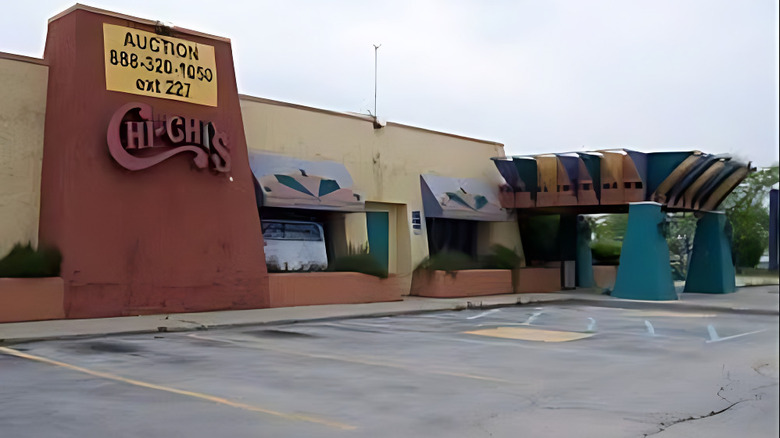
In the 1980s, Chi-Chi's was the go-to spot for massive margaritas and deep-fried chimichangas. Co-founded in 1975 by former Green Bay Packer Max McGee and restaurateur Marno McDermott, the chain exploded into the mainstream by serving up a bold, Americanized version of Mexican cuisine. With lively décor, birthday sombreros, fried ice cream, salsa, all you can eat nachos during happy hour, twice grilled bbq burrito and chimichangas, Chi-Chi's introduced many Americans to Tex-Mex cuisine for the very first time.
The chain peaked in the 1980s with more than 200 locations, but the rapid expansion soon turned damaging. New locations in cities like New York, Atlanta, and Texas struggled to gain traction, and management turnover plagued operations behind the scenes. The brand was also criticized for cultural appropriation, with its heavily Americanized take on Mexican food. Then came the final blow: a devastating hepatitis A outbreak in 2003, traced to contaminated green onions served at a location near Pittsburgh. About 650 people were infected and four died. Already struggling financially, Chi-Chi's closed its remaining U.S. restaurants shortly after.
Fortunately for lovers of the brand, in December 2024, nearly 20 years after its last U.S. location closed, a revival was announced. Hormel Foods, owner of the CHI-CHI'S trademarks, signed an agreement granting Michael McDermott — son of the original co-founder — rights to bring the brand back to life. New locations are expected to open in 2025.
Sizzler
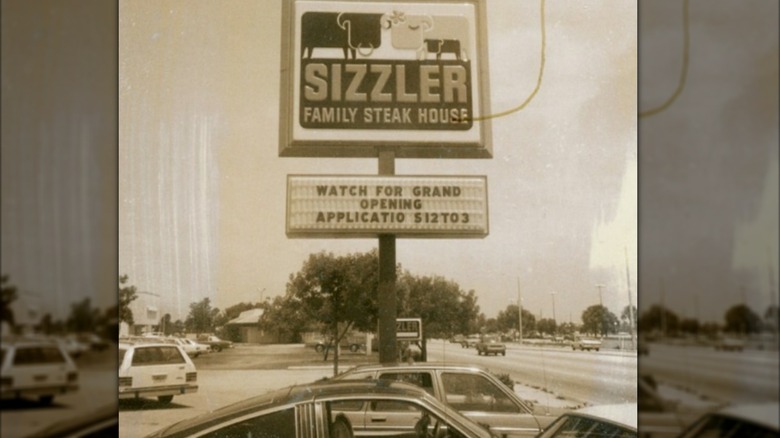
In the 1980s, Sizzler wasn't just a place to eat, it was where America went to feel fancy on a budget. With its budget-priced steaks, unlimited salad bar, seafood, and comfort food, Sizzler hit its stride in the Reagan era. Founded in 1958 in California, the brand exploded during the '80s thanks to its unbeatable value, accessible atmosphere, and pioneering business model. By the end of the decade, Sizzler had locations in the U.S. and worldwide, making it one of the fastest-growing concepts in the casual dining space. The growth came largely on the back of its value-packed menu: a hearty steak dinner for under $10, and all-you-can-eat salad bar lunches that attracted crowds. They were also famous for their steak and lobster, Malibu chicken, and unlimited shrimp.
Sizzler also pioneered a proto–fast casual format that was ahead of its time: customers placed their order at a front cashier, moved down a modified cafeteria line, and picked up their food when their name or number was called. Staff roamed the dining room offering drink refills. This blend of efficiency and hospitality made the experience feel upgraded without the formality of full service.
Sadly though it reigned in the '80s, Sizzler filed for Chapter 11 bankruptcy in 1996, closing 130 of its locations. Though the chain filed for bankruptcy again in 2020, it never disappeared completely. Today, it's attempting a nostalgic comeback, hoping to woo lapsed fans with throwback menu items in commercials.
Red Lobster
Fun fact, Nicki Minaj and Chris Rock worked at Red Lobster before becoming famous. The chain introduced many middle class Americans to seafood dining. Founded in 1968 and quickly expanded under General Mills, Red Lobster ballooned in the mid '80s, operating locations globally and serving millions of guests each year. So popular was the chain that at times people queued for two hours to be served. Seasonal events like Lobsterfest debuted in 1984, and in 1992, Red Lobster introduced its famous Cheddar Bay Biscuits. They were a huge hit and by 2017 the chain was baking up to a million each day.
Their offerings and quality control gained the company a rabid fanbase. But after its heyday, Red Lobster's tide began to turn. In 1995, General Mills spun off its restaurant division into Darden Restaurants. From there, the chain struggled with competition and Darden stopped investing in Red Lobster. In 2014, Darden offloaded the brand to private equity firm Golden Gate Capital, and it was later acquired by Thai Union Group, one of the world's largest seafood suppliers.
Things became murky when Red Lobster filed for Chapter 11 bankruptcy, citing massive losses — including from an ill-fated "Ultimate Endless Shrimp" deal that cost the company over $11 million. 99 of its nearly 700 locations were closed, and the company began seeking a buyer to keep the brand afloat. Even amid decline, Red Lobster's cultural footprint remains enormous.
Ponderosa
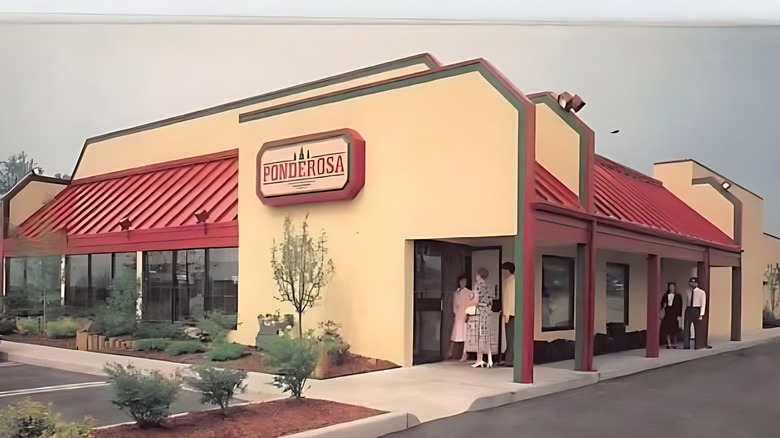
In the 1980s, few chains embodied "family steakhouse" quite like Ponderosa. For countless American families, it was where Sunday dinners, Little League celebrations, and birthday parties went down. It struck the perfect balance between hearty, affordable and comforting. Business was booming, too. By 1989, Ponderosa had expanded to nearly 700 locations. By the early 1990s, it had become the leading steakhouse chain in the U.S.
Part of what made Ponderosa stand out was its cafeteria-style service model. Guests ordered their steaks at the counter, paid up front, then helped themselves to the buffet while their entrees were cooked. It was fast, efficient, and just upscale enough to feel special without being stuffy. There was a limited menu featuring steaks (often sirloin), baked potatoes, a dinner roll, and a salad bar. Other popular items included wings, pork chops, and seafood options like fish and chips. The ice cream sundae bar was a highlight. With wagon wheels on the walls, staff in red-checkered shirts and cowboy hats, and chuckwagon-style buffets, the Ponderosa Steakhouse experience embraced a playful Western theme.
But as the dining landscape evolved in the '90s and 2000s, Ponderosa struggled to keep pace. Ponderosa's aging model combined with internal franchise disputes, stiff competition, food poisoning cases, financial instability, a bankruptcy in 2008, and Covid led to a steep decline. Today, few establishments remain: there are just 18 Ponderosa Steakhouse leftovers.
Pizza Hut
Stepping into one of Pizza Hut's iconic red-roofed restaurants meant sitting under stained-glass lamps, sliding into high-backed vinyl booths with thickly padded seats, and carpeted floors. The tables were topped with red-and-white checkered cloths, your silverware came wrapped in a thick cloth napkin (a major upgrade from the usual paper), and neon signs added a splash of color to the ambiance. You'd head straight for the salad bar while your Super Supreme Pan Pizza was prepared. Pizza Hut's 1980s menu featured Bar-B-Qs and pan pizzas, thin-n-crispy crust, sandwiches, pasta, and drinks (including beer). All drinks came in a pitcher!
While Pizza Hut had already expanded nationally and globally during the 1970s, the chain's cultural and business peak came in the 1980s. In 1986, it celebrated the opening of its 5,000th restaurant in Dallas, and by 1988, it had grown to over 6,000 locations worldwide, including dine-in restaurants and delivery units. That expansion, paired with savvy marketing and its community based initiatives, made it one of the most popular pizza chains of the decade.
The reading program, Book It! launched in 1984, was another stroke of genius. It rewarded students with free personal pan pizzas for hitting reading goals. Pizza Hut's pan pizza introduced in 1980 became a menu mainstay, while extras like arcade machines, jukeboxes, and all-you-can-eat lunch buffets made the dine-in experience feel like a cross between a pizzeria and a family fun center.
Ground Round
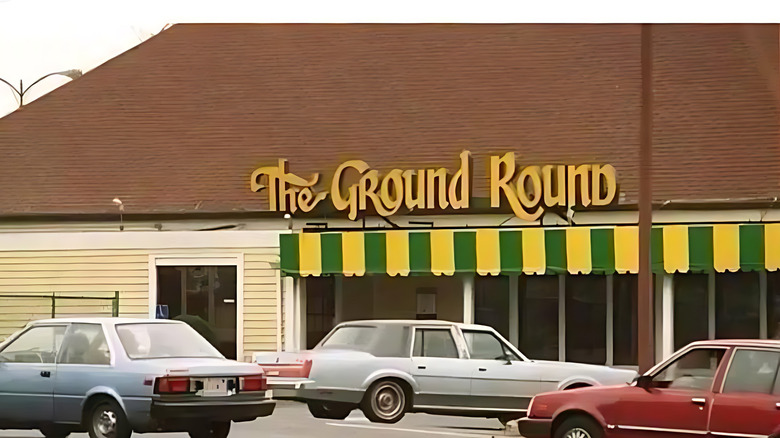
In the '80s, families looking to dine out flocked to Ground Round. With its casual, family-first vibe, free peanuts later replaced by popcorns, and kid-friendly perks like in-restaurant cartoon screenings, it offered a looser, more relaxed alternative to stiffer, more grown-up competitors. Parents could wine and dine while the kids munched on burgers and watched Tom & Jerry and nobody blinked if they tossed the peanut shells on the floor. It was in fact encouraged. They also loved the "Pay What You Weigh" deal where kids' meals cost just a penny per pound.
Founded in 1969 by Howard Johnson's, the chain exploded in popularity in the following two decades. By the '80s, there were more than 200 Ground Round locations across the U.S. Menu items included the "Ground Rounder" burger and extras like the hodge podge, potato skins, tossed green salad, and fried cheese stix. Ice cream was served in cool mini baseball cap cups. Alcoholic and non alcoholic beverages were also sold.
The brand changed hands multiple times and declared bankruptcy in 2004, when its parent company abruptly shut down dozens of locations overnight. Loyal franchisees banded together to buy the chain's assets and formed a cooperative in an effort to save it. Today, only a handful of Ground Round restaurants remain. Five to be exact including the most recent one, reopened in 2025 by husband-and-wife duo Joseph and Nachi Shea in Shrewsbury, Massachusetts.
Bob's Big Boy
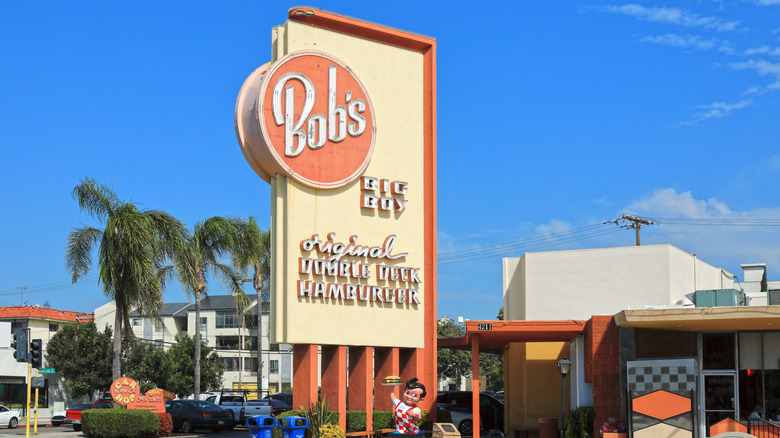
Before Big Boy became a nationwide icon, it began as a modest 10-seat burger stand in Glendale. One day, founder Bob Wian affectionately greeted a chubby six-year-old helper named Richard Woodruff with, "Hey there, Big Boy!"—and the name stuck. Soon after, Warner Bros. animator Ben Washam sketched a caricature of Woodruff in overalls holding a burger. That image became the basis for the iconic Big Boy mascot and the statues that once stood outside over 1,000 locations at its peak in 1979. At the heart of the Big Boy legend was its double-decker burger — two seasoned beef patties nestled in a three-part bun, layered with lettuce, cheese, red relish; later versions had pickles, and a signature tangy sauce that kept fans coming back.
The service was just as memorable. Waitresses wore neat uniforms, cooks ground meat in view of guests, and the entire operation aimed to feel clean and dignified. Outside, carhops in red cowboy hats greeted guests with a smile and delivered trays of burgers, fries, and thick milkshakes that hooked onto the car door — no need to leave your seat. The chain quickly became a magnet for car enthusiasts, teens, and families. It was even one of the restaurants visited by The Beatles during their 1965 Los Angeles tour. Franchise fragmentation and financial missteps led to decline by the 2000s. Today, only a few locations remain, including the Burbank flagship, now a California historical landmark.
Arby's
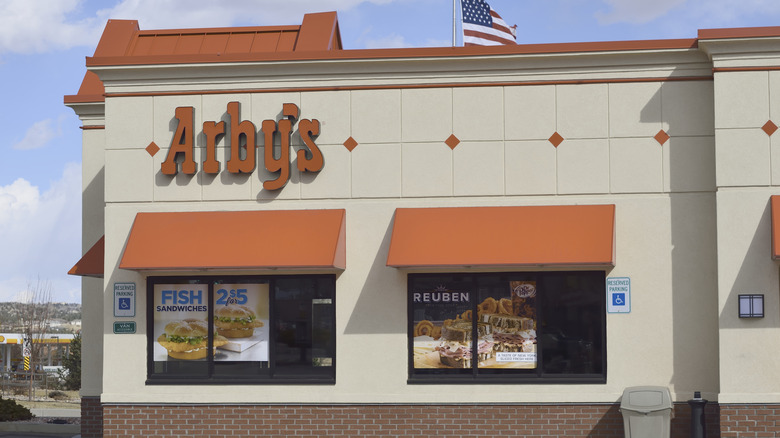
While the 1980s were dominated by burger joints, Arby's carved out a niche with roast beef sandwiches. Founded in 1964, Arby's had already developed a loyal following by the time the '80s rolled around, but this was the decade the brand began solidifying its national and international presence. There was even one in Taiwan. By the mid-1980s, Arby's had grown into a major fast-food player, expanding to over 2,100 locations across North America and even parts of Europe. The chain wasn't just growing in size. Sales were climbing too, boosted by bold ad campaigns and industry-first moves like accepting credit cards and experimenting with computerized ordering. By 1989, Arby's was pulling in over $1 billion annually, ranking it among the top 15 fast-food chains in the U.S. at the time.
The signature roast beef sandwich served on a sesame seed bun and doused in Arby's Sauce or Horsey Sauce was the star, but the chain also introduced menu innovations like the Beef 'n Cheddar, Jamocha Shakes, and a growing variety of sandwiches. Chicken Bacon Swiss and Crispy Chicken Sandwiches joined the lineup in the early 1980s and by 1988, Arby's introduced its now-iconic Curly Fries. Their potato cakes were another fan favorite – so much so that a dedicated Facebook group now exists, rallying for their return. According to longtime fans on Reddit and Facebook, Arby's was the place to be and still is despite any negative rep.
Wendy's
Wendy's didn't just serve square burgers in the 1980s, it served up one of the most iconic ad campaigns in fast food history. While McDonald's and Burger King were locked in a battle over Big Macs and flame-grilled patties, Wendy's used its now-legendary "Where's the Beef?" campaign to carve out space in the crowded market. The 1984 commercial, which featured actress Clara Peller demanding more substance from rival burgers boosted Wendy's sales by 31% that year and the chain hit a record $76.2 million in sales. Between 1988 and 1994, the chain consistently earned the top overall rating from Restaurants & Institutions, outranking Burger King, McDonald's. But it wasn't just the commercials. Wendy's sold fresh, never-frozen beef and offered higher-quality menu options. In 1989, it launched the Super Value Menu, featuring seven items priced at just 99 cents, appealing to budget-conscious diners without relying on heavy couponing. At the same time, Wendy's expanded its menu with an enhanced salad bar and a skinless chicken breast sandwich for the growing number of health-conscious customers, while sandwiches like the Big Classic, Dave's Deluxe, and Chicken Cordon Bleu catered to those craving something heartier.
The brand also pioneered innovations like the drive-thru window, which it introduced in 1970 and aggressively expanded through the '80s to meet consumer demand for convenience. By 1985, Wendy's had already surpassed 3,000 locations worldwide, and now it's aiming to push that number past 8,000 by 2028.
Steak and Ale
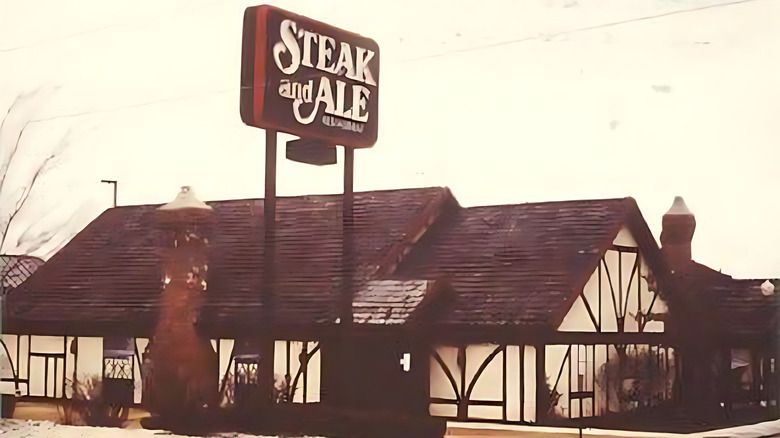
In 1966, restaurateur Norman Brinker introduced a bold new concept in Dallas, Texas — Steak and Ale, a Tudor-style restaurant that made steakhouse dining accessible to middle-class America. With warm wood interiors, dim lighting, and affordable steaks, it felt upscale but was priced for everyday diners. Signature offerings like the Kensington Club, Hawaiian chicken, and prime rib were the most loved. But Steak and Ale's real innovation was its self-serve salad bar, a new concept at the time, and its friendly, casual service. Employees greeted diners by name and the service was personal and inviting.
By the mid 1980s, Steak and Ale had exploded to nearly 280 locations. Diners came not only for the food but for the full experience: hearty portions, warm honey wheat rolls, and comfortable settings where birthdays and date nights felt special but not expensive. However, in 2008, its parent company filed for bankruptcy, and Steak and Ale quietly faded from the national scene. In 2013, fans launched a "Steak and Ale's Comeback" Facebook group, which grew to 56,000 members. In 2015, Legendary Restaurant Brands bought the rights to Steak and Ale. After years of planning, the chain made its return in July 2024 with a new 225-seat location in Burnsville, Minnesota. The revived restaurant brings back the original salad bar and classic dishes, with fresh updates like a prime-rib carving station and craft beer with new locations planned across the Midwest.