

15 Fermented Foods From Around The World You Should Try
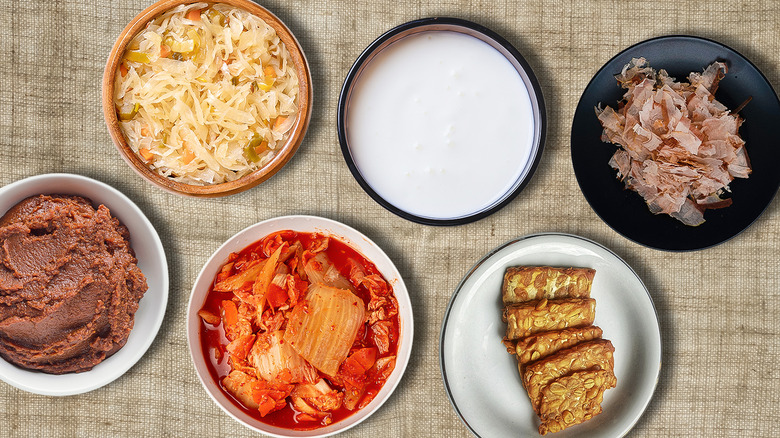
The importance of maintaining a healthy gut microbiome is something we're hearing about in mainstream media more frequently. Multiple studies have revealed links between the composition of the bacteria in our guts and the health of our brains, as well as the likelihood of developing certain diseases and the functioning of our digestive and immune systems. The key is to achieve a diverse and balanced collection of gut microbiota, and one way we can contribute to this is by consuming fermented foods.
Fermented foods are essentially those that have been intentionally made to contain microorganisms like bacteria and yeast, and are often referred to as probiotics. But, unlike the potentially dangerous pathogens that might grow on those leftovers that you've forgotten to throw away, the microorganisms in fermented foods are deemed "good bacteria". Thus, incorporating them into our diets can benefit our health, rather than hurt it.
In recent years, fermented foods have certainly been having their moment in the health food space. However, they've actually been around for far longer than you'd think. Popular options like kimchi and kombucha date back thousands of years, and the technique of fermenting milk or cream into yogurt likely originated in the Neolithic period. Today, fermented foods form a key part of everyday diets in various corners of the world. There's everything from breads and cheese to sauces, vegetables, and drinks. So, let's take a look at some of the many ways that you can give your gut health a delicious boost.
Sauerkraut
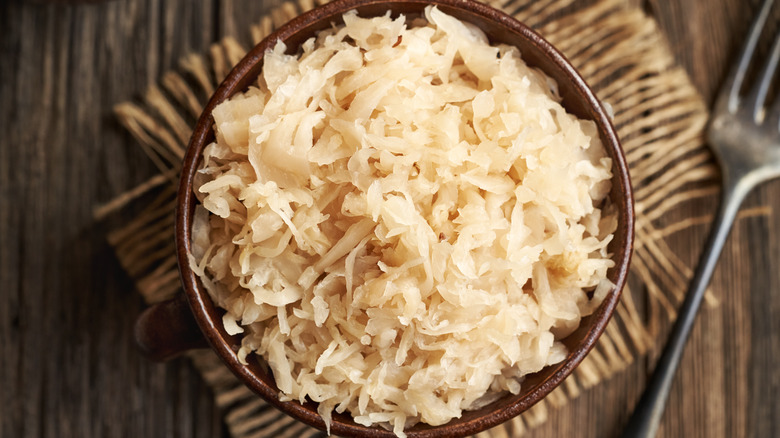
Sauerkraut is a type of fermented, shredded cabbage that's incredibly popular in German cuisine. However, this food actually has its roots in 13th-century Mongolia, and it was Mongolian soldiers who later introduced it to Eastern Europeans. Sauerkraut is often served atop German bratwurst sausages and also features in the American deli classic — the Reuben sandwich. You can serve the fermented cabbage hot or cold, tossing it into salads, soups, grain bowls, or even a charcuterie board.
To make sauerkraut, you need just two ingredients: a head of cabbage and some salt. After you remove the outer leaves and core from the cabbage, wash it thoroughly and shred it thinly. Add the shreds to a bowl and toss them with the salt, then leave everything to sit for 15 minutes. Next, you'll massage the cabbage well and transfer it to a jar along with the liquid that the massaging released. It's this salty brine that inhibits the growth of harmful microorganisms and allows the good bacteria to thrive. Seal the jar with a lid and leave everything to ferment at room temperature. Over time, bacteria will colonize the cabbage and gradually continue to multiply. This process can take up to a month. When ready, the sauerkraut will have a distinctly tangy taste thanks to the lactic acid produced by the bacteria. You can then store the jar in the fridge, which won't kill the bacteria but will simply slow their growth. It'll keep well there for up to six months.
Kimchi
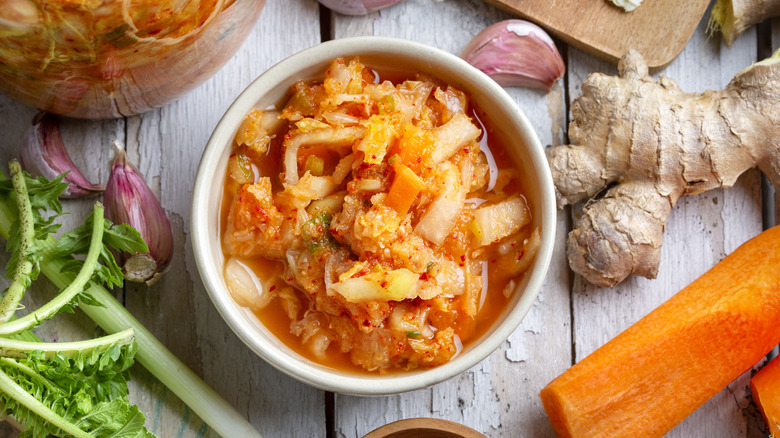
Another versatile and wonderfully tangy fermented veggie is kimchi, a Korean staple with a wide variety of culinary applications. There is evidence of kimchi's existence as early as 289 A.D., and while it has taken various forms throughout the centuries, it's most commonly made with Chinese or napa cabbage today.
Kimchi gets its distinctly savory, spicy taste from the addition of ingredients like ginger, garlic, and chili peppers during the prep process. With napa cabbage as a wonderfully crunchy base, you can also incorporate other veggies like carrots or radishes when crafting a homemade batch. The cabbage is generally salted, massaged, and soaked in water before it's combined with the other ingredients, which might also include fish sauce and sugar. Then, much like with sauerkraut, it's a simple case of transferring everything to a jar and allowing the natural fermentation process to work its magic. When the desired level of tanginess has been achieved, which can take up to two weeks, the kimchi is then stored in the fridge. It's fantastic for jazzing up fried rice dishes, spooning over fried eggs, or stacking atop a burger. You could even whip up some spicy kimchi fritters by combining the fermented cabbage mixture with flour, eggs, soy sauce, and a selection of spices and aromatics before frying dollops of the batter in hot oil.
Miso
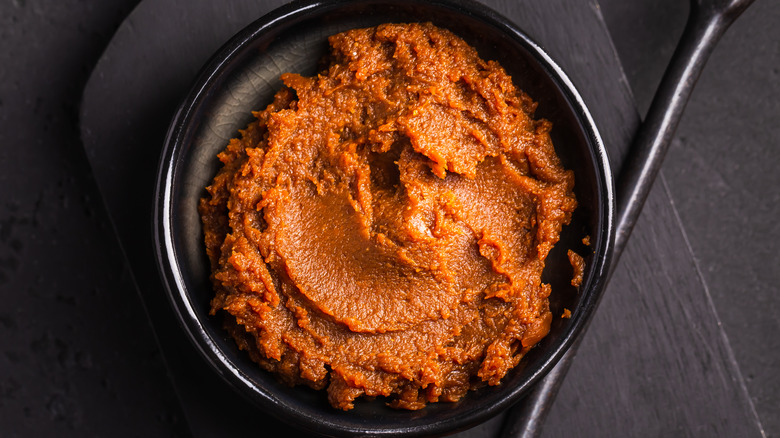
Miso is a traditional Japanese paste made from fermented soybeans. It's commonly used to add savory flavor to soups, dressings, and marinades. There are three main varieties of miso — white, yellow, and red — the latter of which undergoes the longest fermentation time and therefore boasts the richest umami depth. Miso is believed to have originated in China and been introduced to Japan during the seventh century, where it was first deemed a luxury item reserved for elite members of society only. Over time, it gradually became more widely produced and can most definitely be considered a staple today. Miso paste forms the base of classic miso soup and has found its way into many popular Japanese dishes.
The first step in making miso paste is producing koji. This is a specific culture created by steaming rice or barley and inoculating the grains with a type of fungus called Aspergillus. The koji is then mixed with cooked soybeans, salt, and often more rice or barley and left to ferment for a lengthy period. This can be up to three years in some cases. There are countless ways to use miso, whether that's stirring it into a ramen bowl, mashing it into potatoes, or glazing veggies. And this paste isn't just reserved for sweet recipes. It's also perfect for giving a tangy twist to cocktails or even homemade baked goods.
Kefir
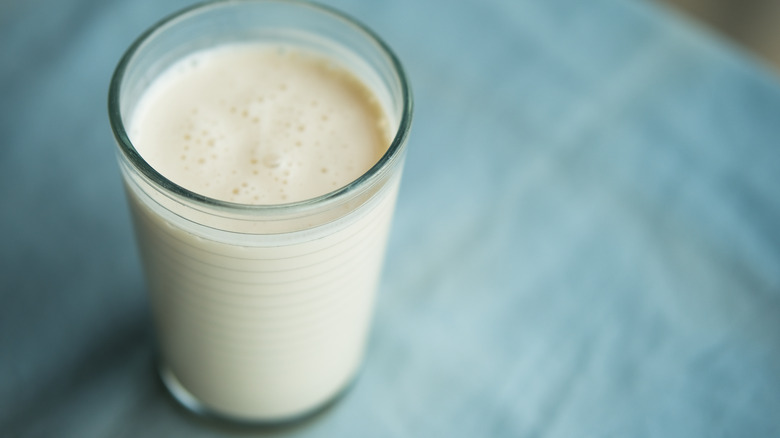
This tangy, drinkable dairy product originates from the Caucasus Mountains, where it's been consumed for centuries. Kefir is not only prized for its refreshing, slightly sour taste but also for the array of health benefits it can provide. Like yogurt, kefir is made using milk and bacterial cultures, though it also contains yeast, which makes it a particularly potent probiotic option.
Kefir is made by combining milk with kefir grains, which are essentially gelatinous clumps of bacteria and yeast cultures. These grains are added to the milk and left to ferment at room temperature for 12 to 48 hours. The result is a thick, slightly effervescent beverage that is similar to a drinkable yogurt. It's packed with live cultures, including strains that aren't typically found in standard yogurt. Kefir can absolutely be enjoyed as is, but it's also great for blitzing into smoothies, making overnight oats, serving with granola, or even using as a base for salad dressings and marinades.
Tempeh
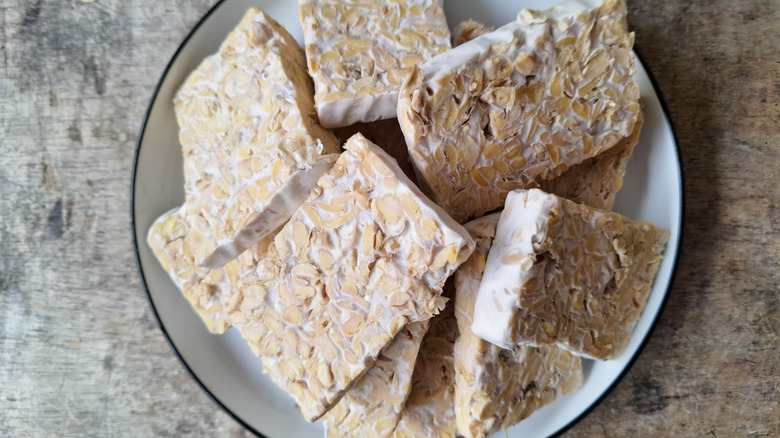
Tempeh is a fermented soybean product with roots in Indonesia. It has since become a go-to protein source for many plant-based eaters around the world. It's often compared to tofu, but the two are very different, both texture- and flavor-wise. Tofu is made from soybean curd, which gives it a softer texture and milder taste. Tempeh, on the other hand, is created with whole, cooked soybeans that get squashed together in a firm, cake-like block during the fermentation process. It therefore has a heartier texture and richer nutty flavor, while also being higher in both protein and fiber.
The fermentation process involves inoculating the soaked, peeled, and boiled soybeans with a specific fungus culture called Rhizopus. The soybeans are then sealed into a container and left to ferment for up to 48 hours. During this time, the mold colonizes the soybeans, binding everything together into a firm block.
Tempeh lends itself beautifully to a wide variety of cooking methods, from steaming and baking to grilling and frying. It works great in stir-fries, sandwiches, and grain bowls, where it can serve as a flavorful and satisfying alternative to meat.
Kombucha
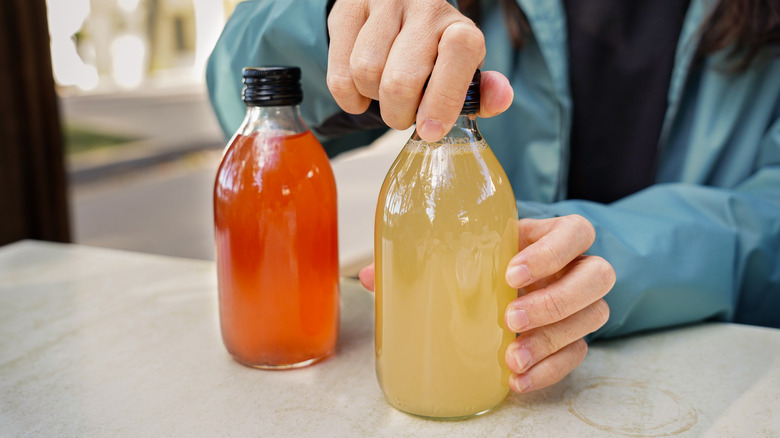
Kombucha is a fizzy, tangy-sweet tea-based drink that comes in a variety of flavors. It has surged in popularity in recent years and is often found in health food stores and hip cafés. But this fermented beverage has been around for over 2,000 years, originating in ancient China.
The kombucha-making process begins by brewing a batch of strong black or green tea, sweetening it with sugar, and allowing it to cool. Then, a symbiotic culture of bacteria and yeast (aka a SCOBY) is added into the mix, and everything is left to ferment for anywhere between seven and 14 days. During the fermentation period, the SCOBY consumes the sugar and produces carbon dioxide, alcohol, and acids, which give the drink its signature tang and fizz. At this point, the fermented drink can be flavored with extra add-ins such as fruits, herbs, or aromatics. You can also let the mixture undergo a second round of fermentation for two to four days. This will deepen its flavor. The resulting kombucha is best served chilled and makes for a delightfully refreshing and gut-friendly alternative to traditional sugary sodas.
Crème fraîche
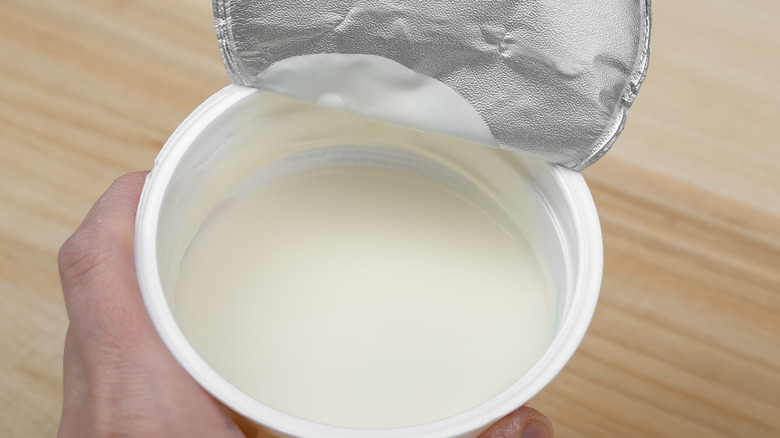
Crème fraîche has long been a staple in French cuisine. And many are unaware that this rich and versatile dairy product is a fermented food. Made by adding bacterial cultures to heavy cream, crème fraîche boasts a thick, velvety texture and mildly sour flavor, that's not quite as sharp as sour cream.
Using traditional French methods, crème fraîche is simply made by allowing unpasteurized cream to sit at room temperature, where naturally occurring bacteria would kick-start the fermentation. Today, it's more commonly made using a commercial starter culture, which is combined with pasteurized cream and left for around 12 to 18 hours. As the cream ferments, it thickens in consistency, giving it a wonderfully indulgent feel.
Crème fraîche shines in both sweet and savory dishes. Try dolloping it over fruit or a slice of homemade pie, mixing it into mashed potatoes for an ultra-creamy finish, or swirling it into soups and sauces. It features in many baking recipes, too, where it brings plenty of richness and moisture.
Ogi
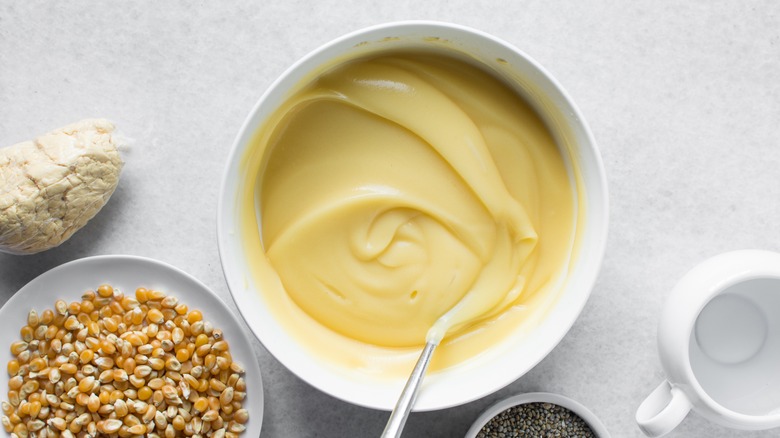
In Nigeria, ogi is a popular fermented pudding with a custard-like texture. It's generally made from corn kernels, which become colonized with gut-friendly microorganisms while soaking in water for around three days. The soaked grains are then blended into a thick paste, which is strained into a liquid and left to ferment for a further few days. It can be stored in the fridge for up to a week. The color of ogi can range from pure white or creamy yellow to deep maroon, depending on the specific type of corn used to make it.
When it's time to eat the ogi, the mixture is typically warmed with water or milk and sweetened with sugar or honey. In Nigeria, it's often served with akara (a type of deep-fried bean fritter) or moin moin (steamed bean cakes). You can also top it with fresh fruits like banana or mango or chopped nuts such as almonds or pecans.
Puto
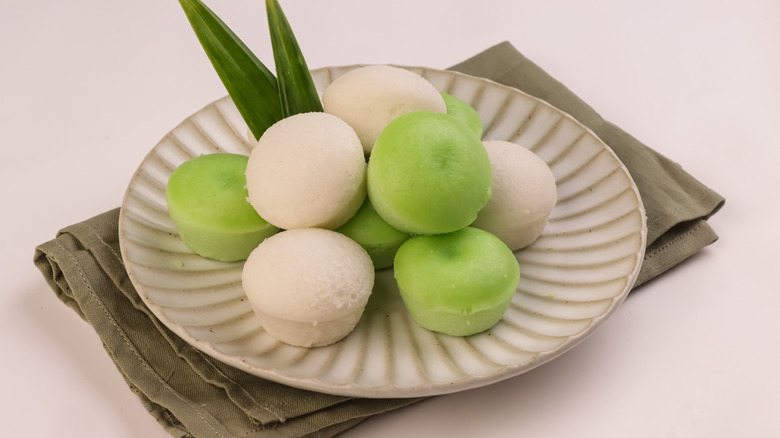
These satisfying, perfectly formed steamed rice cakes are a classic Filipino treat, serving equally as well as a side dish, snack, or dessert. Puto comes in many forms, but the traditional version is slightly sweet, soft, and subtly tangy, thanks to that all-important fermentation process. However, the cakes can also be filled or topped with savory additions like egg or cheese and served with dishes like dinuguan — a Filipino stew made with pork blood.
Traditionally, puto is created by first soaking rice grains in water overnight then grinding them and combining them with water and sugar to create a smooth batter called galapong. This is then poured into small molds and steamed until fluffy yet firm. But with rice flour now so readily available, many modern versions skip the fermentation step altogether, simply mixing the flour into a batter with ingredients like egg white, coconut milk, and sugar, and cooking the shaped cakes right away.
Tvorog
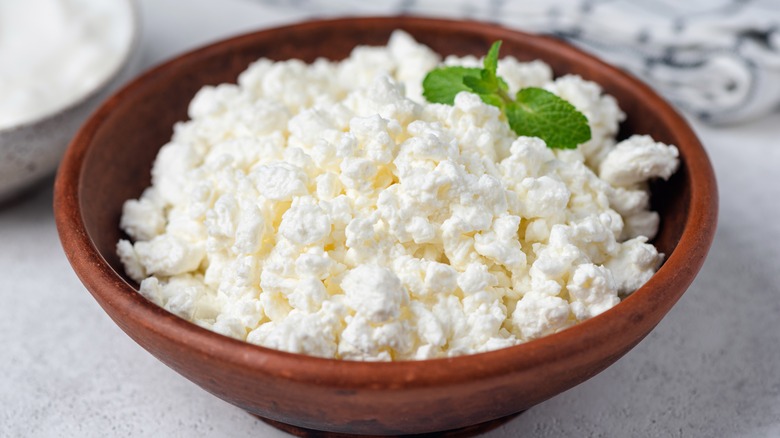
Sometimes referred to as farmer's cheese, tvorog is a fresh, fermented dairy product from Russia. It has a crumbly texture, creamy richness, and mild tangy sweetness, making it well suited for use in both sweet and savory dishes.
Making tvorog first requires milk to be fermented with a bacterial culture. You can start this process by combining the milk with buttermilk or kefir. After the milk thickens and curdles, it's heated to help the curds separate from the whey. Then, the mixture is strained, leaving behind only the soft, tender curds. These are naturally high in protein and gut-friendly probiotics.
Tvorog is a fitting addition to many dessert dishes, such as cakes and pastries. Or, you can simply serve it with honey and fruit for a quick and nutritious morning meal. It's a key ingredient in the traditional Russian breakfast dish, syrniki — golden cheese-based pancakes that are often served with sour cream and fruit preserves. And, you can also mix it with garlic and herbs to create a flavorful savory snack.
Sourdough bread
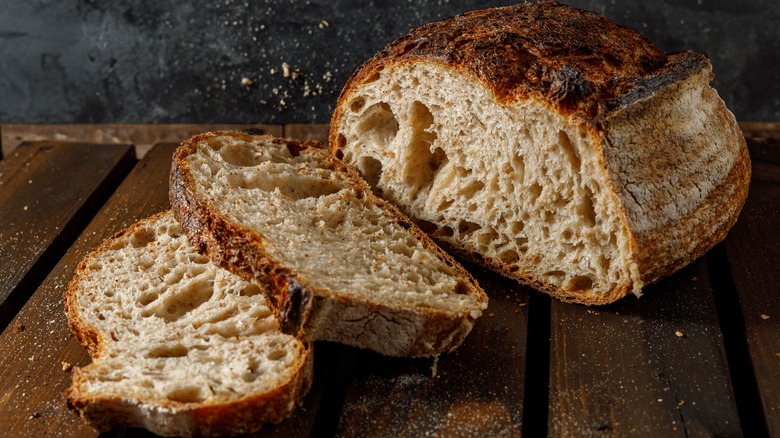
With its irresistibly crispy crust and chewy interior, sourdough bread has achieved its cult status for good reason. This flavorful bread also fits into the fermented food category. Dating back to ancient Egypt, sourdough is thought to be the oldest form of leavened bread, and it's made with just three basic ingredients: flour, water, and salt. The use of a sourdough starter is what fuels the fermentation process here because the gases produced by the starter's naturally occurring yeast and bacteria are what make the dough rise.
Creating a starter from scratch involves mixing flour and water and letting it sit at room temperature, feeding it daily to encourage the growth of microorganisms. Over the course of several days, the mixture becomes bubbly and increases in volume, signifying that it's ready for incorporation into the bread dough. Sourdough can be shaped into crusty artisan loaves, pizza bases, or even crackers, offering a deliciously wholesome way to enjoy those probiotic benefits.
Katsuobushi
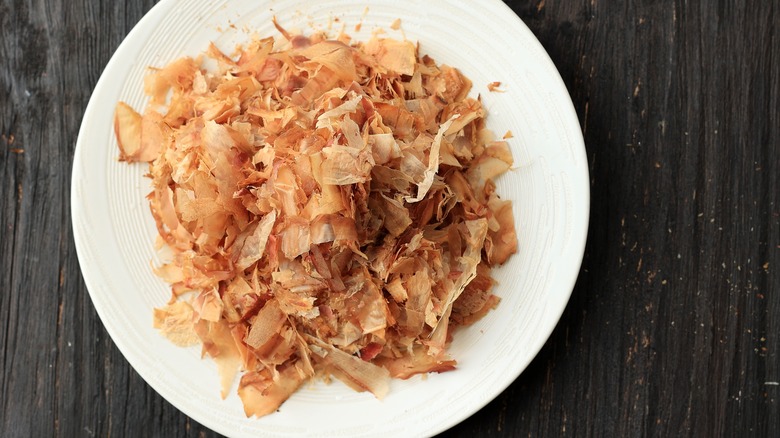
If you're a fan of Japanese cooking, you've likely come across katsuobushi, also known as bonito flakes. These delicate fermented morsels offer an intense, umami-rich taste, making them a potent flavor booster for a variety of dishes. One of the most popular uses for katsuobushi is in the preparation of a savory broth called dashi, which forms the base of an array of Japanese soups and sauces. The flakes also work brilliantly as a garnish for rice and noodle dishes.
The method of crafting katsuobushi is undeniably impressive. First, skipjack tuna is filleted and cooked, before being smoked and cooled up to fifteen times over to dehydrate it as much as possible. Next, the fish is sun-dried, inoculated with Aspergillus glaucus mold, and left to ferment for several months. This process draws out even more moisture and intensifies the umami complexity. When ready, the fish is rock-hard in texture. The final step is shaving the fish into flakes with a special tool called a kezuriki.
Worcestershire sauce

Worcestershire sauce is a trusty tool for injecting savory depth into a variety of home-cooked dishes. It is also classified as a fermented food. Developed in the early 19th century in Worcester, England (hence the name), Worcestershire sauce is made by fermenting an exquisitely balanced medley of sweet, savory, and tangy ingredients. These include anchovies, vinegar, molasses, onions, garlic, and tamarind.
Allegedly, two chemists named John Lea and William Perrins created the first batch of the sauce at the request of a local aristocrat who had come across the recipe while living in India. Lea and Perrins initially found the mixture far too pungent, so they stored it and forgot about it, only to discover that two years later, fermentation had mellowed and balanced the flavors beautifully. Thus, the iconic Lea & Perrins Worcestershire Sauce was born. Today, the exact recipe is still kept under wraps, though many other brands now produce their own versions. And there are plenty of delicious ways to use this sauce, whether that's incorporating it in meat marinades, adding a glug of it to a batch of soup, or even using it to enhance a homemade mac and cheese.
Amasi
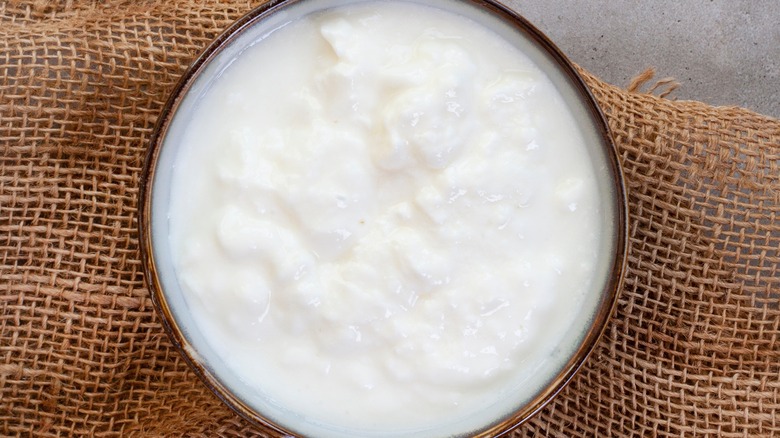
Amasi is a South African fermented milk drink that's similar to yogurt but with a thicker texture and tarter taste, thanks to its longer fermentation period. It's made by leaving raw, unpasteurized cow's milk to ferment in a warm environment, traditionally in a calabash or cowskin bag. As the naturally occurring lactic acid bacteria multiply, the milk curdles and thickens into a creamy final product. Amasi is an excellent source of probiotics that is also rich in calcium, protein, and B vitamins, making it a well-rounded addition to your diet.
This health-boosting concoction has a wide range of applications. You can drink amasi as is, but it's also great to include in bread doughs and scones, blend into smoothies, or pour over fruity desserts. You can also turn amasi into cheese by combining it with salt and straining it through a cheesecloth overnight.
Dosa

Perfect for mopping up a spicy curry sauce or a sweet chutney, dosa is a crepe-like pancake made from a fermented rice and lentil-based batter. This hearty creation has been a staple in South Indian households for centuries, offering a soft texture and slightly tangy taste.
To make dosa, rice and lentils are first soaked in water, then ground into a smooth batter. This mixture is left to ferment overnight, when it becomes colonized with lactic acid bacteria and wild yeasts that impart that signature sourness. The dosa batter is then ladled onto a hot griddle, spreading it thinly into a circle. This crisps up the bottom beautifully while keeping the top lovely and tender. Dosa come in many different forms, including those that incorporate aromatics like onions and ginger into the batter, or versions stuffed with hearty fillings, such as spicy potato or paneer cheese.