

Use Leftover Red Wine To Flavor Salt For Bold Flavor And A Gorgeous Finish
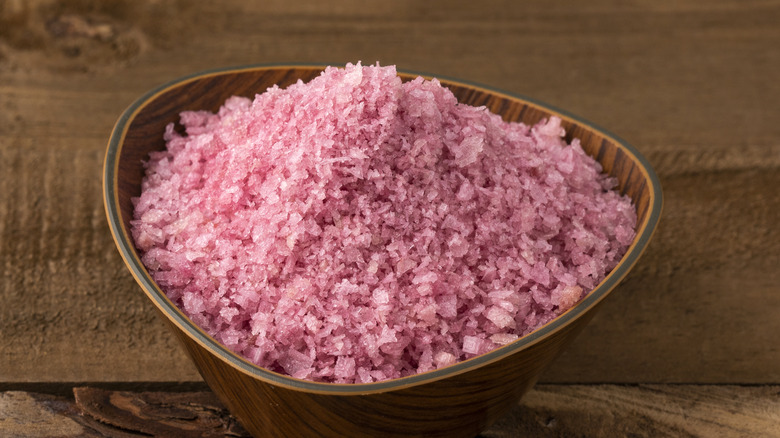
Flavored salt is one of the most fun staples to have on your spice rack. Sure, a pop of salt on its own is great, but when you consider the endless possibilities of what you can infuse that salt with, everything from cooking to mixology gets even more exciting. An espresso salt, for example, brings texture and rich coffee flavor to the caramelized crust of seared meat or the chocolatey top of a brownie. Conveniently, flavored salt is a great way to use up leftover herbs, or really anything left over at all, making it a cheap and sustainable project. One of our favorite iterations of late? Red wine salt.
Create this decadent seasoning by following the same pro tips for making any flavored salt. Combine a ½ cup of salt with a ¼ cup of red wine in a bowl and let it sit — the longer the better, maxing out at overnight. Once you drain the wine off the mixture, you'll dehydrate the wine-soaked salt, and it's at this point that you can add any herbs you'd like, like rosemary, thyme, basil, sage, allspice, or black pepper. To choose, consider the flavors of the wine you're using. Any good-quality varietal works, so you can use anything you've got left over. Fuller-bodied, stronger wines create a deeper hue, while lower-ABV, medium-bodied wines yield a pinker tone. Place the mixture in a dehydrator at 125 degrees Fahrenheit or in your oven at the lowest temperature until it's totally dry.
Perfecting and using red wine salt
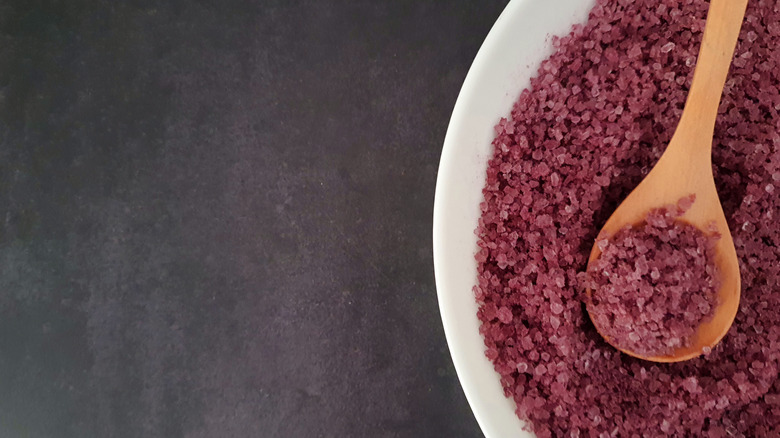
Red wine salt offers so much room for creativity. Keep making different versions with varying wines and comparing them, letting spicy or jammy, or dried-fruity notes lead the way when you're deciding where to incorporate the final seasoning. You can also adjust the ratios — maybe more of a 1:1 salt-to-wine proportion works better for you — and naturally, the herbs, spices, and even dried fruits or florals you add. Imagine a chocolate truffle rolled in red wine salt made with dried strawberries and black pepper, or a pork chop dusted with a tobacco-esque wine, thyme, and fennel.
Remember that the longer you let the flavors infuse into the salt, the bolder they'll be. But there comes a point of diminishing returns: Flavors begin to fade at around six months. With enough ideas for using red wine salt, though, you likely won't have any left by that time.
Red wine salt is an instant upgrade for your snack board, adding interest and a fancy "je ne sais quoi" to meats, cheeses, nuts, and fruits, and of course, pairing perfectly with whatever wine you're serving or drinking. When you're making roasted veggies extra crispy, let a sprinkle of red wine salt contribute crackle and rich flavor. Swap it in for standard salt in a double-salted caramel cheesecake for added depth, or use it as a cocktail rim with red sangria.