

9 Ways To Prioritize Sustainability In Your Kitchen Remodel
Sustainability is a key factor in many folks' kitchen remodeling projects. Perhaps you're aiming for materials that are sourced with eco-friendly practices or want something extra durable that doesn't have to be redone every few years — thus reducing waste. Regardless of why you're remodeling, it can be a headache if you go into it without a plan. But if you think things through ahead of time and identify important considerations, like appliances, electric, and water, and work with a skilled architect to ensure your layout is optimized for your needs, you'll be in good hands. Whether you're working with a shoestring budget or unlimited funds, there are ways to both make sustainability a priority and achieve your dream kitchen.
For helpful advice to achieve this result, we spoke to two industry professionals. Nicole Bordignon co-founded Elemental Millwork with her husband in coastal British Columbia, Canada. The high-quality cabinet and woodwork business is GREENGUARD certified and focuses on an eco-conscious approach by using sustainably sourced, low-emission materials to minimize carbon footprint. Jayne Everett and her husband founded Naked Kitchens in Norfolk, England, inspired by the beauty of their natural surroundings. Their mission is to build kitchens for life using sustainable, durable materials while minimizing waste and emissions. Read on for their advice to prioritize sustainability in your kitchen remodel.
Plan your design carefully
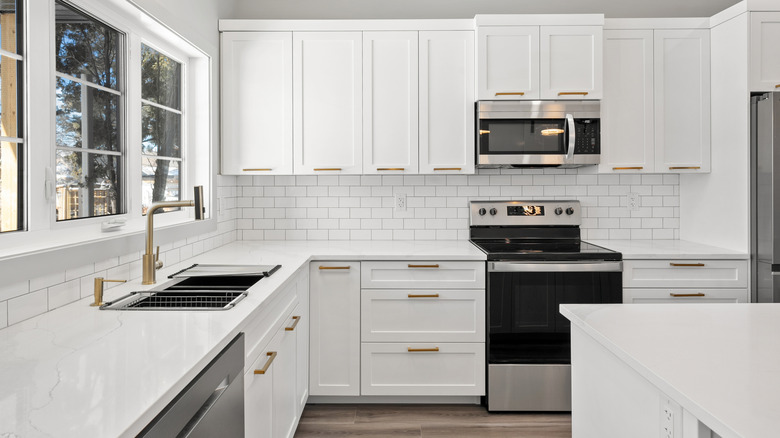
First things first: Make a plan. There are some projects that you'll be okay winging, but if you want to maximize sustainability in your kitchen remodel, then you need to carefully assess the situation. It's important to think of your actual needs, rather than what looks nice in the moment or feels like a handy shortcut. Sometimes, higher upfront costs may be necessary, but they will pay off down the line.
Nicole Bordignon, co-founder of Elemental Millwork, recommends considering both the size of the home and the number of people living in it, then building that kitchen around it. If you know your household will soon shrink or expand, then remodel with the future in mind, rather than immediately renovating your remodel. And if household size is too unpredictable at the moment, use materials that can make future renovations simpler. For example, "building with ¾-inch plywood materials will allow for reusing and rearranging if needed in the future," Bordignon says.
Meanwhile, failing to make your kitchen functional is one of the most common design mistakes people make. If your kitchen doesn't work for your needs, you may end up remodeling it sooner than you think, investing more time and materials into making the space flow more efficiently. Bordignon recommends prioritizing the working triangle when designing your kitchen layout, which places the refrigerator, stovetop, and sink at each corner, allowing for optimal movement.
Opt for using durable materials
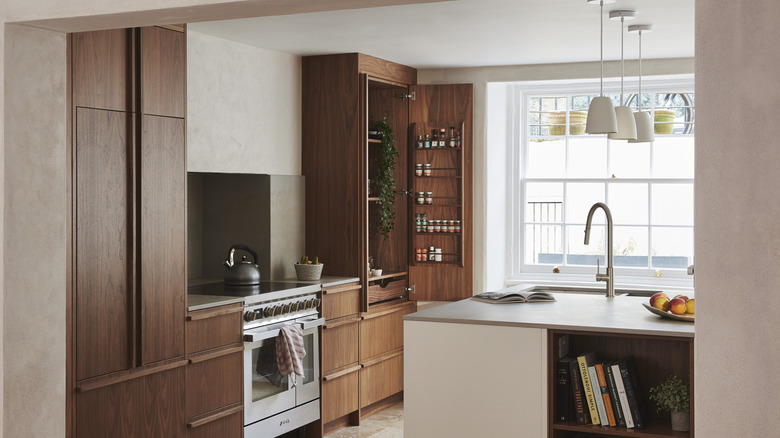
Choosing the right materials for your kitchen remodel is important when prioritizing sustainability. Aside from ensuring they are sourced and produced following reputable practices, they need to stand the test of time. Nicole Bordignon says that durability is key and notes the importance of "spending [upfront] costs on [long-term] gain and longevity."
Finding a good deal is all well and good, but if you have to keep replacing parts, you'll wish you had gone for the durable choice from the get-go. Jayne Everett, co-founder of Naked Kitchens, agrees, highlighting quality and longevity as essential characteristics to look for with your remodel materials. "A kitchen should be a totally considered purchase that will last for decades. Kitchens at the cheaper end of the spectrum are not made to last and therefore will head to [a] landfill, certainly when a property changes hands," she says.
You don't have to splurge either, as Bordignon suggests that there are durable products for every budget. You can find a balance between durability and cost, such as by using solid wood and avoiding Thermofoil products. If your budget is on the lower end, she recommends, "placing costs into products that are easy to maintain and durable but are lower cost."
Understand the function of certain materials
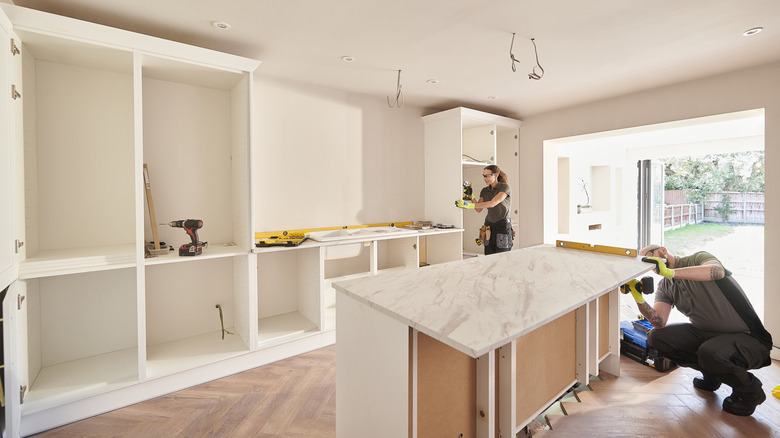
Selecting materials and a design for your kitchen remodel can be overwhelming, and you may be making decisions solely based on the price tag. However, many materials and features offer specific functions that may benefit you in the long run, improving the sustainability of your renovation and increasing durability.
As far as plywood sheets for cabinet construction, shelving, and the like go, Nicole Bordignon recommends using something ¾-inch thick. While it may seem like a minor point, she notes that the wood lasts longer and doesn't warp as much. Humidity, temperature changes, and water can damage plywood, so the thicker and stronger the material is from the get-go, the better.
The type of hardware you use matters more than you think. For example, you can use thick, low-gauge metals for your remodel. Besides being sturdier, Bordignon explains that they can be used with solid wood — which can be repaired, refinished, and reused. You can also opt for more durable cabinets rather than cheaper, thinner ones when using stronger hardware, since it will be able to support the extra weight of the material. Furthermore, heftier metals retain their shape, which makes it easier to dismantle and move your cabinets if you want to improve your kitchen layout without having to purchase new replacements.
Look for certifications that demonstrate sustainable practices
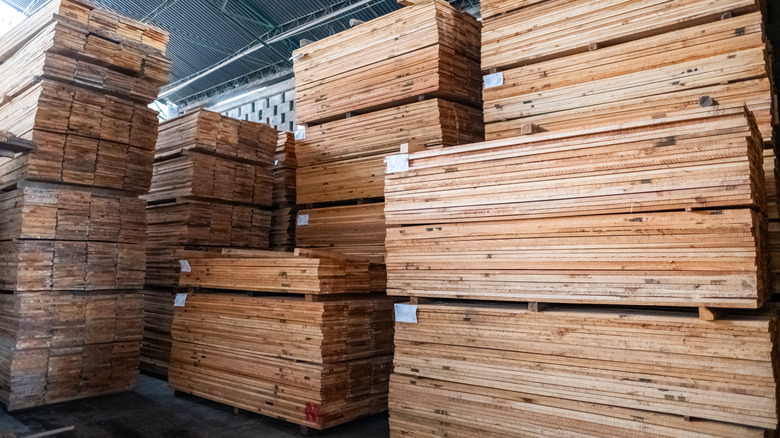
Thankfully, you don't have to become an expert on kitchen construction materials in order to know whether or not you're making a sustainable choice. Many manufacturers obtain certifications in order to guarantee their eco-friendly methods and practices. Nicole Bordignon highlights the importance of these accreditations and notes, "Certifications allow you to know that you're working with people [who] have made effort, and gone the extra mile to [uphold] their training and knowledge." Jayne Everett agrees and highlights that certified materials are a must when prioritizing sustainability.
These will vary depending on your country and the materials in question, so it's worth speaking with your contractor or supplier to learn more. For example, Bordignon points out that CANFER certifications, which set limits on formaldehyde emissions in building materials, are now required by law in Canada. Formaldehyde can have negative impacts on human health and the environment, meaning that buying certified products can give you peace of mind.
LEED (Leadership in Energy and Environmental Design) is an internationally recognized certification focusing on building designs that improve clean air flow, natural light, and safe materials. Ultimately, its goal is to reduce harmful emissions and improve energy and water efficiency. Seek out contractors and builders who abide by this approach to boost the sustainability of your reno. Other certifications focus on specific materials, such as FSC (Forest Stewardship Council), which certifies responsibly sourced wood products.
Research the environmental effects of the materials
Certain building materials can contain or emit compounds that have negative impacts on human health and the environment. "You want to avoid plastics, [highly toxic] finishes, and [Thermofoil] products," Nicole Bordignon says, explaining that they can create microplastic pollution and contaminate landfills. Similarly, she notes that highly toxic finishes pollute the environment when they break down, potentially affecting water, land, and air quality.
Meanwhile, other materials end up as waste if they can't be reused over time. Bordignon cites Thermofoil products as an example and explains they can't be upcycled. Compared with solid wood, which can be sanded, repainted, and upcycled, it's clear that the former will end up in the landfill while the latter may have a second life in another home. Additionally, she recommends opting for materials made with recycled paper and those with low volatile organic compounds (VOCs). When low-VOC products break down, as Bordignon explains, they won't leave behind toxins in the landfills or in the atmosphere. When remodeling your kitchen, you'll want to focus on sourcing high-quality, durable materials that are free from toxic compounds.
Consider secondhand materials or furnishings
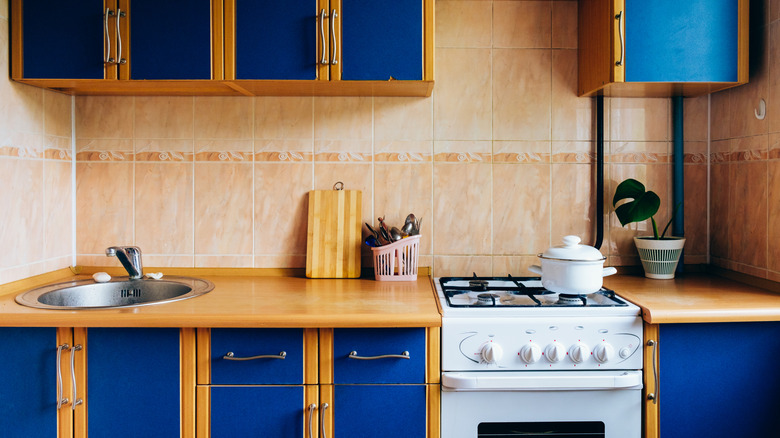
Sometimes, prioritizing sustainability means reusing rather than starting from scratch. Your kitchen remodel doesn't have to begin from the ground up. Secondhand materials or furnishings like cabinets and counters can be a great choice for your kitchen. Unless you're going for a super modern aesthetic, secondhand pieces can fit into most kitchen styles. For example, Nicole Bordignon suggests looking for antique wooden hutches.
Not only can secondhand furniture make your space look unique, but it can also be a more economical choice. Jayne Everett points out, "There are now kitchen resale companies who market and sell [secondhand] kitchens. This is a much better way to buy when on a tight budget." You'll likely end up with better-quality used materials rather than opting for something new but cheaply made if you're on a budget. Furthermore, going for secondhand also reduces waste, another sustainable practice that shouldn't be overlooked in the world of house flips and quick renos.
Focus on the big stuff
It can be intimidating to overhaul your kitchen remodel to optimize sustainability, so if you can't tackle everything, think of what items cover the most area. Consider the square footage covered by the different components of your kitchen remodel, so you can maximize the sustainable benefits without having to look at too many moving parts. For example, Nicole Bordignon says that cabinets and flooring are often forgotten about when considering remodeling for sustainability. "Many people seek the cheapest [option] and don't look into what it's made of," she says. Similarly, carpets and cabinets take up a lot of square footage and can expose you to harmful emissions over time if you only focus on choosing the least expensive option.
Of course, following a budget is an important part of staying on top of your kitchen remodel project, but components that are used every day will experience a lot of wear and tear. You might save on cheap flooring today, but the result could be having to redo it in a few years, in turn generating more waste and potentially driving up long-term costs. Thankfully, you don't have to go for top-of-the-line luxury products either, as Bordignon assures that some low-cost products also come with low emissions. For example, some types of laminate and engineered wood flooring could be a good option, as could reclaimed hardwood.
Meanwhile, if you choose sustainable materials and craftsmanship for your cabinetry from the start, it will last for decades. Opting for solid wood over less durable materials means you won't be replacing parts once the wear and tear starts to show, boosting the lifespan of this large area of the kitchen.
Don't forget about appliance energy usage

Speaking of items that take up a lot of space, appliances require a lot of energy to function. While that's inevitable, there are ways to mitigate the consumption. Nicole Bordignon references Energy Star as the gold standard for appliances. This certification is a government program by the U.S. Environmental Protection Agency (EPA) that designates certain criteria to improve energy efficiency.
Refrigerators, freezers, dishwashers, ovens, microwaves, and the like can all be certified independently to determine whether they meet the specifications for optimal efficiency. This includes features like refrigerator compressors that emit less heat and use less energy, better insulation, stoves with improved air circulation, and freezers with optimized temperature systems. By purchasing Energy Star-rated appliances, you'll both decrease your energy consumption and cut your energy bill. The certified appliances might have a slightly higher upfront cost, but could save you more in the long run. Although it's not as significant in terms of energy usage, choosing efficient lightbulbs and prioritizing natural light sources is another worthwhile consideration when planning your kitchen remodel.
Optimize water efficiency
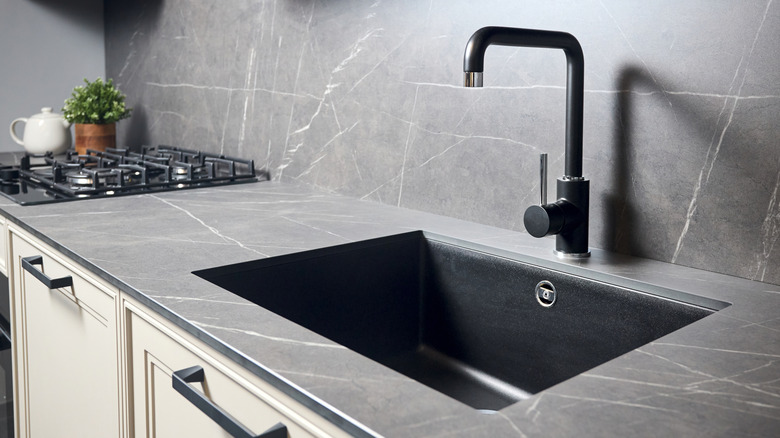
Kitchens use a lot of water, whether you're rinsing produce, hand-washing dishes, or running your dishwasher. Luckily, there are several ways to make your space more water-efficient. For starters, if you are purchasing a dishwasher, look for an Energy Star-certified model, which can include features designed to reduce both water and energy consumption, including efficient water jets and better filtration. These features can add up and save you up to 6,000 gallons of water over the dishwasher's lifespan, per Energy Star. Size matters too; if you are a household of one, choosing the largest model won't be efficient if you have to regularly run it half-empty.
Aside from appliances, your kitchen faucet and sink can also be optimized for water use. In the case of the latter, choose a smaller model if you routinely fill it with water to do the dishes. Chances are you don't need a huge space for the job, and reducing the size of the sink will, in turn, decrease the water you use daily for washing dishes. You can also buy high-efficiency faucets, including those certified by the EPA's WaterSense program. To meet the standard, the products must use at least 20% less water than standard models. Not only can you decrease your water bill, but you can conserve water, which is especially important during certain times of the year, and make your kitchen more sustainable.