

How To Pick The Perfect Countertop Material For Your Kitchen
There are several things you'll want to be careful to avoid when renovating your kitchen. However, choosing the wrong countertops is arguably one of the most serious mistakes you could make. As Rachel Blindauer, an interior and product designer, shared, "A countertop is one of the few design decisions that touches every part of daily life. It's not just a backdrop — it's a work surface, a serving station, a visual anchor, and often, a quiet luxury. The best choice is rarely the trendiest. It's the one that reflects how you cook, host, clean, and live."
Understanding how much your countertop decision can impact all of these aspects of your life, it should be easy to see how important it is to choose the best kitchen countertop material. However, there is no one "best" material. Instead, the right choice can vary based on your priorities. For example, someone who wants to make their kitchen look like it was torn out of a magazine and someone who cooks a lot and is worried about keeping their counters from getting stained or damaged by a hot pot will likely end up choosing different materials.
We spoke with three kitchen and design experts to learn more about how to pick the ideal countertop material. In addition to Blindauer, mentioned above, we also spoke with Angie Hicks, the co-founder of Angi, and Michael Hartel, PhD, the founder and CEO of Cabinet IQ. Ahead, you can learn more by reading through the exclusive advice they shared with Tasting Table.
Consider the lifespan of each material before you commit
New countertops can be a major investment in your kitchen. You want to feel confident that the material you choose will deliver several years of use before it needs to be replaced again. If you are prioritizing lifespan when looking for a new countertop, quartz is a good option to consider. Many quartz manufacturers back their countertops with a warranty of at least 10 years, but if you take care of your countertops, they can easily provide decades of use.
Similarly, granite is another long-lasting material to consider. With proper maintenance, a granite countertop could last a lifetime — or up to 100 years. Angie Hicks also recommends considering concrete countertops if you're prioritizing longevity. She says, "If treated properly, concrete is a great durable countertop material that can last decades."
Laminate countertops, on the other hand, won't be the best choice if you are looking for a long-lasting material. Assuming you care for your countertops properly, the higher-end estimate for their lifespan is around 30 years. However, many will not make it this long, and those that do will likely be showing visible signs of wear, including fading and discoloring from exposure to the sun.
Some materials are better suited for those who want to prioritize the aesthetics of their kitchen
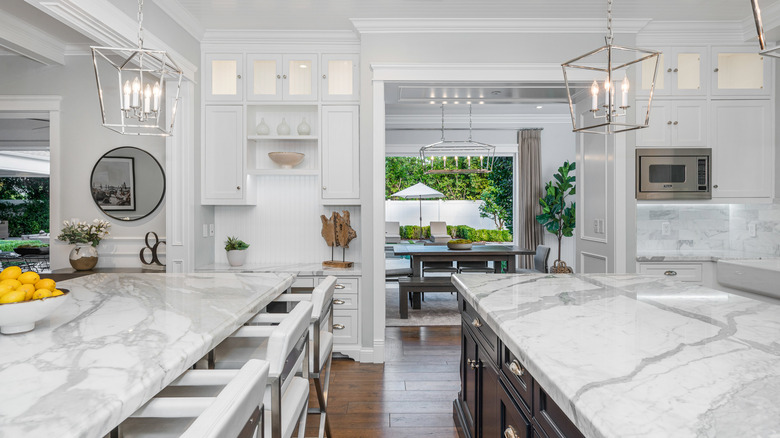
If you don't use your kitchen for very heavy cooking tasks, but instead frequently entertain guests, then creating an aesthetically appealing space might be your top priority. Fortunately, according to our experts, there are a variety of materials that could help you achieve this goal. Rachel Blindauer highlights marble as one of the most aesthetically-pleasing options. "Few materials offer the same romantic veining and natural beauty. My favorite here is Calacatta Viola Honed Marble," she says. For those who want to balance durability with style, Blindauer recommends quartzite, calling it a "natural showstopper." Michael Hartel offers another suggestion that might work for certain design goals. He says, "If you're after something more custom or industrial, concrete's a solid choice too."
While there are several materials that can help you achieve your design goals, there are others that you'll want to stay away from. Angie Hicks generally recommends avoiding butcher block and stainless steel countertops when aiming for a magazine-worthy design. She says, "While a great option for a very specific aesthetic, butcher block counters and stainless steel don't offer much variety in color and look and might not be the best aesthetic choice." Outdated laminate countertops may also give your kitchen a sad and ancient look. Blindauer notes that today's laminate may be a higher quality than what you would find years ago. However, she still recommends staying away from it because "it often lacks depth or texture under natural light."
Don't overlook the stain resistance of each material — especially in a busy kitchen
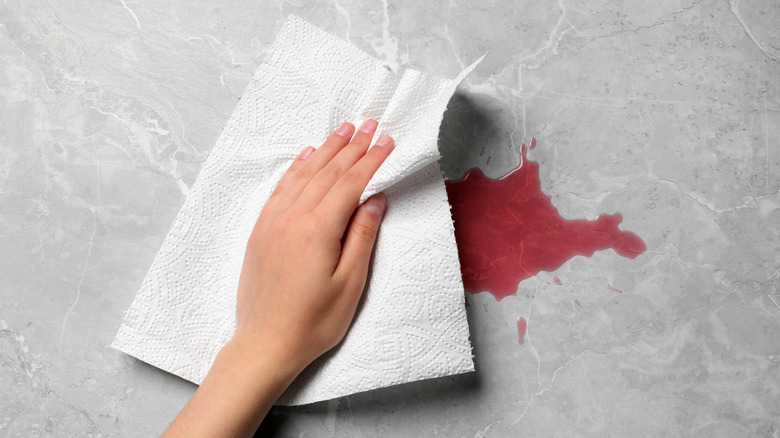
From splattering tomato sauce, spilled wine, and the countless other messes that can happen, your kitchen has to take a lot. If you cook regularly and are worried about these spills and splatters blemishing your countertops, then paying attention to the stain-resistance of each material is a wise idea as you shop. "Quartz really shines here. It shrugs off spills without much fuss," shares Michael Hartel. He also says that granite — as long as it is properly sealed — can also resist staining well.
According to Angie Hicks, laminate and solid surface countertops (like Corian) are two other materials that are known for their ability to resist staining. If you're willing to stray from a more traditional look for your countertops, she has another suggestion that you might want to try. Hicks says, "Stainless steel is impervious to any stains and a great option if stains are a concern."
Some materials, however, are not very stain-resistant, so they probably shouldn't be at the top of your list if you have a busy kitchen or work with a lot of items that could threaten their look. For example, while butcher block countertops are one kitchen design trend that Erin Napier says is on its way back, they're not ideal for all situations. Hicks cites them as one of the materials you should avoid if you are worried about staining. Hartel adds on two additional materials to steer clear of. He says, "Marble and concrete, especially if they're unsealed, can soak up stains pretty easily, think red wine, oils, tomato sauce, so timing matters."
Heat resistance may also be important for those who want greater flexibility when cooking
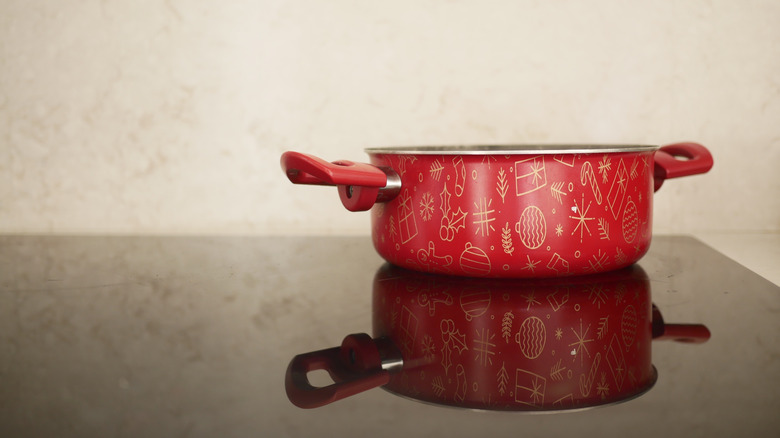
If digging through a drawer to find a trivet is a hassle you don't want to worry about with your new countertops, then prioritizing heat-resistance as you shop will be essential. Certain materials are much more resistant to heat, while others can be damaged by those hot pots and pans, so shop carefully and follow the advice of our experts. Angie Hicks says, "If you want to be able to put hot pans directly on the countertop, there are a few good options that you might consider. Granite is often coveted for this purpose." Hicks cites concrete as another heat-resistant option. Rachel Blindauer also puts soapstone countertops onto the list of considerations for those worried about heat damage. She says that the material is "surprisingly good with heat, even if it scratches easily."
So, which countertop materials should you avoid if you are worried about heat damage? Blindauer recommends staying away from quartz. If a pot is placed directly on these countertops, she explains that the "heat can crack or discolor the resin." Hicks notes that laminate is not a good candidate here, either, sharing that you will need to be careful to always place a trivet under hot pans. She goes as far as to say that "heat is laminate kryptonite" because of the damage it can cause.
If you want lots of color and pattern choices, some materials will be better than others
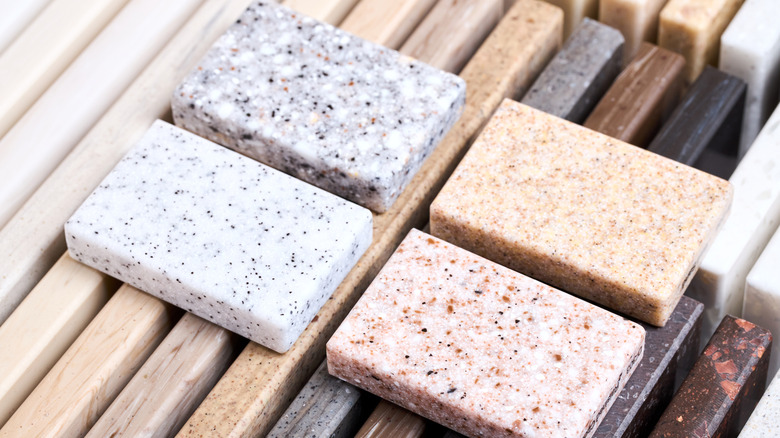
Those who are looking to introduce more exciting colors or patterns into their kitchen will find that some countertop materials offer significantly more options than others. "If you want a lot of flexibility in how your counters look, quartz has to be the winner, as it comes in tons of colors and patterns," says Michael Hartel. He also highlights concrete as a surprise choice for this category. Rachel Blindauer agrees, noting that custom concrete countertops "can be dyed, textured, or shaped to suit the space."
Sadly, you aren't going to find such a range of colors or patterns with other options. For example, Angie Hicks doesn't recommend stainless steel or soapstone due to their limited design options. Rachel Blindauer adds butcher block to this list, too, due to the lack of variance in tone or color choices. While you can find granite countertops in a variety of colors and patterns, Michael Hartel advises exercising some caution before making a final choice. He explains, "Its patterns can be unpredictable, which might be tricky if you have a specific look in mind." As a natural stone, the variance of the pattern can't be controlled, so you might end up disappointed by the seemingly random splotches and marks.
Don't forget to keep your budget in mind as you shop
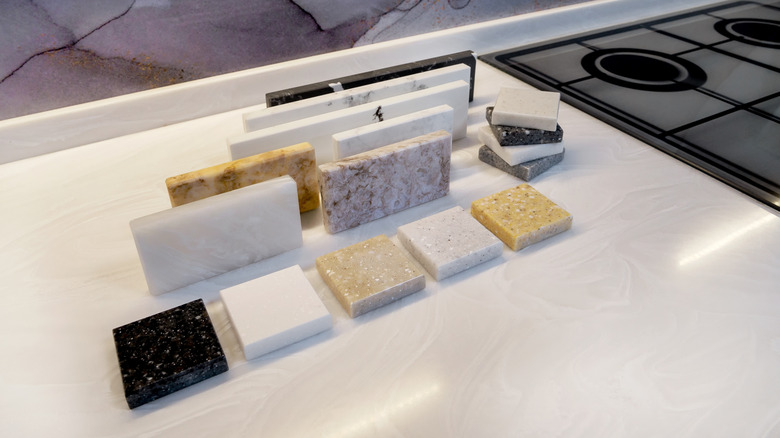
While the cabinets are typically the most expensive part of remodeling your kitchen, countertops can also take up a large part of your budget. As Angie Hicks shares, "Countertops can range from about $1,000 to over $10,000 depending on the materials, size of your kitchen, where you live and more." Unfortunately, most of us don't have an unlimited amount of money to spend on new kitchen countertops, so sticking with more budget-friendly options and balancing them with other priorities, such as aesthetics, durability, and heat-resistance, will be important. "If you're looking for a more budget-friendly option, I'd recommend laminate, tile, butcher block, or a solid surface. These options can all look great and do well on price," says Hicks.
While there are some ways to save money on kitchen countertops, there are some materials that you shouldn't waste your time considering if you are trying to stay within a tight budget. For example, if you've been debating between quartz and granite countertops, neither is the most budget-friendly choice. So, you should probably skip over both of these if you're trying to keep your costs down. "Materials like marble and soapstone look amazing but you'll definitely feel the cost, both upfront and over time with the extra care they need," cautions Michael Hartel.
Scratch resistance may be an important consideration, too

If your kitchen sees a lot of heavy use, then prioritizing a scratch-resistant material can help ensure that your countertops don't look dinged up within a few years of having them installed. While it is still best to use a cutting board regardless of the countertop material you choose, some materials will fare better against a knife that slips or something that gets slid across the countertop. All countertops may feel "hard" when you knock or tap on them. However, there are actually some key differences in their durability. One material our experts cite as a durable option is quartz. On the Mohs scale, which measures how hard and scratch-resistant an item is from 1 to 10, quartz ranks as a 7. Rachel Blindauer explains, "Engineered for resilience, it handles spills, scratches, and life with ease."
Granite is another durable and scratch-resistant option you might want to consider, with Michael Hartel describing it as "tough and reliable." Some granites rate at an 8 on the Mohs scale, while others place at a 6 or 7, so you might want to seek out one of the harder varieties if durability is important to you. Angie Hicks also mentions concrete as a scratch-resistant option — though she does not recommend cutting directly on it or quartz, as doing so can dull a knife.
Despite what you might think, cutting directly on a butcher block countertop isn't always a good idea. The material is soft and not scratch-resistant, so you'll see lots of cuts on the surface after a short period of time. However, as Hartel notes, "Some folks actually like the character that comes with that kind of wear, so I guess it's all personal preference." Marble is another softer material that our experts say can scratch easily, with a hardness level between 3 and 5. Rachel Blindauer also generally recommends against choosing soapstone. She says that it is "lovely, but soft," as it's only rated between a 1 and a 2 on the Mohs scale.
Long-term maintenance should also be considered when choosing a countertop material
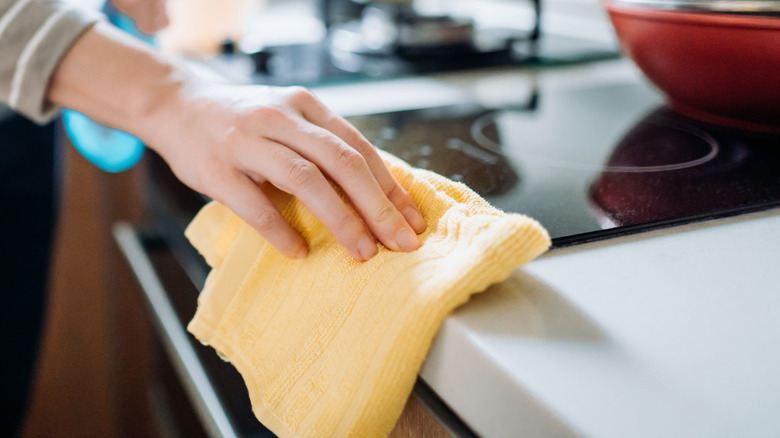
Some countertops offer a much more hands-off maintenance experience than others. "When thinking about low-maintenance options over the long term, you'll want a counter that isn't porous, cleans easily, and is easy to repair," shares Angie Hicks. She recommends solid surface and laminate countertops to match these priorities. Both materials are non-porous and stain-resistant. Michael Hartel offers two additional materials to consider. He says, "If you don't want to constantly fuss over your counters, quartz and sealed granite are solid low maintenance picks. Wipe them down and you're good." However, you will need to seal granite countertops once every few years.
If you're looking for a low-maintenance option, then there are some materials you'll definitely want to stay away from. Rachel Blindauer recommends staying away from concrete countertops in this case. She explains that the material needs regular sealing, stains easily, and cracks are common over time. Hicks cites soapstone as one material she would advise against for anyone desiring something that is low-maintenance. "It scratches more easily and it also needs monthly maintenance during its first year to achieve the unique patina homeowners covet," she says. Marble and butcher block are also not likely to be a good choice here. As Hartel notes, they will need much more frequent sealing or oiling and are likely to get stained if spills aren't taken care of promptly.
Sustainability may also play a role in your decision
Those aiming to create an environmentally-friendly space should turn their focus to the sustainability of the various countertop materials. "If you're thinking green, then recycled glass and bamboo butcher block are worth a look, as they're both stylish AND better for the planet," Michael Hartel advises. If you've never heard of recycled glass countertops before, they have a smooth and reflective surface that is made by mixing small fragments of glass, porcelain, seashells, and other recycled items together and binding them with a resin. The finished countertop is non-porous and heat-resistant.
Unlike traditional butcher block countertops, bamboo butcher block countertops are made from sustainable, fast-growing bamboo. Not only does bamboo look nice, but it is also harder and stronger than many varieties of wood (you still should not cut directly on the surface, however). Bamboo butcher block countertops will also require regular maintenance and are not heat or stain-resistant.
Hartel also offers some recommendations for materials you will want to avoid if you are prioritizing sustainability and eco-friendliness during your renovation. He says, "Materials like PVC laminate or imported exotic stones can come with a heavier environmental footprint – especially once you factor in shipping and sourcing practices.
You might want to keep resale value in mind as you shop

If you intend to sell your home in the future, then you might also want to consider how the material you choose will impact the value of the home. According to Rachel Blindauer, "Quartz and granite continue to offer the highest returns." Potential buyers are familiar with these materials and their overall quality. Many buyers also appreciate the look that these natural or man-made stones add to a kitchen and how they make it feel like a more upscale space.
Cheaper materials, such as laminate or tile, are not going to offer a similar return on investment. Potential buyers aren't going to be wowed when they walk into your kitchen. If anything, these materials could end up making your home less appealing to potential buyers, who will likely be calculating the cost of getting new countertops to improve the space.