

12 Collectible Beer Bottle Designs To Look For At The Flea Market
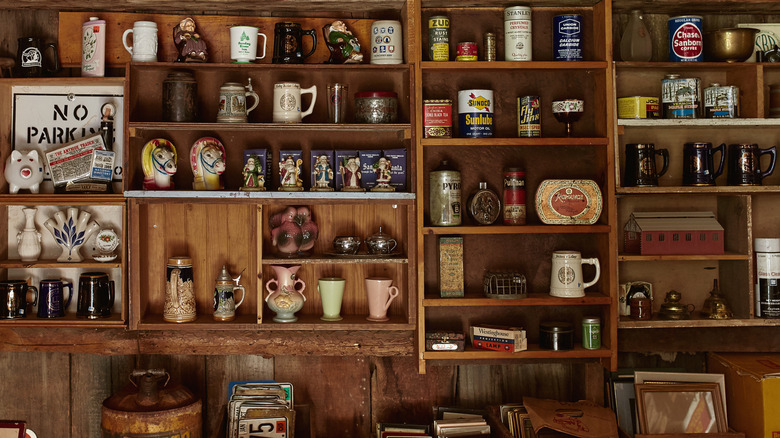
One man's trash is another's treasure, and such is the case with old beer bottles. What is known as breweriana has come to define collectors items related to beer, brewing, and breweries. This includes bottles and openers, advertisements, and taps. Not only can these charming pieces of history add character to your home, but you can also impress your next dinner party guests with stories from the past. The next time you're browsing flea markets and garage sales, it's important to know what to look when hunting for some hidden treasures.
From teal bottles that shine in the light to sturdier pieces of stoneware, beer wasn't always packaged in the kind of glass you might be familiar with. Though spotting a collectible bottle can be a tricky task, true collectors have developed tricks of the trade. The opening of the bottle and the shape, plus the type of closure used to seal the bottle — a cork, screw top, or crown — can provide some indication of its age. So can the base of a bottle and the mold seams, which are the lines that run alongside the length of a bottle can also provide clues to its age. Generally, the higher the seam carries, the newer the bottle, while the newest bottles won't have any visible seams in the glass at all. Read on for 12 collectible beer bottle designs to look for at the flea market.
Bottles with markings on the bottom

Markings on the bottom of an old beer bottle can help you understand where the container has come from and how old it might be. Pontil marks are the scorings left over from bottles that have been blown by a glassblower, and they usually mean that the design is from the beginning of the 19th century or before. Even further back, before the Civil War, a lot of the beer sold and made was transported in wooden barrels, where local taverns poured pints or bottled smaller batches in-house.
Though it is safe to say that quite a bit of beer was gulped down in America before machines started cranking out bottles, these pontil-dimpled containers can be hard to come by. Bottles made during Prohibition (which hurt the U.S. in many ways) or just after this time can be even more difficult to find. Once machines were used to make bottles, the bases became smoother, and different kinds of embossed markings could be printed on the glass. These, too, can indicate the value of what you find in the flea market.
Pre-Prohibition bottles with words and names marked on the bottle

Beer bottles made before the Prohibition era often have the words "brewery" or "bottling" printed on them, in addition to the name of a particular brewing company. These raised markings can appear on either the side of the container (where an actual label might be printed) or on the underside. They can be an any assortment of letters, words, numbers, and symbols, which often hold clues as to where and when the bottle was made.
Hand-carved markings often weren't necessarily fully complete or would appear skewed when etched onto a bottle. If you notice a partial marking or something that looks like a mistake on these raised details, this kind of flawed appearance could indicate an older beer bottle. Sometimes, if you're lucky, the embossed details will have the actual dated age of the container, so you know exactly when it was made and can make calculations about value from there.
Colored bottles can be worth a pretty penny
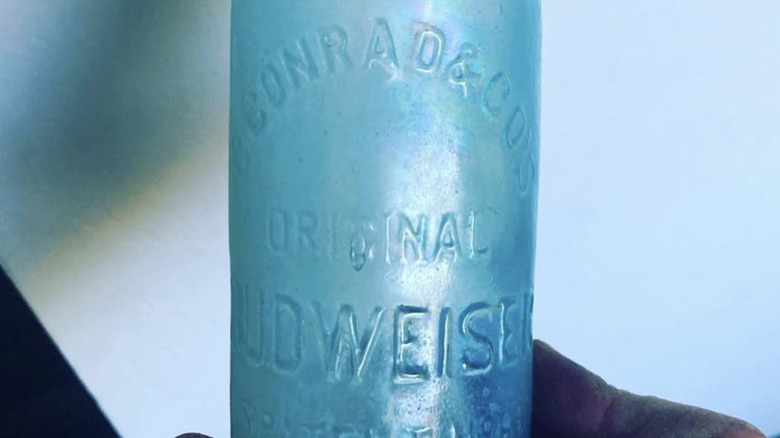
The color of the glass can indicate a more valuable bottle. Early Carl Conrad & Co. Budweiser bottles can be light blue or teal, for example, and can be sold for $100 or more a piece. Other rare colors include amethyst and yellow. These unique hues are typically priced higher than glass bottles that are clear, black, and amber.
Brown-looking glass designs were frequently used throughout the 16th and 19th centuries for storing more precious liquids. The shift began after we came to understand the kind of damage light can cause to certain concoctions. Manufacturers started extensively producing amber-colored glass in the 19th century, so if you pick up a beer bottle in this color, you can get a fairly accurate estimate of the age.
Look for embossed labels and shorter, stout bottles

Beer companies used to stamp their names on bottles because the early glass designs weren't exactly cheap to make. The embossed labels were used until around 1918 and helped each container get back to the right owner. Sometimes, though, the bottles were confiscated by an enterprising bootlegger, who would refill them with homemade concoctions.
In addition to the embossed images and letters on bottles, note the shape of the design to get an idea of how old it might be. Shorter, stout bottles that held porter and stout were used in the 1850s until a longer, taller shape was brought to breweries in the 1870s. As facilities looked to keep brewing and bottling processes efficient, different kinds of tops were used to seal the liquid inside.
Keep and eye out for blob-top designs
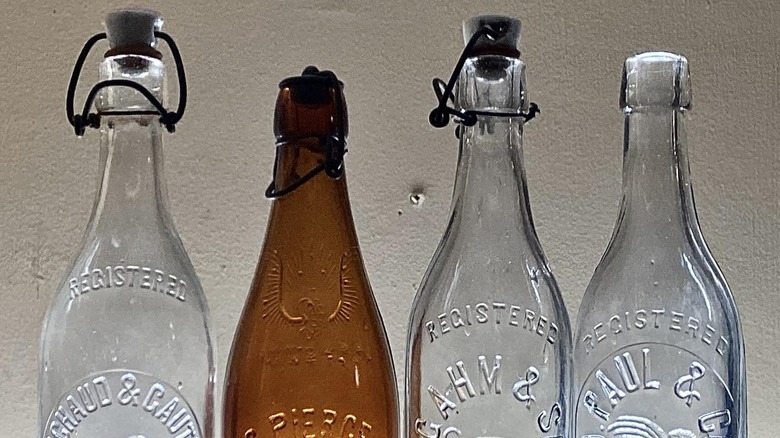
The type of lid used can also help you determine the age of a bottle. The crown cap seal wasn't invented until the 1890s, and the blob-top appeared on bottles made in the mid-19th century and throughout the middle of the 20th. The term "blob-top" is commonly used among collectors. "Blob" refers to the mouth of the bottle, as its surface will look somewhat rounded. This kind of opening is a feature of models made from the mid-19th to the early 20th century, so if you see this type of opening, you can safely assume it dates to sometime in this range.
This blob-style bottle resulted from the use of machines. Once automatic processes eliminated the need for glass to be blown and helped drop prices associated with production, more breweries turned to this option. Bottles with blob tops could easily be wired shut with a cork or sealed off with a gravitating stopper, a secure attachment that helps keep liquids fresh and preserve the taste of the concoctions.
Great finds in small packages
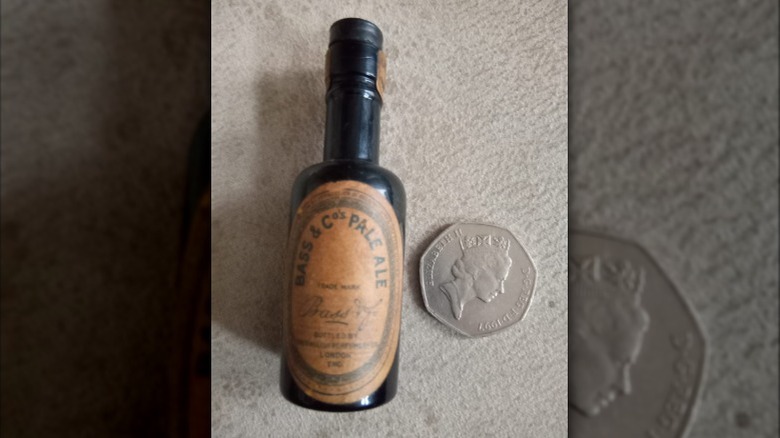
In the 19th century, samples became a thing. These smaller bottles were often labeled as such and could contain a dose of beer, bitters, or whiskey. Miniature bottles can be wonderful discoveries if you happen to find one tucked away on a shelf at the antique store, and the playful shapes can make a fun addition to a growing home collection.
In addition to containing smaller amounts of alcohol, these tiny bottles also were used to pack poisonous substances. In this case, they were often made in colorful glass (like blue or amber) and would have specific markings to indicate the hazardous materials inside. To differentiate between a sample beer bottle and one that could have been intended for poison, look for embossed lines or points and the word "poison" along the glass. You may also see geometric designs that helped unknowing consumers understand that whatever was inside wasn't meant to be tasted.
Grab aesthetic pieces for collections
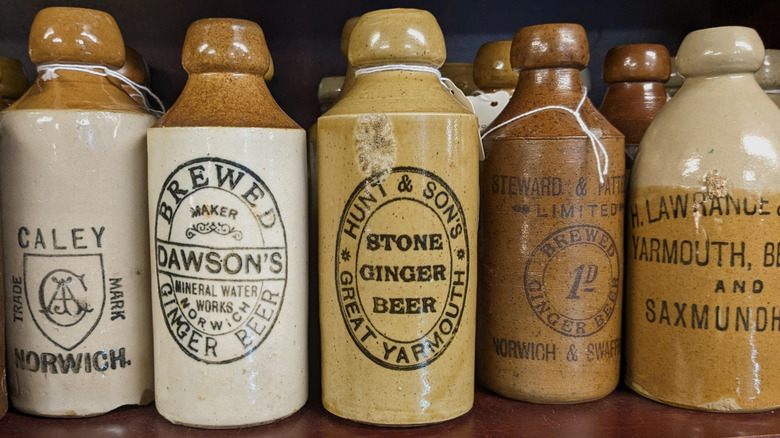
If stoneware bottles catch your eye among a pile of antiques, you may want to snatch them up. These pieces were made in the 1850s and steadily increased in popularity until their decline several decades later. Clay bottles weren't cheap to make but were easy to order and convenient to refill.
Unlike glass bottles, the stampings and markings on the outside of these containers would advertise the name and location of the bottler but would rarely announce what was contained inside. It is assumed that other kinds of beverages — both non-alcoholic and boozy — were kept in these vessels as well. The price of antique stoneware bottles can vary anywhere from around $20 to $100 or more, depending on the model, design, and age. Bottles that appear rounded in the shoulder with a longer neck could be from Wisconsin, for example, while those with more square-looking shoulders were made elsewhere in the United States.
To make these aesthetic-looking vessels, liquid clay was dumped into molds. Once the bottle took shape, the remaining liquid inside the formed container was dumped, and the inside was glazed and the outside stamped. Some were painted with colors along the lip or the shoulder to help differentiate products packed into a case. Earthenware bottles can also be found, but these are rare since this material isn't as hardy as stoneware. Once glass bottles became cheaper to order, stoneware pieces fell out of favor.
The legacy of Lemp Brewery
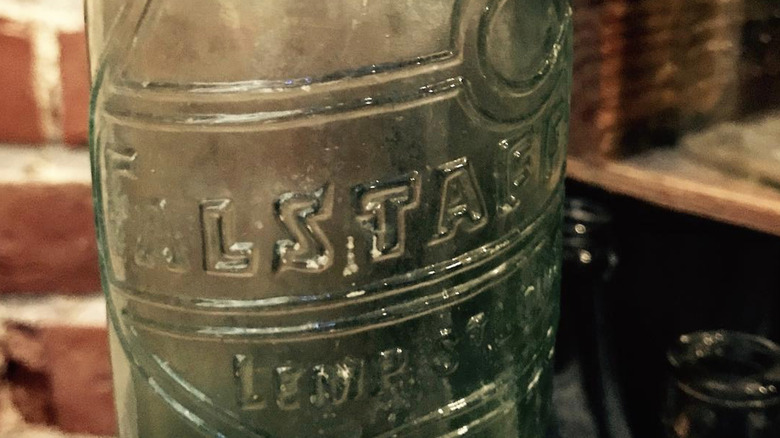
Lemp Brewery is shrouded in the kind of stories that would make for an excellent movie. It all started when John "Adam" Lemp made lager and sold it in his own grocery in St. Louis. He had experience making beer in Germany, and word spread. The popularity of Lemp's beer overshadowed the earnings he made from other grocery items, and he was encouraged to open what was then called Western Brewery. The business stayed in the family, becoming the largest in St. Louis and a well-known name throughout the United States.
In 1877, brewery operations included a bottling plant, and Lemp's beer was sent across the country on trains. Unfortunately, a series of family tragedies, suicides, and rumored ghost stories enveloped the company. In 1892, the brewery was incorporated and renamed the William J. Lemp Brewing Co. Five years later, the family celebrated a marriage into the Pabst brewing family. All of this lore adds to the hype of these bottles, so if you happen to stumble across them during your antique hunts, get exΩ
Collecting items from America's Best
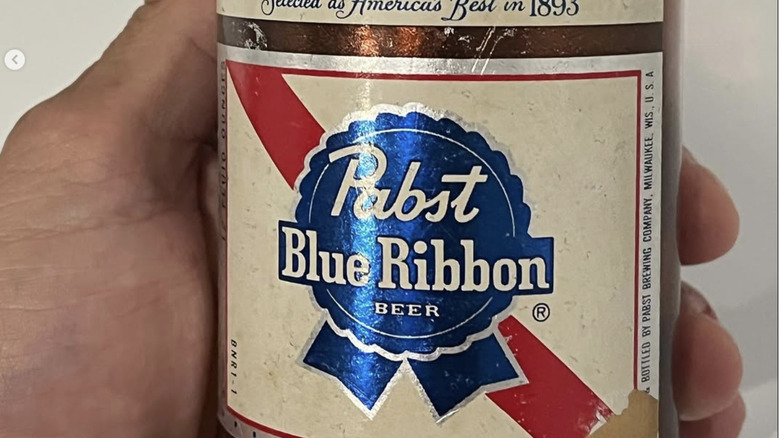
The history of Pabst can be traced to German immigrant Jacob Best, who opened the Jacob Best Brewing Company in Wisconsin in 1844. Its lager was the Best Select, and as product demand slowly increased, the endeavor became a family affair named Ph. Best & Co. Later, another immigrant by the name of Frederick Pabst arrived in America and married into the Best family, and in 1889, "Ph. Best & Co." was shortened to "Pabst." The family continued to crank out beer, claiming awards and medals, which prompted a rebranding of its Pabst Select beer to Pabst Blue Ribbon. This unique history means that bottles with "Best Select" and "Pabst" labels can become hot collector's items.
Pabst has an array of breweriana, like bottle openers, displays, and cans. As with any memorabilia and collectors' items, prices can range depending on condition and age. Bottles without chips can run $20 online, while vintage blobs can go for $10. For comparison, a rare 30-inch gimmick bottle made in 1950 can cost around $400, while a clear blue glass vintage bottle dating back to the early 1900s can be purchased for around $60.
Schmidt beer, a brand with plenty of breweriana
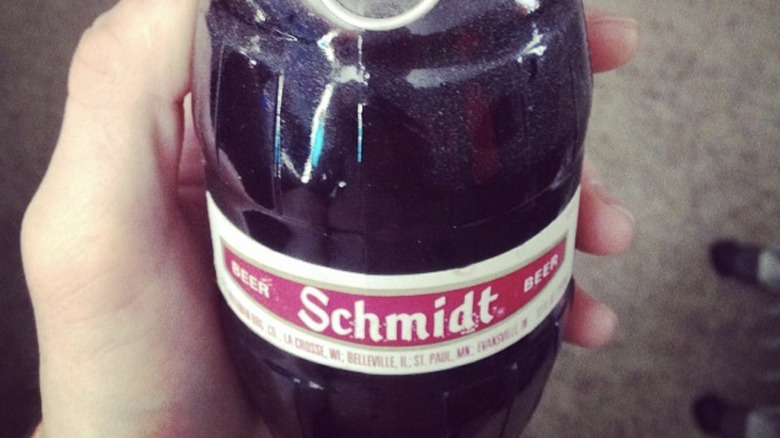
The Schmidt Brewery is another American brewery with a long history. In 1855, Christopher Stahlmann founded the Cave Brewery, which prepared and stored beer in underground tunnels. By 1860, it had emerged as the largest beer operation in Minnesota. The company had a solid run of shipping its products across America until a restructuring occurred in 1898. Two years later, Jacob Schmidt purchased the business.
Even when many breweries took a hit during Prohibition, the Schmidt Brewery managed to keep beverages flowing by turning its attention to alcohol-free products. Once Prohibition lifted, Schmidt catapulted into position as one of the largest breweries in the United States. The brand's enduring history has collectors hungry for some of its various advertising gimmicks, like a big mouth beer bottle that can be found for around $15 or a clear 12-ounce design that can be sold anywhere from $9 to close to $20. If a Schmidt label catches your eye while digging through your neighbor's garage sale items, snatch it up!
On the hunt for Yoerg bottles
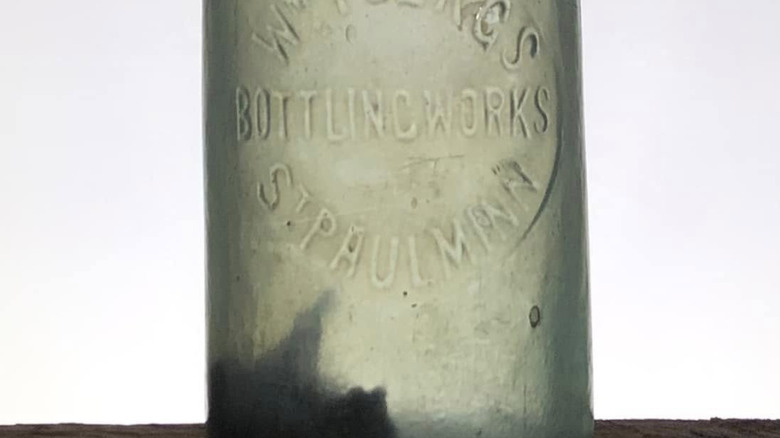
Yoerg is Minnesota's first brewing company thanks to the efforts of Anthony Yoerg, who began brewing beer out of his home in 1848. Eventually, he moved operations to a collection of caves, where he found the cooler environment needed to keep his concoctions. Up until the shattering blow of the Great Depression, Yoerg kept the beer brewing and the bottles flowing.
This unique history has helped catapult the brand's bottles to the top of collectors' lists. Whether beer trays or beer labels, Yoerg paraphernalia can go for a pretty penny online. Case in point: A typical beer tray taken from before Prohibition might garner around $75, but a Yoerg model could cost several thousand dollars. For this reason, if you see a bottle marked "Yoerg" while strolling through your local antique store, be sure to stash it in your basket.
The lasting appeal of Guinness
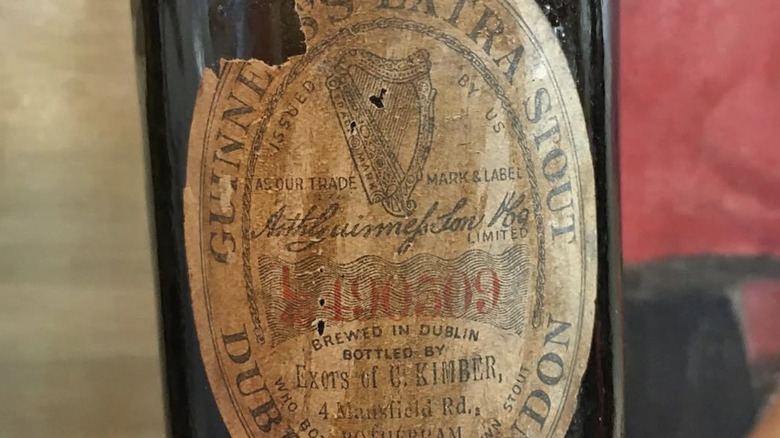
The legend of Guinness began in 1759, when 34-year-old Arthur Guinness famously signed a 9,000-year lease for St. James' Gate Brewery in Dublin, Ireland. He began steadily brewing ale that attracted a solid mass of customers until he tried his hand at making porter, an English beer that was revolutionary at the time.
Guinness' brews remained local until 1796, when he exported beer via a ship that set sail for England. His porter quickly found a thirsty audience both at home and beyond until in 1799, he put the nail in his ale operations to direct his attention strictly to making porter. Guinness' brew logs can be traced back to the 1790s, but from the early 19th century, the stronger stouts and porters were aged in vathouses in the area around St. James' Gate.
Initially, the darker brews were bottled, as the more complex, weighty drink wasn't ideal for the kind of draft beers that were served at the time. Guinness had to send the beer to different companies for bottling, and some of those original bottles have the names of these outsourced businesses on the labels. Sometimes, the Guinness brand is omitted entirely or minimized when compared to the name of the bottling business. For this reason, if you stumble upon a Guinness bottle in a flea market, take it home and see if your can verify its authenticity.