

Baking Dish Vs Baking Pan: What's The Difference, Really?
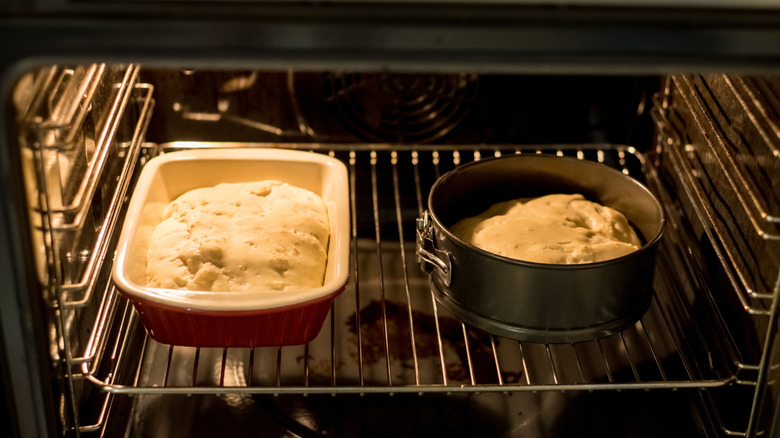
It's not uncommon for at least one kitchen cupboard to be a jumble of trays, dishes, and tins for the oven. And while there's no expectation to keep it organized, it is important that you know what you're reaching for when baking or roasting. If you're following a recipe that calls for a baking dish or a baking pan, how do you know which is which?
What indicates whether you have a baking dish or a baking pan is the material it's made from. If it's glass, stoneware, or ceramic then it's considered a baking dish; whereas a baking pan is made of metal. Both vessels are available in a range of sizes and shapes, but it's the material that is the key difference as it determines how it's used.
A baking dish is best for recipes cooked low and slow with an even heat, like baked pastas or fruit crumbles. When you want a quicker cook or browned edges, reach for a baking pan. Metal is a better conductor of heat and helps add a firm crust to bread or cakes and crispy edges to roast vegetables. While in some cases you might be able to use whatever you have on hand, getting your recipe right will generally depend on using the appropriate ovenware.
What is a baking dish?
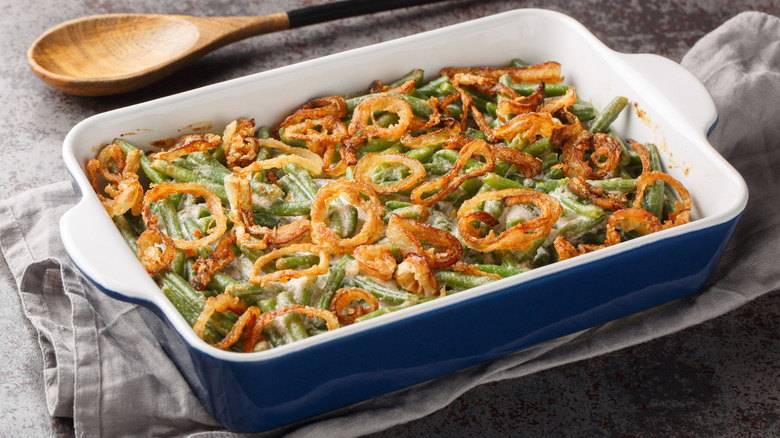
If you've ever inherited any ovenware, it's most likely a baking dish. From retro Pyrex to the floral porcelain dish your grandmother used for her peach crisp, it seems every home has one tucked away somewhere. They can be shaped as a square, rectangle, oval, or circle, with lids or without, but most importantly the dish is made from porcelain, glass, or stoneware. And while they're pretty enough to use for serving at the table, it's not just about aesthetics.
These materials are not great heat conductors, which in this case is a good thing. Baking dishes should be your go-to when you have a recipe that requires a long stint in the oven, but without the risk of burning the edges. Think scalloped potatoes, casseroles, or baked custards. These materials also have the advantage of being non-reactive. Unlike metal, you can use them to cook anything acidic, like lasagna with a rich tomato sauce or a tart blackberry cobbler.
What is a baking pan?
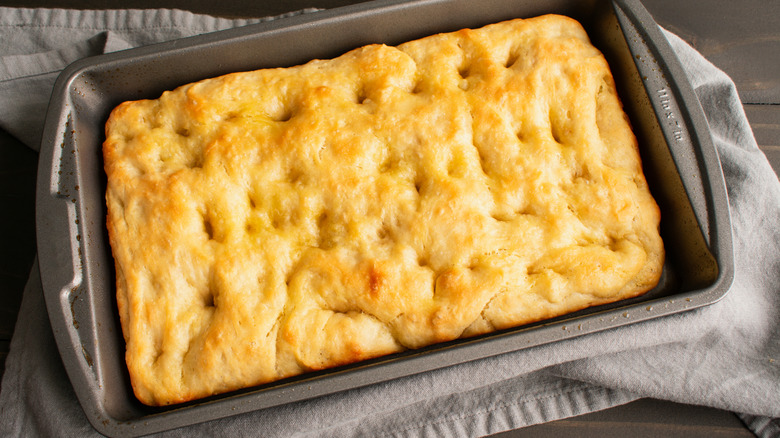
A baking pan is essentially a metal version of a baking dish but with a greater variety of shapes and sizes. Your cake pans, bundt pans, or muffin tins are all considered baking pans, though recipes will usually specify if you need anything other than a regular rectangular shape. A baking pan shouldn't be confused with the shallower sheet pan or the flatter cookie sheet.
Just as with baking dishes, baking pans have their own strengths that make them ideal for certain recipes. They're usually made from stainless steel or aluminum, which are excellent heat conductors. This is helpful for setting food quickly (which stops your cookies spreading) or crisping edges for the perfect brownies. With a baking pan you have the benefit of being able to put it under the broiler, perfect for melting cheese or batch cooking eggs.
If you're wondering where silicone ovenware fits in, it's with the baking pans, but it's not an exact replacement. While silicone baking pans work wonders for muffins or cakes, and are much easier to unmold, they won't give you crispy roast vegetables or crusty loaves of bread.