

Homemade Clotted Cream Recipe
We may receive a commission on purchases made from links.
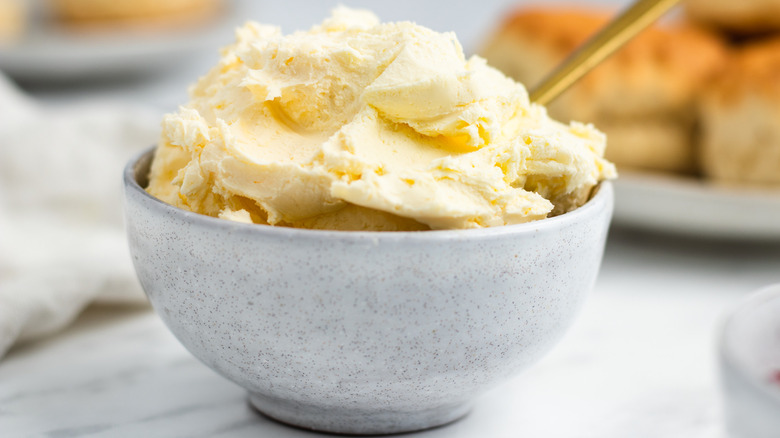
Clotted cream is a simple yet special treat that is closely associated with a particular part of the world — specifically Devon and Cornwall. Recipe developer Catherine Brookes of Blue Sky Eating is great at making desserts, main courses, and just about everything in between, and this wonderful homemade clotted cream recipe is no exception. "Clotted cream is traditionally made in the South West of England, often spread on top of scones along with jam," Brookes explains. It requires only one ingredient, which happens to be prevalent in the dairy-producing regions of Devon and Cornwall: full-fat milk. It's likely that clotted cream originated as a way to reduce waste, but today eating a cream tea with scones, strawberry jam, and clotted cream is a ritual that many tourists to the area enjoy crossing off their list of things to do.
There are plenty of things to love about this tasty spread, and Brookes explains it best. "Clotted cream is rich, indulgent, and perfect for spreading on a warm scone," she says. "With the oven and the fridge doing most of the work for you, I love how little prep work is required to make your own at home." Though traditionally served with scones, we also think that it would be great to enjoy on a biscuit, or pretty much any other baked good that you could imagine.
Gather the ingredients for homemade clotted cream
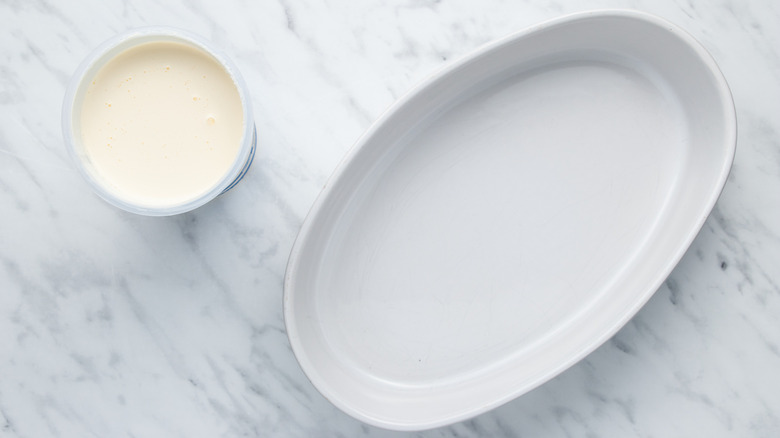
The great part about this particular recipe is that you only need to buy one ingredient. Yes, you read that right; this simple and delicious recipe only calls for one thing, making your trip to the store a breeze. Better yet, it also makes this dish affordable and worthy of making over and over again. Simply grab some heavy cream from the store. After that, and assuming you have everything else you'd like to pair with this recipe, you can head back home and get to work.
Preheat the oven and pour cream into a dish
This recipe is cooked in an oven, which means that you need to preheat it ahead of time. Set your temperature to 180 F, and let the oven get hot while you tend to the rest of your prep work. Luckily, this temperature is relatively low, and it won't take too long for the oven to fully preheat.
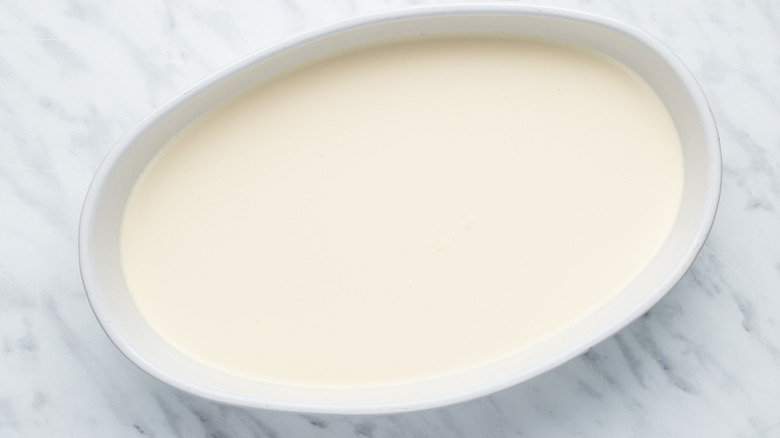
Next, pour the cream into a large oven dish. The dish should be big enough so that the cream sits over a wide surface area between ½- to 1-inch in depth. Brookes used a 12x8-inch dish, which proved to be perfect.
Bake the cream
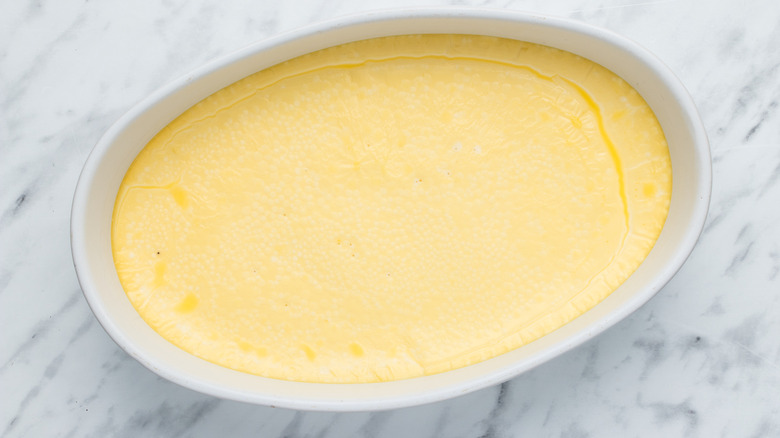
Once the cream is in its dish, pop it into the oven and set your timer for 12 hours. It may seem like a long time to cook something, but there is a reason for it. "The long heating in the oven at a low temperature allows some of the liquid to evaporate and the thick fatty part of the cream to rise to the top," Brookes explains. As she mentioned before, one of the great things about this recipe is that the oven does the work for you.
Once your timer goes off, carefully remove the cream from the oven using oven mitts. While the cream was baking, it should have formed a thick skin over the top. This is a good indicator that it is adequately cooked, and the dish will be a success. "The thick layer means it's done, and that is the part you want to keep," Brookes says.
Let the cream cool and stick in the fridge
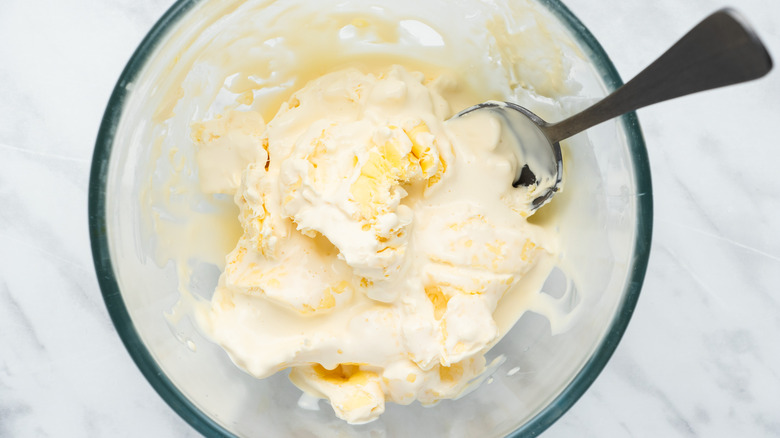
Let the cream cool at room temperature first. Once it does, put the entire dish in the fridge for 12 hours. "I think the cooling is what makes the clotted cream layer firm enough to scrape off," Brookes shares. Though this is a lot of waiting time, trust us when we tell you that the end result is well worth it. After the 12 hours are up, remove the cream from the fridge and place it on your counter. Scrape off the thickened layer that has formed and then transfer it to a mixing bowl. At this point, you can also discard the liquid.
Mix and serve the clotted cream
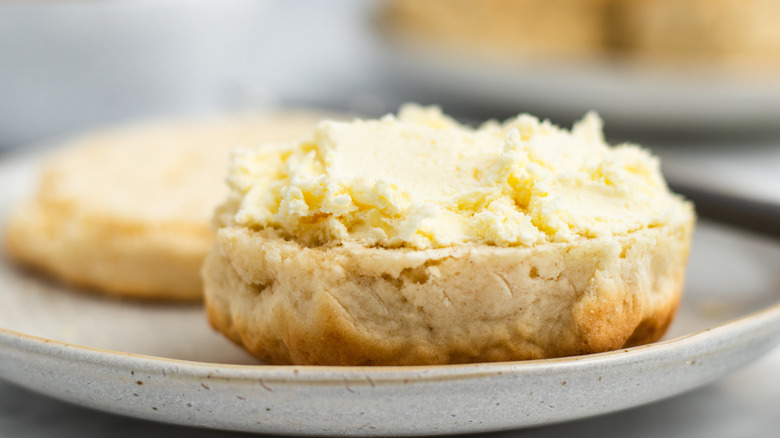
Now, mix the cream thoroughly until you have a smooth and thick clotted cream. Finally, it's time to enjoy the fruits of your labor. There are plenty of things to serve this cream on, but the traditional suggestion may just be the best suggestion. Brookes tells us, "Clotted cream is best served spread on top of traditional British scones with some jam. You can also use it to make fudge, shortbread, or ice cream, and it results in a rich, creamy flavor," Brookes shares. Anything left? "It should keep well in the fridge in an airtight container for up to a week," Brookes notes. We hope you love this spreadable delight as much as we do!
What can I serve with homemade clotted cream?
Homemade Clotted Cream Recipe
Clotted cream is a traditional scone topping in England, and you can make your very own at home thanks to this easy recipe.
Ingredients
- 1 (500 milliliter) carton heavy cream
Directions
- Preheat the oven to 180 F.
- Pour the cream into a large oven dish. The dish should be big enough so that the cream sits over a wide surface area and be between ½- to 1-inch in depth.
- Put the cream in the oven for 12 hours.
- Remove the cream from the oven. A thick skin should have formed over the top.
- Let the cream cool to room temperature, then put the dish in the fridge for 12 hours.
- Scrape off the thickened layer that has formed and transfer to a mixing bowl. Discard the liquid.
- Mix thoroughly until you have a smooth, thick clotted cream.
What is the history of clotted cream?
As with most dishes closely associated with a particular region of the world, the history of clotted cream is the stuff of legend. Clotted cream has also been known as clouted cream or scalded cream over the ages, but there's no real way of knowing for certain what the Phoenician sailors who settled in Devon and Cornwall thousands of years ago might have called it. There are references to clotted cream in materials from Devon and Cornwall as early as the 1300s, often associated with monasteries in the area. Though clotted cream has likely been made for centuries, the reasons for doing so may have changed over the years. As well as using up dairy waste, heating the cream would have allowed it to stay fresh longer during an era with no refrigeration, which is a health benefit that was stressed in cookbooks from the 19th century.
In 1998, Cornish clotted cream was awarded a Protected Designation of Origin, and to this day, a trip to Cornwall that doesn't include a cream tea is a missed opportunity. The concept of a cream tea seems to be a more recent invention, with the earliest mentions of the ritual showing up in the 1930s and 1960s.