

The 10 Best Stouts For Beginners

In a world where there is an almost shocking number of different types of beers, stouts stand out from the group as something special — but they can also be very, very polarizing. An ale or lager fan who jumps right into the deep end of the stout world might find themselves wondering what the heck all the fuss is about, but we've got you covered.
We wanted to know what the best choices are for those looking to start easing their way into the style, so we reached out to some experts for advice on where to start. First, the introductions: Luke Walster is the beer expert over at The Cask Connoisseur, Sanwar Mal Khokar is a mixologist and beverage program leader at Sanjh Restaurant & Bar, and Brian Thompson is the director of beer, THC, and mixers at ABC Fine Wine & Spirits. They came through for us in a big way, with not only recommendations, but also explanations on what makes each option a standout and what tastes it'll appeal to.
That's important, as the world of stouts is incredibly and surprisingly varied. Don't take our word for it: As Walster explains to us, "I think they're sometimes misunderstood by people who haven't tried many of them. They can be creamy, rich, chocolatey, fruity, and occasionally quite sweet, so there's far more variety than people might initially expect." If you've tried a few stouts and found you weren't a fan, it's time to try again — and consider these standout options.
Guinness Draught
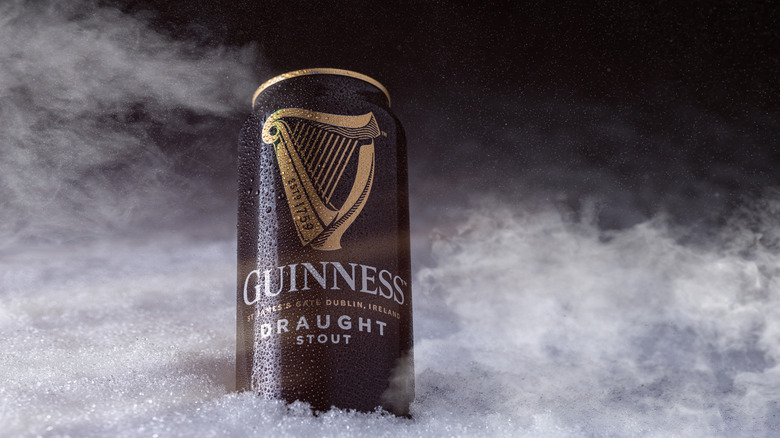
No stout is as iconic as Guinness, so it's not entirely surprising that this was an across-the-board win with our experts. But what makes it such a standout? It's much more than just the flagship beer of St. Patrick's Day. "There's a good reason why it remains so popular," Luke Walster says. "What makes Guinness Draught particularly interesting is the way nitrogen creates that distinctive creamy head and wonderfully smooth texture." He adds, "There's a pleasant roasted bitterness, accompanied by gentle coffee and chocolate notes, but the overall drinking experience is much lighter than its dark appearance might suggest."
Stouts can have a reputation as being heavy, but Walster notes that Guinness Draught isn't just easy-drinking, it's also great proof that you shouldn't rule out a stout if you're in the mood for something on the refreshing side of things. Sanwar Mal Khokar agrees, saying that Guinness Draught is a surprisingly light option that can be a great intro.
"If you like coffee or dark chocolate, you might expect the same kind of tasting notes from Guinness," he explains. Khokar, too, notes the texture to be found here, citing this as a brilliant example of how important mouthfeel can be to the experience of a stout. What should you take note of? "The nitrogen makes tiny bubbles, and [a] nice and creamy head," he says, adding, "That head gives a very mellow and soft mouthfeel." (Bonus: Guinness is also a great beer for cooking, from beer bread to stews.)
Guinness Foreign Extra Stout
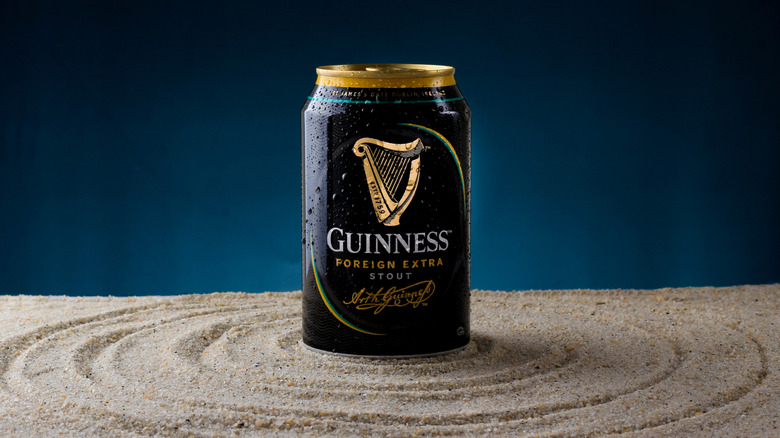
There are actually a number of different beers in the Guinness lineup, and that presents beginner stout drinkers with a unique opportunity. For Luke Walster, recommendations start with Guinness Draught and continue with Guinness Foreign Extra Stout, a beer he says is a sort of a stronger step up in richness and body. There's a little more to it, though.
"One of the things I find particularly interesting about Guinness is just how different its beers can be, despite sharing such a recognizable name," Walster says. Foreign Extra Stout delivers something else: "There are lovely dark chocolate, coffee, caramel, and dried fruit flavors, alongside a more noticeable bitterness and warming finish," he explains. While they're both approachable, sampling the two side-by-side is also a great way to begin recognizing the nuances and variety present in stouts — even from the same brewery. Walster also appreciates the history behind this one. The hint is in the name: Walster says that this hop-heavy brew was designed to weather long overseas voyages, making it an important chapter in Guinness history.
Walking Tree Brewery Babycakes Oatmeal Stout
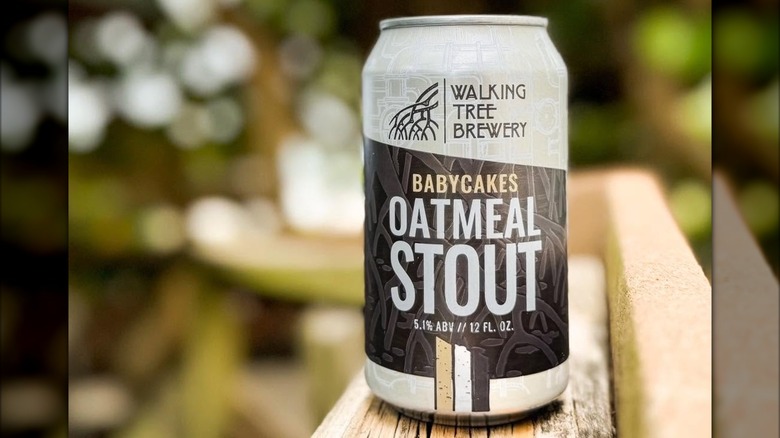
Although Brian Thompson's top pick for an outstanding beginner stout is also Guinness Draught, he says that Walking Tree Brewery's Babycakes Oatmeal Stout is a close second. "It delivers the flavors you would expect from a dark beer without being overly bitter," he tells us. It's a winning combination, as far as he's concerned: "Low bitterness, smooth, creamy mouthfeel, with chocolate and coffee flavors, with a dab of sweetness."
The Florida-based brewery also has a pretty neat history, having grown from a love of homebrewing to an award-winning brewery housed in a World War II-era Naval supply warehouse. Those are the kinds of stories we can get behind, and speaking of stories, Babycakes has a pretty great one. Walking Tree was founded by Mike and Brooke Malone, proof of the magic that can happen when opposites get together: The former was a lifelong homebrewer, and the latter wasn't a beer fan in the least. When Brooke tried a chocolate stout and liked it, Mike took on the challenge of perfecting an easy-drinking, approachable stout perfect for winning the hearts of beginners. It won him a number of homebrew awards, and it's become a year-around brewery flagship.
Hobgoblin Stout
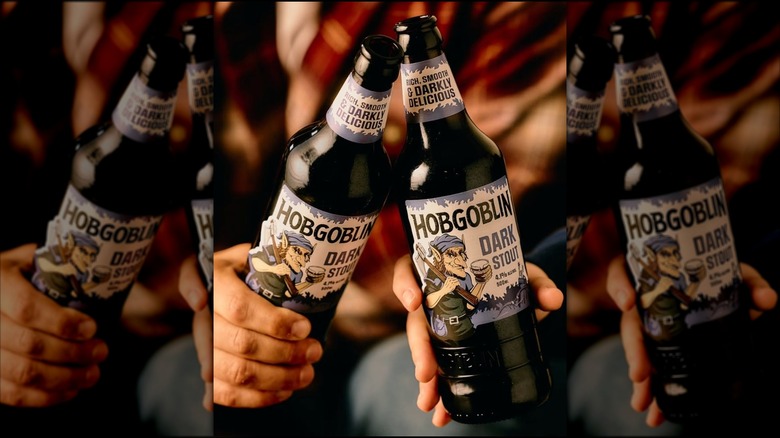
This one comes with a bit of a caveat: Hobgoblin Stout comes out of the U.K., and finding it in the U.S. might take some hunting, a little determination, and a little time. You might be fortunate enough to find it offered in your area — availability can be listed on apps like DoorDash, and we'd also recommend heading to Reddit to ask other beer fans if they've spotted it. Folks have been doing that for years, and according to Luke Walster, it's worth looking for.
"Hobgoblin Stout is a great example of how a beer doesn't need to be particularly strong to pack plenty of flavor," he says. "At 4.1% ABV, it's an approachable, easy-drinking stout that offers a lovely balance of roasted malt, coffee, and dark chocolate flavors, with a hint of treacle sweetness to round things off." Walster adds, "What I particularly like about this beer is that it delivers those rich, comforting characteristics you'd expect from a traditional stout without feeling too heavy or overpowering." That, he says, makes it a perfect transition into the genre — particularly for anyone who tends to seek out traditional British ales.
Sierra Nevada Brewing Company Narwhal Imperial Stout
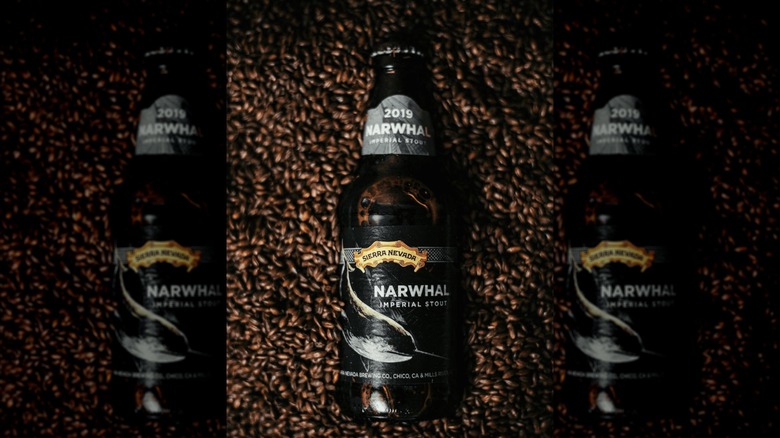
One of the biggest mistakes you might be making when buying beer is not taking the season into account. A stout is going to hit differently if you're drinking it in the autumn months as opposed to the height of summer, so it makes sense that Sierra Nevada Brewing Company's Narwhal Imperial Stout is only available from September to December. There's nothing to keep you from stocking up, of course, and according to Luke Walster, it's simply a great beer for a few reasons.
"There's an incredibly rich combination of espresso, dark chocolate, and roasted malt, accompanied by a subtle smokiness and a wonderfully full-bodied texture," he explains. "What makes beers like Narwhal so interesting is the way these intense flavors come together, creating something that's almost closer to a dessert or after-dinner drink than a traditional session beer."
There's a footnote to this one, though. Walster says that this is on the more advanced end of the beginner spectrum, and he suggests that this is the kind of beer you reach for after you've dabbled in some of the other stout recommendations and are interested in learning more about complexity. It's strong, too, clocking in at 10.2% ABV. That said, if you're ready to start branching out and looking for a beer to sit with and sip for a while, this is an outstanding option.
Samuel Smith Stouts
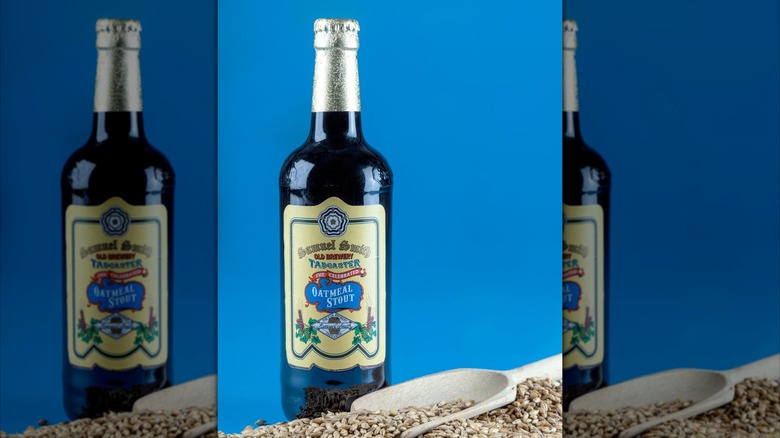
Samuel Smith is another U.K. brewery, and this one has a pretty amazing history that goes back to 1758. Fortunately, this brand has widespread U.S. availability, and for Sanwar Mal Khokar, the brewery's Oatmeal Stout is bringing something unique to the table.
"[It] is a great beer for the people who want to see ... how ingredients can change the texture of beer," he tells us. "The use of oatmeal helps create a silky and very rounded mouthfeel. This beer has a great balance between the roasted malt character and bittersweet finish." Khokar notes that it's also a great example that demonstrates how mouthfeel impacts our perception of flavor and bitterness, and how silky beers can take the edge off flavors that might otherwise be overwhelming.
Luke Walster also recommends Samuel Smith's Oatmeal Stout, citing it as a great example of what makes Britain's old-school brewing traditions so important. He also says that you don't have to stop there, telling us that for anyone who likes brews on the sweeter side of things, the Organic Chocolate Stout is a chocolate-forward beer that dials up the indulgence and backs off on the bitterness. Those looking for something stronger should check out the brewery's Imperial Stout, a classic that hits all the right notes without pretending to be something it's not. "It's a wonderful example of how traditional brewing techniques can create a beer with considerable depth," Walster says.
Kentucky Bourbon Barrel Milk Imperial Stout
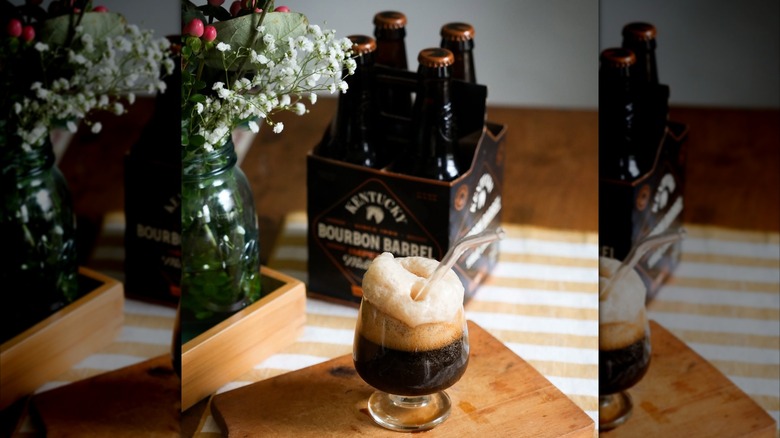
There are plenty of beers out there that can satisfy your sweet tooth, but what about the bourbon fans looking to be wooed by a stout that features some of their favorite flavors? If that's you, look no further than Kentucky Bourbon Barrel Imperial Milk Stout, an offering from the Lexington Brewing & Distilling Co. It's earned some lofty awards as a flavored stout, carrying a unique caramel-and-oak forwardness thanks to the six months or so that it spends in bourbon barrels before it makes it into the bottle.
That's a recommendation that comes to us from Brian Thompson, who lauds this one for the way it combines all the best from bourbon and milk stouts. "This is a good beginner bourbon stout if you are curious about bourbon-aged beers, but don't want something overwhelmingly boozy or intensely bitter," he advises. "The lactose adds sweetness and a creamy body that softens the roasted malt character." This, too, is perfect if you're looking for something to sip and savor. It delivers a whopping 12% ABV, helping to make it the kind of beer you're going to want to take your time with and truly appreciate the complexity it has developed.
Left Hand Brewing Co. Milk Stout Nitro
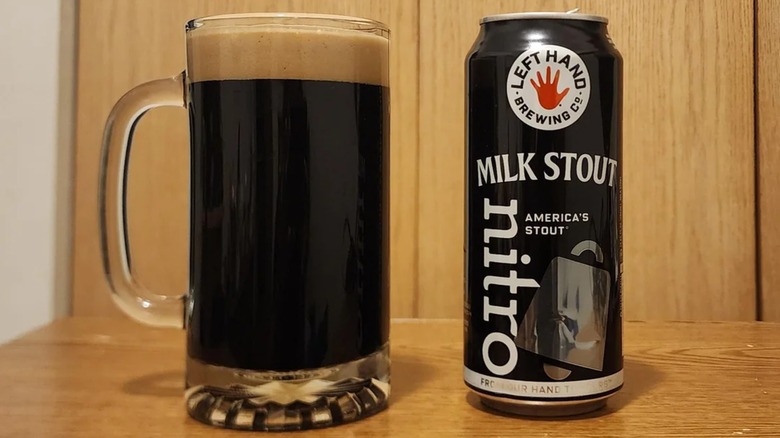
Left Hand Milk Stout made its debut in 1999, and to say it's won a few awards is a vast understatement. In 2017, the beer got an update with the addition of a nitro widget — similar to Guinness — which turns that stout into something extraordinarily creamy. It's a favorite of Luke Walster's, who says that it delivers all the traditional stout flavors with a creaminess that takes it to the next level. "What I particularly enjoy about nitro stouts is how the softer mouthfeel can make a beer seem much gentler than you might expect from its appearance," he says, before going on to note that this is also a great example of how the American craft beer scene is taking old-school favorites and adding something new.
Sanwar Mal Khokar agrees, telling us that he recommends this to anyone who finds themselves gravitating toward experiences with that extra-creamy mouthfeel, like coffees and desserts. A sidestep from Guinness — and its famous nitro character — he says that this one is perfect for anyone who might shy away from stouts in fear of finding something overly bitter.
Left Hand also has a Chai Milk Stout Nitro, which Khokar also recommends for its wonderfully warm character. "This stout brings the roasted malt and creamy texture of the milk stout, along with the spices like cinnamon, cardamom, ginger, cloves, and nutmeg," he says, before adding, "Someone who enjoys the chai spices or warm baking spices may find this beer ... familiar and approachable."
Anderson Valley Barney Flats Oatmeal Stout
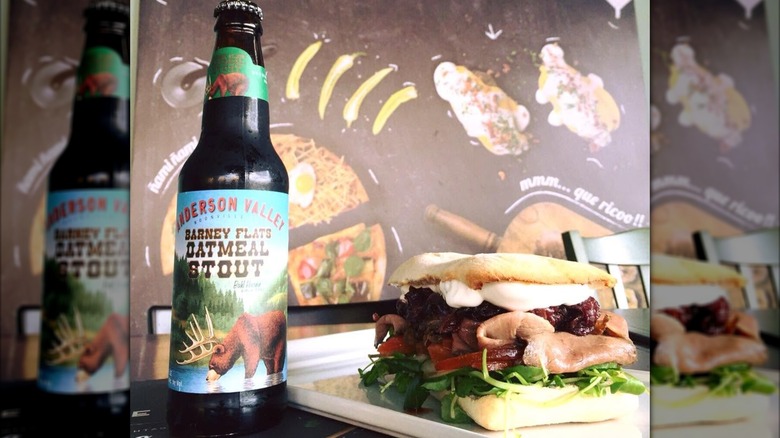
Anderson Valley boasts that consumers can expect the Barney Flats Oatmeal Stout to deliver on everything a stellar oatmeal stout should be, and it's got the awards to back up those claims. It's also got a recommendation from Luke Walster, who says this one is a great example of how American craft breweries are taking British traditions, holding onto the basics — like that distinctive texture that comes from the use of oats — and then adding something completely extra.
"What makes this beer particularly interesting is its combination of roasted coffee, toffee, and subtle dried cherry flavors, alongside the wonderfully smooth texture," he explains. While it can absolutely stand on its own as an introductory option into oatmeal stouts, Walster recommends this one especially if you're a fan of Samuel Smith's Oatmeal Stout. That, remember, is a super-traditional British oatmeal stout. And sometimes? Trying two different beers of the same style, side-by-side, is an excellent way to really understand the differences. Walster says, "It's fascinating how two breweries can work within the same beer category and produce something with its own distinctive character."
Founders Brewing Co. Breakfast Stout
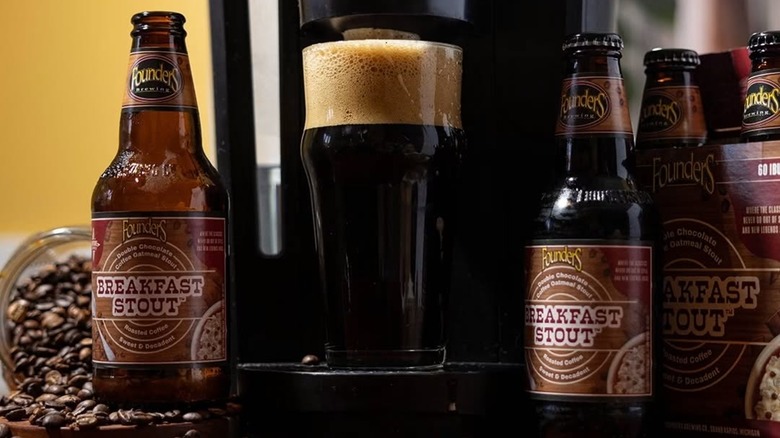
Brewing is pretty much magic. Doubts? Just look at coffee-flavored beer. Coffee beers usually get their distinctive taste without the use of actual coffee beans, with many relying solely on grains to create that unique flavor profile. See? Magic. Many coffee-flavored beers are stouts, and if you're looking to try a truly great example of one, Luke Walster recommends the Breakfast Stout from Founders Brewing Co. Interestingly, it actually does use coffee in the brewing process — two different coffees, to be precise — which he says works really, really well with flavors of chocolate and roasted malts.
"There's plenty of coffee intensity, alongside dark chocolate and caramelized sweetness, creating a beer that's full of character," he explains. "What I particularly like about beers such as this is how they show the creativity of American craft brewing, taking familiar ingredients and using them to create something that feels rather special."
Walster does caution that this, too, is a sort of next-step introduction to stouts, particularly because it comes in at 8.3% ABV. That said, it's also an excellent illustration of a bit of wisdom that he gives to anyone new to stouts. That's not to give up — even if you find a few that aren't to your liking. "There's such a wonderful variety of flavors, strengths, and textures available," Walster says, "and finding the right one can completely change your appreciation of darker beers."