

Be On The Lookout For This Antique American Glassware Known For Its Heavy Quality And Sharp Edges
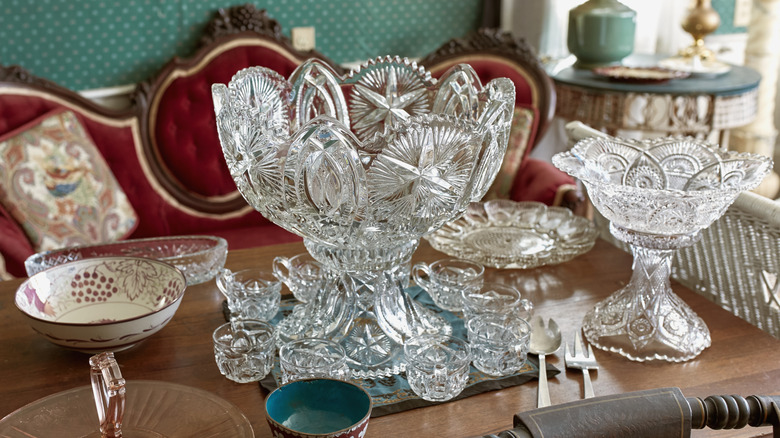
Walk into any given secondhand shop, and you may spot an enormous, glittering crystal bowl with elaborate geometric patterns carved so deeply into the surface that the edges feel almost sharp. It looks expensive, even aristocratic, yet the price tag may be modest. Chances are you've encountered American Brilliant Period cut glass, a once-coveted category of glassware with a beauty that has outlasted the fashions and culture that made it valuable.
Produced during a period generally dated from 1876 to 1917, these glass cups, bowls, and other dining staples were fixtures of prosperous American dining rooms. Skilled craftspeople used rotating abrasive wheels to carve intricate patterns into the glass, polishing them to create the sparkling, prismatic effects that gave the period's its name. Its value and prestige were directly related to the skilled artistry required to transmute the raw materials into something dazzling.
The style's popularity coincided with the Gilded Age. Back then, prosperous households displayed their wealth through a culture of extravagant dining customs. In one catalog from the era obtained by the American Cut Glass Association, a 14-inch prism-pattern bowl was listed at $120, which is equivalent to over $4,000 today.
A well-appointed table served the luxurious foods that defined the Gilded Age, but also showcased economic rank. Thus, manufacturers produced highly specialized pieces for everything from serving celery to presenting ostentatious punches. This glassware also offered something less tangible: the prospect of becoming family heirlooms, preserved and passed down as evidence of a family's stability and continued status.
The decline of brilliance
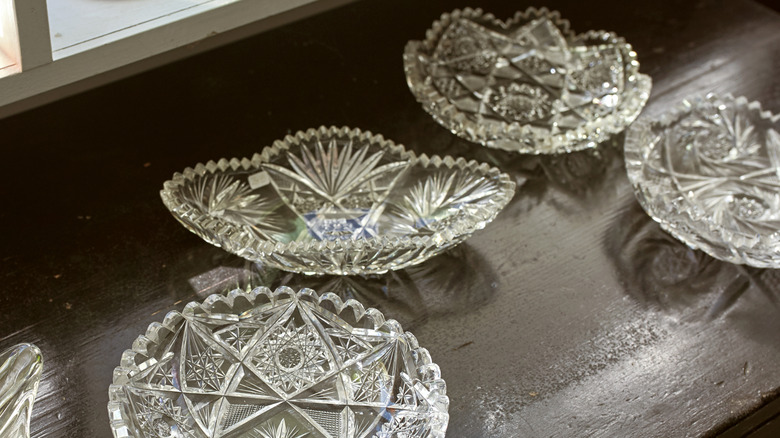
The American Brilliant Period faded as the expense of labor-intensive production became increasingly difficult to justify. Less costly pressed glass offered consumers decorative alternatives. World War I brought further economic and manufacturing disruptions, which contributed to the industry's decline, while culture shifted, and later generations developed different customs and aesthetics for their dining rooms.
As entertaining became less ceremonious throughout the 20th century, formal vessels were increasingly relegated to cabinets and storage boxes, preserved, perhaps, because they hold sentimental value from when they lived on your grandmother's dinner table. These fragile-looking objects have, by now, survived generations of handling and household moves, while the social arrangements that gave them their significance proved less durable.
The contemporary market for American Brilliant cut glass pieces reveals a range in type, quality, and pricing. In 2025, the Neal Auction Company sold an American Brilliant bowl with a chipped rim for $60, while another larger and undamaged bowl was purchased for $375. Even the higher figure, however, is a fraction of the sums (when adjusted for inflation) that such pieces once commanded.
Disparities in current pricing reflect differences in condition, rarity, and desirability, making it difficult to estimate a piece's value at a glance. The distinction between a pretty find and a valuable collectible often comes down to obscure details, so it's important to know what to look for. If you're hoping to identify American Brilliant cut glass in the wild, start by picking it up — carefully.
Examining brilliant thrift finds
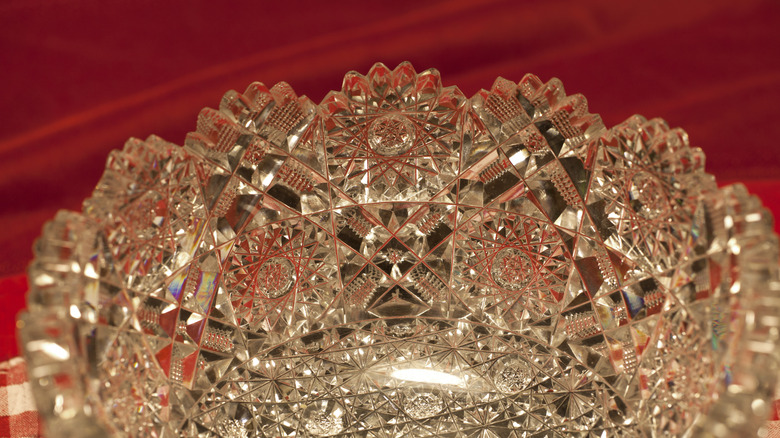
Authentic pieces are often fairly heavy, due to the thick glass blanks and high lead content commonly used during the period. Look for deeply incised geometric patterns, such as radiating stars called "hobstars." The cuts should boast sharply defined edges and polished surfaces that catch and scatter light. Pressed glass can imitate, but its patterns generally have softer contours and mold seams.
At this point, these antiques have lived long lives, so be sure to inspect for damage. Chips can hide along the rim and within the intricate cuttings that make them difficult to see, so try holding the piece against a light source. Many genuine American Brilliant pieces were not signed, so pattern identification is an important aspect of researching a prospective purchase. Comparing found glassware against documented examples can also help narrow down its origins.
Of course, you don't need to wait for a special occasion to enjoy fancy dinnerware. Inherited punch bowls could become an everyday centerpiece filled with flowers, or a small cut glass dish might be pressed into service holding hair ties, pens, or pocket change. There's no shortage of good uses for something so unapologetically beautiful.
That said, antique lead crystal, like any thrifted vintage vessel, is best approached cautiously. Lead can leach, particularly during prolonged contact, so avoid eating or drinking from these treasures. They may be pretty, but they are for display only. Even under the pallid, fluorescent thrift store lights, those painstakingly polished facets still sparkle, as their makers intended.