

Transform Bologna And Potatoes Into A Cheap And Hearty Casserole
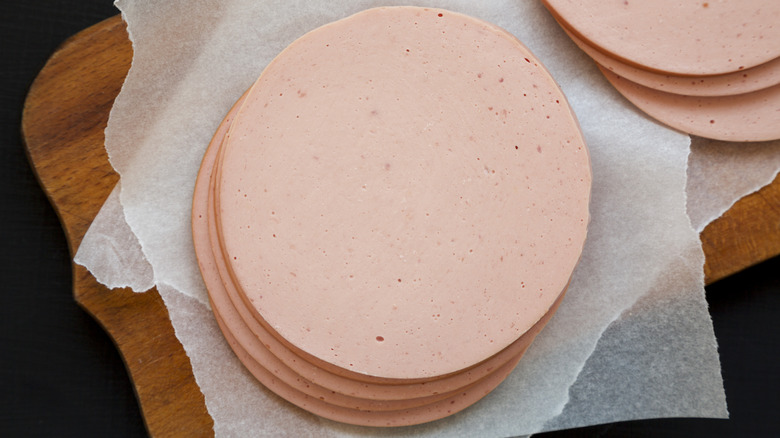
Bologna has a branding problem. Unfortunate subject of the phrase "phony baloney" aside, few people ever consider it unless they absolutely have to — like in a lunchbox. Well, it's their loss. Long a 'poor man's steak' in parts of the South and Appalachia, bologna has plenty of creative (and tasty) uses that have nothing to do with sandwiches, with one of the most satisfying involving a casserole dish and a few potatoes.
This recipe couldn't be more simple. All it needs is sliced-up bologna, potatoes, something creamy to hold them together like whole milk or canned condensed soup, and some melted cheese on top ... and that's it! You'd be surprised, however, at how effective it is. The lunchmeat provides protein and salt for seasoning the mild potatoes, while the spuds stretch a pound of lunch meat into a dinner that feeds the whole table.
The origin of this modest casserole can be traced back to the belt-tightening times of the Great Depression and World War II (hence it's sometimes called a "depression bake"). Bologna was one of the cheapest types of meats you could find back then, it being made from fattier trimmings and sold for cheaper than ham or salami. A 1943-wartime version of Betty Crocker's rationing cookbook described a dish called "Full O' Balogney" made from layered thin-sliced potatoes and bologna in a milky sauce. Later, in 1954, a casserole by the same name was written into the brand's "Good and Easy Cook Book." Given that "full of baloney" is how you'd describe someone talking nonsense, whether the title was a pun or a confession is anyone's guess.
Bologna casserole comes together with whatever potatoes you have on hand
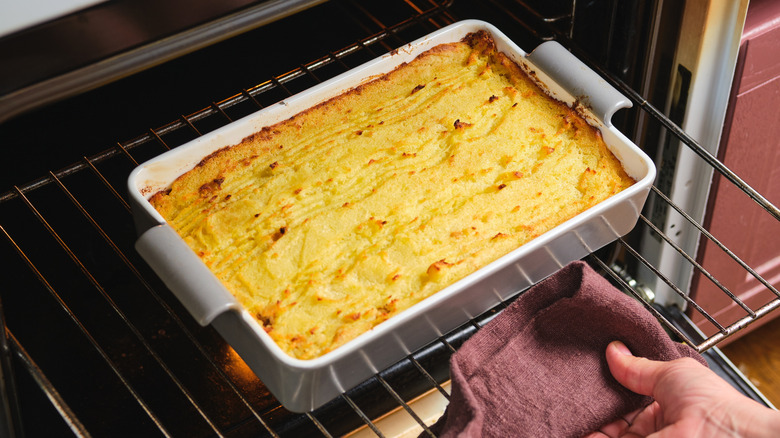
The potatoes are the most important part of the recipe, considering how it takes the longest to prep. For a quicker version, you can skip it with leftover or packaged pre-seasoned mashed potatoes instead. Simply stir in some butter-softened onions into the mash, then layers it with fried bologna slices and shredded cheddar and bakes it until the cheese bubbles.
Whichever type of spud you end up choosing, the bologna ought to be given some time in a skillet first to develop its flavor – a quick sear gives it browned, crispy edges that stand up to all that soft potato. Slices about a quarter-inch thick work best. If thin packaged bologna is all you have, cutting a few small slits around each slice keeps it from curling into little cups in the pan. Dice it and scatter it throughout, or shingle whole slices across the top so they crisp in the oven.
It's a very rich meal, so for sides, you'll want lots of green and plenty of tang. A salad would be perfect, or some steamed green beans. You can even serve the casserole with a swipe of mustard or a dash of hot sauce to help cut through the richness, and leftovers can be kept handily in the fridge. Not bad for a lunch meat most people haven't thought about since grade school, right?