

13 Times Pepsi Tried And Failed (Miserably)
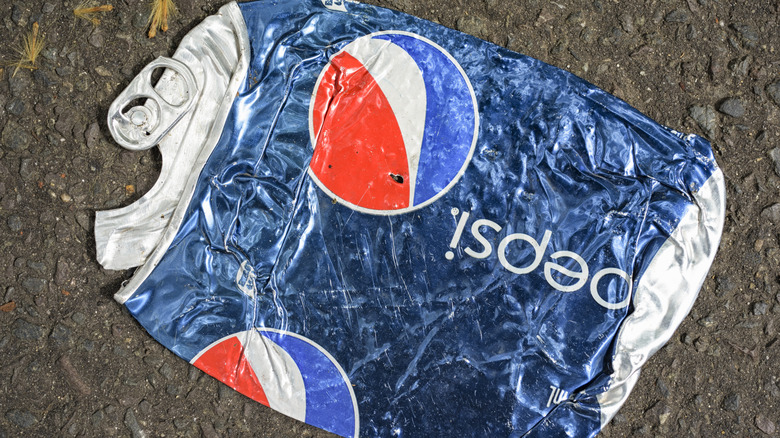
From Pepsi's introduction in the late 1800s until the 1980s, the cola didn't see many changes to its core formula. However, experimentation was inevitable as the brand tried to keep up with Coca-Cola. Some releases, like Pepsi Light, worked out just fine, but others proved to be disastrous failures within a short period of time.
When you look into the ideas that failed, they mainly appear to fall into three categories: adding more caffeine, changing the classic flavor, or making a "healthier" soda with fewer calories or more natural ingredients. Sometimes, it's been an innovation that the world just wasn't ready for; other times, the marketing didn't manage to convey exactly what was special about a new Pepsi variety. Some of these new products had their fans but didn't appeal to a broad enough audience, and there was one change the company tried again and again that, in hindsight, appears to be aimed at an imaginary audience. Pepsi meant well these 13 times that it tried something new, but it unfortunately missed the mark ... at least the first time around.
Pepsi A.M.
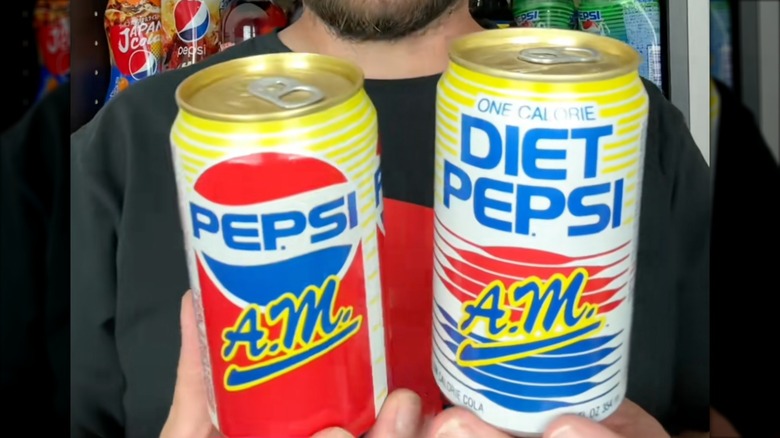
In the late 1980s, Coca-Cola ran an ad campaign that tried turning Coke into a morning beverage. Pepsi thought that creating a higher-caffeine version of its classic cola labeled "A.M." would earn it more morning cola drinkers. The new product launched in 1989, but it wasn't an idea that people embraced.
The boosted caffeine level wasn't really high enough to gather a whole lot of interest. While it had almost 30% more caffeine than a regular Pepsi, it still contained almost 80% less caffeine than a cup of coffee. Marketing it as an alternative wake-up beverage wasn't going to appeal as much as Jolt Cola, which came out in 1985 with twice as much caffeine as regular cola, and is considered by some to be America's first energy drink. And why give it a name that gave people the perception it should only be drunk within a limited time frame in the morning? How about when they're trying to get through the post-lunch slog in a busy workday? There's also the simple fact that a morning cup of tea or coffee is a ritualistic part of many people's morning routines that Pepsi was never going to make them give up.
If you don't remember hearing about Pepsi A.M., it's likely because it was only test-marketed in the Midwest. However, without enough people in the Midwest embracing the idea of drinking a morning Pepsi, the product was discontinued in 1990.
Pepsi Wild Bunch
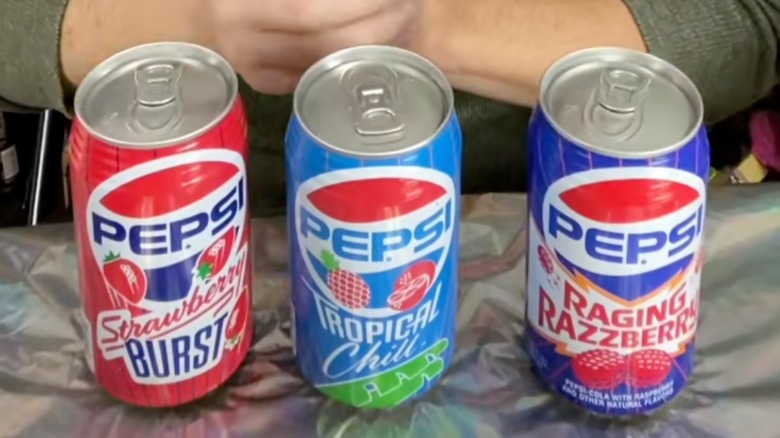
In 1991, Pepsi test-marketed a range of three fruit-flavored colas under the name Wild Bunch. Raging Razzberry, Strawberry Burst, and Tropical Chill were released as limited-edition products between February and April, and they could only be found in three cities.
Strawberry Burst featured a traditional cola flavor mixed with sweet, candied strawberries. Raging Razzberry was similar but with a raspberry flavoring. According to a taste test on YouTube from 2024, the raspberry flavor was distinctive and reminded the reviewer of Coca-Cola Byte from 2022 — a cola that was marketed as tasting like pixels. The third of the Bunch, Pepsi Tropical Chill, was a tropical-punch-flavored cola drink with pineapple and orange as key flavors. Needless to say, Wild Bunch never rolled out on a national level. Pepsi did try relaunching Tropical Chill in the U.K. in 1994 under the name Pepsi Tropical, but it also failed to find long-term success across the pond.
While customers didn't hate the Wild Bunch sodas, that's not the same as people enjoying them enough for Pepsi to roll out the range on a larger scale. Alternative Pepsi flavors have found success internationally, but if you look at the U.S. offering at any given time, Pepsi Wild Cherry seems to be the only one with staying power.
Crystal Pepsi
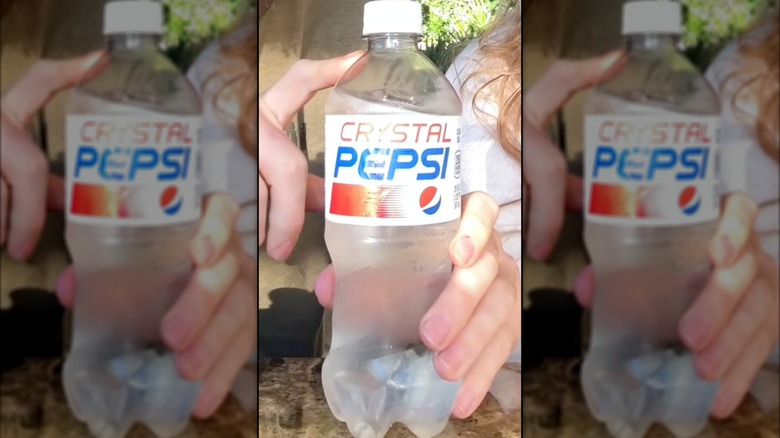
Many of us who were excited for Crystal Pepsi's debut in 1992 remember just how disappointing it was. The build-up to the product's release featured ridiculous ads that certainly made us think this clear cola was going to be the best thing ever. Sadly, for many, it was a one-and-done drink.
It was sold as being healthier because it didn't contain caffeine or artificial colors, while the lack of coloring made it appear more refreshing, especially in the ads that showed the bottle glistening with condensation. The main problem was that Crystal Pepsi didn't taste enough like classic Pepsi. It tasted like a flat, bland Pepsi-adjacent drink. Even before it hit store shelves, Pepsi bottlers were petitioning the company to adjust the flavor so it tasted closer to the original cola. Failure to reformulate the recipe is likely why it didn't have the success the company was hoping for, and by late 1993, it had been discontinued.
Still, the nostalgia factor sees Crystal Pepsi return every few years. People find that the newer versions taste better than the original, with blind taste tests showing the flavor is much more similar to regular Pepsi.
Pepsi Kona
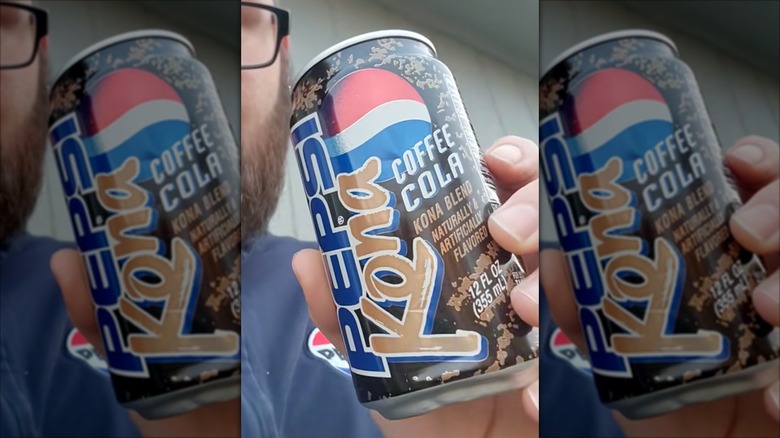
Despite the failure of Pepsi A.M., the company made another attempt at creating a drink that could appeal to the morning crowd in 1996. Pepsi Kona was a coffee-flavored cola drink released in a limited test market in the Northeastern United States.
The drink got its name from the Hawaii-grown Kona coffee beans used to achieve the coffee flavor. The richness of the coffee married to the sweet cola flavor of Pepsi was a combination that some people actually loved, especially since it was refreshing rather than being bitter and heavy. To the dismay of the drink's fans, it didn't last beyond 1997.
Both of the cola giants have tried their hand at combining coffee with their signature products. Coca-Cola has released a couple of coffee-cola drinks over the years, none of which deserve a comeback. Meanwhile, Pepsi has never managed to launch a version nationwide in the U.S. It planned to release one in 2020 called Pepsi Café, but it never saw the light of day as far as we know. So if coffee and cola is a combination you love, you'll just have to make your own cold brew Coke.
Josta
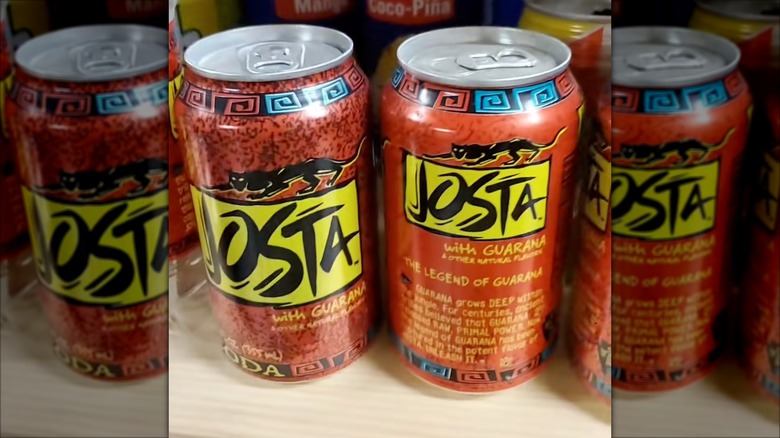
Pepsi's high-energy Josta drink came out in 1997, which was the year after Red Bull arrived in the United States. While people may have been ready for Red Bull, it seems they weren't quite ready for unusual energy-boosting ingredients in their colas. Today, in a world where flavored energy drinks are all the rage, this turbocharged, higher-caffeine cola might thrive, but it may have been ahead of its time in the '90s.
Caffeine wasn't the only ingredient Josta used to invigorate its drinkers; it also included Brazilian guarana seed, which has featured in a variety of energy drinks over the years. Guarana seeds contain twice as much caffeine as coffee beans, but they may release it over a greater period of time, so the energy-increasing effects can last longer.
Only the younger crowd really latched onto Josta — it was a flop with Pepsi drinkers in general. While the company gave Josta a couple of years to gain momentum, it finally decided to pull the product in 1999. Dedicated fans of Josta started a variety of campaigns to try and bring it back, but the powers-that-be weren't persuaded.
Pepsi Twist
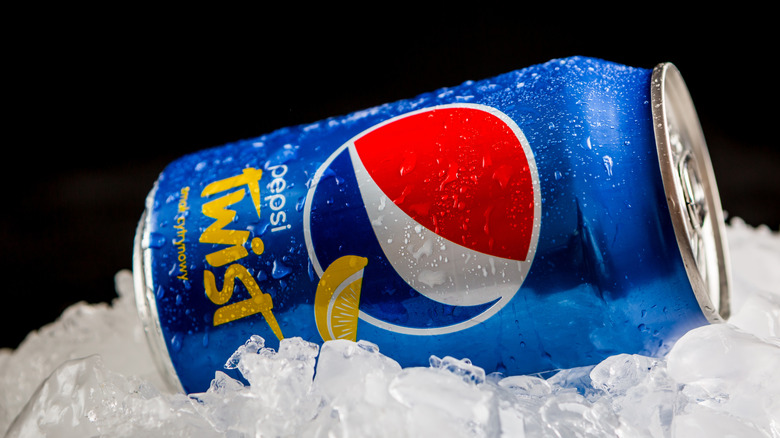
For the dawn of the new millennium in 2000, Pepsi offered the masses a lemon-flavored cola drink called Pepsi Twist. A lot of people loved having a cola drink with a hint of lemon, and it actually had a fairly long run, lasting until 2006, but it was ultimately scrapped in the U.S. because it wasn't selling well enough.
While Pepsi Twist made a brief return in 2008, it appears the company has no interest in reviving it long-term. When we last checked, a Change.org petition for the product's return had fewer than 60 signatures, so while there are certainly people feeling nostalgic for it, it's not many. Interestingly, Pepsi Twist was more successful elsewhere — it's still available in some countries, predominantly in Eastern Europe. When it comes to citrus-flavored beverages, it seems PepsiCo's current focus is on Starry, a lemon-lime soda that launched in 2023 as an apparent replacement for Sierra Mist.
Pepsi Blue
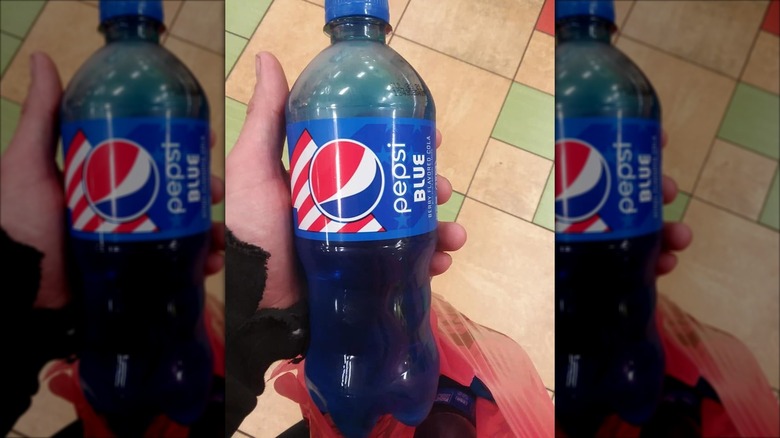
Despite the failures of Crystal Pepsi and Pepsi Wild Bunch, the company wasn't done with changing the color of its signature beverage, or attempting a berry-flavored version. The company combined both ideas in 2002 when it launched Pepsi Blue.
The cola was colored blue with blue No. 1 and red No. 40 food dyes, and infused with an unnamed berry flavor. The company spent nine months formulating its berry-based recipe, which remains a secret to this day — guesses include cotton candy or a mixture of blueberry and raspberry. This translucent blue cola got a lot of screen time, including TV ads, movie placements, sports tie-ins, and celebrity endorsements. There were also influencer-style online campaigns (before those were really a thing). However, once the internet realized the people gushing about the drink online were Pepsi employees, the drink became something of a joke.
Ultimately, it appears Pepsi Blue didn't sell well enough after the first year for the company to make it permanent. It's believed that by the time it was discontinued in 2004, the product resulted in losses for the company in the tens of millions of dollars. While Pepsi Blue did make a brief reappearance in the U.S. and Canada in 2021, it's never done well enough to stick around. That said, it appears to have found a strong market in the Philippines, where it's a permanent fixture in the Pepsi lineup, first launched there as Pepsi Pinas.
Pepsi Edge
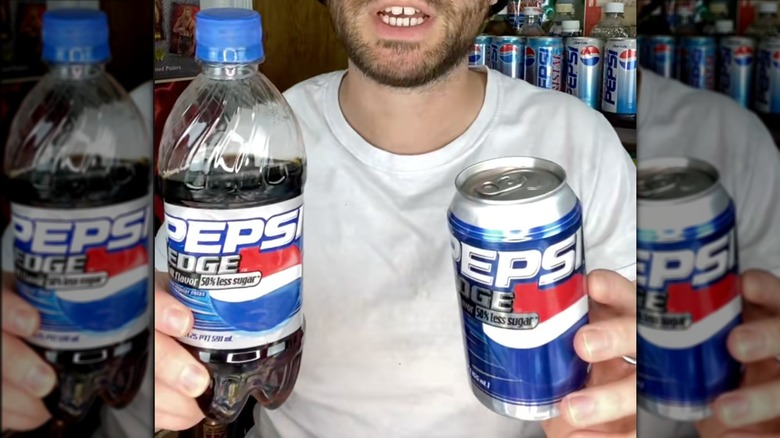
One Pepsi flavor we'd really like to see again is Pepsi Edge. When this 50%-less-sugar cola came out in 2004, the world just wasn't ready for it yet. However, today, with so many people choosing lower-sugar and no-sugar sodas quite a lot over artificially sweetened diet sodas, it really might have a good chance. Today, there are certainly those who would embrace a drink with half the calories, sugar, and carbs as regular cola.
Interestingly enough, Coke created a mid-calorie cola in the same year: C2. However, people were naysaying both of these drinks before they ever made it to store shelves. The problem people foresaw for both drinks was that there wasn't really a market for mid-calorie drinks at the time, with diet cola drinkers not likely wanting to switch to drinking a sugary drink and regular cola drinkers not wanting to lose the sweetness of the drink they'd loved for years. Yet, the company assumed that the problem was the sugar level and added artificial sweeteners to future incarnations.
Coke sold nearly three times more C2 than Pepsi sold of its Edge drink in the first months of existence. So, accepting failure, Pepsi threw in the towel and discontinued Edge in 2005. Meanwhile, C2 limped along until 2007 before Coke accepted its failure as well.
Pepsi Jazz
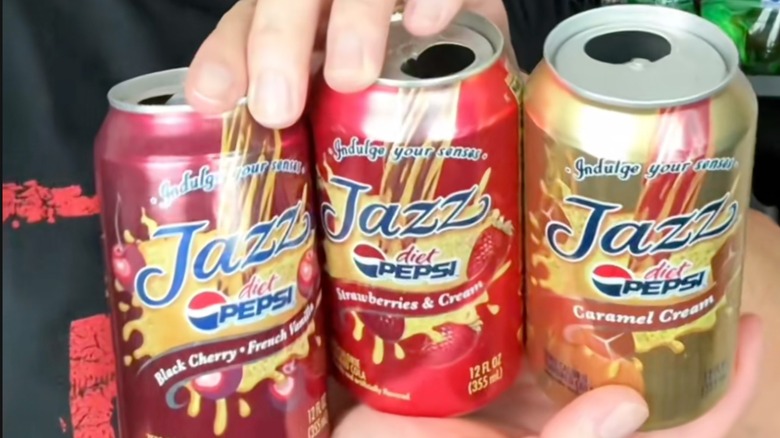
In 2006, Pepsi launched a line of zero-calorie colas called Pepsi Jazz, featuring complex, dessert-like flavors that sounded like something you'd see at an ice cream parlor. The first two Pepsi Jazz flavors were Black Cherry French Vanilla and Strawberries & Cream, with Caramel Cream following in 2007. They were meant to turn the idea of drinking a diet drink from being a compromise to being an indulgence.
While some people say they still got the aftertaste of aspartame, the flavors provided an alternative to ordinary diet cola. Unfortunately, by 2008, the company decided to discontinue the line because sales weren't going so great. There are plenty of people on social media who remember Jazz fondly (especially the strawberry one); however, there are others who preferred some flavors to others. Some folks just didn't like them enough to buy them more than once. At the same time, the company's other new no-calorie cola drink, Pepsi Max, was doing really well and appears to have taken its focus — being a diet drink doesn't seem to have been the problem.
Pepsi Summer Mix
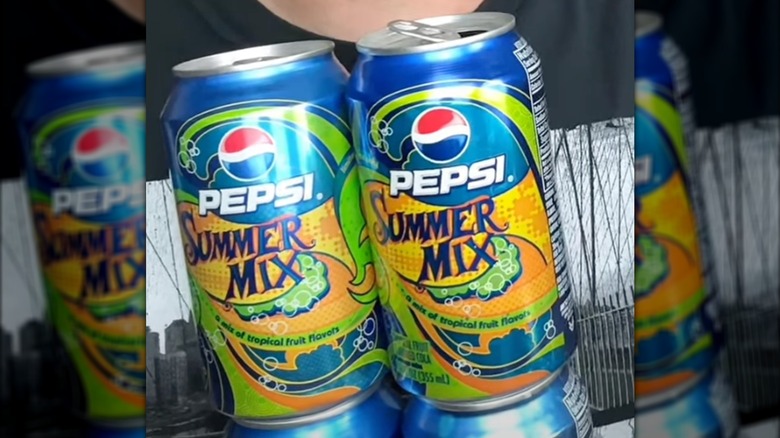
Sixteen years after Pepsi released a tropical-flavored cola under the Wild Bunch lineup, it made a second attempt with Pepsi Summer Mix. When it came out in the spring of 2007, the bottle itself declared that it would only be around for a limited time. Ads for the drink showed people on the beach with their iconic iPods, listening to their "summer mixes." Interestingly, 2007 was also the year that Apple released its iPhone, meaning that iPods — like Pepsi Summer Mix — were on their way out.
The funny thing about Pepsi Summer Mix was that those who tried it couldn't agree on what flavor it was. Several people on social media thought it tasted a lot like Pepsi Blue, except that now it was cola-colored and had a stronger cola flavor. One person claimed it tasted like Pepsi Blue mixed with Pepsi Holiday Spice — a limited-edition soda flavored with ginger and cinnamon. Some felt it tasted like classic Pepsi mixed with a bag of Skittles, a mouthful of Starburst candies, or ice pops. One less favorable review likened the taste to a bottle of sunscreen. While there were plenty of people who liked Pepsi Summer Mix, it wasn't for everyone — for many, it was just too sweet. Based on the fact that it didn't return as a seasonal summer release, perhaps it didn't sell well enough to bring back.
Pepsi Raw
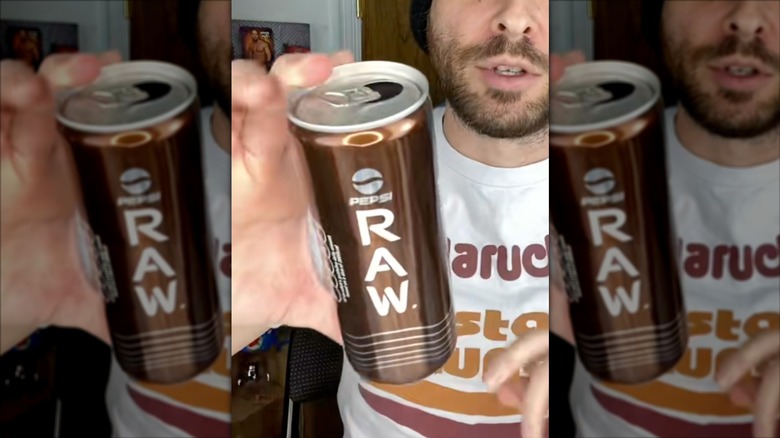
When Pepsi released Pepsi Raw in the U.K. in 2008, the idea was to re-create its signature cola using all-natural ingredients, like cane sugar, natural caffeine, and kola nut extract. At an increasingly health-conscious time, you'd think it would have been a success — but it wasn't. The company noticed that it sold a lot better in pubs and clubs than in grocery stores. The U.S. version, Pepsi Natural, didn't even make it past the test-market stage that year.
It doesn't appear that there was anything off-putting about Pepsi Raw itself, but perhaps it could have been better named, advertised, or timed. Perhaps people didn't understand what it was from the branding and marketing. The name sounded a bit primal, like something you'd expect from an energy drink, while the "natural" phrasing didn't make it immediately clear what the product actually was — it can be difficult to persuade diehard Pepsi drinkers to try something new, especially if it looks suspiciously healthy. It also didn't help that the drink was intended as a premium offering and came out at the beginning of a global recession. With all of those factors working against it, the company discontinued Pepsi Raw in 2010. Not to be put off, Pepsi tried marketing the product in other countries, including Norway and Australia, but it didn't last long there either. A Japanese version called Pepsi Nama arrived in 2021 and appears to have stuck around.
Pepsi Next
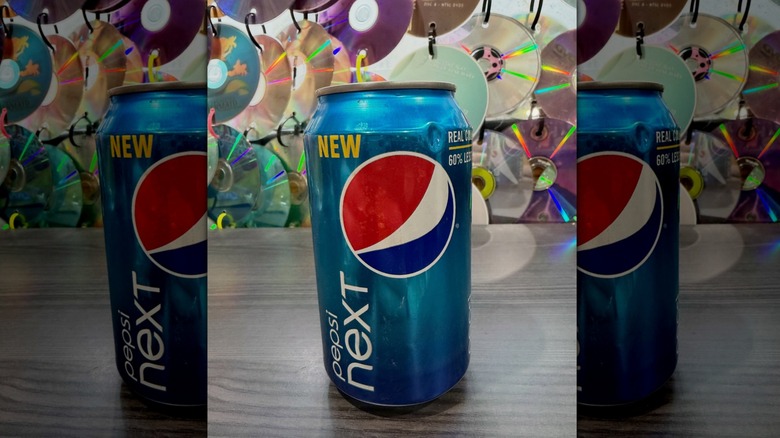
When Pepsi Next came out in 2012, it looked suspiciously like Pepsi Edge — a soda with half the carbs, calories, and sugar of classic Pepsi that the company had axed seven years earlier. This version contained only 60 calories per can, which it achieved with a combination of artificial sweeteners and high-fructose corn syrup. So, it cut calories while keeping much of the sweetness of regular Pepsi. Along with the original Pepsi version, there were also Cherry Vanilla and Paradise Mango flavors.
It turns out that the company misunderstood what its customers wanted. Pepsi Next was pitched at regular Pepsi fans who wanted fewer calories and at diet-soda skeptics, but each group had a reason to pass. People looking for a lower-sugar soda didn't necessarily want to have to taste artificial sweeteners, or they would already be drinking diet drinks. People who were skipping Pepsi for its high-fructose corn syrup weren't going to be interested in it either. So, who exactly was supposed to be the market for this drink?
In 2013, the company reformulated Pepsi Next without aspartame, but the continued presence of acesulfame potassium as a flavor preservative meant it still contained artificial sweeteners. It never found its footing, and the company discontinued it in 2015, as it shifted its focus to a reformulated Diet Pepsi.
Pepsi True
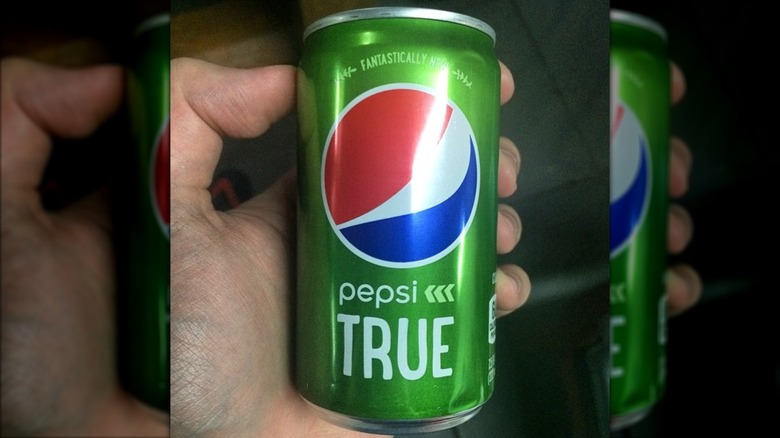
If the high-fructose corn syrup and chemical-tasting artificial sweeteners were what was keeping more health-conscious consumers from drinking Pepsi Next, then the company posited that changing that combo to something more natural would be its winning combo. Right? This was the plan behind Pepsi True when it came out in 2014. Instead of artificial chemical sweeteners and high-fructose corn syrup, this mid-calorie cola contained real sugar and the natural zero-calorie sweetener stevia. Like Pepsi Next, Pepsi True only had 60 calories per can.
In theory, this should have been a winner for health-conscious consumers looking for a lower-calorie cola that tasted a lot like original Pepsi, but it was still flawed. The question remained as to who was going to buy this. Many people are all-or-nothing when it comes to looking at calorie content for their drinks. Additionally, those wanting real sugar and low sugar don't necessarily like the bitter aftertaste that stevia has any more than they like artificial sweeteners. So, even if both cane sugar and stevia are natural, that doesn't mean this drink held interest for the people the company thought it would.