

McDonald's Filet-O-Fish Vs Burger King's Big Fish: Which Chain Has The Better Sandwich?
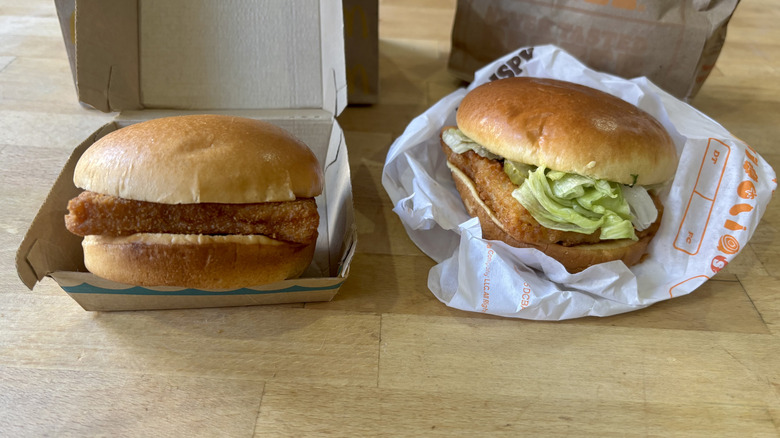
The Filet-O-Fish is a dark horse on the McDonald's menu. It may not be a hall-of-fame fast food item like the McNugget or the McDouble, but it's one of the most iconic items on the permanent menu. And like those other, higher-profile menu stars, the Filet-O-Fish has inspired a great deal of competition.
Enter Burger King's Big Fish, or as it was first known, the Whaler. BK introduced it nationally in 1975 as a direct rival to the Filet-O-Fish, which had debuted nationally ten years earlier. While Filet-O-Fish has stuck with its name and formula from the get-go, the Big Fish went through many name and formula changes before finally settling on the current name and recipe.
McDonald's clearly stands by its OG sandwich. And Burger King seems to keep reworking its version in pursuit of fried-fish perfection. Which strategy produces a better result? I bought both sandwiches to find out.
The truth is, I love fried fish, but I have never had either fast-food chain's fish sandwich. No prior biases or expectations here. Plus, I have previously reviewed McDonald's and Burger King breakfast sandwiches head-to-head, so I have the experience to spot each product's strengths and weaknesses. I was looking for tender and flavorful fish, fresh toppings, and condiments that complemented the delicate meat. Only one truly delivered.
Methodology
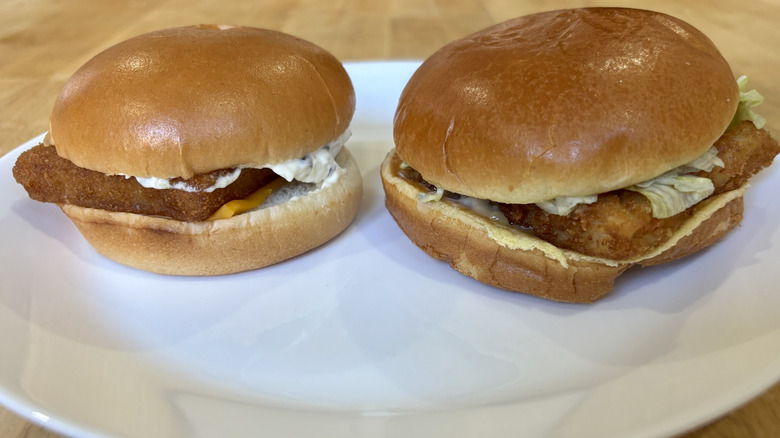
I ordered both sandwiches as-is, with no modifications or substitutions. I purchased both sandwiches within five minutes of each other and photographed and ate them within 15 minutes of purchase. I evaluated the individual components of each sandwich based on freshness, flavor, and texture. To do so, I tasted each component individually and looked at each sandwich holistically. I evaluated how the different components worked together in terms of flavor and texture, as well as how successful the ratio between different components was.
I considered the size relative to the price of each sandwich as a means of evaluating value. They were not determining factors, especially since the items may be dynamically priced. I did not consider the aesthetic appearance of the sandwiches. However, I noted when certain aspects were visually noticeable (for example, a lack of sauce on one side of a sandwich). I also accounted for textural changes that could result from packaging and travel.
Filet-O-Fish
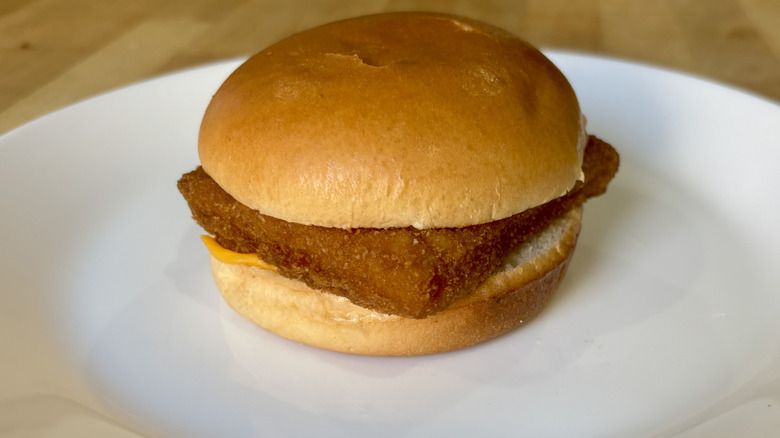
The components of the Filet-O-Fish are basic, but intentional. The breaded and fried Alaskan Pollock is topped with a simple tartar sauce and a mere half-slice of cheese (McDonald's says the conservative use of cheese is meant to avoid overwhelming the fish's delicate flavor). The round potato bun may look no different from some other McDonald's offerings, but it's steamed instead of toasted, echoing the delicate treatment offered by the half-slice of cheese.
Of course, with a sandwich so simple, there is nowhere to hide; any flaws will be that much easier to find. And I didn't have to look hard to find the first one. The sandwich's construction was way off. One side of the sandwich was covered in tartar sauce, but had no cheese. The other side had zero tartar sauce and all of the cheese. I know the half-slice is intentional, but the lack of uniform bites definitely isn't. The result was dry, though the fish itself was tender and flaky. Unfortunately, the Pollock was rather bland and needed salt, and the tartar sauce had a strange, artificial aftertaste. These flavor issues were relatively subtle, and I thought the sandwich was tasty overall, but with just a few ingredients, the little things become big.
Big Fish
I may have never had a Filet-O-Fish before, but I'd never even heard of the Big Fish. Maybe it's because it's gone through many name changes during its time on the Burger King menu. Or is it simply because it's not very good? I was ready to find out.
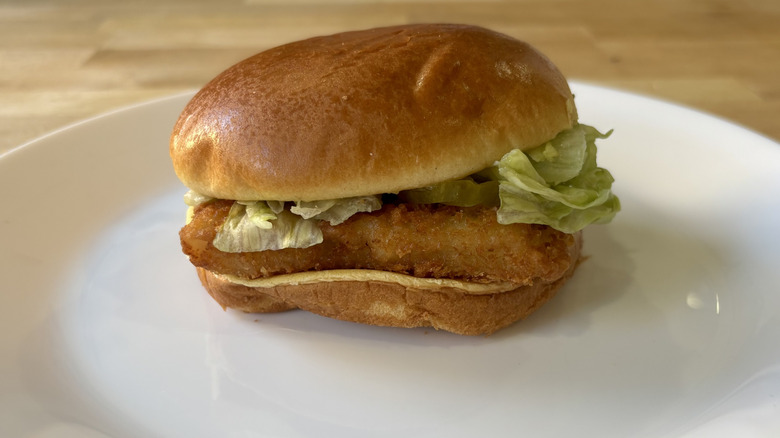
Like the Filet-O-Fish, the Burger King Big Fish features a breaded, fried Alaskan Pollock fillet with tartar sauce. But instead of cheese, the Big Fish has lettuce and pickles, and the potato bun is toasted instead of steamed.
My first thought was that the name was apt. This sandwich was significantly larger than the Filet-O-Fish. It costs more than a dollar more than the Filet-O-Fish (at least at the locations near me), but it made the McDonald's sandwich look more like a slider by comparison. Of course, if it didn't taste good, a bigger sandwich wouldn't be much of a positive. But it tasted very, very good. Like the McDonald's fillet, the Pollock was moist, flaky, and tender, and well-seasoned. The creamy, slightly sweet tartar sauce balanced the tangy pickles, and the lettuce added a refreshing, crisp element.
Final verdict
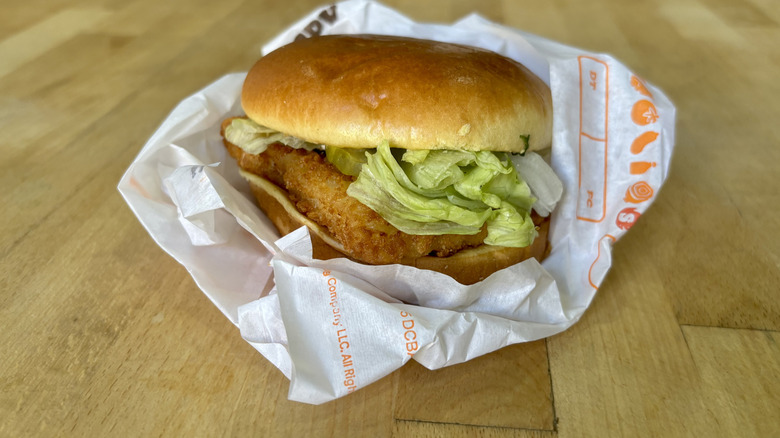
Burger King may have introduced its fish sandwich in response to McDonald's, but that response changes the conversation entirely. The Filet-O-Fish (priced at $6.79) is not necessarily a bad fast food fish sandwich, but the Big Fish (which costs $8.49) is better on almost every count. Both sandwiches had a well-cooked, tender fillet, but the Big Fish version was more well-seasoned. The condiments on the Filet-O-Fish were inconsistent and sparse, whereas the condiments on the Big Fish were uniformly distributed.
The pickles, tartar sauce, and lettuce complemented the delicate, crunchy fish fillet on the BK Big Fish without overwhelming it. With the creaminess of the tartar sauce, the crunch of the pickles, and the crisp lettuce, there was no reason to miss the American cheese that was on the Filet-O-Fish. And the winning sandwich had much more heft than the Filet-O-Fish, leaving me full and satisfied. The Burger King vs. McDonald's showdown will likely never truly end. But undeniably, Burger King won this round. I can't imagine ordering the Filet-O-Fish in the future when I know the Big Fish is so much better.