

Why Cookie Jars Are A Time-Honored Tradition Of American Kitchen Decor
We may receive a commission on purchases made from links.
It would be impossible to talk about retro Americana without mentioning the ceramic cookie jar. Over the last century, these utility-meets-kitsch containers have become a staple of the American kitchen. Even in recent years, Pillsbury fans flocked to get their hands on the reissue of the classic 1980s Poppin' Fresh cookie jar once ubiquitous to households of the decade. So, what do ceramic figures shaped like roosters, apron-wearing teddy bears, and shiny red apples have to do with the roots of American nostalgia?
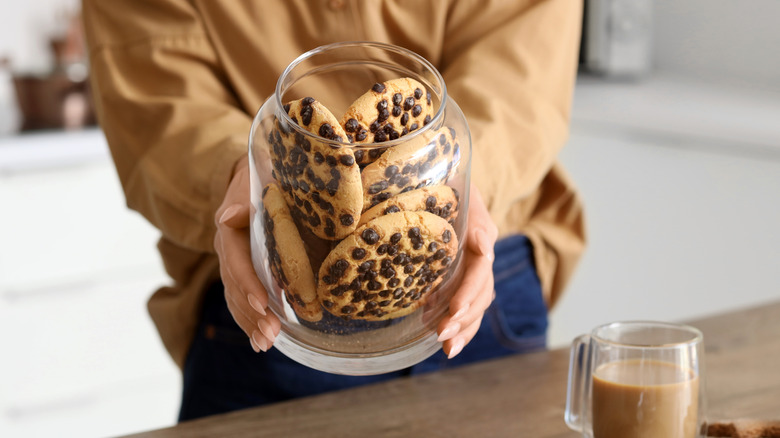
Today, many foodies may think of cookie jars as the retro, familiar fixtures of grandparents' kitchens (not unlike the warm sentimental glow from the under-the-microwave light at night). But, the cookie jar's history first begins in England. During the 1700s, U.K. households began using jars to hold freshly-baked biscuits. These jars were simple glass cylinders outfitted with metal lids. By the 1800s, biscuit jars had made their way across the ocean to the U.S., and they had taken on fun novelty shapes. Before the advent of resealable plastic bags (Ziploc bags were invented in the 1950s) and airtight containers (Tupperware wasn't released until 1946), these cool, dark, lidded jars were a useful way to help dry baked goods retain their freshness, keeping out mold-causing moisture and slowing down staleness. In the early days, the bulk of these jars were made of glass. Ceramic and porcelain wouldn't become the dominant cookie jar material until after World War II.
A tradition of creativity, utility, and social expression
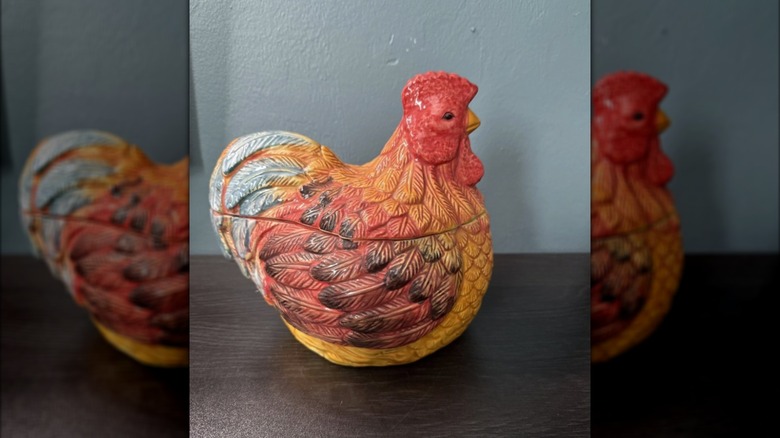
Cookie jars skyrocketed as popular home fixtures during the 1920s, as Depression era economic hardship led to more and more Americans making their own baked goods at home. Even in the modern age, cookie jars are perhaps most often spied during the holiday season, when home baking volume increases. Most of the novelty-shaped cookie jars that are prized today were produced from 1940 through the 1970s, when the household bobble enjoyed its heyday of popularity. Public demand for creative cookie jars also coincided with a broader rise in general consumerism, spurring the development of identity-signifying jars. Shapes from recognizable pop culture characters like Humpty Dumpty and Betty Boop to avant-garde figurines like leather-clad pigs on a motorcycle appeared in kitchens nationwide.
Fast-forward to the present day, and ceramic cookie jars remain a cornerstone of any "granny chic" kitchen. The O.G. models of yore can still be found at antique stores and thrift shops, as well as on reseller sites like eBay in the $20-$100 range. Some collectible antique cookie jars are worth hundreds of dollars nowadays. Decorative ceramic cookie jars can still be purchased new from retailers like Amazon, available in shapes from whimsical painted cows to cartoon frogs and Strawberry Shortcake at Christmastime. All that's left to do is lift the lid and pull out a cookie for a taste of American history and nostalgia (and a sweet treat, to boot).