

12 Ways To Give Scrambled Eggs A Fiber Boost
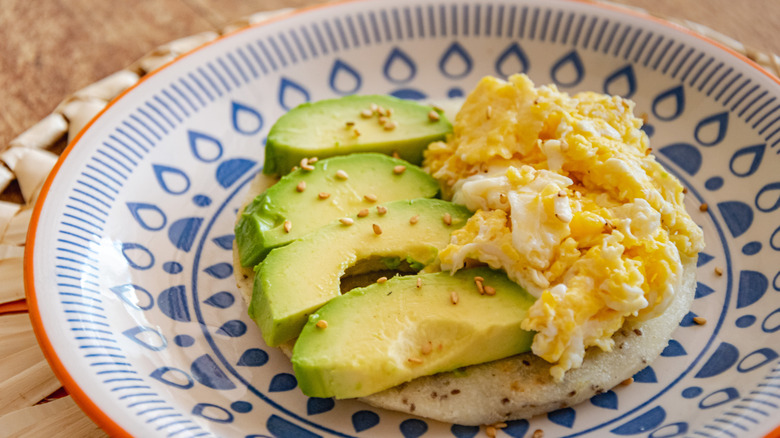
Scrambled eggs are simple, filling, and go with almost anything. Serve them up with a couple of strips of bacon, and you have what many would consider to be the perfect breakfast. It's only missing one thing: fiber. Thankfully, that's an easy fix. A few thoughtful ingredients can add more fiber to your plate without adding too much of a lift to your morning routine.
Today, most adults aren't eating anywhere near the recommended amount of fiber. The majority of men and women fall short on their daily intake. Because scrambled eggs are essentially a blank slate and absorb flavors so easily, they make a great base to build upon. Beyond breakfast, you can eat them as a midday or midnight snack or for any meal. If you're trying to get more fiber where you can, this list will give you plenty of inspiration.
1. Canned black beans
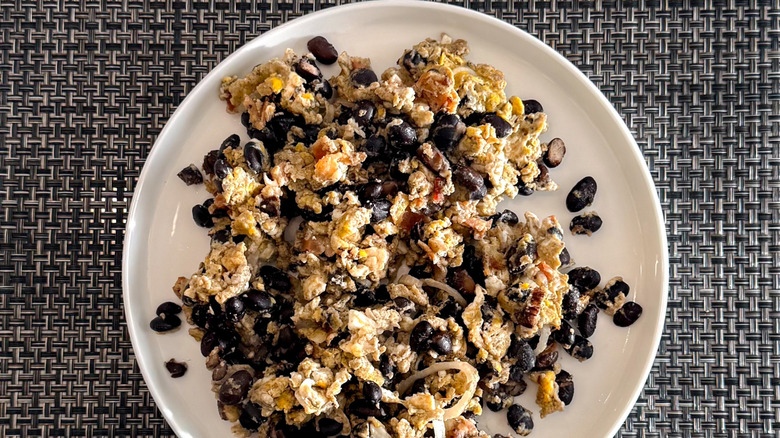
For those of us who find Mexican breakfasts like huevos enfrijolados and huevos rancheros irresistible, you might enjoy adding black beans to your plate. Not only is opening and rinsing a can of black beans about as easy as it gets, it also offers one of the most effective ways to up your fiber. We're talking nearly 7 grams a serving. Black beans are also a rich source of plant protein, folate, iron, and complex carbohydrates. They get their dark color from anthocyanins, the same antioxidants found in blueberries.
Eggs and beans as a breakfast meal are an time-honored breakfast, common around ranches in northern Mexico and Texas, offering a low-cost, convenient, and, ultimately, filling meal for ranch hands. Making them at home is simple enough; just add rinsed canned beans directly to your skillet. Sauté them with oil or butter, sprinkle in spices like cumin and salt, and finish by scrambling the mixture with beaten eggs. If you want a fuller flavor, use the back of a fork to mash the beans as they cook. This move helps release natural starches, creating a velvet-like paste that blends well with scrambled eggs.
To stay on theme with Mexican cuisine, serve with chopped cilantro, crumbled cotija cheese, and your preferred hot sauce. (Take a look at our favorite.)
2. Ground super seeds
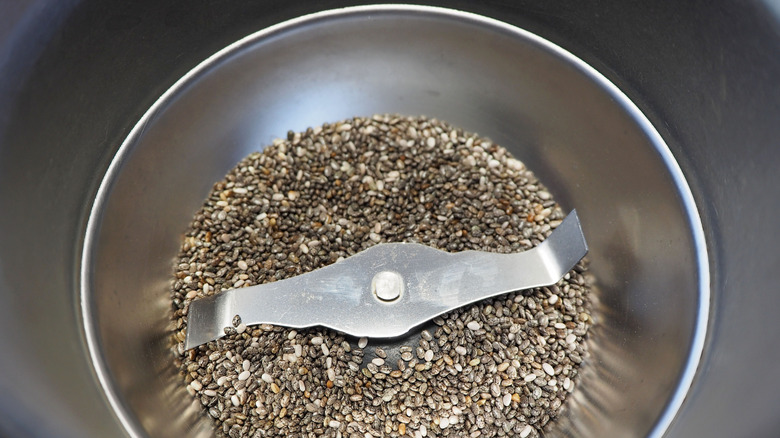
The word "superfood" gets linked to flax and chia seeds so much that it may have lost all meaning, but these seeds do live up to their fiber-rich reputation. Both are high in soluble and insoluble fiber. While seeds plus eggs may not sound appealing, the trick is to grind whole chia seeds (tiny and gray) or flaxseeds (flat and brown) before scrambling and eating. Grinding takes less than a minute using a small food processor or coffee grinder. Adding just two tablespoons of ground flaxseed or chia seeds to your eggs can give you from 8 to 10 grams of fiber.
Once ground, whisk the seed powder with two to three eggs in a bowl and a sprinkle of water or milk. It's a good idea to let the mixture sit for a minute as the seeds tend to swell, causing it to thicken. The final product may be a bit fluffier than your usual scrambled eggs and have a nutty flavor. If you're new to fiber-maxxing your breakfast, it helps to start slow, see how your body adjusts, and add more seed meal going forward. Drinking enough water (along with your morning coffee) can help to keep your digestive system happy and cut down on bloating.
3. Cooked quinoa
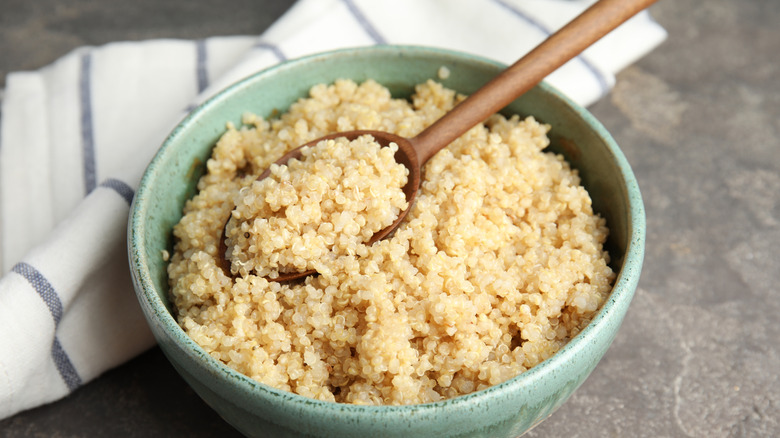
When it comes to leftovers, quinoa is one of the tastiest. Versatile and quite easy to store, it also happens to be high in fiber. The real challenge is overcoming the misconception that a hearty grain like quinoa is only for non-morning meals. So, don't leave those leftover grains waiting around for dinner; quinoa, technically a seed, pairs perfectly with eggs and offers up to 5 grams of fiber in a single serving. Quinoa is also one of the few plant foods that's a complete protein, containing all nine essential amino acids.
But quinoa's texture is what's really worth writing home about. The small grains stay fluffy even after reheating, making a scramble feel wholesome instead of heavy. You can start by warming leftover or freshly cooked quinoa in a pan with a bit of butter and let it toast for a few minutes. Hearing a crackle is a sign that it's time to add the eggs and scramble.
All that's left is to fold the toasted quinoa into the eggs as you cook them together. If you want to balance out the earthiness of the quinoa, it comes down to how you season. Think lemon zest or a spoonful of salsa verde, which can add some acidity to brighten quinoa's subtle flavors.
4. Avocado
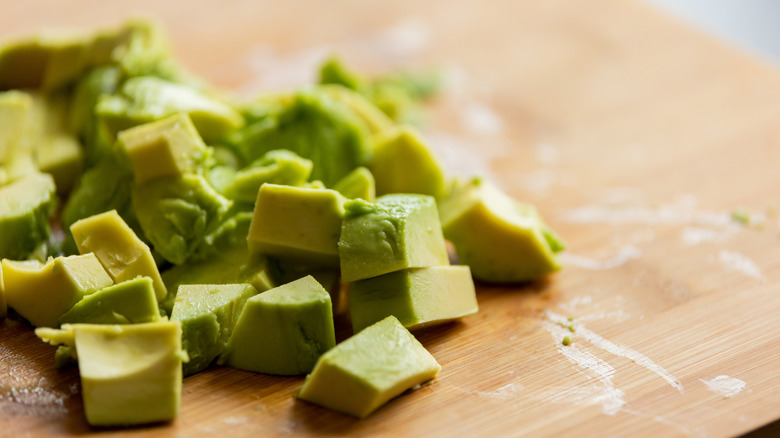
Avocado toast gets all the attention, but there's more than one way to enjoy this fruit for breakfast. Simple and satisfying, avocado scrambled eggs is the kind of meal you can eat most mornings of the week. Along with being packed with monounsaturated fatty acids, half of an avocado contains about 5 grams of fiber. An avocado's natural fats act as a nutrient carrier, helping your body absorb fat-soluble vitamins, like A, D, E, and K found in eggs.
To master an avocado scramble, it's all about temperature and timing. As many of us have learned the hard way, heating avocado for too long can break down its structure, turning its creamy texture into an unappetizing green mush. Luckily, you can follow a few steps to avoid this hot mess.
First, start by dicing half an avocado into cubes, then scramble with beaten eggs and a pinch of salt and black pepper. When your eggs are about 80% cooked, meaning still soft and a little wet, fold in the cubed avocado. After folding, make sure to remove the pan from the heat right away; the residual heat in the eggs will be enough to warm up the avocado cubes without overcooking them. If you want to mix things up, try mashing half an avocado with lime juice and salt onto a plate and spoon the scrambled eggs over it.
5. Crispy chickpeas
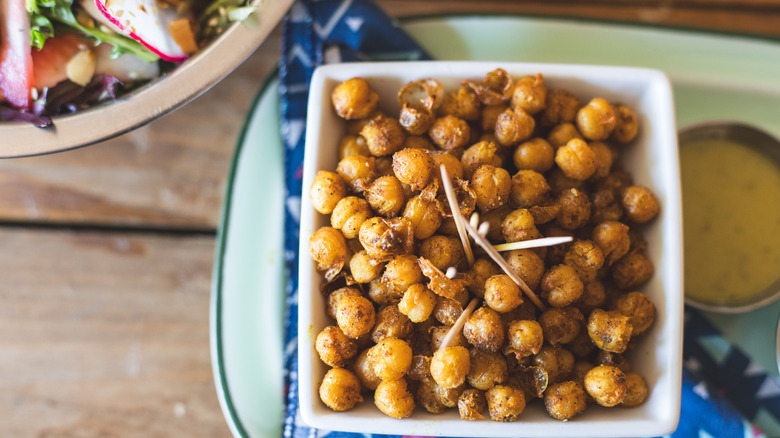
Ever wished scrambled eggs had a bit more crunch? Enter the crispy chickpea: a protein-dense legume that functions like a high-fiber crouton atop your breakfast. Canned chickpeas, or garbanzo beans, are also filled with fiber at nearly 6 grams a serving. Funny enough, chickpeas have a special kinship with eggs since the liquid in the can (called aquafaba) is often used as a vegan substitute to whip up like egg whites.
That said, adding wet chickpeas to eggs is a recipe for disaster. To cut down on moisture, take a moment to drain and prep your chickpeas ahead of time. You can even do it while your coffee is brewing. After draining and rinsing canned chickpeas, pat them dry with a paper towel. Then sauté them in a saucepan with olive oil for several minutes. When they start to pop, they're ready to go. Alternately, you can skip the stovetop and toast your chickpeas in an airfryer.
In Tunisia, it's not uncommon to have chickpeas and eggs for breakfast. Lablabi, the country's popular chickpea soup often eaten in cold weather, is ladled over bread and spiced with garlic, cumin, and harissa. Then an egg goes in, cooking directly in the broth of the soup. Serving crispy chickpeas with scrambled eggs plays on the same flavors.
6. Red lentils
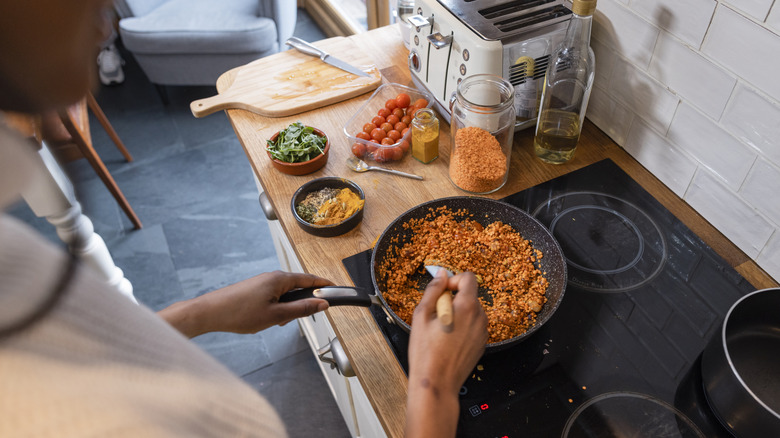
Short on time? Using red lentils can put you in the fast lane. Since they're split and hulled, there's no soaking needed. Unlike brown or green lentils, which hold their shape, red lentils break down quickly into a creamy purée. Just simmer according to package instructions for about 15 minutes, and you'll be left with a soft mash coming in at about 4 grams of fiber per serving.
As you can imagine, this mash is the perfect material to mold into a patty for a breakfast sandwich. Let the cooked lentils cool for a few minutes, then stir a few spoonfuls into two beaten eggs. You can also add salt and spices, like curry, garlic powder, or cumin. Shape the mixture into a patty and cook over low heat for a few minutes on each side, until it's lightly browned. The patty should hold together and be sturdy enough to stack on an English muffin.
Build your breakfast sandwich to your liking, adding fixins like turkey bacon, avocado, and a slice of cheese. Cook a batch of patties on the weekend and keep them in the fridge all week. If you want to plan even farther ahead, assemble the sandwiches, wrap each one in foil, and freeze. Your future self is going to thank you later.
7. Riced cauliflower
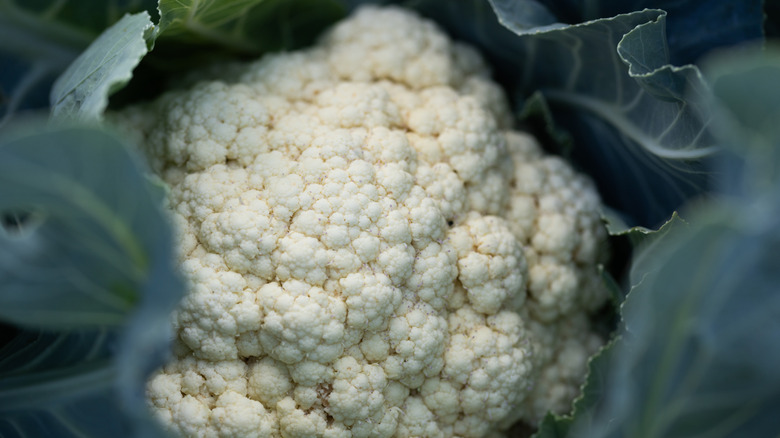
Mark Twain called cauliflower "cabbage with a college education," and he wasn't wrong. Cauliflower is the sophisticated cousin to its other cruciferous relatives, including kale, broccoli, and Brussels sprouts. It has a well-mannered reputation, mainly because it plays nicely with almost any flavor. A serving of raw cauliflower adds about 2 grams of fiber and all but disappears into scrambled eggs, making it an easy sell for anyone who turns up their nose at veggies.
There's just one thing to remember. Make sure to cook your cauliflower before the eggs go in. Raw riced cauliflower sheds water as it heats up, and that water turns a scramble into a puddle. Steam fresh cauliflower and rice it in a food processor or microwave frozen riced cauliflower and drain it well. Then brown it in an oiled pan, helping to remove even more moisture, for several minutes. Finish by scrambling in your eggs. Because cauliflower is a "flavor chameleon," you can season any way you'd like.
If you're craving Italian, go with garlic, olive oil, and red pepper flakes. If you're in the mood for something warm and earthy, add in turmeric, cumin, and coriander. Or, keep it cozy with a little cheddar and a pinch of mustard.
8. Toasted pepitas
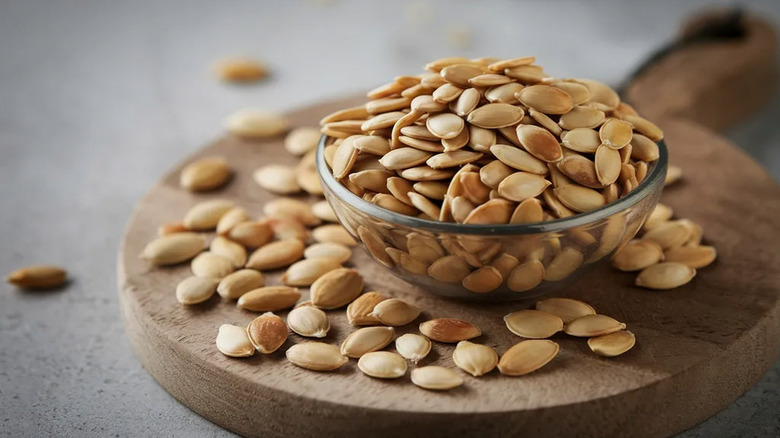
Pepitas are pumpkin seeds without the shells, and they're one of the easiest toppings to have on the table. A small handful, roughly an ounce, delivers about 2 grams of fiber along with around 8 grams of protein. And then there's the crunch. While it's not unusual to sprinkle pepitas on salads or use them in baked goods, their crisp texture really sings when you pair them with eggs.
Word to the wise: Toasted beats raw every time. Raw pepitas are chewy and taste a little grassy. Toasted pepitas are crunchy, nutty, and even buttery. You can toast them for a few minutes in a dry skillet over medium heat; just follow this technique. A telltale sign that they're ready is when they swell, change color, and start to pop. Popping means it's time to remove them from heat before they burn. Season the toasted pepitas as you like, with salt or a dash of lime, and then sprinkle them (as well as some extra virgin olive oil) on top of scrambled eggs.
9. Arugula
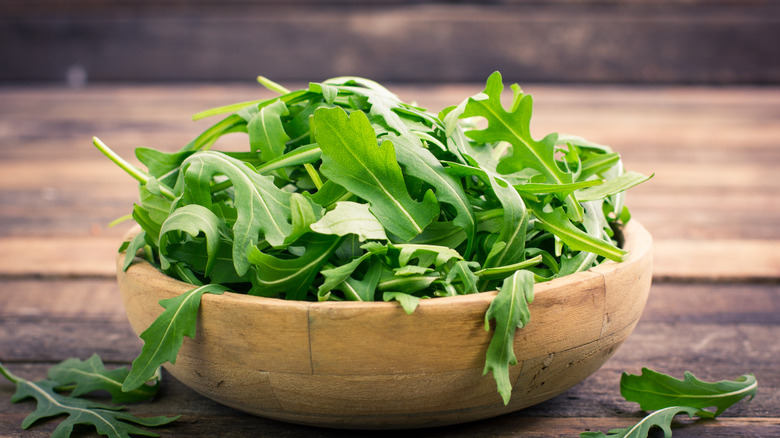
If you're already in love with sprinkling arugula on a pizza, the next step is to introduce it to your morning plate. Peppery baby arugula is criminally underrated in the breakfast department. A handful or two of the leafy greens adds 2 grams of fiber, which is greater than nothing. You'll also get vitamin K, folate, and glucosinolates (protective plant compounds) with no cooking time needed.
Turns out, the ideal method for pairing arugula with scrambled eggs is not to cook it in a skillet. Rather, treat the leaves as a warm, wilty salad base for your scrambled eggs. Cooking arugula on a stovetop will only increase its bitterness, and not in a good way. Just pile a handful of arugula on your plate, then spoon hot scrambled eggs on top. The heat from the eggs will wilt the leaves slightly, softening them without overcooking. The best part? The meal prep takes minutes and leaves you with a restaurant-caliber plate so pretty you'll want to snap a pic.
Arugula's peppery kick comes from the same plant family as mustard and horseradish, which explains why it balances buttery eggs so well. Consider playing into that contrast. You can dress the leaves with lemon juice and olive oil, then add some crunch on top, like toasted pepitas or crispy chickpeas. The eggs will do what they do best, bringing out the flavors of the dressing and melting the greens.
10. Apple slivers
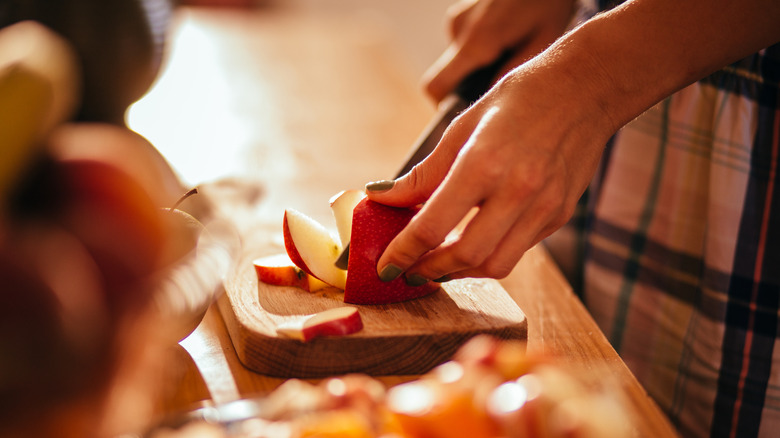
While this may be the biggest surprise on the list, we promise it's a good one. A medium Honeycrisp apple with the skin has 3 to 4 grams of fiber. Just cut it into thin matchsticks (with the skin on since that's where the fiber lives) and sauté them in butter until soft. Sprinkle on a few thyme leaves, then pour in beaten eggs. Once the eggs are soft scrambled, fold in a handful of grated sharp cheddar. At this point, the softened apples can start to taste almost jammy, meaning that you'll hit a sweet pocket that makes the cheddar taste even sharper with every few bites.
Apple and cheddar, usually served alongside pie or on a cheese board, is an age-old pairing. When salty and savory cheese meets a sweet and tart apple, it works for the same reason we love eating a cheeseburger with ketchup. The flavors contrast and complement each other. And when you serve up your apple scramble with toast and coffee, you have a breakfast that feels like a fresh fall morning. Don't forget to cue up season 1 of Gilmore Girls.
11. Spinach
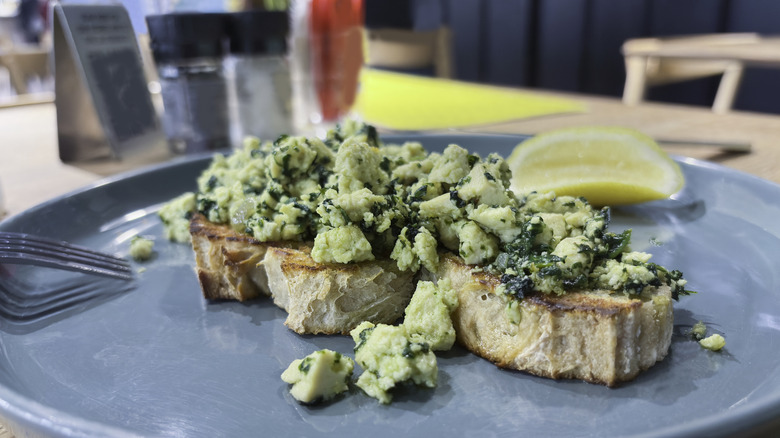
In classic French cooking, "Florentine" describes a dish served with spinach. Culinary legend alleges that the origins of eggs Florentine can be traced back to Catherine de' Medici, who was said to have brought her Florentine cooks and their love of spinach to the French court, however, that connection is tenuous at best. Eggs Florentine, a spin on eggs Benedict, is what made the spinach-and-egg pairing famous.
Suffice it to say, serving eggs with spinach is nothing new. What's less common is blending it. Instead of wilting leaves and hoping for the best, throw several cups of baby spinach, eggs, and cottage cheese into a blender. Blend until smooth, then pour the mixture into an oiled pan and scramble. The addition of spinach brings fiber, iron, calcium, and vitamins A and C to your plate; spinach has almost 2 grams of fiber per serving.
While spinach brings the nutrients, cottage cheese does the real heavy lifting. It adds protein, creaminess, and a subtle tang, helping to prevent the eggs from becoming too rubbery. Once blended, the spinach all but disappears, save for the mixture's green color. That makes this method a smart (and fun) way to sneak in breakfast veggies for kids or picky eaters.
12. Kimchi
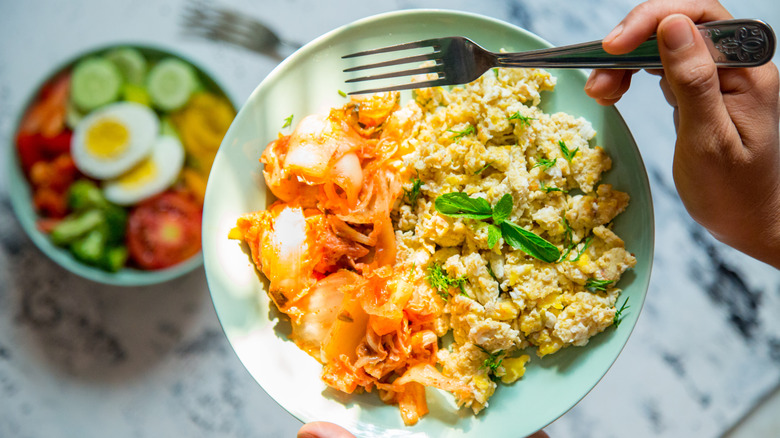
Kimchi lovers, rejoice: You can eat fermented cabbage at every meal. Traditional Korean kimchi, which is made from salted, fermented cabbage, radishes, and spices, happens to be a good source of dietary fiber at around 2 grams per serving. It's also rich in probiotics that help with digestion. Kimchi on eggs is a staple in many Korean households. Try it once, and plain scrambled eggs may never taste the same again.
To add it to your next scramble, take a spoonful of kimchi from the jar and cut it into small pieces. Pour some kimchi juice from the jar into a pan, then add the chopped kimchi, cook for a few minutes, and scramble with eggs. When you cook kimchi, it mellows some of its acidity, making it a milder addition to your breakfast.
Want to go in with guns blazing? Forget about cooking and just use kimchi from the jar as a topping to your scrambled eggs. While this combo is already perfection for most fans of kimchi, you can finish the dish with some sesame oil, sliced green onions, and toasted sesame seeds. Add white rice on the side (or brown rice for even more fiber) to make it a Korean-style breakfast bowl.