

7 Beverages American West Pioneers Drank
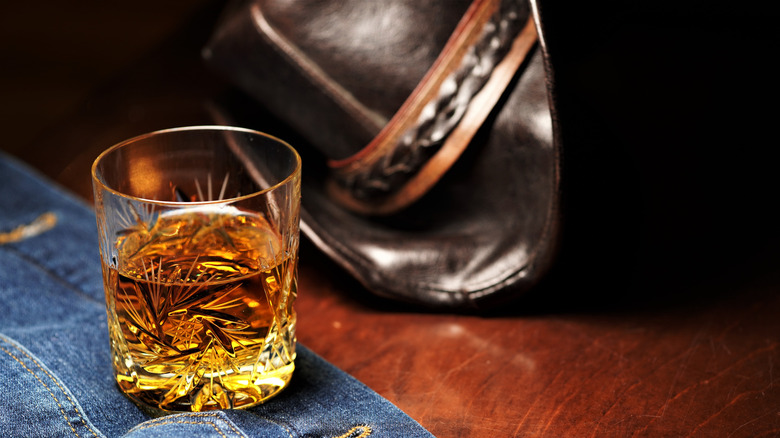
The American West represented a diverse mix of cultures, each with its own culinary traditions. Settlers from the East carried their own food with them down the Oregon Trail, which they supplemented with native flora and fauna found along the way. Meanwhile, the region's Indigenous peoples introduced settlers to their own foodways, immigrants brought recipes from overseas, and the shifting borders of the Southwest exposed the pioneers to Mexico's rich culinary heritage.
Life on the frontier was thirsty work, too. People had to stay cool through long, hot days in the sun, but reliable sources of potable water were often scarce, so pioneers were forced to seek hydration in unconventional ways. And when the day's hard work was done, social drinking was unsurprisingly a favorite pastime.
As a result, the beverages of the American West were as diverse and complicated as its foods, ranging from familiar brews we still drink today to forgotten quaffs that have faded with time. Drawing on insights from Heather Richie, an experiential journalist and author specializing in Southern foodways, and Carolyn Brucken, senior curator at the Autry Museum of the American West, below we explore seven drinks that people drank in the Old West.
Whiskey
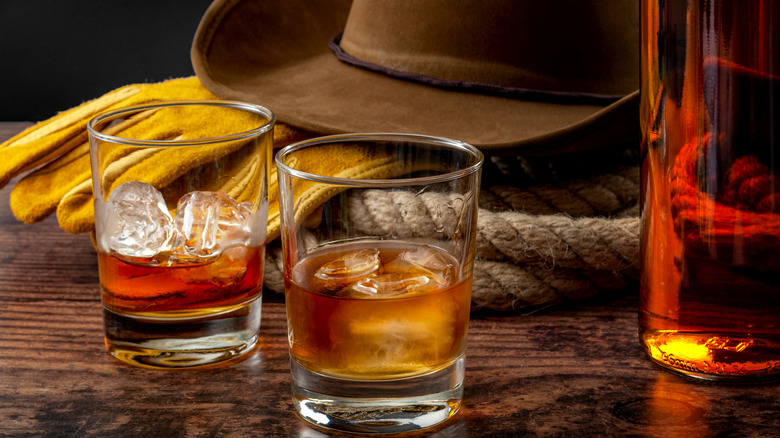
We're all familiar with the image of the lone Old West cowboy sipping whiskey at the saloon. As it turns out, there's a historical basis for the cliché. "Whiskey had many jobs," explains Heather Richie. "It was a painkiller, a trade good, and a form of currency, and it was the center of saloon social life." Merriwether Lewis and William Clark hauled barrels of the stuff across the country, using it for medical purposes and rationing it out to keep the members of their expedition happy.
As for how whiskey came to the Americas, Richie points to the Scots-Irish. In the 1700s, Scottish immigrants by way of Ulster brought the tradition of small-still distillation to America, creating a burgeoning whiskey industry in western Pennsylvania. Since a whiskey barrel was easier to transport than the grains the spirit was made from, it became a popular trade good. After the Whiskey Rebellion – a revolt against the newly founded U.S. government's attempt to tax liquor – many distillers fled south or westward.
"One of the first whiskeys made in the West itself came out of that line," says Richie. Tennessee distiller Simeon Turley brought his craft to Taos, New Mexico, where he began distilling a whiskey that came to be known as Taos Lightning. "It was sold locally as aguardiente, 'fiery water,'" Richie adds. "A Scots-Irish craft under a Spanish name, which makes it about as Western as a drink gets."
Coffee
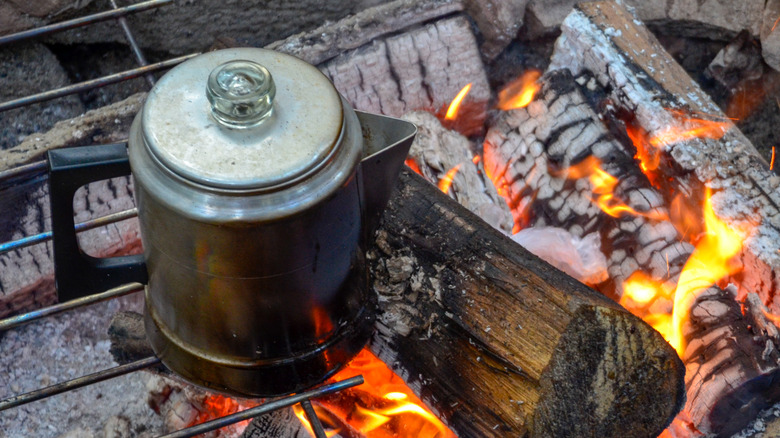
Much like people today, pioneers relied on coffee as a staple pick-me-up. Often brewed over a campfire in the style now known as "cowboy coffee," it helped keep them going on the trail, but maintaining a fresh supply wasn't always simple. Up until the mid-1860s, most Americans purchased raw, green coffee beans and roasted them at home. However, improperly stored beans were susceptible to mold and mildew, which made it difficult to cart coffee over long distances.
In 1865, grocery wholesaler John Arbuckle found a solution. He developed a glaze for coating coffee beans, made from Irish moss, gelatin, isinglass, sugar, and eggs. Arbuckle's glaze was so effective that it could keep coffee fresh even on long journeys out West, which made it an instant hit with pioneers. According to Heather Richie, Arbuckles' Ariosa Coffee powered long, hard days on the range: "Coffee kept cattle drives and night watches going, and the pre-roasted, sugar-glazed Arbuckles' beans became the cowboy standard after the Civil War," she explains. But it was also an important tool for survival. "Water on the trails was often alkaline or contaminated, and cholera killed thousands of emigrants around 1849 to 1852. Boiled coffee and tea, and alcohol, were safer choices even before anyone understood why."
But the coffee supply chain wasn't always reliable, either. "Coffee substitutes made from chicory, parched corn, or acorns filled in when supplies ran out," adds Richie. That finally began to change when innovations in coffee roasting and packaging made roasted beans more widely available and easier to store.
Tea
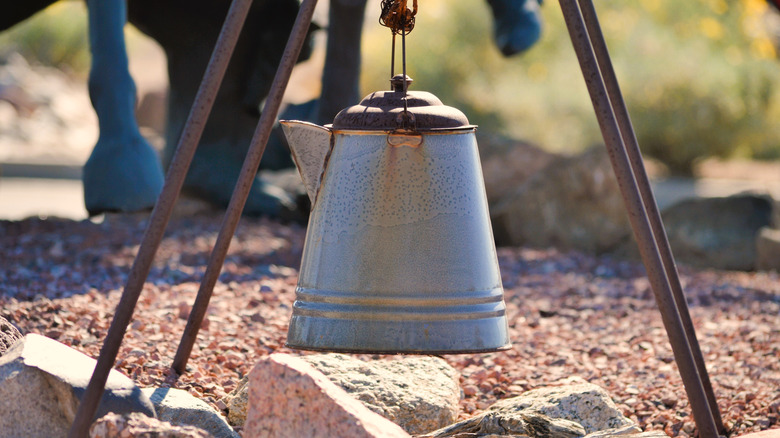
Westward expansion required a lot of new infrastructure, including railroads to connect established Eastern cities to the settlements out West. The tracks they steamed down were largely constructed by Chinese immigrant workers, most of whom drank tea. But tea was more than a mid-afternoon pick-me-up for exhausted railroad workers: it was also a necessity for survival. Clean drinking water wasn't a guarantee on job sites, but boiling water to make tea helped purify it by killing harmful bacteria.
Different brews thrived across the West, says Heather Richie. "Mormon or Brigham tea is the rare drink with genuinely Western roots," she explains. This herbal tea was brewed from the stems of Ephedra nevadensis, a desert shrub that grows throughout the Southwest. Richie tells us that Mormon settlers learned about it from the indigenous peoples of the Great Basin region — including the Cahuilla, Havasupai, Kawaiisu, Papago, Pima, White Mountain Apache, and Zuni — who used it to treat ailments ranging from stomach upset and congestion to syphilis and gonorrhea. Since it contains no caffeine, it also served as a substitute for coffee and conventional tea, which Mormons are discouraged from drinking.
Hot chocolate
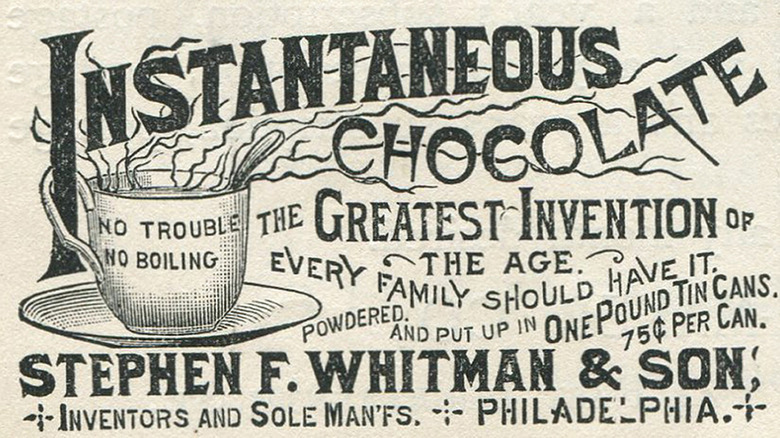
Carolyn Brucken calls hot chocolate "one of the often overlooked and surprising drinks of the Western frontier." Drinking chocolate has a rich history originating in Mesoamerica and dating back thousands of years. The Aztecs and Mayans were among the many civilizations that cultivated cacao, brewing the beans into a drink associated with royalty and often reserved for special occasions, like weddings and festivals.
Even after the Spanish colonized the region, the tradition of drinking chocolate continued. "The consumption of drinking chocolate far outpaced coffee in early California," explains Brucken. "Thousands of pounds [were] sent by ship from Caracas, Venezuela, and Mexico to the northern frontier." Hot chocolate remained popular during the California Gold Rush in the mid-19th century, which saw an influx of immigrants hoping to find precious metals. French immigrant Etienne Guittard came seeking fortune but found no gold. Instead, after returning to France to learn the craft, he established Guittard Chocolate, which is still around today.
At the time, hot chocolate was marketed on the basis of its perceived medical benefits. "Drinking chocolate was touted as everything from a restorative, an energy boost, to an aid to longevity," says Brucken. She also notes that the Pullman Palace train cars that carried many settlers westward sold hot chocolate, which would likely have boosted its popularity.
Patent medicines & bitters
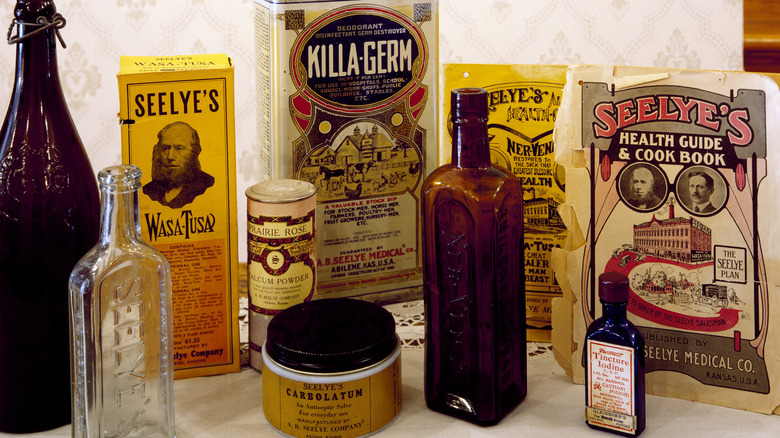
Another important component of frontier medical care was patent medicine – a general term for a wide variety of unregulated curatives. Many of these took the form of medicinal bitters, not unlike the ones used in cocktails today. "Medicine was the label. Alcohol was the product," says Heather Richie. "What it sold, as much as relief, was a respectable pretext. A tonic was easier to explain than a bottle of whiskey, particularly for a woman, and the alcohol did the rest for anyone who simply wanted a drink."
A popular brand found all throughout the American West was Hostetter's, which was touted as a cure for stomach upset and liver issues. It traveled West from Pittsburgh once production scaled up in 1853, and soon became one of the most famous patent medicines in the country. Richie says the reality is that Hostetter's was a highly potent alcoholic beverage. "The original formula is commonly put at about forty-seven percent alcohol, and a later analysis found thirty-two percent alcohol, sixty-four percent water and four percent herbal extracts, which is to say a stiff drink with a bitter finish." The passing of the Pure Food and Drug Act of 1906 marked the beginning of the end for patent medicines and bitters, as they introduced federal oversight of products marketed as medicine.
Switchel
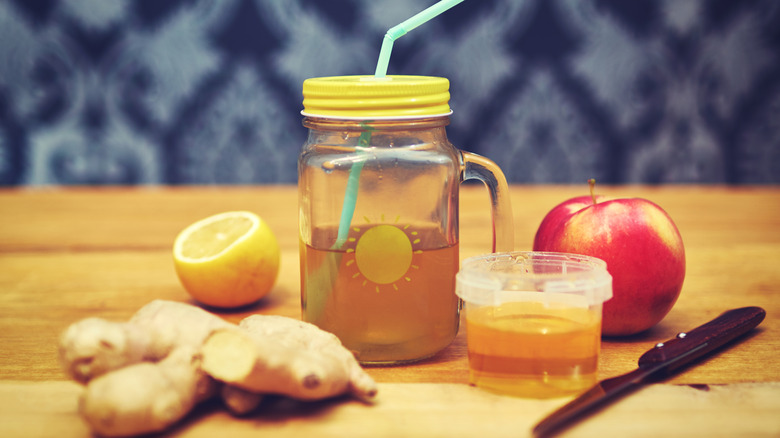
Switchel was the all-natural energy drink of the American West, keeping farmers and ranchers hydrated through long days working under the hot sun. It generally consisted of water, apple cider vinegar, ginger, and a sweetener like honey, molasses, or maple syrup. "Recipes varied with the household and with whatever was in the larder," explains Heather Richie. She gives Vermont as an example, where some recipes included lemon juice and oatmeal.
Switchel went by many names: ginger water, ginger pop, and Yankee punch, to name a few. The latter hints at its origins: "Switchel went west in the jugs of Yankee and Midwestern farm families," says Richie. "By the nineteenth century, it was a fixture of New England hayfields, where it went by 'haymaker's punch.'"
Richie explains that people at the time considered ginger water safer than plain cold water for someone overheated from working in the sun. Switchel was inexpensive, refreshing, and easy to prepare by the gallon, while cider could be stored until needed, making it a convenient drink for a full day in the fields.
Mezcal
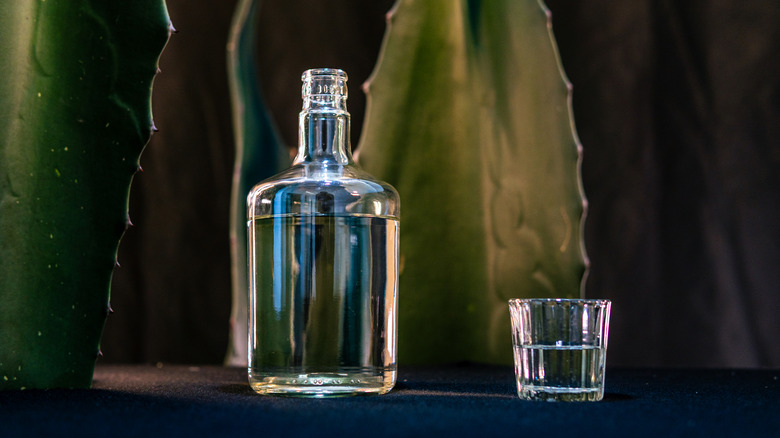
Although agave is native to the Southwest, the origins of mezcal, a distilled liquor made from the plant's roasted and fermented hearts, remain unclear. "Before agave was a drink in the Southwest, it was food," says Heather Richie. "Indigenous peoples roasted the hearts in stone-lined pits and sometimes dried them to see a family through winter."
While fermented agave drinks were popular before colonization, it's unclear exactly when distillation arrived in the region. Richie says accounts differ: one credits Spanish distilling traditions, while another points to Filipino sailors who crewed the Manila galleons. Some archaeologists hypothesize that Indigenous peoples of Mexico began making mezcal even earlier, based on the discovery of pottery jars that appeared to be suitable for distillation.
After the Mexican-American War ended in 1848, Mexico ceded much of its land to the United States. "By the nineteenth century, agave spirits were sold on both sides of a border that had moved beneath them," said Richie. "The agave stayed where it was. A Santa Fe newspaper in the 1860s reportedly described Mexican mescal-making and praised an aged sample as the equal of fine brandy."