

These Are The Most Iconic Snacks From Every Decade Since The 1920s
The world started moving a lot more quickly in the 20th century thanks to rapid advances in science and industry. And with that came the birth of "the decade," as it were, with each 10-year span having its own distinctive trends and touchstones to differentiate it from what came before and what would follow. Food likewise came to play a central role in defining each decade, either because something new immediately took hold or because circumstances were such that a classic food returned to prominence.
As a whole, main courses don't tend to change nearly as much in popularity from one decade to the next, but snacks most certainly do. Given that we've already covered America's most loved candies by decade, we thought we'd spotlight the salty and savory treats that became nationwide favorites in each decade of the last 100 years. Most of these are still around and would prove to be timeless, while a few have either become incredibly niche or have been discontinued entirely. But what unites them all is that they were hot during their given decade for reasons we will dive into for this tasty history lesson.
1920s: Pretzels
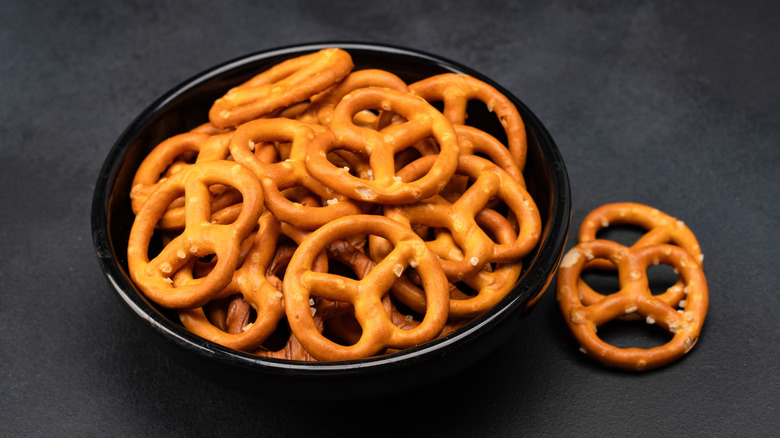
As a vintage bar snack of Prohibition-era speakeasies, pretzels saw their golden era during the 1920s. Of course, unlike most of the items on this list, it wasn't because pretzels were introduced during the decade or even first garnered fame in that era. There is evidence of the prevalence of pretzels way back in the 1600s, though most agree that their origins likely go back even further. But where pretzels really took off was when they were introduced as a snack for the burgeoning saloon industry just after the Civil War.
So how did the pretzel become such an iconic snack during the decade that was kicked off by Prohibition? Pretzel bakeries found their business actually picking up a few years into the 1920s, assuming that people were buying them to eat at home while they brewed their own alcohol. This was probably at least partially true, though we now know that bars continued to secretly operate as speakeasies even while alcohol was illegal. And those speakeasies still needed pretzels to quench the thirst of their patrons.
In fact, there's an argument to be made that Prohibition actually "saved" the pretzel. Anti-German sentiment in the U.S. following World War I had stigmatized anything that came from or was otherwise related to the country, and pretzels got lumped into that rhetoric in the late 1910s. But the secret nature of speakeasies lent itself to likewise consuming a "forbidden" snack like the pretzel, and the salty, twisty treats persevered.
1930s: Ritz Crackers
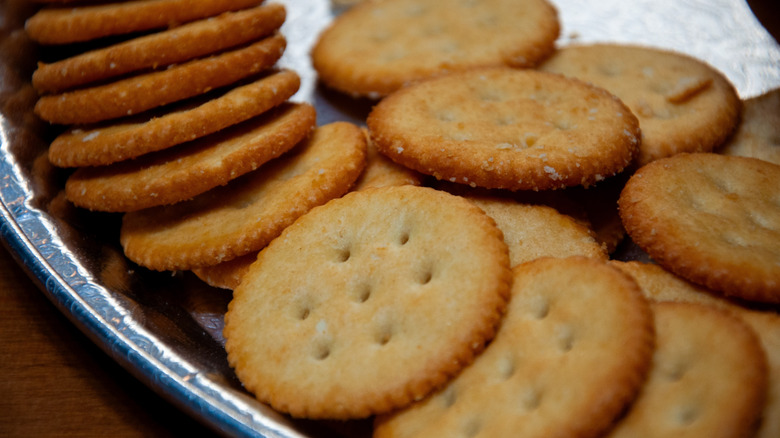
Unfortunately, the most enduring legacy of the 1930s in America was that the Great Depression spanned the entirety of the decade. It was the era of people needing to stretch every penny and trying to make the most of what little bit of food they could get their hands on to feed themselves and their families. So in 1934, Nabisco decided to brand its new snack crackers as "Ritz" crackers, a name meant to evoke the presumption of getting something fancy at a time when the typical American meal was anything but.
Some of the higher-ups at Nabisco were hesitant about the name. They feared a backfire that resulted in customers assuming the snack was too luxurious for them and would subsequently be turned off. But the original intent of hoping people would see Ritz crackers as an upscale snack at an affordable price was spot-on. They were a hit, with people buying them both to snack on and also as a cheap ingredient for casseroles and desserts. Most famously, they were used in Ritz's own mock apple pie recipe that allowed people to approximate the iconic American dessert without actually using apples (which were often difficult to come by at the time).
To this day, people turn Ritz crackers into an actual gourmet snack, adding true luxury ingredients like caviar or prosciutto. Ritz crackers have certainly come a long way since they were used to make apple pie without apples.
1940s: Slim Jims
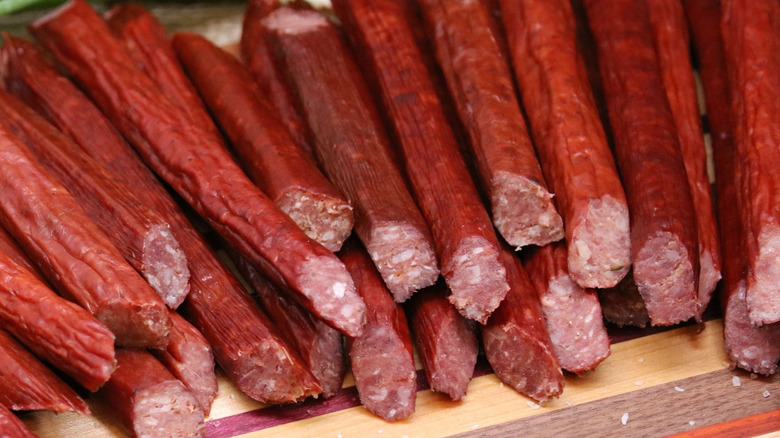
Once again, a snack that people loved to eat at the bar led to the decade's most popular snack. More specifically, Slim Jims were born in 1940 when businessman Adolph Levis noticed that pepperoni had become a popular bar food, and he wanted to come up with a smaller, cheaper, longer-lasting alternative that, most importantly, was easier to hold in one hand while having a beer in the other. In essence, he made sausage into a handheld snack. It wasn't long before it was commonplace for 1940s bars to have a jar of Slim Jims in vinegar sitting on their counters.
Fast forward 20 years, and Slim Jims had mostly moved out of bars and into cars. These days, the dried meat sticks are more famous for being sold at gas stations for people to grab as a savory road trip treat. Slim Jims would see various resurgences over the years, from the "Macho Man" Randy Savage-led ad campaign in the '90s aimed at teenage boys to the most recent surge that was spurred on by the brand's kooky social media presence. But it was when they were first introduced as a more substantial bar snack than pretzels or peanuts that Slim Jims were the tastiest, chewiest snack around.
1950s: Party Mix
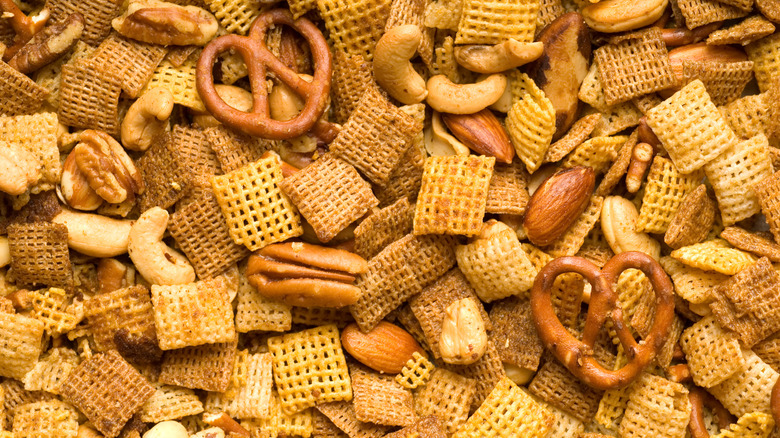
Between 1950 and 1960, the number of American homes with a television set grew from just 9% to a whopping 90%. And as more and more homes had TV screens, those screens became the focal point of pretty much every facet of American home life — including snacking. Thus arose the need for a snack that was easy to eat while watching sports or "I Love Lucy." And with that, came the birth of Party Mix.
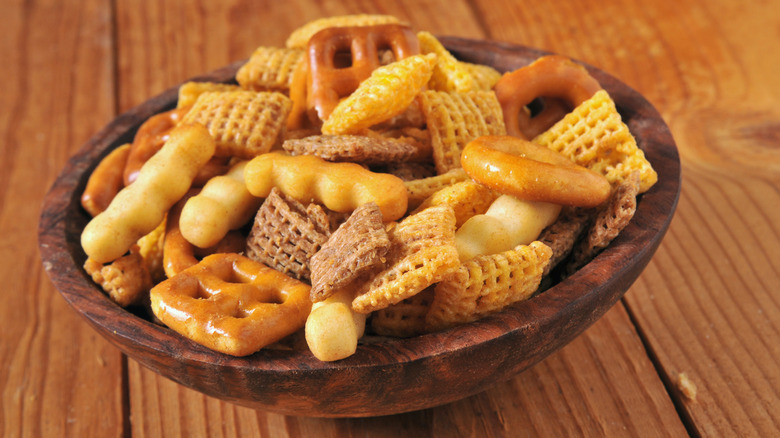
We specified "Party Mix" instead of "Chex Mix" because Chex Mix wasn't the originator of the snack. A Betty Crocker cookbook that uses Kix cereal mixed with melted butter and seasoning predates the first published Chex Mix recipe by four years. But it goes without saying that Chex Mix quickly became the favorite version of the snack. This is a combination of Chex cereal with various other salty snacks — pretzels, nuts, rye chips, etc. — seasoned and often with oil or some other type of binding agent.
Chex Mix became hugely popular in the '50s because it was easy to throw together with ingredients that were already on hand, had a lot of flexibility in which ingredients it contained (and how much), and most importantly, was easy to grab by the handful from a big bowl while watching TV. It also served as a mainstay of dinner parties, which had become especially popular after World War II as people were trying to settle back into normal life and reconnect with friends and neighbors.
1960s: Corn Chips
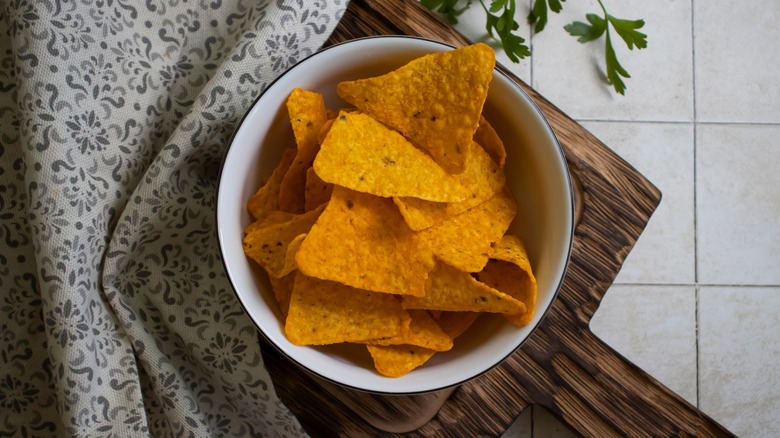
From the introduction of Doritos at a Disneyland restaurant to General Mills bringing Bugles to the masses and new youth-focused marketing that saw an explosion in the popularity of Fritos, the 1960s were the decade of snack chips made from corn. Further helping things along was Americans falling in love with Tex-Mex cuisine during that era. This all aligned with corporate mergers that saw increased distribution channels for various corn chips, creating fertile ground for Doritos, Bugles, and Fritos to become the new go-to for people looking for a salty, crunchy treat. Or, in the case of Bugles, to wear on their fingers.
In fact, people were so eager for corn chips in the '60s that the original Doritos weren't even flavored. They were literally just toasted corn tortilla chips and sold just fine as-is, with a taco seasoning not being added until later. It actually wasn't until all the way in 1972 that the iconic Nacho Cheese flavor finally made its debut, which is now considered the default Doritos flavor.
Likewise, the original Bugles were also just corn-flavored snacks and were hugely popular nonetheless, with the first Bugles flavor not being introduced until the 1980s. In fact, Bugles launched alongside a companion corn snack, Whistles, that were discontinued after just a few years despite being coated in cheese flavoring. It seems that snackers in the '60s just wanted their corn chips to taste like corn and nothing else.
1970s: Space Food Sticks
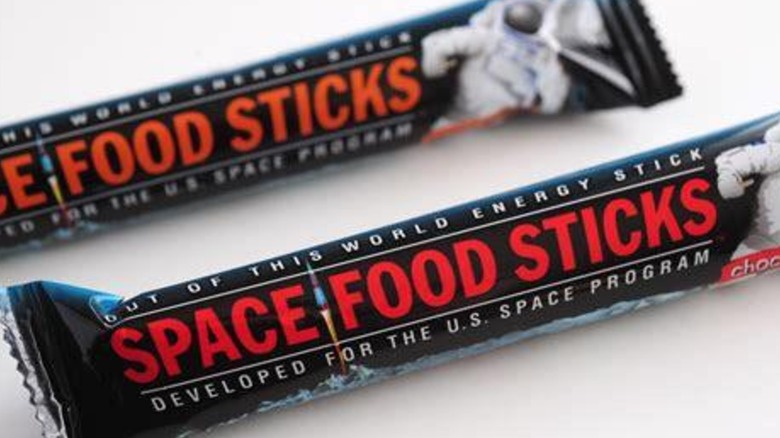
Beginning life as a government-funded snack made for astronauts, Pillsbury's Space Food Sticks were slightly modified and turned into a commercially available snack aimed at kids in 1969. Seen as one of the earliest examples of an energy bar, Space Food Sticks initially came in three main flavors — chocolate, peanut butter, and caramel — and promised various vitamins and nutrients in a compact, chewy bar. And we mean "bar" literally, as Space Food Sticks were shaped like a rod.
Kids were obsessed with NASA and space at the time, owing to the 1969 moon landing, and couldn't get enough of snacks that were sold to them as something the astronauts ate. But with space fever quickly losing its luster going into the '70s as the moon landing faded from public consciousness, the "Space" was dropped from the name of the snack. Besides the space race no longer being as big of a deal, Pillsbury also felt that the word "space" in the name of a snack would make people assume said snack was bland and dry.
Between its new, generic-sounding name and several attempts to rebrand the snack, Food Sticks would be gone shortly after the '70s rolled into the '80s. But for a generation of kids who marveled at the moon landing and spent the next handful of years playing astronaut with their friends, Space Food Sticks made them feel like they were eating something from the future.
1980s: Planters Cheez Balls
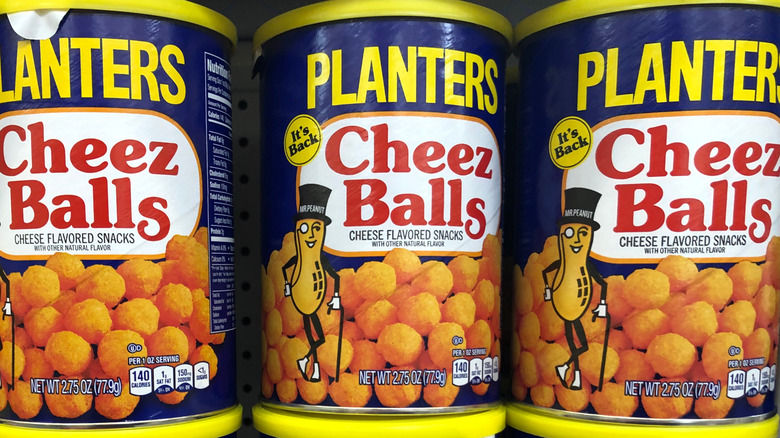
Tell a 1980s kid to close their eyes and imagine a typical day in their childhood, and whatever activity they are picturing likely involves a canister of neon-orange balls sitting nearby. The balls in question would've been Planters Cheez Balls, the crunchy, airy snack that accompanied a decade of Saturday morning cartoon watching and Matchbox car racing — not to mention subsequently leaving dusty orange fingerprints on virtually every surface in the house.
But Planters Cheez Balls weren't just a ubiquitous '80s snack for the kids of that era. The '80s was also a decade marked by parties of all kinds — birthdays, cookouts, family reunions, et al. — and you could rest assured that you'd find a big bowl of Planters Cheez Balls at just about any type of party or gathering that was held during the era. They were the perfect mix of the bright, gaudy colors of the decade with the need to satisfy a party guest's munchies. (You can use your imagination as to why someone at a party in the '80s might've had the munchies.)
Of course, other companies made their own cheese balls, with Utz Cheese Balls and the signature massive clear jars they come in perhaps being the most well-known. Neither of those hit the market until 1990, ensuring that Planters Cheez Balls had the '80s all to themselves.
1990s: Sun Chips
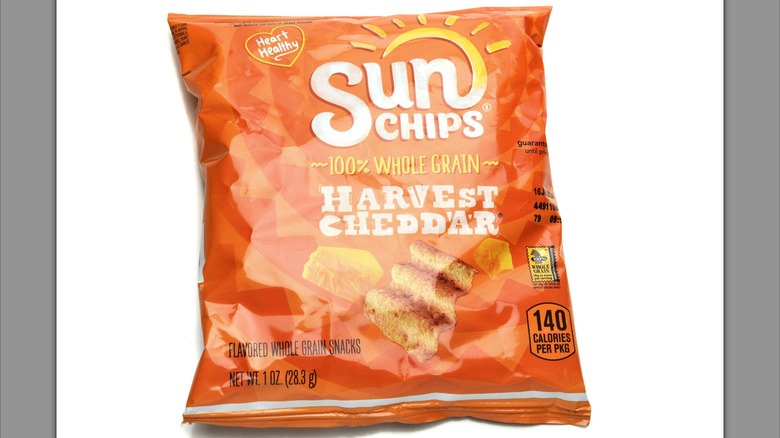
The 1990s saw a number of food trends with healthiness in mind, and several of those trends spilled over into snacks in a big way. No, we aren't talking about the Lay's "Wow" line and the disgustingly terrifying side effect that came with the fat substitute that they were made with. Sun Chips, heavily promoted as being made with 100% whole grain and positioning itself as a healthy form of snack chip, ended up coming away as the biggest snack of the decade for promising big health benefits coupled with big taste. As it turns out, the nutrition label on a bag of Sun Chips doesn't really differ all that much from the one on a regular bag of potato chips. Oops.
But that was neither here nor there at the time, because snack fans in the '90s thought they were healthier. And that's what mattered. It was a decade in which people seemed especially susceptible to marketing that offered only vague suggestions of something being a much healthier alternative, from Sun Chips to Fruitopia drinks, SnackWells cookies, and Kudos bars.
Without easy access to the internet to instantly fact-check such things, people bought the hype of these nebulously healthy treats. So they walked around with their hands buried in bags of Sun Chips, feeling smug because they were seemingly making a healthier choice than all those potato chip eaters. Oh well. For what it's worth, they're still really tasty, at least.
2000s: Yogos
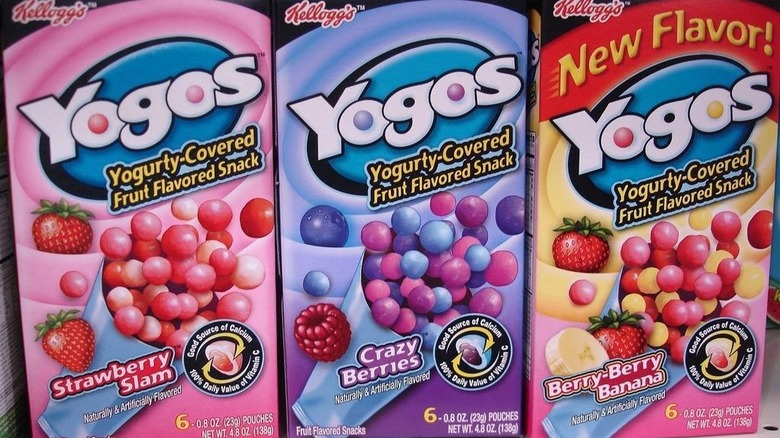
The 2000s were the era of frozen yogurt — or "froyo" for those who were around at the time and knew the cool lingo. It was also a decade that saw yogurt become a fixture in the snacking world even outside of froyo shops, with lunchboxes full of Go-Gurt tubes and Kellogg's line of Yogos yogurt-covered fruit snacks. But popular as Go-Gurts were — and still are — we have to give this one to Yogos, which just seemed to be more of a defining snack of its decade.
Whether you opted for the Strawberry Slam, the Berry-Berry Banana, or the Crazy Berries flavor, if you were a kid in the 2000s you likely have fond memories of Yogos. There is Reddit thread after Reddit thread full of people waxing nostalgic about Yogos, how much they miss them, and expressing confusion as to why they went away in the first place — which they did by the start of the new decade.
As it turns out, they were simply too costly to produce to justify keeping them at a suitable snack aisle price. And rather than roll the dice on seeing if people would pay the amount of money they actually needed to be sold at, Kellogg's opted to just pull them entirely. About the closest thing you can find to Yogos today are Welch's Fruit 'n Yogurt snacks. But if you grew up on Yogos, don't expect anything else to spark the same joy for you.
2010s: Takis
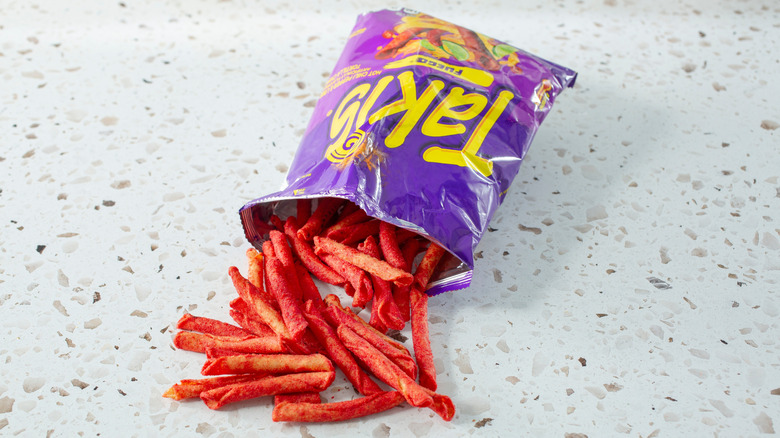
Takis was one of the first snacks to take advantage of social media — and more specifically, social media challenges. The snack took off in the 2010s thanks in no small part to how many heavily hashtagged TikToks it got featured in. Various trends emerged that challenged people to try and eat the spiciest Takis flavors and record themselves doing so, which led to a massive surge in sales of the rolled corn snack.
But it speaks to Takis actually being a legitimately tasty snack that they stuck around long after they weren't going viral as often anymore. That certainly isn't true of all of the viral food sensations of the decade, like the unhinged "unicorn" trend or when people were stacking ridiculous things inside and on top of milkshakes, both of which have fallen by the wayside since the 2010s ended.
Not that something needs to endure or be timeless to be the best snack of its decade (see: Space Food Sticks), but it proves that Takis were a genuinely good product that people actually liked rather than something wild that people only tried because it was funny and "random." Things that are just trendy for a moment or two within an era don't end up representing the entirety of said era, whether you're talking about food or anything else.
2020s: Seaweed Snacks
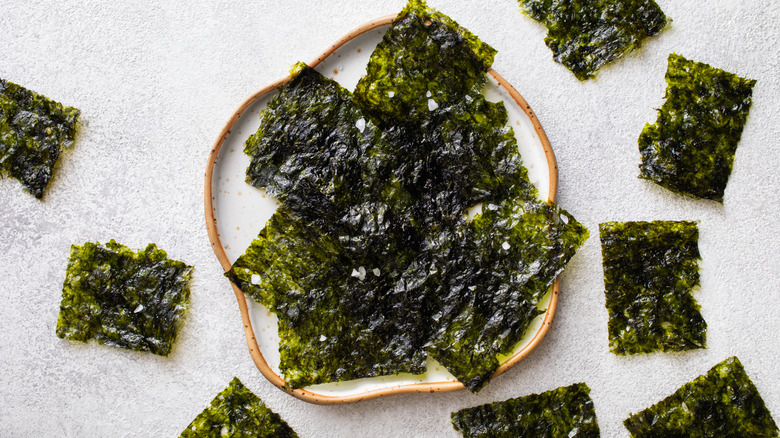
The concept of viral snacks has remained alive and well into the 2020s. But something different has also started happening this decade, which is that Gen Z has been trying to be more health-conscious and showing a preference for natural products — including snacks. Between those factors, plus a surge in popularity of mukbang videos and other food-based content during the COVID-19 pandemic era, has created an environment where the seaweed snack market is booming.
Most commonly in the form of crunchy sheets made from nori, seaweed snacks can come in a variety of flavors from sweet to spicy and everything in between. They are also extremely versatile, and can either be enjoyed on their own or as the foundation for all kinds of more elaborate snacks — and even full-fledged meals. The many ways to creatively utilize seaweed snacks have only further reinforced why they are such a food influencer-friendly snack, which is paramount to any snack's success in the 2020s. And, probably, for the foreseeable future.
As of this writing, we're only just over halfway through the 2020s, so it remains to be seen if seaweed snacks will remain their popularity in the latter half of the decade. Or if something else emerges that completely usurps its current standing as the era's signature snack. But we'd be extremely surprised if that happened, given seaweed snacks' enduring ubiquity.