

6 High-Protein Frozen Pizzas, Ranked Worst To Best
We may receive a commission on purchases made from links.
I admit there were years when I sailed right past the freezer case of pizzas while shopping. It wasn't a nutritional decision or because I needed a recommendation for the best frozen pizzas; I was just never satisfied after eating a generous portion or two. Thirsty, yes, but also still needing second dinner. When high-protein pizzas started popping up on freezer shelves, I was here for it. A more satiating meal coupled with the ease of frozen pizza? Count me in.
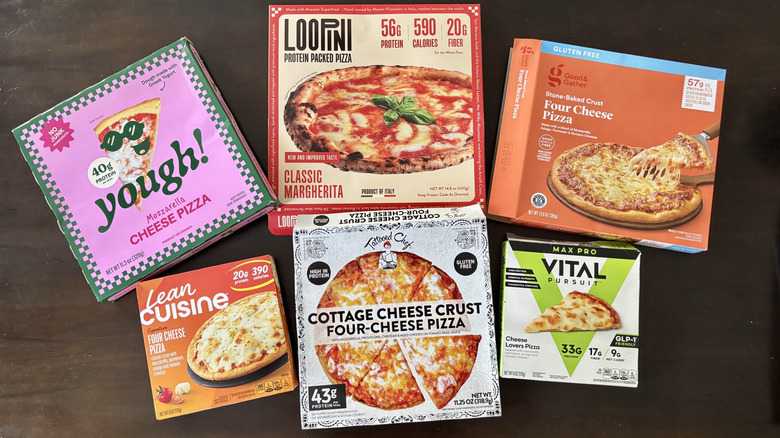
These pies often rely on ingredients like cottage cheese, yogurt, yeast protein, and beans to beef up their protein content. While I was intrigued and slightly dubious about whether protein-added foods are worth it, and how the extra ingredients would impact the taste, I decided I had to try them to find out. I headed to a few stores to gather an assortment of high-protein frozen cheese pizzas. To sort out which ones are worth stocking up on, I baked and ranked them from worst to best based on their overall flavor and texture. Here's what you should try on your next pizza night in.
6. Vital Pursuit Max Pro Cheese Lovers Pizza
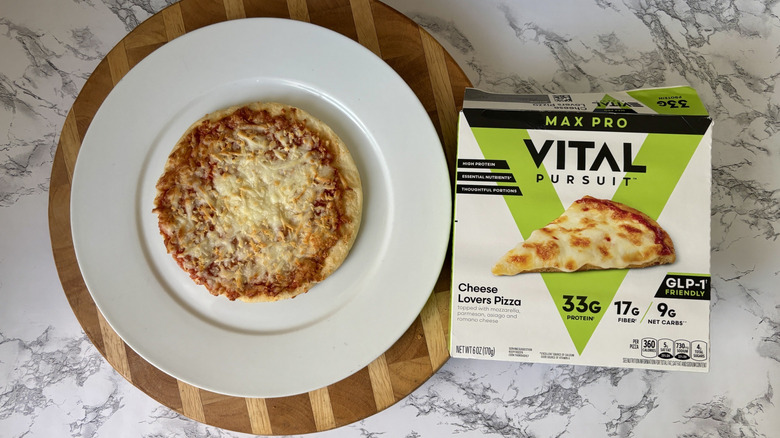
This pizza makes me sad. It's not just the 6-ounce individual size or even the cheese that melts but doesn't fully lose its shape; it's because Vital Pursuit's Max Pro Cheese Lovers Pizza was incredibly doughy and bland, except for the heavily spiced sauce that tastes like it came out of a can. And it sort of did because the sauce is made from tomato paste, which offered a concentrated, intense taste that was out of place next to the other, milder-tasting ingredients. The protein boost comes from milk protein isolate in the crust, and I have to assume it's also responsible for the overall poor texture, color, and flavor.
The box suggests cooking the pizza in an air fryer or microwave. I chose to air fry it so I could more fairly compare it to the others, which were baked in the oven. But I'm not sure it mattered, as the crust of this pizza was still very soft, white, and not crispy. It looked raw and was devoid of flavor, meaning it literally just became the vehicle for sauce and cheese. There is a good amount of cheese, but it didn't taste creamy or gooey, offering little redemption. This pizza wasn't in our roundup of the worst grocery store pizzas, but it should be. With no real positive attributes, I had to place it in the bottom spot.
5. Yough! Mozzarella Cheese Pizza
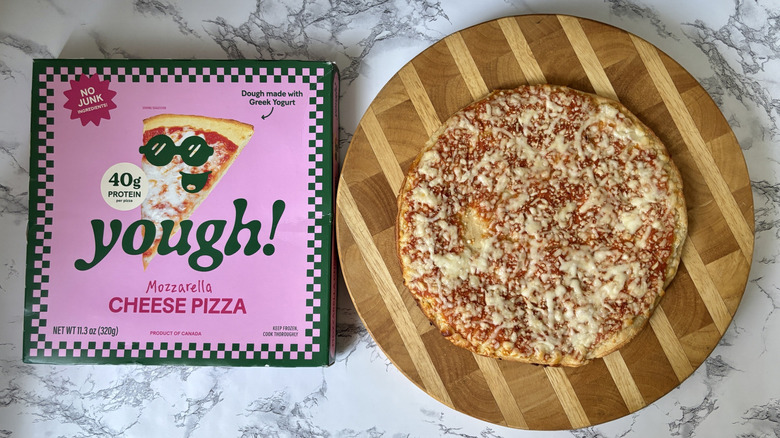
Yough! Mozzarella Cheese Pizza features a Greek yogurt-based crust, as well as no added sugar, seed oils, or preservatives. Customers love this frozen, high-protein pizza and say its fluffy crust doesn't taste like yogurt. I wasn't so sure because I've experimented with two-ingredient pizza dough, using Greek yogurt, and wasn't impressed with the bland, gummy result.
I had some trouble during baking, as the pizza drooped between the grates on my oven rack, making it hard to get out of the oven. It didn't look amazing either, with sparse, poorly melted cheese over the sauce, and one annoying bald spot without any toppings. I figured the taste could turn things around, but it only took one bite for me to know this pizza wasn't going to rank well. The thin crust had the dreaded gummy, not fluffy texture I was worried about. Coupled with the light dusting of not-so-creamy cheese, it became slimy as I chewed. Then I was hit with a wave of sourness from the tomato sauce and the crust. The package boasts there is no added sugar, but in this case, that's a missed opportunity to balance the tomato's acidity, not a bragging point. Coupled with the tang of yogurt, it was too much. Yough! fell to the bottom of the ranking because I had a hard time eating more than the few required bites.
4. Lean Cuisine Signature Four Cheese Pizza
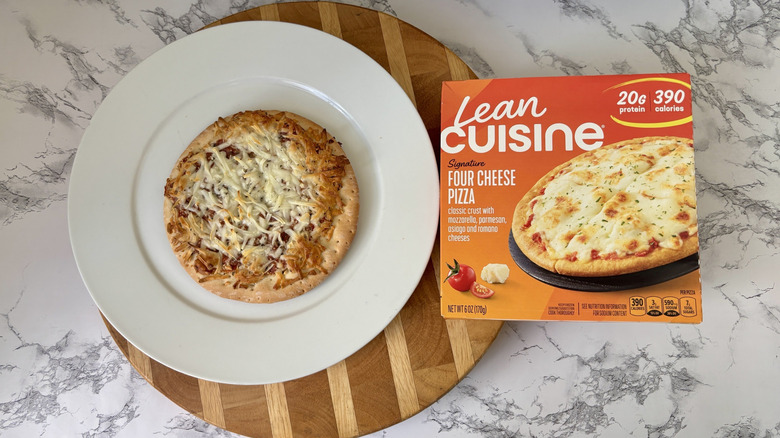
Lean Cuisine's Signature Four Cheese Pizza was previously branded "Protein Kick," and when shopping for this pizza I found it labeled both ways. However you find it, it appears to be the same product, or at least it clocks the same macros, with 20 grams of protein for an individual 6-ounce pizza. You can microwave the pizza, but since all the others were going in the oven or the air fryer, I opted to bake it.
Unlike most of the other high-protein pizzas, there was nothing unusual on the ingredient list. It relies on the natural protein in wheat flour and various reduced-fat and part-skim cheeses to reach its protein total. The crust browned well in the oven, but stayed soft except right at the edge, which took on a dry, cracker-like texture. It was marked all over with little holes, which likely allowed steam to escape, so even if you do use the microwave, rest assured that your pizza won't be wet. For me, it was just a visual reminder that this was far from a traditional pizza.
Without the toppings, the crust was bland, but there weren't many bites without the strongly flavored sauce, which tasted like dried oregano, thyme, and garlic. As for the cheese, this pizza is another example of how cheese can melt yet still retain a shredded look at the same time. It tasted very generic, landing it in the middle. It's not horrible, but if protein is your goal, there are better options.
3. Loopini Classic Margherita Pizza
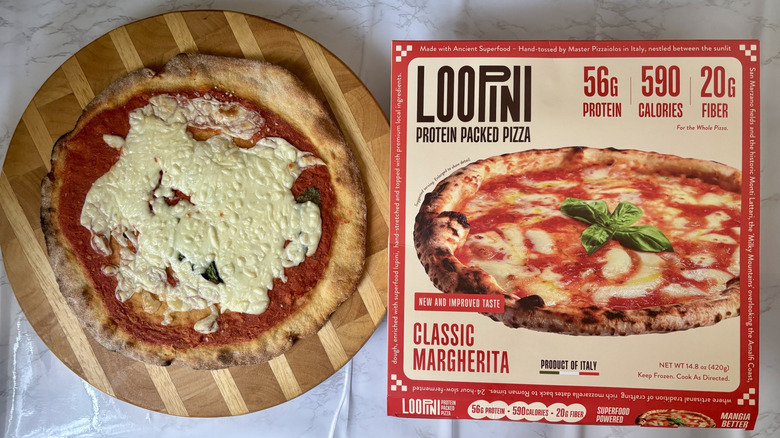
Coughing up around $15 for this not-so-big pizza really had me wondering if more expensive frozen pizzas are worth it. That's pretty subjective, but at least Loopini explains why its pizzas cost so much. It says that Classic Margherita pizza is hand-tossed in Italy, fermented for 24 hours, topped with local ingredients, and includes protein-rich, superfood lupini beans.
Marketing aside, I focused on the pizza's flavor and texture. Even fully frozen, the crust was slightly flexible and extremely thin, but it crisped up well in the oven. The cheese was piled in the center of my pie, leaving a good amount of uncovered sauce and crust on the edge. Unfortunately, I wasn't able to loosen the cheese and better distribute it.
This is the most unique pizza of the bunch. It has some excellent qualities and drawbacks, landing it in the middle. The sauce was applied lightly over the brown, bean-infused crust, but had a bright, fresh flavor, which was lovely paired with the creamy fior di latte cheese, herby basil, and earthy, nutty crust. On the flip side, the bare crust, which was a significant portion, was brittle and slightly bitter. The dense cheese didn't spread as it melted and had no stretch — a texture I missed. It would have also benefited from a big pinch of salt. Though imperfect, there was a sophistication to the pizza that I appreciated and I think there is an audience for it.
2. Tattooed Chef Cottage Cheese Crust Four-Cheese Pizza
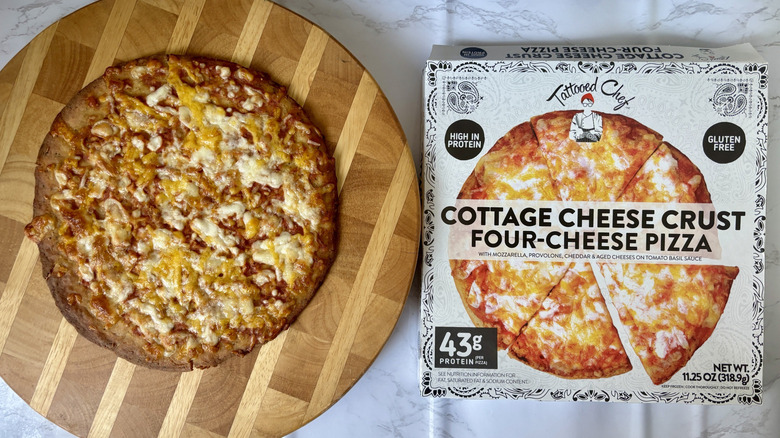
Just in case you thought cottage cheese might not make it into a high-protein food ranking, rest assured that the Tattooed Chef Cottage Cheese Crust Four-Cheese Pizza has answered the call. This pizza features a cheese blend that includes mozzarella, provolone, and cheddar (the only pizza in the ranking with a non-Italian cheese). It also happens to be gluten-free, but the packaging keeps the focus on its high-protein content.
The packaging calls for cooking this pizza on a nonstick baking sheet instead of directly on an oven rack. I was pleasantly surprised that the crust still crisped and browned nicely. The toppings almost completely cover the crust, leaving a thin, plain edge with a gentle crunch. That texture was welcome because the rest of the pizza, though sturdy enough to not flop over, was slightly squidgy due to the moisture in the toppings and cottage cheese crust. It wasn't soggy or unpleasant, but it also wasn't bready or chewy — the only real reminder that it's gluten-free. Plenty of garlic and dried oregano gave this pizza a nostalgic frozen pizza taste, and a solid blanket of cheese delivered sharp and creamy flavors. It was everything I wanted, and expected, from a good, frozen pizza. I enjoyed it fresh and hot from the oven and cold from the fridge later on. It just missed the top spot, but it's a close runner-up thanks to its classic, balanced pizza flavor and tasty crust.
1. Good & Gather Four Cheese Protein Pizza
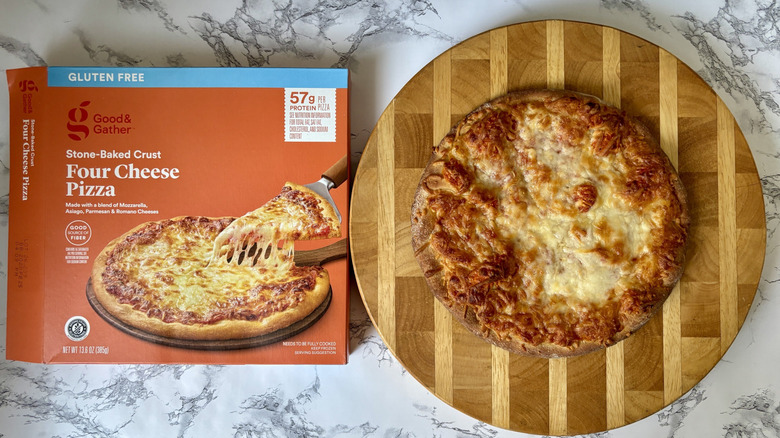
Good & Gather Four Cheese Protein Pizza wasn't just the most picturesque pie, with its browned, fully melted cheese and golden, fluffy crust; it was also, by far, the most delicious. This high-protein pizza was flagged as a new item at Target and is sold under the store's private label. It has a gluten-free crust enriched with yeast protein, a tomato sauce made with minimal ingredients, and a mixture of mozzarella, Asiago, Parmesan, and Romano cheeses. A whole pizza has 57 grams of protein, while a serving (⅓ of a pie) has 19 grams of protein.
I'm not familiar with yeast protein, so I wasn't sure if I would notice an extra-yeasty flavor as it baked, but all I picked up on was sharp, cheesy Asiago and Romano. The crust was soft and bready in the best way, with air pockets keeping it light, and a crisp edge. If I really concentrated, I could pick out a touch of grittiness, but it's incredibly minor. This might be one of the tastiest gluten-free crusts I've ever had. The sauce was well seasoned, with a hint of sweetness that would appeal to both kids and adults. This frozen pizza took the top spot because it had it all: a flavorful crisp-yet-soft crust, creamy melted cheese, just enough sauce, and the right amount of seasoning. I'll be buying this again.
Methodology
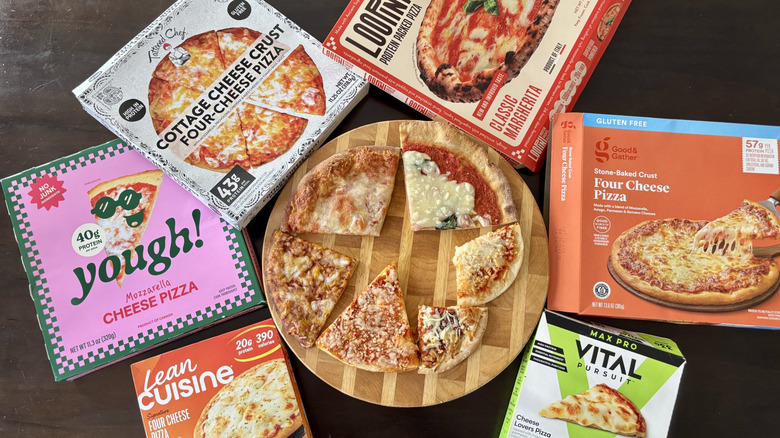
When shopping for pizzas, I looked for ones promoted as high-protein, which met the required guidelines. The Food and Drug Administration (FDA) states that a food can be labeled as high-protein if it contains at least 20% of your daily value of protein per serving, based on a recommended daily intake of 50 grams. Depending on your personal goals, having one of these as a meal may not be enough, but since everyone's needs are different, I stuck with judging the taste and the texture of the pizza rather than just its macros.
To ensure a fair ranking, I skipped loaded pizzas and only purchased cheese ones. I cooked them one at a time according to the package directions, opting for the oven or air-fryer rather than the microwave. I sampled each pizza hot and fresh, noting the flavor and quantity of sauce and cheese as well as the texture of the crust. If there was an added ingredient, such as beans or cottage cheese, I considered how the addition impacts the texture or flavor, but I didn't rank it higher or lower based on whether I could taste it specifically.
Even though I spent years in professional test kitchens developing from-scratch pizza recipes, I'm no stranger to frozen pizzas, due in large part to my son. As any parent, and cook, knows, children's tastes can be finicky, so a favorite frozen pizza one day isn't welcome the next. But the food writer in me enjoys the opportunity to sample so many different brands and varieties.