

Helpful Or Trendy: Are Protein-Added Foods Actually Worth Buying?
In recent years, protein has taken the food world by storm, showing up in everything from Starbucks lattes to Cheez-It crackers. It's certainly nice to have the option of everyday beverages and snacks that can give us a bit more energy, but we can't help but wonder: Are these products actually worth buying, or is it better to stick to natural sources of protein? Tasting Table spoke with Angel Luk, a registered dietitian, to get some answers.
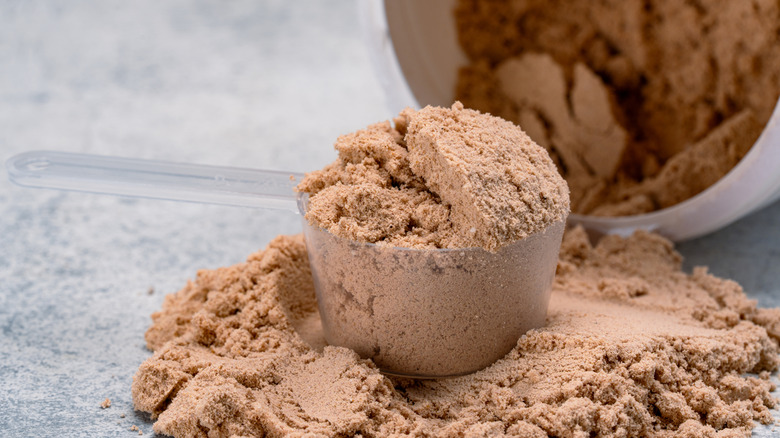
"I would discourage people from choosing the protein-added versions," said Luk. Protein-added foods primarily derive their protein from isolates, concentrated powders that are stripped down from whole foods like milk (which is where whey comes from) or peas.
"Traditional food sources are superior in that they provide additional nutrients and require more work for our bodies to digest, which helps to improve our satiety and meal satisfaction," she explained. And while protein-added foods might be a convenient way to get your daily protein intake, extracting the isolates requires heavy processing, moving them pretty far from their natural, whole-food state.
Stick to traditional sources of protein when possible
According to dietitian Angel Luk, the next time you're in the mood for a bag of protein popcorn or a bowl of Protein Cheerios, you might want to reconsider. "If choosing between a product like protein-added Cheerios and the regular plain version, I would suggest throwing a handful of nuts or seeds into the plain version with milk," she recommends.
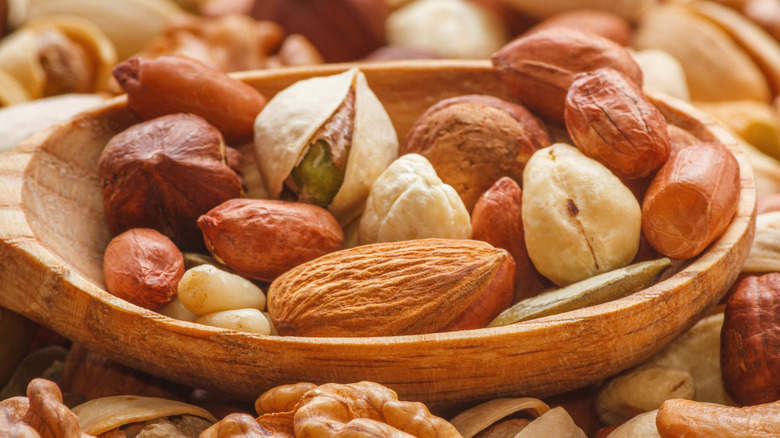
The nuts and seeds section of the grocery store has some of the most overlooked high-protein foods. A handful of almonds contains six grams of protein, while a handful of peanuts has a little over seven. Protein Cheerios has eight grams of protein per serving, but by adding nuts "the protein is boosted from real food, and there's additional healthy fats," Luk explains.
You can follow this same advice when it comes to other protein-added foods, too. Nuts certainly make a great addition to snack foods, but nut butters are even more versatile. Instead of eating a bagel with added protein, for instance, enjoy it topped with peanut butter. Or, take it one step further and spread cottage cheese on your bagel for a high protein breakfast. Instead of protein-added granola, make your own granola from scratch (a cup of oats has a little over 10 grams of protein, anyway) and eat it over Greek yogurt with a drizzle of peanut butter. The natural protein options are infinite with a little bit of creativity.