

The Grocery Store Section With The Most Overlooked High-Protein Foods
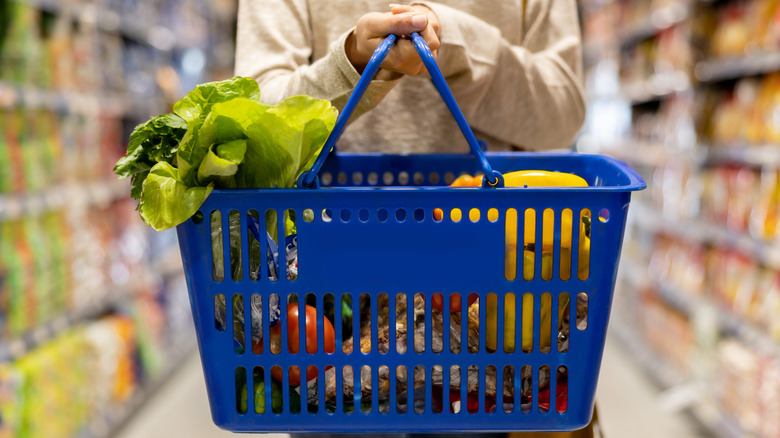
Most health-conscious shoppers know to head to the meat and dairy sections of the grocery store to select their proteins. But the dry pantry section of the supermarket is packed with affordable sources of protein that you're likely overlooking. While there are some obvious high-protein foods like canned tuna or salmon on these shelves, there are so many more non-perishable options to choose from that can also help you meet your protein goals. Some of them you can even eat right out the bag, while others do need to be cooked and prepared. So the next time you hit the grocery store, swing by the pantry section and take a look at the nutrition labels of beans, nuts, seeds, grains, and even alternative flours, as you might be pleasantly surprised by their protein content.
Nuts are an incredible source of protein. Not only do they last for a long time in the pantry, but they also take zero preparation and are great for on-the-go snacking. Peanuts are technically a legume, but the misnomered nut contains more than 7 grams or protein per ounce. Dried legumes, beans, and grains also have long shelf lives and are easy to store and prepare. Cooked quinoa contains 4-5 grams of protein per 3.5-ounce serving, while a half cup of cooked lentils has about 12 grams. And most types of cooked beans contain about 7-8 grams of protein per half-cup serving.
Good sources of shelf-stable protein
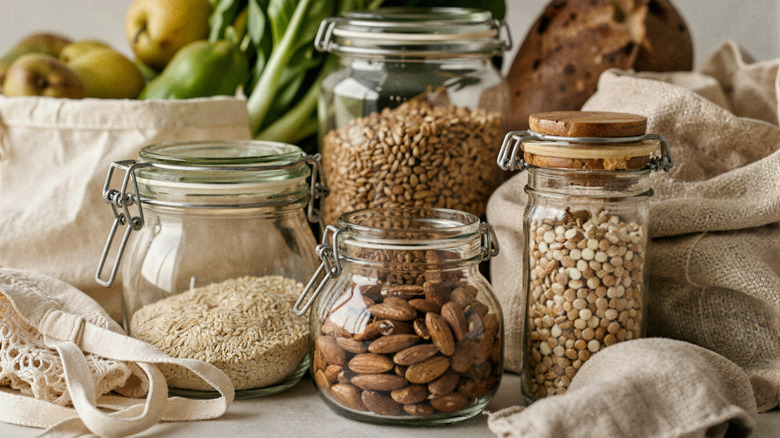
Snacking on even a handful of nuts can easily help you reach your protein goals, as well as increase your intake of healthy fats. Almonds and pistachios contain 6 grams of protein each in only a single-ounce serving, followed by cashews at 5 grams per ounce. Walnuts, pine nuts, and Brazil nuts all have 4 grams in the same size serving. Along with nuts, seeds are another great protein powerhouse. Pumpkin seeds have about 7 grams, sunflower seeds contain 5.5 grams per ounce, and the same amount of chia seeds has almost 5 grams of protein. Roasted and salted seeds and nuts make for great snacks, while a classic chia seed pudding recipe is an easy make-ahead breakfast.
When you're looking to bake a sweet treat that has a bit more nutritional value, you could use almond flour instead of all purpose flour, as is called for in a traditional Sicilian almond cookie recipe. Or even whip up a batch of edible cookie dough using the alternative flour (and you could throw in some sunflower seeds for an additional protein boost). Not only are these pantry items great additions to your diet, but they are also usually much more affordable than more traditional proteins like fresh meat and dairy products. Though obviously not safe for those with nut allergies, these pantry staple protein sources are also suitable for many types of special diets, given that most of them are dairy-free, gluten-free, and appropriate for vegans and vegetarians.