

Avoiding This Common Cooking Habit May Help Protect Your Induction Stovetop's Longevity
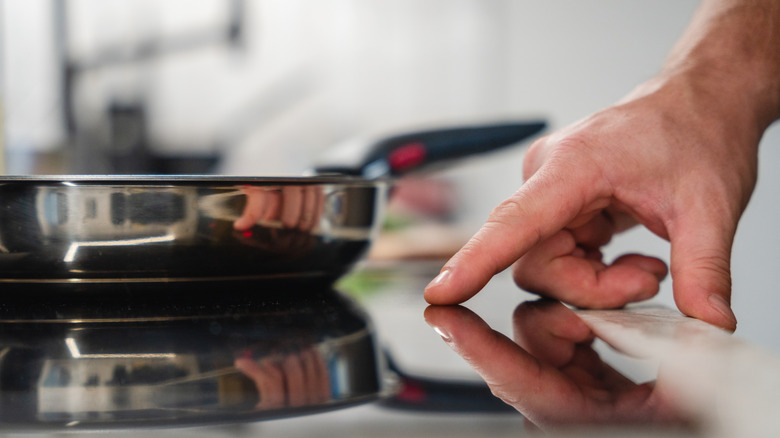
As sleek as an induction stovetop looks in a kitchen, that glass and ceramic composite surface can also become one of its biggest disadvantages. Dragging pots and pans across the surface instead of lifting them up and setting them back down can become a habit that can hold disastrous results; but when you're focused on getting food onto the table fast, paying attention to how you handle your cookware may not be your first priority. Among the pros and cons of an induction stove, remember that while the surface is durable, it isn't scratch-proof. Whether you're stirring contents in a pot or shifting a pan on the stovetop, this can cause scratches.
Uneven bottoms on the base of cookware can damage the surface, and even grit trapped between the base of a pan and the stovetop can turn into scratch-inducing abrasive material. The weight of cast iron and pots can also leave visible markings behind, if not carefully handled. Such damage isn't simply a matter of aesthetics, though. Scratches on the ceramic surface are like tiny scores on a piece of glass that can contribute to more vulnerable weak points, which can crack more deeply over time. Scratches can't be buffed out on induction stovetops, so once they are present, there is little that can be done to reverse the damage.
Making small adjustments for a lasting impact
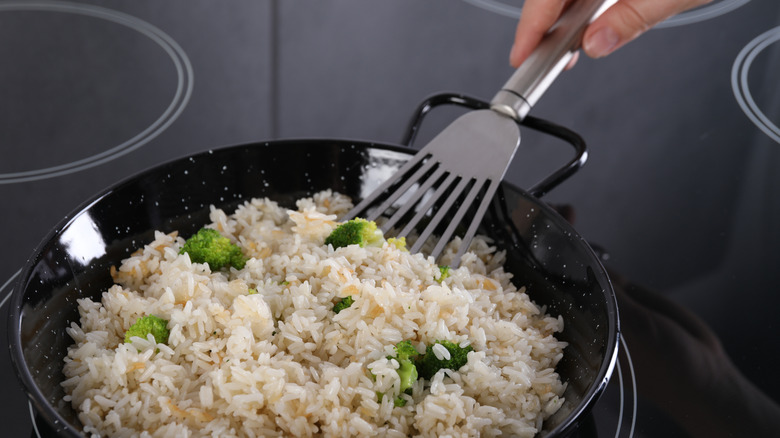
To avoid this potential pitfall, lift pots and pans off the induction stovetop and try to avoid sliding items across the surface. Additionally, place cookware down gently onto the stovetop, even when working quickly, to preserve the material and lengthen its lifespan. Promptly wiping spills and cleaning up ingredients like salt or spices can also ensures that nothing becomes trapped between pans and the cooktop and creates an uneven surface.
Inspecting the bottom of cookware regularly can help spot potential offenders, too. If you're wanting extra piece of mind when it comes to some of your older, heavier, vintage cast iron thrift finds, look to invest in induction-safe surface protectors that can be set directly onto the cooktop. These materials are made from silicone or fiberglass, but you'll want to be sure that the mat is designed specifically for induction use, since some options can block the magnetic field and slow heating or prevent the surface from recognizing cookware.
Though these concerns of damage might give pause while you're making your favorite recipes, treating your induction cooktop with intention is a small sacrifice that can keep the stovetop scratch-free and functional for extended use.