

One Of The Biggest Disadvantages Of An Induction Stovetop And Your Metal Kitchen Tools
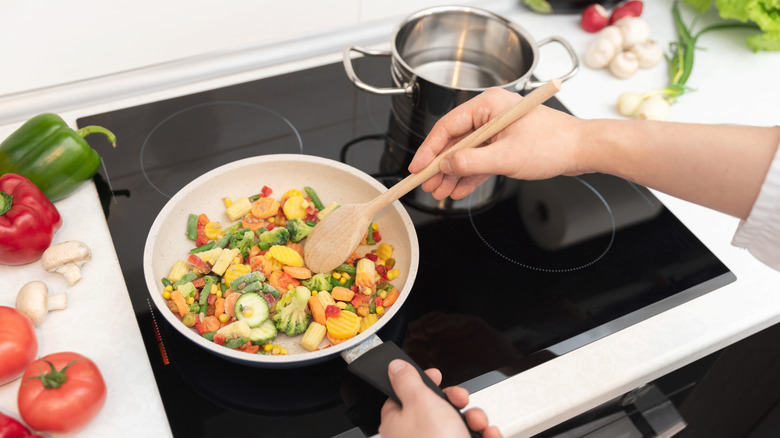
While induction stovetops used to seem straight out of a sci-fi movie (or a Michelin-starred restaurant, at least), they're becoming increasingly common in home kitchens. They're precise, they generally use less energy, and they heat up way faster than a gas or electric range. Of course, no kitchen appliance is perfect. Before you have one installed in your home, it's important to review all the pros and cons of an induction stovetop, including how this electromagnetic appliance can interfere with some of your other electronic kitchen tools.
Induction ranges create an electromagnetic field using a coil of metal under the glass cooktop, which passes from the metal coil to your cookware and heats the cookware directly rather than just creating heat that the cookware then sits on top of. This is why only certain types of metal work on an induction stovetop: If it isn't magnetic, it simply won't work. It is also why induction stovetops stay cooler than other cooking surfaces, as the heat isn't heating the stovetop, it's heating the pan.
However, one downside of running induction cookware is that, as with all magnets, the electromagnetic field can interfere with other electronics and metal tools. If you're using an instant-read or clip-on thermometer, the electromagnetic field from the stove could heat the metal in the thermometer, giving you a false reading. Grab an infrared thermometer, instead. You should also never leave metal cooking utensils in the heated pot or pan, as the induction burner will not distinguish between a stainless steel spoon and a steel pan and the utensil could be heated to a high temperature without you knowing. And while induction stovetops are tested for safe use at home, if you have a pacemaker, it is recommended that you check with the pacemaker manufacturer for safe use before operating an induction stovetop.
Tips for cooking safely with an induction stovetop
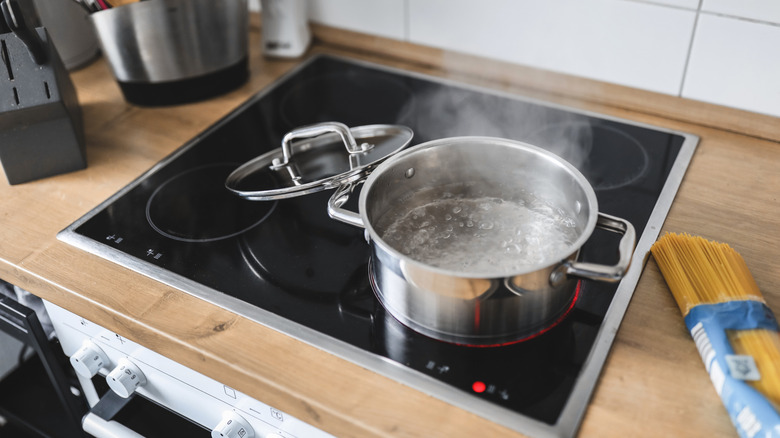
If you do decide to invest in an induction stovetop, there are simple — but very important — tips to keep in mind to use the range safely. One of the biggest induction cooktop mistakes is trying to use the wrong type of pan. The pan material must be magnetic in order for the induction stovetop to heat the pan, so you'll need to use something like cast iron, carbon steel, or stainless steel. Not sure if your current pans will work? Use the magnet test. Grab a magnet and try to stick it to the bottom of your pan. If it sticks, you're good to go.
Another important safety tip is knowing where the heat on your range is. While an induction range is designed to directly heat your pot or pan, that doesn't mean the entire range stays cool. Anywhere the cookware touches may be hot, but anywhere the cookware isn't touching will stay cool. Just as with a gas or electric range, exercise caution around a recently-used stovetop. As a rule of thumb, keep certain electronics away from your induction range. The humming or buzzing sounds produced by an induction stovetop can, for example, interfere with headphones that use active noise canceling. In general, electronic devices should be kept a safe distance from induction stovetops when in use, to ensure the electromagnetic field does not unintentionally heat metal parts within the devices. Just like you shouldn't put your laptop on a hot gas range, you shouldn't put it on a hot induction range, either.