

8 Forgotten Coffee Brands Of The '70s
"The past is a foreign country," as English novelist L.P. Hartley famously observed. That's true even in your own country; if you're over 30, you can probably name a few cultural touchstones of your childhood. Over time, even the highest-profile brands (been to a Blockbuster lately?) can fade away.
If you were a coffee drinker in the '70s, for example, several brands you knew aren't around anymore. Some were longstanding brands that ground (sorry!) to a halt in the '70s, while others were still significant but disappeared over time.
It's interesting to look at the's brand'srise and fall. So me were standalone coffee chains, some were supermarket brands, some were both (or neither). Some were well-entrenched regional brands, and one was even — in its heyday — the top-selling coffee in the US. So here are the stories of seven once-mighty coffee brands you'd have seen in the '70s, plus a couple of "zombie" brands that have been rebooted along the way.
Gold Shield coffee
Seattle is widely recognized as one of America's coffee centers, with Starbucks, Peet's, and many other trailblazing brands. Its coffee culture dates back to before Starbucks opened in 1971, starting in 1869 when the enterprising Schwabacher family arrived and set up shop.
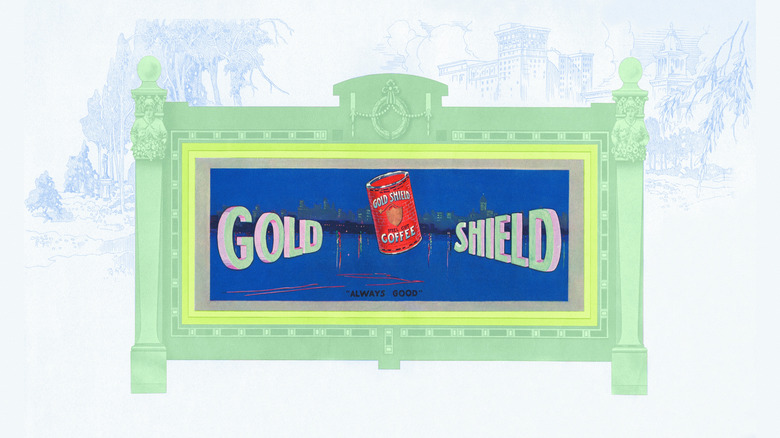
The Schwabacher brothers opened up a store in Seattle, selling everything the then-frontier city might need, including (of course) coffee. By the 1890s, they were roasting the coffee themselves, and marketing it under the Gold Shield brand. It was a huge success, quickly becoming a major player throughout the West Coast and into the adjoining states. Crescent Manufacturing purchased the company in 1957.
Crescent kept selling Gold Shield coffee until the 1970s, though sadly there's no readily available documentation to say when the brand finally disappeared. Crescent (best known for its imitation maple flavoring) was eventually bought by McCormick's in the early '90s.
High Point Decaffeinated Instant Coffee
Decaffeinated coffee has a long and fascinating history, though many feel it's never as good as caffeinated. That goes double for instant coffee, which can't compare to ground coffee but still earns points for convenience.
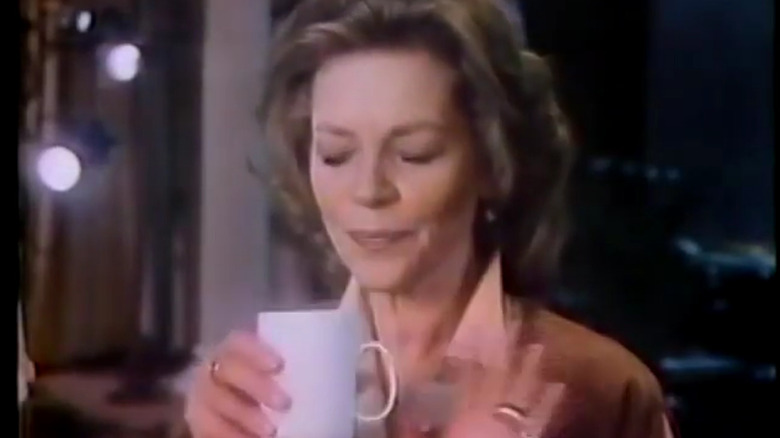
So it's mildly surprising that decaf instant coffee enjoyed a real pop-culture "moment" in the '60s and '70s, driven largely by the success of Sanka's "no-jitters" advertising. Inevitably, rival brand Folger's wanted to get in on the action and created High Point to compete with Sanka. It launched in the mid-1970s, but it didn't really impact pop culture until a famous series of ads, featuring Hollywood legend Lauren Bacall, hit the airwaves in the 1980s.
Her star power certainly generated some buzz back in the day, and even inspired a much-loved spoof on Saturday Night Live, but ultimately it wasn't enough to save High Point. Procter & Gamble, owners of Folgers and its sub-brands, would phase it out in the '90s, making it another vintage coffee brand you can't get anymore.
Coffee Connection
Unless you live in the Northeast, you might not remember Coffee Connection, another regional favorite and the first coffee shop chain to make our list. A fond memory for those who lived in the Boston area in the '70s and '80s, it was part of the national resurgence of coffee culture (and has one very big footnote in coffee-chain history).
The chain was founded by entrepreneur George Howell, who was a big fan of the original Peet's location when he lived in Berkeley in the late '60s. When Howell and his family moved to Boston in 1974, he was mortified to learn that he couldn't get the kind of coffee he'd been accustomed to on the West Coast. So he launched Coffee Connection almost immediately, assuming East Coasters would enjoy good coffee as much as their western counterparts. He was right, and quickly became a firm favorite with local coffee drinkers.
The chain ultimately expanded to a couple of dozen locations, centered around Boston, before Howell sold out to the rising Starbucks empire. That's where Coffee Connection earns its footnote in pop-culture history. Along with taking over those locations, Starbucks gained the trademark to the Frappuccino. The Starbucks version has evolved into something quite different, but the catchy name stuck.
Savarin Coffee
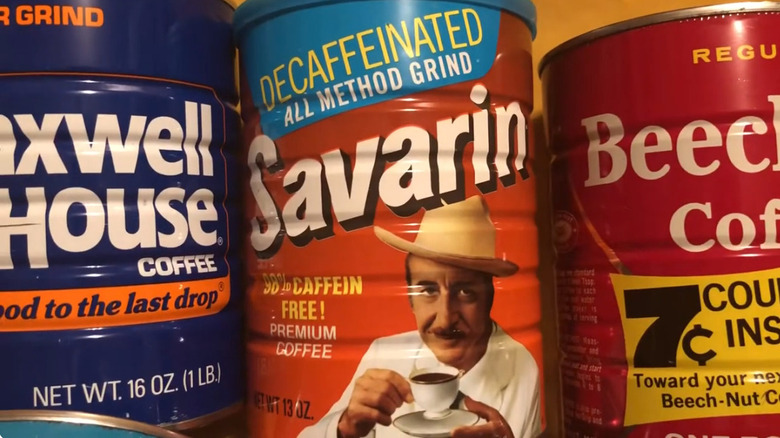
If you ever find yourself leafing through a stack of mid-century magazines in a used-book store, or perhaps an estate sale, pay attention to the ads. They're fascinating, if only because they're so different from what we see now.
Savarin coffee is a prime example. Named after a legendary French gourmet, it was well known and highly successful for the first three-quarters of the 20th century, mostly in the mid-Atlantic region centered around New York City. The company promised a richer, more satisfying cup than its competitors (one vintage ad called it the "coffee-er coffee") and staked out its claim to upscale status by pointing out that it was, then, "The Coffee Served At the Waldorf-Astoria." Much of its advertising revolved around a notoriously picky coffee taster, "El Exigente" ("the demanding one"), played by actor Carlos Montalban (his better-known brother Ricardo, you'll recall, was the Maxwell House pitchman).
The brand soldiered on through the '70s and into the '80s, with "El Exigente" pitching Savarin-branded instant coffee to television audiences, but deeper-pocketed rivals earned more attention and bigger sales. The brand was eventually part of the General Foods portfolio, where it languished and disappeared.
Rykoff-Sexton Coffee
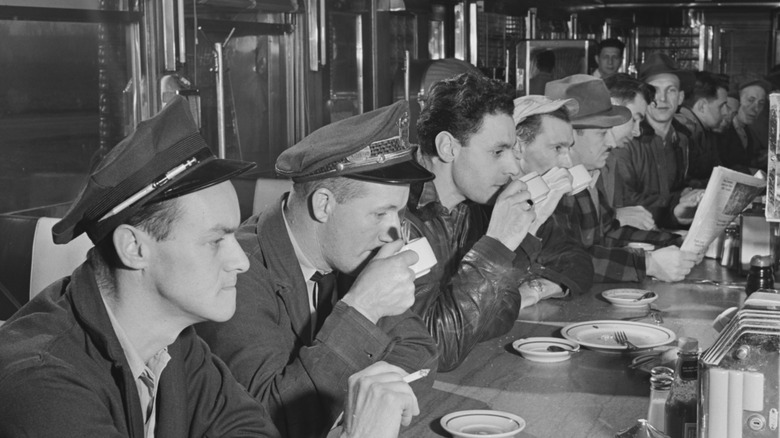
Have you ever gotten nostalgic for Rykoff coffee? How about Sexton? No? Never heard of 'em? That's because they were never consumer brands; they were wholesalers serving the West Coast and Midwest hospitality industries. But if you've ever talked about how diner coffee used to taste, you may have been yearning for their product without knowing it.
Los Angeles-based S. E. Rykoff & Company was founded in 1911 and sold coffee and staples to the hotel and foodservice industries. Over time, it grew across California and the adjoining states. John Sexton & Company launched in 1883 in Chicago as a tea and coffee merchant and expanded into a broader range of products marketed to the hospitality industry. By the start of the 1980s, Sexton was one of five national food-product distributors in the institutional and hospitality market. Rykoff bought them the following year, jumping on the industry consolidation trend.
Here's where things get murky through a series of mergers and acquisitions. The goal was to keep up with industry giant Sysco. Rykoff-Sexton was bought by rival JP Foodservice, creating US Foodservice, now US Foods, second only to Sysco in size. The always-obscure Rykoff and Sexton brands are now largely forgotten.
Schilling Coffee
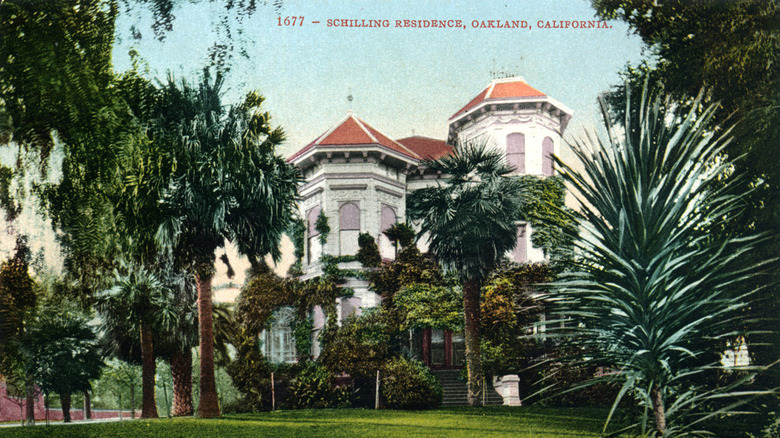
Folgers has been around since the mid-1800s. Amusingly, the origin story of Schilling Coffee — another famous West Coast brand — is linked to Folgers' early days.
The story begins with an ambitious immigrant named August Schilling, who arrived in California around 1870. He found work with J.A. Folger & Company and rose to become a partner in the firm (now Folger, Schilling & Co.) a few years later. In 1881, he struck out on his own to start A. Schilling & Company. Schilling originally roasted and sold coffee, then expanded to tea, spices, flavoring extracts, and baking powder. It was a highly successful enterprise and became one of the top brands of spices and coffee in the western states.
Schilling passed away in 1934, and the company was purchased by McCormick in 1947 (fun fact: black currant, McCormick's 2026 flavor of the year, used to be banned in the US). McCormick kept the Schilling name alive for decades in the West, selling coffee and spices under McCormick-Schilling co-branding. The Schilling name was retired in the '90s as its nostalgic appeal faded.
Manning's Coffee
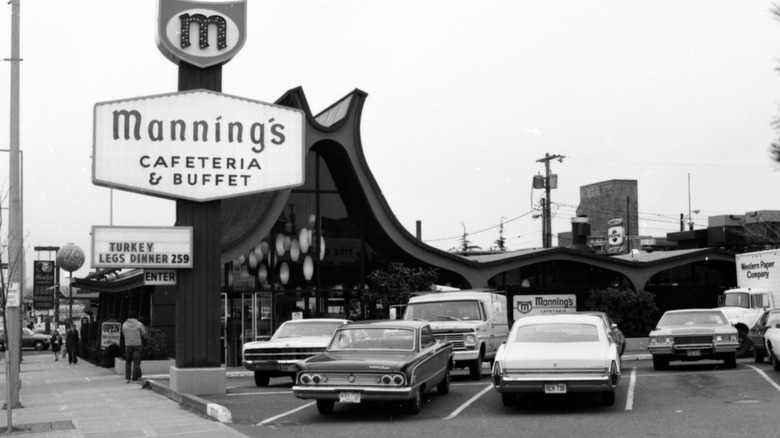
We can all name the biggest coffee empire to come out of Seattle without any difficulty, but could you name the first Seattle-based chain to become a major player? Probably not, unless you're aware of Seattle's unlikely rise to prominence as (arguably) America's leading coffee hotspot.
That distinction goes to Seattle-based Manning's Coffee, which opened in 1908 at the iconic Pike Place Market. Over the ensuing decades, the chain expanded throughout Washington, Oregon, and California, and established beachheads in Phoenix, Denver, and Salt Lake City. Manning Coffee also lined supermarket shelves in the region alongside brands like Folgers.
Despite decades of success and a modern approach to foodservice, the brand faltered under the pressure from major chains on the coffee-shop side of its business, and from deep-pocketed consumer brands on supermarket shelves. The last Manning's restaurant closed in 1984, just a few years before Starbucks began its climb to prominence.
Zombie brands
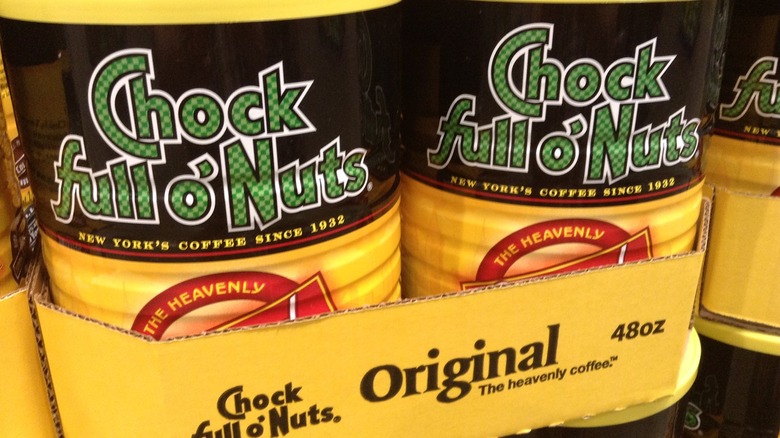
This article focuses on '70s brands that are gone and largely forgotten, but another special category deserves mention. We can call these "zombie" brands since the coffee is still sold under its original name, but there's little or no connection to the original product or ownership.
Consider Chock Full o' Nuts, for example. It was a popular chain of lunch counter/coffee shop outlets in New York City during the Depression, and its coffee was popular enough to show up in supermarkets alongside the major players. The brand was sold to Sara Lee Corp. in 1999, and is now part of the Massimo Zanetti Beverage conglomerate. The coffee is still being sold, and Chock Full o' Nuts coffee shops have returned to the streets of NYC, but its connection to past glories is in name only.
Then there's A&P, which was once America's biggest grocery chain. Its house brand coffees, Eight O'Clock, Red Circle, and Bokar, were hugely popular, and Eight O'Clock was once the country's best-selling coffee. But as new players ate into A&P's dominance, the company fell on hard times and sold its coffee brands in a desperate attempt to stay solvent. India-based Tata Group still sells coffee under the Eight O'Clock brand, but Red Circle is gone, and Bokar is sold only at one location in Burbank, CA. A&P has been rebooted and has returned to its roots as a seller of coffee and tea under its own name.