

The Once-Banned Fruit That's Now McCormick's 2026 Flavor Of The Year
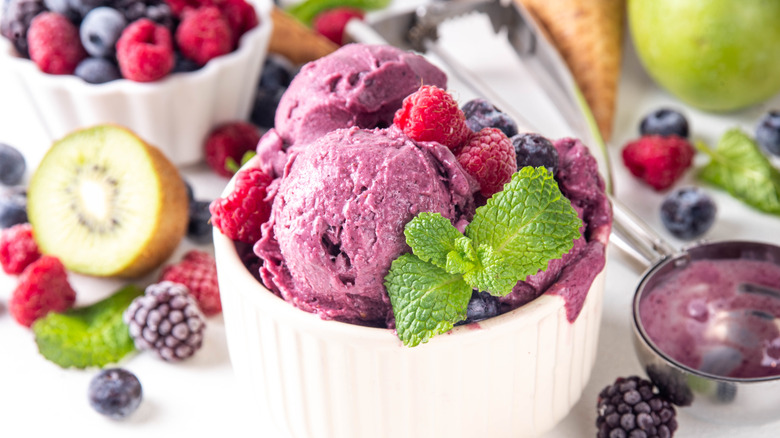
The leading brand of herbs and spices in the world has just made a little-known, once-controversial fruit its newest darling. McCormick named black currant its Flavor of the Year for 2026. For a time, this ingredient was banned in the U.S. (but not anymore). Mixologists might have even been working with the fruit without even knowing it: Backbar staple crème de cassis is a black currant liqueur.
McCormick praises the fruit's flavor for its unique, "adventurous" culinary potential. For the unacquainted, black currants are a sweet-tart berry with a dark purple hue. Their rich, bold taste can be applied to both sweet and savory dishes. Black currants are indigenous to central and northern Europe and northern Asia and have gained popularity among foodies in Great Britain. The U.K. produces an average of 12,000 metric tons of the fruit every year. In fact, it's so ubiquitous that purple Skittles in the U.K. are black currant-flavored instead of grape. So, why has this dimensional fruit been so slow to catch on in the U.S. food scene?
Domestic production of black currants thrived in the U.S. during the late 1800s, with the largest crop coming from New York State. Then, in the early 1900s, blister rust hit the scene. This devastating fungal disease came over from Europe, decimating the white pine trees on which the American lumber industry relied and, by extension, the thousands of acres of black currant plants. In 1911, growing the fruit on U.S. soil was officially illegal due to the risk of the disease spreading. While the federal ban was lifted in 1966, state legislation still varies on its agricultural permissibility.
Black currants bridge the sweet and savory worlds
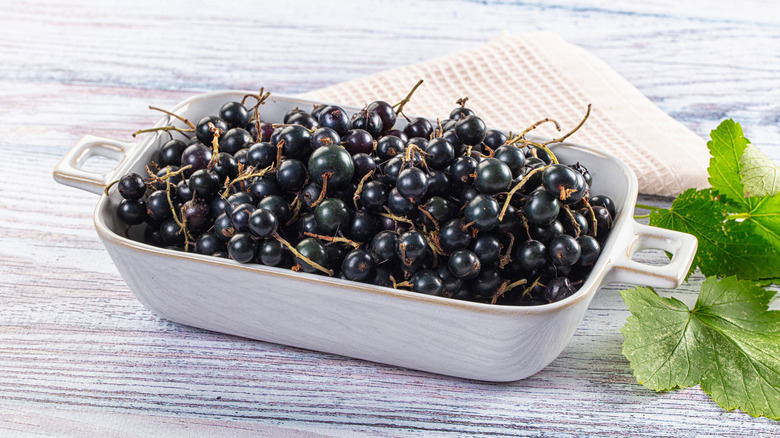
Today, black currant farms can be found all over the U.S. in regions that allow it, and food lovers are picking up on the fruit's unique flavor, which already has a longtime fanbase all around the world. Tabata Gomez, McCormick's Chief Marketing Officer, calls black currant "the next 'it' berry on the scene," in an official press release. Hadar Cohen Aviram, Executive Chef at McCormick, expounds that the versatile fruit is "gaining attention in kitchens, prized for its vibrant intensity."
To put it to good use in the kitchen, black currants can be used anywhere you might normally reach for a berry. Sprinkle them over a morning yogurt parfait or blend them into your next smoothie. You could also whip up a few jars of black currant jam or add this unconventional fruit to a pie. Swap them into a blueberry scone recipe, or fold them into pancake batter for breakfast — bonus points for a dollop of tangy crème fraîche on top. You could bake 'em into muffins or a loaf of dense pound cake — but this rich, dark berry is bold enough to stand up to savory dishes, too.
Try turning black currants into a sweet compote or chutney for roasted duck or pork chops, spooned over the meat alongside mashed potatoes. Thirsty? For an elegant drink, muddle a few black currants with a splash of vinegar to make a flavorful cocktail shrub, then top it with juniper-forward gin and sparkling water.